


JINJIA / RESPONSE MOBILITY
Delta wheeledUGV/AGV family
Three payload classes for patrol, inspection and field logistics.
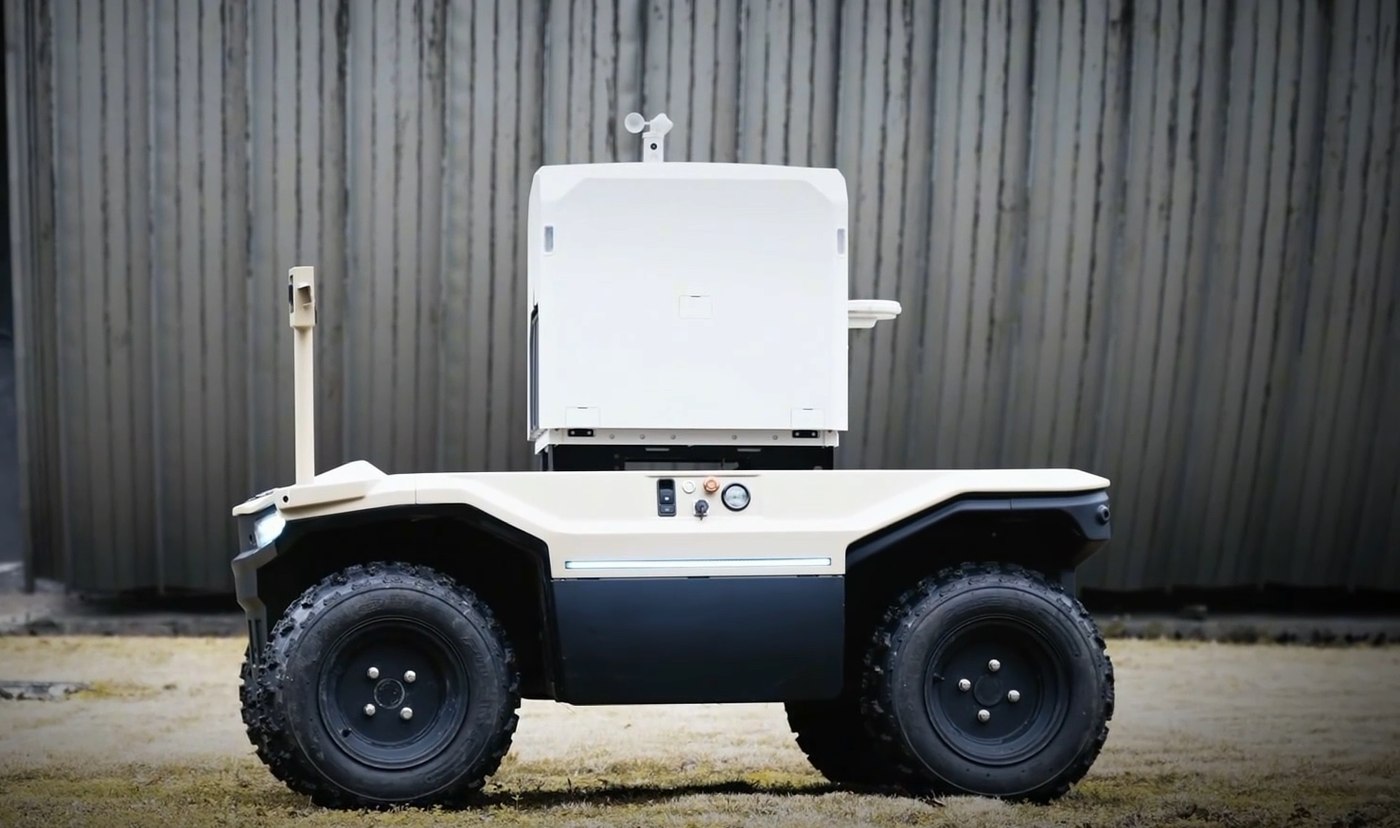
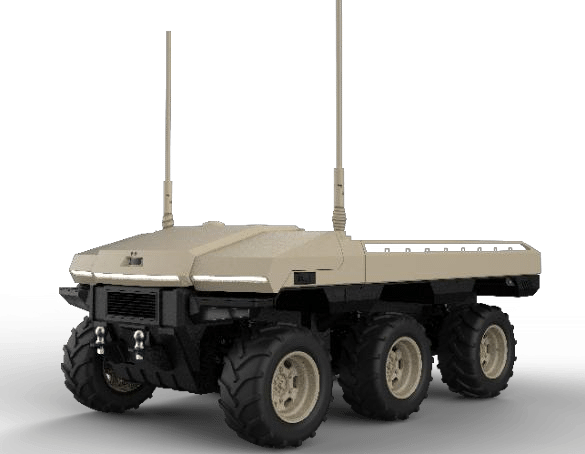
01 / Delta family
Three models. Three payload classes.
Compare payload classes on the same scale, then open the model that fits your task.
01 / Compact wheeled platform
Delta 150
Patrol & inspection
View model02 / Mid-size payload class
Delta 500
Equipment & supplies
View model03 / Full-time 6×6 platform
Delta 1000 6×6
Field logistics & heavy equipment
View model02 / Model details
Choose the platform around the task.
Explore vehicle configuration, mission equipment and technical specifications for each model.
01 / 150 kg class
Delta 150
A compact 4×4 platform for patrol, inspection and remote observation. Specify the sensor package and operating mode for the route.
View model applications01
All-terrain mobility
Two mid-mounted motors deliver a combined 11 kW. Four-wheel drive uses differential braking for steering.
02
Navigation and route following
The design supports GNSS/RTK positioning, route following, follow mode and obstacle avoidance.
03
Mobility performance
Review the design targets for speed, range and terrain against your operating conditions.
04
Mission modules
Discuss EO/IR imaging, loudspeaker and warning equipment, cargo carriers or task-specific sensors.
05
Power for mission equipment
Confirm equipment power draw, connection and operating time during technical scoping.
06
Data and control integration
Confirm video, telemetry and control-centre interfaces for the selected project configuration.
Technical specifications
Chassis & mobility
- Powertrain
- Dual mid-mounted motors, 11 kW
- Drive configuration
- 4WD + differential braking
- Kerb weight
- ≤350 kg
- Payload
- ≤150 kg
- Dimensions (L×W×H)
- ≤2000 × 1100 × 850 mm
- Gradeability
- 60%
- Obstacle clearance
- 400 mm
- Turning radius
- ≤4 m
Performance & autonomy
- Max. speed
- 50 km/h
- Max. autonomous speed
- 40 km/h
- Cruise speed
- 20 km/h
- Endurance
- ≥60 km
- Wading depth
- ≥300 mm
- Tracking success rate
- ≥98%
- RTK positioning accuracy
- ≤5 cm
- Obstacle recognition rate
- ≥95%
Figures refer to a nominal configuration at 20 °C with a new battery pack, on a prepared surface where applicable. Payload, endurance and speed degrade with mission kit mass and terrain severity. Verified values are issued with the technical proposal.
02 / 500 kg class
Delta 500
The mid-size member of the Delta family for equipment and supply transport. Vehicle configuration is confirmed against load, route and operating requirements.
View model applications
01
Equipment carrier
Define the total mass and dimensions of equipment, mounting hardware and protective enclosures.
02
Site resupply
Specify the tools, spare parts or consumables to move, and how they will be loaded and secured.
03
Route and controls
Provide the travel distance, surface, gradients and preferred operating mode for configuration review.
Configuration and selection
Payload
- Payload class
- 500 kg
Project configuration
- Chassis, drive and performance
- Confirmed during project scoping
- Control, mounting and equipment
- Configured to the mission
03 / 1,000 kg class
Delta 1000 6×6
Delta 1000 combines diesel range extension, dual electric motors and full-time 6×6 traction. Remote control, configured autonomy and emergency onboard operation support modular cargo transport for field teams and industrial sites.
View model applications
01
Diesel range extension
A 999 cc water-cooled V-twin diesel engine drives a 30 kW permanent-magnet synchronous generator. Dual 30 kW electric motors complete the powertrain.
02
Full-time 6×6 traction
Six-wheel drive, independent double-wishbone suspension and 250 mm ground clearance combine with shaft transmission, hydraulic disc brakes and all-terrain tires.
03
Flexible operating modes
Remote control supports operation from a separate control position. Configured autonomy supports defined routes and agreed operating conditions, while emergency onboard operation provides an additional operating mode.
04
A platform for changing loads
Modular upper bodies and cargo loading/unloading rails support different load arrangements. A passive towing kit adds another configuration path for projects with a defined towing requirement.
Technical specifications
Vehicle & operating modes
- Product model
- Delta 1000 6×6
- Powertrain architecture
- Diesel range-extended electric drive
- Drive configuration
- Full-time 6×6
- Operating modes
- Remote control, configured autonomy and emergency onboard operation
- Maximum payload
- 1,000 kg
- Curb mass
- 1,500 kg
- Dimensions L × W × H
- 3,200 × 1,800 × 1,400 mm
- Wheelbase
- 1,100 × 2 mm
- Minimum ground clearance
- 250 mm
Reference performance
- Range*
- Up to 200 km
- Maximum speed*
- Up to 50 km/h
- Maximum remote-control distance*
- Up to 2 km
Powertrain
- Engine type
- V-twin, four-stroke, water-cooled diesel
- Engine displacement
- 999 cc
- Rated engine output
- 50 hp at 3,200 rpm
- Maximum engine torque
- 130 N·m at 2,200 rpm
- Generator type
- Permanent-magnet synchronous
- Generator output
- 30 kW
- Drive motors
- Dual motors; 30 × 2 kW
Running gear & equipment
- Transmission
- Gearbox and shaft drive
- Steering
- All-wheel tracking steering
- Brakes
- Hydraulic disc brake calipers
- Suspension
- Independent double wishbones with hydraulically damped coil springs
- Wheel rims
- 14-inch steel wheels
- Tire specification
- AT27×11-14 all-terrain tires
- Available tire configuration
- Run-flat tires; supply configuration agreed for the project
- Modular equipment
- Modular upper bodies, cargo loading/unloading rails and passive towing kit
- Colors
- Desert yellow / custom
*Performance figures are reference values. Range, maximum speed and remote-control distance depend on payload, route, terrain, operating mode and communications conditions and are not simultaneous guarantees. Final configuration and operating conditions are agreed for the project.
Typical missions
01
Emergency response logistics
Carry supplies between staging areas and designated response support points.
02
Mining and construction
Move maintenance parts and materials along suitable surface-site routes.
03
Energy and utilities
Deliver equipment and supplies to field maintenance teams.
04
Oil and gas field support
Move tools and materials between designated field work areas.
Compare all three models
Payload classes on a common 1,000 kg scale.
| Model | Delta 150 | Delta 500 | Delta 1000 6×6 |
|---|---|---|---|
| Payload class | 150 kg | 500 kg | 1,000 kg |
| Typical tasks | Patrol & inspection | Equipment & supplies | Field logistics & heavy equipment |
| Drive | 4×4 | By project | Full-time 6×6 |
| Range | ≥60 km | By project | Up to 200 km* |
| Top speed | 50 km/h | By project | Up to 50 km/h* |
Delta 150 range and speed are design targets. Delta 1000 6×6 starred values are for reference. See each model for conditions.
03 / Application concepts
Applications by model
Delta 150 · 150 kg class
Patrol, inspection and remote observation
All scenario imagery on this page is concept visualisation, not field photography.
Oil, gas and power assets
Inspect accessible routes around pipelines, substations and industrial facilities.
Fire-scene observation
Survey access routes and observe thermal conditions at the scene with a suitable sensor package.
Collapse-site assessment
Support initial visual assessment along accessible routes near rubble and relay observations to the team.
More scenarios
Route and perimeter patrol
Plan repeated patrol routes and night observation around sites and controlled perimeters.
Flood response
Cold and high-altitude terrain
Port and coastal logistics
Delta 500 · 500 kg class
Equipment and supplies across the site
Equipment carrier
Carry mounted survey or monitoring equipment between a staging area and designated work points.
Tools and spare parts
Move tool kits and replacement parts from site storage to maintenance crews.
Site resupply
Deliver packaged supplies from a site depot to distributed workstations.
Delta 1000 6×6 · 1,000 kg class
Field logistics and larger loads
Bulk supply transfer
Transfer packaged supplies and equipment cases from a staging point to field crews.
Industrial site logistics
Move tools and larger replacement assemblies between site storage and maintenance areas.
Emergency logistics
Move relief supplies or equipment cases from a staging point to a forward support area.
Delta family · 150 / 500 / 1,000 kg
Choose a model by task
150 kg
Delta 150
Patrol & inspectionStart here for route patrol, visual inspection and initial site assessment.
View model500 kg
Delta 500
Equipment & suppliesStart here when the task is moving equipment, spare parts or supplies between work points.
View model1,000 kg
Delta 1000 6×6
Field logistics & heavy equipmentStart here for larger field consignments, industrial site transport or emergency logistics.
View model04 / System integration
Delta within the JINJIA equipment system
Combine wheeled unmanned platforms with crew transport, field logistics and command tools as the project requires. Confirm interfaces during technical scoping.
01
F120 high-mobility chassis
Crew and equipment transport alongside wheeled unmanned vehicles.
02
Amphibious 8×8 platforms
Support loads and water crossings where an amphibious platform is required.
03
Electric off-road motorcycles
Rapid single-operator mobility for access and last-mile dispatch.
04
SAE command & control
Scope telemetry, video and fleet interfaces with the selected equipment.
Example workflow for remote inspection
01
Detect
Collect observations along the route.
02
Identify
Review sensor data with the operator.
03
Alert
Pass the event to the control team.
04
Respond
Dispatch people or equipment as the task requires.
05 / Next step
Tell us what the vehicle needs to carry.
Share the terrain, payload mass and size, route length, operating mode and mission equipment. We will scope the model and configuration with you.
Which Delta model should I start with?
Start with total payload, including the equipment, mounts and cargo. Then compare route conditions and operating mode for the shortlisted model.
How are control modes and modules specified?
Share the mission, expected communications coverage, required sensors and any integration interfaces. JINJIA can use those details to scope a configuration.