









Exhibitions & Industry Engagement

JINJIA at Hanoi 2026 | Industry Visit

We are visiting the third edition of Viet Nam's international exhibition for public safety, emergency response and special-purpose equipment, held 10-13 December 2026 at Gia Lam Airport in Hanoi. Our interest is the ground layer: how crews, tools, unmanned systems and field power reach the work when roads, surfaces and fixed infrastructure are not prepared.

Dates

10-13 Dec 2026

Venue

Hanoi, Viet Nam

Stand

Industry visit — no stand

Status

Upcoming

Explore the Digital Showroom
01Overview

The event and why we are there

This is the third edition of Viet Nam’s international exhibition for public safety, emergency response and special-purpose equipment. Its scope includes public security equipment, disaster rescue and relief systems, civil protection and special-purpose vehicles. For a ground-mobility supplier the useful question is not the headline displays – it is what large, controlled sites and degraded operating conditions demand of the vehicles, the power and the coordination layer on the ground.

  • EventThird edition of Viet Nam’s international exhibition for public safety, emergency response and special-purpose equipment
  • Official dates10-13 December 2026
  • Public opening days12-13 December 2026 (organiser announcement, October 2026)
  • VenueGia Lam Airport, Hanoi, Viet Nam
  • Edition3rd
  • JINJIA participationIndustry visit – no stand, no product display
  • Visitor accessRegistration and access conditions are set by the organiser; JINJIA attendance days are confirmed separately
  • Team itineraryExact attendance days and meeting slots to be confirmed – the official dates are not a four-day attendance commitment
  • Meeting pointBy appointment, arranged through the contact link below
Sector focus

“Public-safety requirements, applied to the ground layer that keeps work moving”

Large-site ground operations

Movement and perimeter coverage across a large, controlled site and the access roads that serve it.

Unmanned inspection

Remote and semi-autonomous checks of hangars, storage areas and restricted installations.

Flood and soft-ground access

Riverine and delta terrain where prepared roads end and seasonal flooding cuts access.

Field power and utilities

Quiet, mobile power for tools, communications and lighting away from fixed infrastructure.

02Our Perspective

What we read into the event

The third edition brings together equipment users, public-safety agencies and industrial suppliers in Hanoi. Scale is the headline; the more useful signal for us is how large-site operations and emergency-response work are being redesigned around unmanned systems, distributed power and fewer people on the ground.

The display gets the attention. The constraint is almost always the ground: whether a crew, a tool and a power source can reach the work, stay there, and be recovered.

Q1 · What is the event saying?

The third edition covers public security equipment, disaster rescue and relief systems, civil protection and special-purpose vehicles alongside a wider industrial exhibition. The direction is systems, not single machines.

Q2 · Which ground environments do we focus on?

Large controlled sites and their access roads; hangars, storage areas and remote installations that are easier to inspect remotely; riverine and delta terrain exposed to seasonal flooding; and field positions where the grid ends at the gate.

Q3 · Why does it matter?

Public-safety and emergency-response work is specified around reliability under degraded conditions. Redundancy, payload, power density and maintainability are set up front, not added later. That discipline is what an emergency-response fleet needs when access degrades.

Q4 · What position do we bring?

No single vehicle answers this. What changes the outcome is a ground layer configured per site – tracked where the ground is soft, amphibious where the road is gone, electric where noise and emissions matter, unmanned where the area is restricted, and connected so the picture is shared.

03Our Response

Four operating problems, four ground configurations

Each configuration is stated as the constraint, the combination we field, and the effect we intend to produce – with the conditions it is engineered for.

Large-site perimeter and access patrol

Challenge
Long perimeter roads and repeated rounds across a controlled site, with crews spending the day driving rather than observing.
Combination
Electric utility vehicle + Delta 150 UGV + SAE
Effect
Route coverage with quieter movement and a recorded observation trail for later review.

Conditions  Controlled-site access permit · defined route and radio coverage · operating procedure agreed with site operations

Remote inspection of hangars and storage areas

Challenge
Large structures and restricted installations where a person should not be the first to enter.
Combination
Delta 150 UGV + SAE situational awareness
Effect
Visual and thermal checks completed before people are committed.

Conditions  Approved remote-operation procedure · coverage survey · emergency recovery plan

Flooded access and riverine sites

Challenge
A flooded access road or seasonal inundation can cut a site off for days, and rerouting adds hours to every shift.
Combination
8×8 amphibious platform + tracked carrier
Effect
Crews, tools and supplies keep moving while the road is under water.

Conditions  Water entry and exit survey · reduced payload for the crossing · current, bed and debris assessment

Field power away from fixed infrastructure

Challenge
Lighting, communications and tool charging at positions with no connection and no generator on standby.
Combination
8×8 range-extended platform with field power output + SAE
Effect
The platform that brought the crew also powers the work, instead of a second generator being hauled in.

Conditions  Load profile and duty cycle confirmed · output matched to actual loads · earthing and protection agreed

Configurations shown are illustrative mission configurations. Final vehicle, equipment and system configuration are subject to project-specific engineering, hazardous-area classification and validation.

04Focus Areas

What we are looking at on the floor

We are not exhibiting at this edition. These are the three ground problems we are taking into the halls – and the platforms we would put against them. Each is a starting configuration, not a catalogue position.
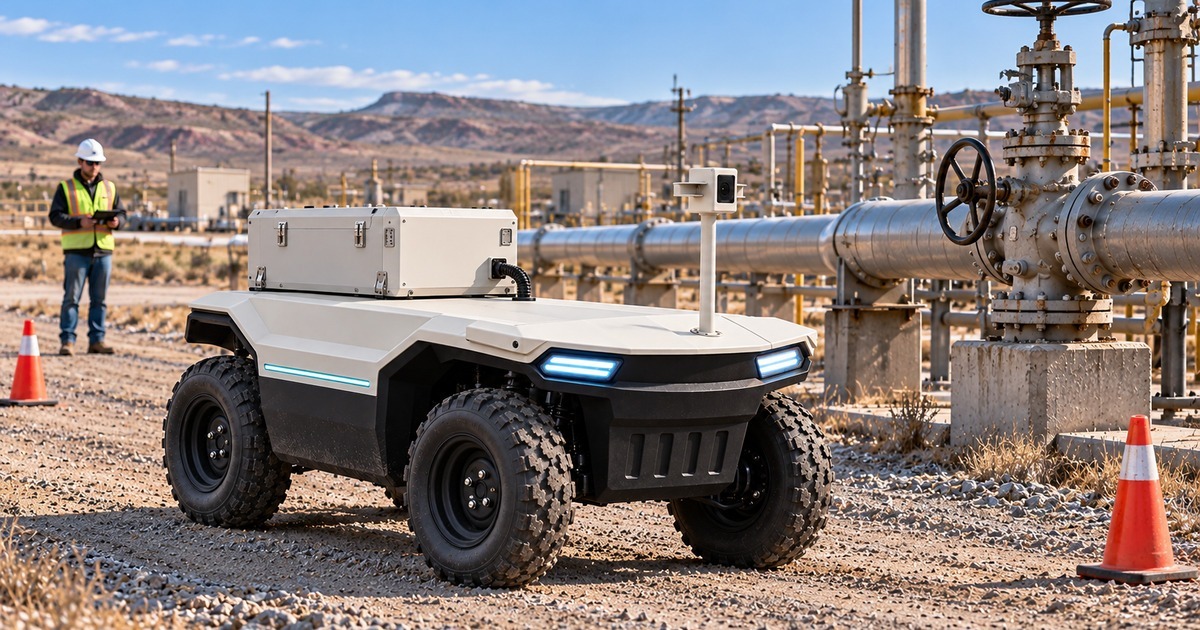
JINJIA Delta 150 unmanned ground vehicle photographed in a factory yardManufacturer product photograph

Focus 01 · Unmanned inspection

Inspection before entry

Inspect the hazard before sending people.

Remote and semi-autonomous patrol for hangars, storage areas and remote installations – EO/IR observation, LiDAR and GPS navigation, obstacle avoidance with automatic return and remote takeover.

  • EO/IR observation
  • LiDAR + GPS
  • Obstacle avoidance
  • Remote takeover
Unmanned Ground Vehicle →
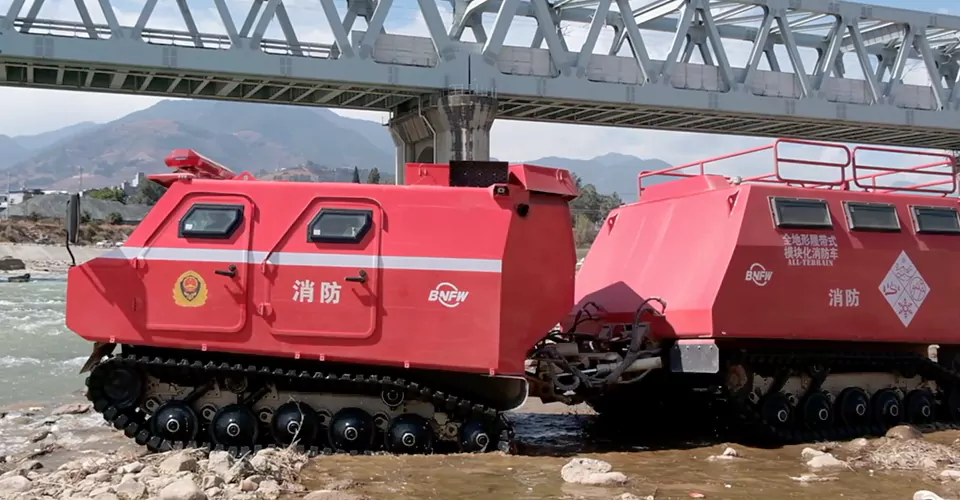
JINJIA JJ117 tracked carrier in fire-service livery, photographed outdoorsFire-service livery shown — export configuration differs

Focus 02 · Tracked access

Ground that will not carry a wheeled truck

Low ground pressure is a specification, not a slogan.

Tracked carrier for soft ground, mud and flood debris – crew, tools and supplies taken to a site with no prepared track, on a platform configured for the surface rather than the road.

  • Low ground pressure
  • Payload deck
  • Crew + equipment
  • Soft ground
Tracked Utility Vehicle →
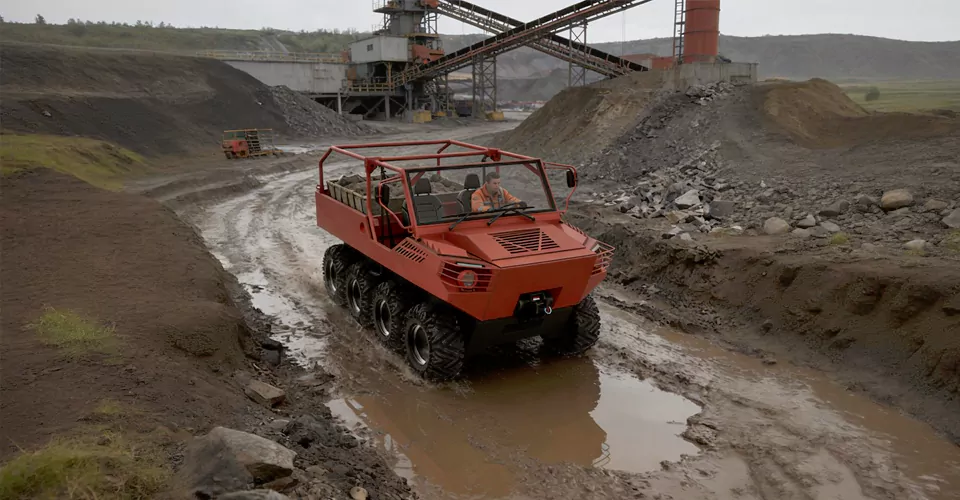
JINJIA 8x8 amphibious utility vehicle on waterManufacturer visual — not a project site

Focus 03 · Amphibious crossing

When the road is under water

When the road ends, the rotation does not.

Amphibious all-terrain platform for flood, tidal inundation and submerged access tracks – six-person mission transport with field power on a range-extended electric architecture.

  • Amphibious
  • 6 personnel
  • Range-extended
  • Field power
Amphibious Utility Vehicle →

Illustrative mission configuration. Final vehicle, equipment and system configuration are subject to project-specific engineering, hazardous-area classification and validation.

Book a Meeting

Schedule a 30-minute technical session

Tell us the incident type or access constraint you want to work through. We will confirm a day and time slot at the stand.

Our Perspective

Official organiser theme: ADEXCO 2026 focuses on disaster management, emergency response equipment and civil protection for Indonesia’s multi-hazard environment.

Q1 · What is the organiser saying?

Indonesia faces flood, earthquake and peatland fire events at the same time. Equipment that works in one scenario often fails in another.


Q2 · Which regions and industries do we focus on?

Flood plains and peatland in Sumatra, Kalimantan and Papua; island logistics; mining haul roads in East Kalimantan; oil & gas right-of-way across remote terrain.


Q3 · Why does it matter?

In every one of these events the decisive failure point is access — not detection, and not command intent. Roads that are open are not the same as communities that are reached.


Q4 · What position do we bring?

Vehicles alone do not solve it. A connected ground system — where tracked, wheeled, amphibious, electric and unmanned assets share one picture — is what makes degraded access survivable.

Our Response

Government & Disaster Response

ChallengeFlood, peatland and island access; multi-agency coordination
→
Combination8×8 amphibious + articulated tracked + SAE
→
EffectOne common picture across agencies and terrain types
→
ConditionsSoft ground, water crossing, no fixed infrastructure

Mining

ChallengeHaul-road inspection, evacuation support, tailings access
→
CombinationDelta UGV + electric utility vehicle + SAE
→
EffectHazard assessed without sending people in
→
ConditionsMine sites with defined radio coverage and safety regime

Oil & Gas

ChallengePipeline patrol, wellsite inspection, thermal anomaly checks
→
CombinationDelta UGV + JJ2030A 4×4 + SAE
→
EffectRepeatable inspection at lower cost per patrol
→
ConditionsRight-of-way accessible by 4×4 plus autonomous legs

Remote Industry & Utilities

ChallengeInspection of remote assets without power or coverage
→
CombinationElectric utility vehicle + SAE edge command
→
EffectLow-signature inspection with local decision support
→
ConditionsDisconnected, infrastructure-denied operating conditions
Showcase

ZONE A

Unmanned & Remote Inspection

Inspect the hazard before sending people.

⤢ Enlarge PANEL A-01

Delta UGV · Unmanned Inspection

Inspect the hazard before sending people.

Autonomous and remote inspection for mine sites and hazardous areas. EO/IR observation, LiDAR + GPS navigation, obstacle avoidance with automatic return and remote takeover.

  • EO/IR
  • LiDAR + GPS
  • Obstacle avoidance
  • Remote takeover

ZONE B

Electric & Light High-Mobility

Silent utility with real work capacity — for mine sites, industry and rapid response.

⤢ Enlarge PANEL B-01

Electric Utility Vehicle

Silent utility. Real work capacity.

500 kg rear cargo-bed payload, zero tailpipe emissions and low noise signature, modular rear deck for tools, parts and rescue logistics.

  • 500 kg payload
  • Zero emissions
  • Modular deck
  • Low noise

⤢ Enlarge PANEL B-02

JJ2030A · Light High-Mobility 4×4

One platform. Multiple critical missions.

Right-hand drive for Indonesia, up to six occupants, 600 km road range and 2,500 kg towing capacity on a mission-ready rear platform.

  • Right-hand drive
  • 6 occupants
  • 600 km range
  • 2,500 kg towing

ZONE C

All-Terrain & Amphibious Access

When roads end, response continues — peatland, swamp, mud and flood.

⤢ Enlarge PANEL C-01

8×8 Amphibious Response Platform

When roads end, response continues.

Amphibious all-terrain mobility for flood, mud, swamp and extreme terrain. Six-person mission transport with field power, communications and a range-extended electric architecture.

  • Amphibious
  • 6 personnel
  • Field power
  • Range-extended EV

⤢ Enlarge PANEL C-02

Articulated Tracked Vehicle

Built for soft ground. Ready for real missions.

Low ground pressure and terrain-adaptive articulation for peatland, swamp, mud and flooded areas. Carries personnel, equipment and supplies on a configurable mission platform.

  • Low ground pressure
  • Articulated
  • Modular
  • Local support

ZONE D

Situational Awareness & Multi-Platform Coordination

The layer that turns separate vehicles into one coordinated system.

⤢ Enlarge PANEL D-01

Indonesia Programme Overview

All-terrain response & industrial mobility for Indonesia.

Terrain access across flood, peatland, swamp, mountains and islands — delivered as one coordinated system: 8×8, JJ2030A, Electric UTV, Delta UGV, Articulated Tracked Vehicle and SAE.

  • Flood
  • Peatland
  • Swamp
  • Mountains
  • Islands

⤢ Enlarge PANEL D-02

Situational Awareness Engine

See. Decide. Coordinate.

Multi-platform command and coordination — common operational picture, live tracking and risk visualization, task dispatch and route coordination, with continuous field feedback.

  • Common picture
  • Live tracking
  • Task dispatch
  • Field feedback

ZONE E

Industry Programmes

Oil & gas, mining and national response — configured as programmes, not products.

⤢ Enlarge PANEL E-01

Oil & Gas Operations

Remote inspection for oil & gas operations.

Pipeline and right-of-way patrol, wellsite and facility inspection, visual plus thermal anomaly assessment, and remote site access with emergency support.

  • Pipeline patrol
  • Wellsite
  • Thermal
  • Emergency support

⤢ Enlarge PANEL E-02

Mining Mobility & Safety

Safer mobility for mines & remote sites.

Haul-road and pit-area inspection, mine emergency and evacuation support, tools/parts logistics, tailings and soft-ground access, and remote hazardous-area reconnaissance.

  • Haul-road
  • Evacuation
  • Tailings access
  • Reconnaissance

Illustrative mission configuration. Final vehicle, equipment and system configuration are subject to project-specific engineering and validation.


Panel

Panel

Board artwork is shown as reference only — the full text is available on this page.
Press ESC or click ✕ to close. Focus returns to the panel you opened.


Highlights

STAND · HALL D2 / 964

09 Sep 2026 · Opening day

Stand opened

Five zones opened to institutional visitors; Zone C drew the largest disaster-response delegation.

TECHNICAL EXCHANGE

10 Sep 2026

Peatland configuration clinic

Ground-pressure and water-supply questions answered against real Kalimantan photographs.

DEMONSTRATION

11 Sep 2026

SAE edge command walkthrough

Disconnected-operation demonstration: tracking and task dispatch without cloud or backbone network.

Key Takeaways

Questions visitors actually asked

  • Local maintenance and spare-part availability inside Indonesia, not just delivery.
  • Ground-pressure figures for specific peat classes rather than generic soft-ground claims.
  • Whether UGV inspection can be certified under existing mine safety regimes.
  • Water supply over long distances onpeat rather than short-distance pumping.

Technical understanding gained

  • Confirmed that 8×8 amphibious sizing matches current Kalimantan canal-crossing practice.
  • Revised robustness assumption for Delta UGV occupations after four Site visits.
  • Identified right-hand-drive configuration as a gating requirement, not an option.
  • Open question carried forward: local certification pathway for autonomous patrol.
Resources

Meeting Booking