










Tracked and wheeled vehicles are both designed for transportation and mobility, but they perform very differently depending on the terrain and operating environment. Choosing between tracks and wheels depends on factors such as speed, traction, ground conditions, payload requirements, and off-road capability.
Tracked vehicles are commonly used in extreme terrain and heavy-duty operations, while wheeled vehicles are typically preferred for speed, efficiency, and road travel.
What Is a Tracked Vehicle?
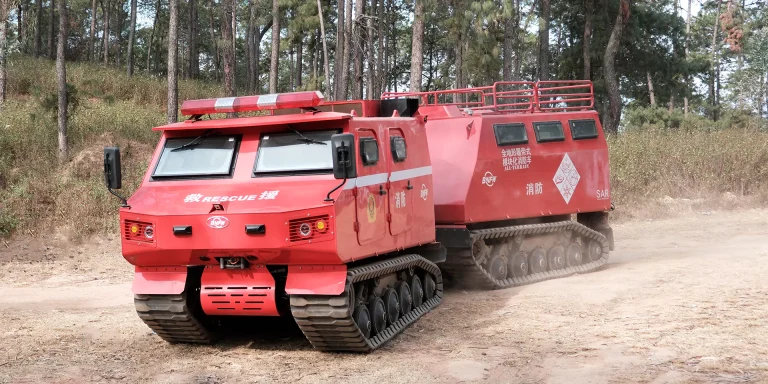
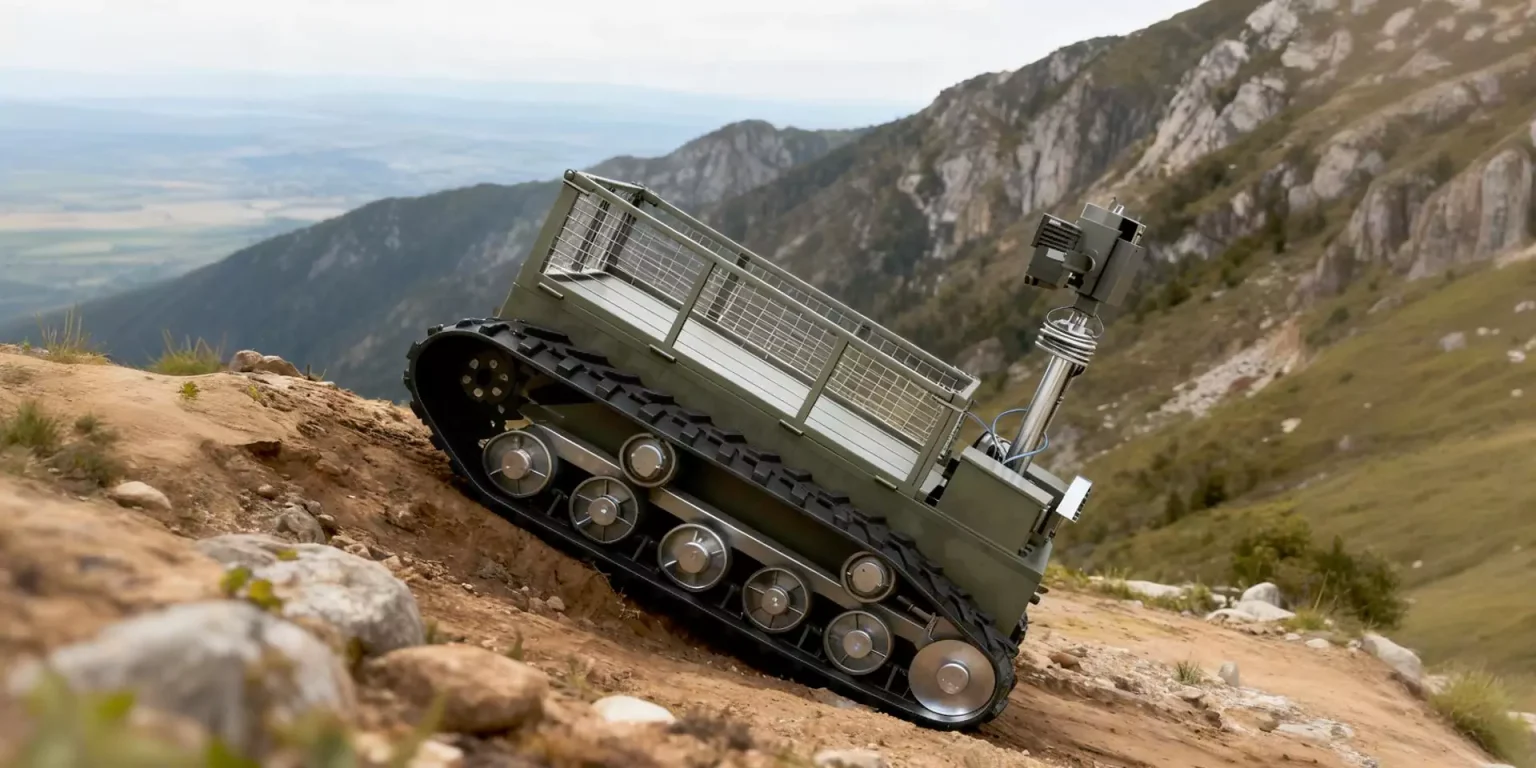
A tracked vehicle uses continuous tracks instead of traditional wheels. These tracks spread the vehicle’s weight over a larger surface area, helping improve traction and reduce ground pressure.
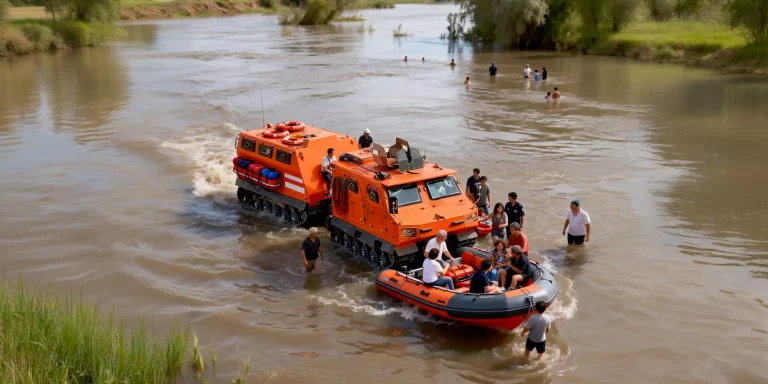
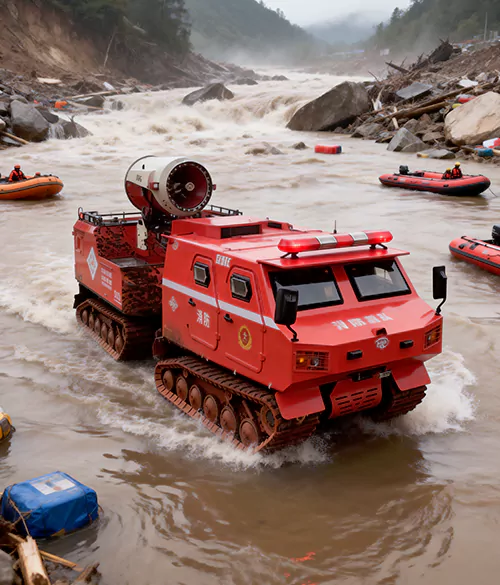
Tracked vehicles are designed for difficult environments such as mud, snow, wetlands, sand, steep slopes, and rough off-road terrain. Common examples include tracked utility vehicles, bulldozers, excavators, and amphibious platforms.
What Is a Wheeled Vehicle?
A wheeled vehicle uses tires for movement and is mainly designed for faster travel on roads and hard surfaces.
Wheeled vehicles are widely used for highway transportation, industrial logistics, urban driving, and general off-road applications. Examples include trucks, SUVs, ATVs, UTVs, and commercial utility vehicles.
Main Differences Between Tracked and Wheeled Vehicles
| Feature | Tracked Vehicles | Wheeled Vehicles |
|---|---|---|
| Terrain Capability | Excellent in soft terrain | Better on hard surfaces |
| Traction | Superior | Moderate |
| Ground Pressure | Lower | Higher |
| Speed | Usually slower | Usually faster |
| Fuel Efficiency | Lower | Higher |
| Maintenance | More complex | Easier |
| Ride Comfort | Rougher | Smoother |
| Best For | Mud, snow, wetlands | Roads and dry terrain |
Advantages of Tracked Vehicles
Tracked vehicles perform exceptionally well in difficult environments because their tracks create a larger contact area with the ground. This improves stability and allows the vehicle to move more effectively across soft or uneven terrain.
They are especially useful in deep mud, snow, wetlands, rocky terrain, and loose sand where wheeled vehicles may struggle to maintain traction.
Advantages of Wheeled Vehicles
Wheeled vehicles are generally faster, more fuel-efficient, and easier to maintain than tracked vehicles. They provide smoother handling and better driving comfort on paved roads and hard terrain.
Because of their lower operating costs and higher travel speed, wheeled vehicles are often preferred for everyday transportation and long-distance mobility.
Why Are Tracked Vehicles Slower?
Tracked vehicles are usually slower because tracks generate more friction and rolling resistance than tires. In addition, tracked systems are often heavier, which can reduce speed and efficiency.
However, this trade-off allows tracked vehicles to deliver much better traction and stability in difficult terrain.
Which Is Better: Tracked or Wheeled?
The better choice depends on the operating environment and application requirements.
Tracked vehicles are ideal for extreme off-road terrain, forestry, firefighting, snow operations, and remote industrial work where traction is critical.
Wheeled vehicles are better suited for road transportation, urban driving, commercial logistics, and applications that require higher speed and lower operating costs.
Conclusion
Tracked and wheeled vehicles each offer unique advantages depending on the terrain and operational needs. Tracked vehicles provide superior traction and off-road capability, while wheeled vehicles deliver better speed, efficiency, and road performance.
Understanding the differences between these two systems can help operators choose the right platform for transportation, industrial operations, emergency response, and extreme-terrain mobility.
For advanced tracked and off-road mobility solutions, contact Jinjia Special Equipment at: panjun@responsemobility.com