










A tracked utility vehicle is a specialized off-road vehicle that uses tracks instead of wheels to travel across difficult terrain. These vehicles are designed to operate in environments where conventional wheeled vehicles may struggle, such as mud, snow, wetlands, sand, forests, and steep slopes.
Tracked utility vehicles are widely used in industries that require reliable mobility, heavy-duty transportation, and access to remote or unstable terrain.
How Does a Tracked Utility Vehicle Work?
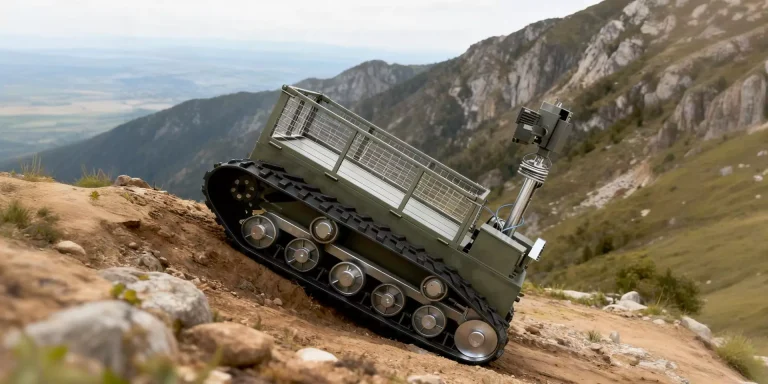
Unlike conventional utility vehicles that rely on wheels, tracked utility vehicles use continuous track systems to distribute the vehicle’s weight more evenly across the ground. This design improves traction, reduces ground pressure, and enhances stability on soft or unstable surfaces.
Because the vehicle’s weight is spread over a larger contact area, tracked vehicles are less likely to sink into mud, snow, or sand. This allows them to maintain mobility in environments where wheeled vehicles may lose traction or become stuck.
Main Uses of Tracked Utility Vehicles
Tracked utility vehicles are designed for demanding off-road applications across a wide range of industries.
Forestry and Wildland Firefighting
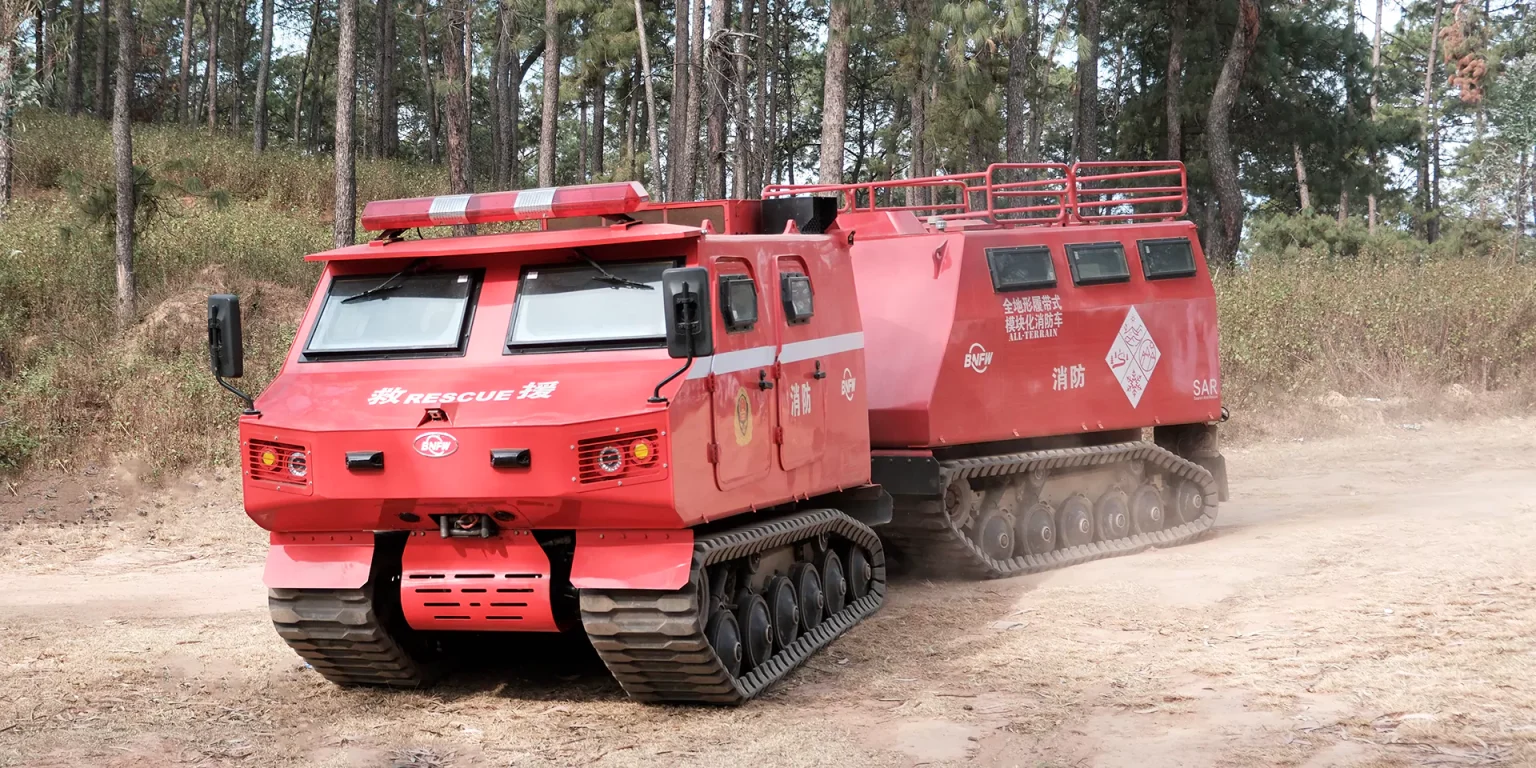
Tracked utility vehicles are commonly used in forests and wildfire zones where terrain is rough, muddy, steep, or damaged by fire. Their off-road capability allows firefighters and emergency teams to transport personnel, water pumps, hoses, fuel, and equipment into remote areas that are difficult to access with conventional trucks.
In wildfire operations, tracked platforms can continue operating in unstable terrain, helping improve mobility and logistical support during emergency response missions.
Search and Rescue Operations
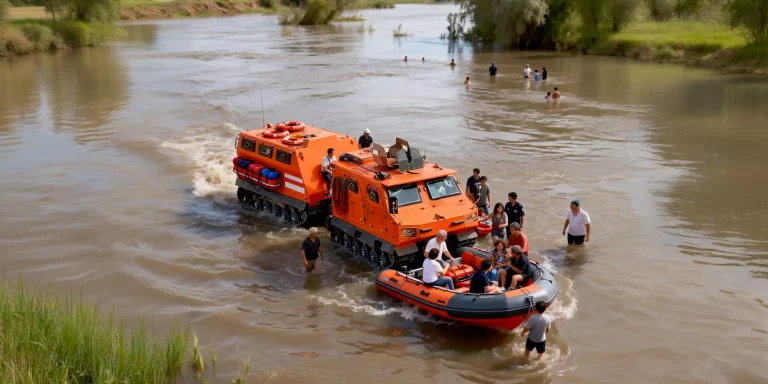
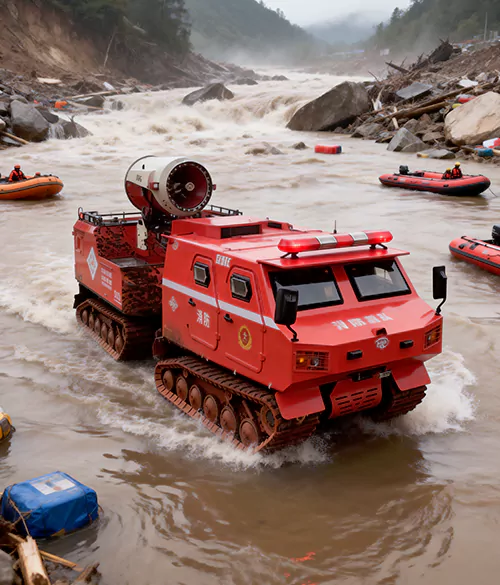
During floods, snowstorms, landslides, and other natural disasters, tracked utility vehicles help rescue teams reach isolated or damaged areas more efficiently. Their ability to travel through flooded roads, deep snow, and unstable terrain makes them valuable for emergency evacuation, medical response, and disaster relief operations.
Many rescue organizations use tracked vehicles to deliver supplies and transport injured individuals in environments where normal transportation infrastructure has been compromised.
Agriculture and Farming
In agriculture, tracked utility vehicles are often used in wet fields and uneven farmland where wheeled vehicles may struggle to maintain traction. Farmers use them to transport tools, feed, materials, and equipment across difficult terrain, especially during rainy or winter conditions.
The lower ground pressure of tracked systems also helps reduce soil damage in certain farming environments.
Construction and Infrastructure Work
Construction sites and infrastructure projects often involve unstable ground conditions, loose soil, mud, and undeveloped terrain. Tracked utility vehicles provide reliable transportation for workers, tools, and materials in these environments.
They are particularly useful in remote construction areas where conventional road access may be limited or unavailable.
Mining and Oil & Gas Operations
Remote industrial sectors such as mining, oil & gas, and energy infrastructure frequently rely on tracked utility vehicles for transportation and logistical support. These vehicles can operate across rocky terrain, wetlands, snow-covered areas, and desert environments where standard vehicles may not perform reliably.
Their durability and off-road capability make them suitable for transporting personnel and equipment in demanding industrial conditions.
Snow and Arctic Operations
Tracked utility vehicles are highly effective in snow and extreme cold environments due to their superior traction and low ground pressure. They are commonly used for snow rescue, mountain transportation, Arctic operations, and winter maintenance work.
In deep snow conditions, tracked systems provide better flotation and stability compared to traditional wheeled vehicles.

Advantages of Tracked Utility Vehicles
Tracked utility vehicles offer several important advantages in extreme terrain environments. Their track systems provide excellent traction and stability on mud, snow, sand, and wetlands, allowing them to operate where wheeled vehicles may become immobilized.
Because the vehicle’s weight is distributed more evenly, tracked platforms generate lower ground pressure, reducing the risk of sinking into soft surfaces. Many tracked utility vehicles are also designed to carry heavy loads, making them suitable for transporting personnel, cargo, tools, and emergency equipment in remote areas.
Their ability to maintain reliable performance in harsh environments makes them valuable for firefighting, rescue operations, industrial transportation, and outdoor utility work.
Tracked Utility Vehicle vs Wheeled Utility Vehicle
| Feature | Tracked Utility Vehicle | Wheeled Utility Vehicle |
|---|---|---|
| Terrain Capability | Excellent in soft terrain | Better on hard surfaces |
| Ground Pressure | Lower | Higher |
| Traction | Superior | Moderate |
| Speed | Usually slower | Usually faster |
| Stability | Better on rough terrain | Better on roads |
| Best For | Mud, snow, wetlands | Roads and dry terrain |
Modern Trends in Tracked Utility Vehicles
Modern tracked utility vehicles are becoming more advanced with the integration of new technologies such as electric drivetrains, hybrid power systems, amphibious capability, autonomous navigation support, and modular mission configurations.
Many next-generation platforms are also equipped with real-time situational awareness and edge command systems that improve communication, coordination, and operational efficiency in remote or emergency environments.
As industries continue to demand greater mobility and adaptability, tracked utility vehicles are evolving into highly versatile platforms for both civilian and industrial applications.
Conclusion
Tracked utility vehicles are designed for environments where conventional wheeled vehicles cannot operate effectively. Their superior traction, low ground pressure, and extreme-terrain mobility make them ideal for firefighting, rescue operations, agriculture, industrial transport, and remote infrastructure work.
As off-road transportation requirements continue to grow across multiple industries, tracked utility vehicles are becoming increasingly important for reliable mobility and mission support in difficult environments.
For advanced tracked mobility solutions and specialized off-road platforms, contact Jinjia Special Equipment at: panjun@responsemobility.com