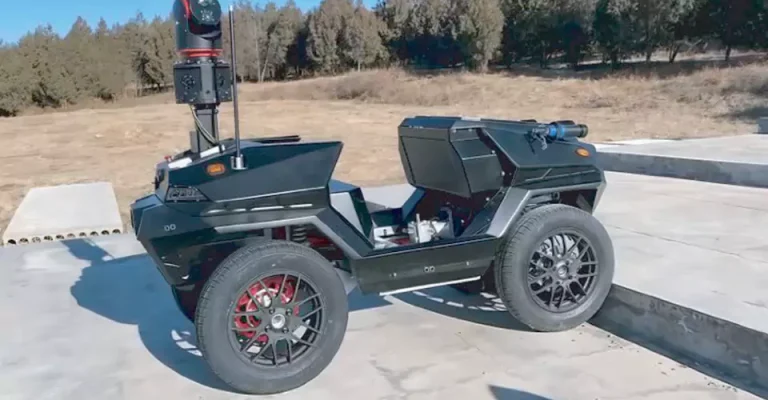











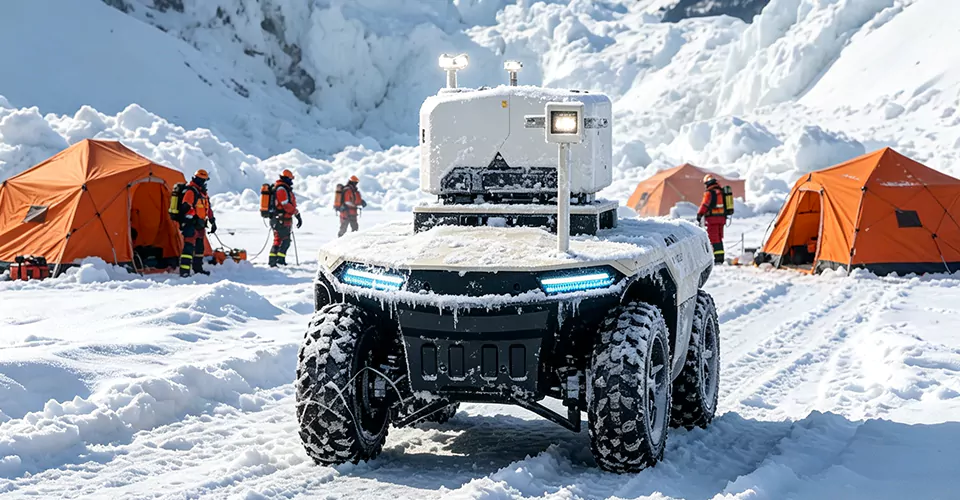
An Unmanned Ground Vehicle (UGV) is a vehicle that operates on land without a human driver onboard. Depending on its design and purpose, a UGV may be remotely controlled by an operator, operate autonomously using sensors and software, or use a combination of both methods.
As advances in robotics, artificial intelligence, and autonomous navigation continue to accelerate, UGVs are becoming increasingly valuable across a wide range of industries. They help organizations improve safety, increase efficiency, reduce labor requirements, and access environments that may be difficult or hazardous for human operators.
How Does a UGV Work?
A UGV combines mobility systems, sensors, communication technologies, and onboard computing to perform tasks without carrying a driver.
Typical components include:
- Cameras and imaging systems
- GPS and navigation modules
- LiDAR and radar sensors
- Wireless communication systems
- Electric or internal combustion power systems
- Onboard computers and control software
Depending on the level of automation, the vehicle may receive commands from a remote operator or make certain navigation and operational decisions independently.
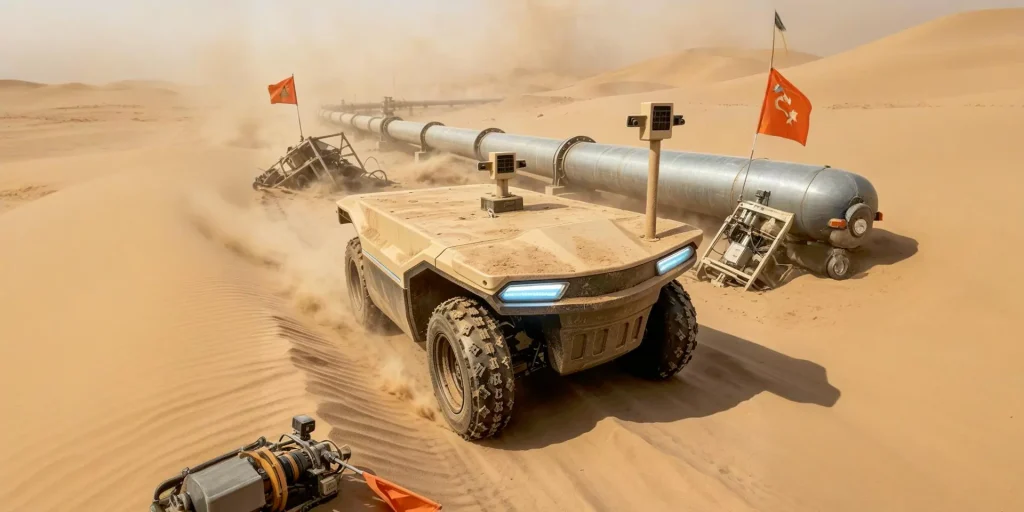
Types of Unmanned Ground Vehicles
Remotely Operated UGVs
These vehicles are controlled by an operator from a safe distance using a wireless communication link.
Common applications include:
- Hazardous material inspection
- Industrial facility monitoring
- Infrastructure assessment
- Emergency response operations
Semi-Autonomous UGVs
Semi-autonomous vehicles can perform certain tasks independently while remaining under human supervision.
Examples include:
- Route following
- Obstacle avoidance
- Automated material transport
- Facility patrol operations
Fully Autonomous UGVs
Fully autonomous UGVs use advanced sensors and software to navigate and complete tasks with minimal human intervention.
Potential applications include:
- Warehouse logistics
- Mining operations
- Agricultural field work
- Large-scale industrial transportation
Benefits of Unmanned Ground Vehicles
Improved Safety
One of the primary advantages of UGVs is their ability to operate in environments that may pose risks to human personnel.
Examples include:
- Disaster zones
- Chemical spill sites
- Mining operations
- Areas with unstable terrain
- Remote inspection locations
Increased Efficiency
UGVs can perform repetitive tasks consistently and often operate for extended periods with limited supervision.
Reduced Operating Costs
Automation can help reduce labor requirements while improving productivity and resource utilization.
Access to Challenging Environments
UGVs can travel through areas that may be difficult, dangerous, or impractical for conventional vehicles and human operators.
Enhanced Data Collection
Modern UGVs can gather valuable information through cameras, sensors, and monitoring equipment, supporting better decision-making and operational planning.
Common Civilian Applications of UGVs
Agriculture
UGVs assist with:
- Crop monitoring
- Precision farming
- Field mapping
- Autonomous material transport
Mining
Mining operators use UGVs to:
- Transport materials
- Conduct site inspections
- Monitor hazardous areas
- Improve worker safety
Construction
Construction companies deploy UGVs for:
- Site surveying
- Material delivery
- Equipment monitoring
- Progress tracking
Warehousing and Logistics
Autonomous ground vehicles are increasingly used to move goods efficiently within distribution centers and manufacturing facilities.
Emergency Response
UGVs can help emergency teams assess hazardous environments and deliver equipment to difficult-to-reach locations.
Conclusion
An Unmanned Ground Vehicle (UGV) is a land-based robotic vehicle capable of operating without a driver onboard. Whether remotely operated, semi-autonomous, or fully autonomous, UGVs are helping organizations improve safety, efficiency, and productivity across industries such as agriculture, construction, mining, logistics, and emergency response.
As autonomous technology continues to evolve, UGVs are expected to play an increasingly important role in modern industrial operations and off-road transportation systems.
For more information about advanced tracked vehicles, unmanned ground vehicle platforms, and customized off-road mobility solutions, contact JINJIA Special Equipment at panjun@responsemobility.com. JINJIA team can provide professional guidance on selecting the right vehicle solution for your operational requirements.