











An articulated tracked vehicle lifecycle cost comparison covers purchase and documented costs of owning, using and ultimately retiring the civilian asset. It is not simply the opening quotation. A credible buyer comparison uses consistent scope, currency and reporting period, distinguishes evidence from assumptions, and leaves missing prices unfilled.
Contents
Understand what the purchase quotation includes
Separate cost categories across the ownership period
Treat interruptions and support expenses separately
Use a blank, comparable scenario worksheet
Know what is still outside the quotation
Frequently asked questions (FAQ)
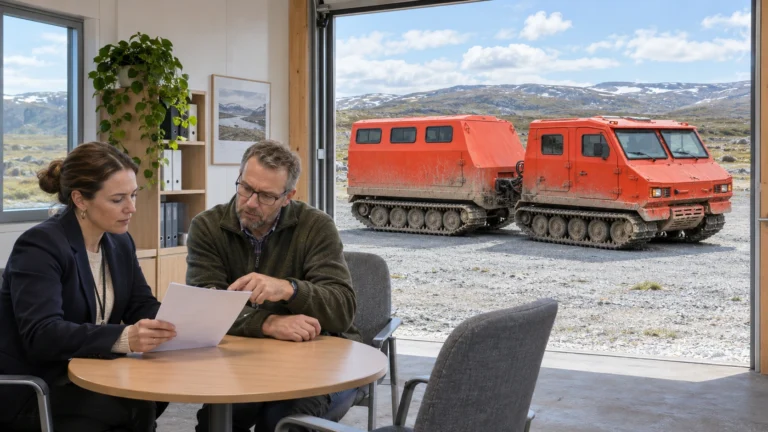
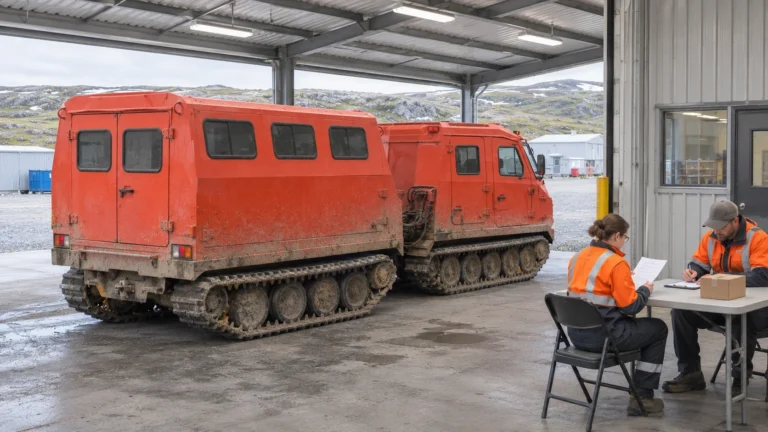
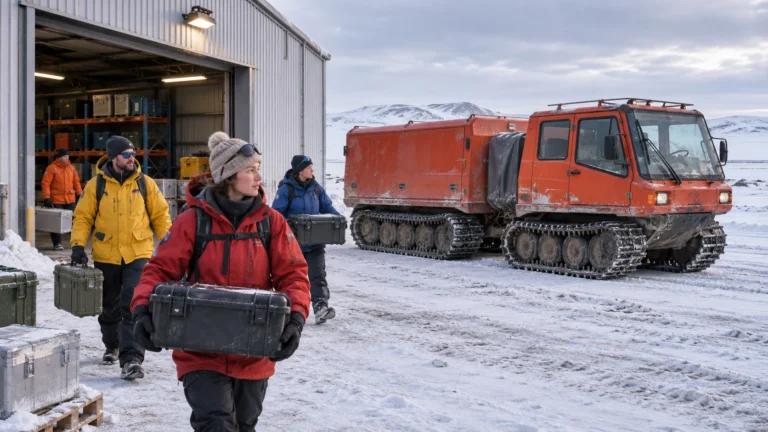
Civilian fleet finance personnel discuss a generic budget document near a window overlooking a parked orange-red two-section vehicle. AI concept of civilian use; not verified JJ117 equipment, delivery or actual event.
Understand what the purchase quotation includes
Two quotations may appear comparable because both name a tracked carrier. However, a quoted price might include only the offered equipment, while a second offer includes contracted delivery, documentation or a service element. Therefore, compare the written scope before comparing the headline amount.
Ask which civil configuration each quote identifies, which services are explicitly included and which items are excluded. For example, an unsigned service brochure attached to a quotation should not automatically be counted as a purchased benefit.
JINJIA publishes its tracked utility vehicle category [S0]. However, actual quotations, inclusions, currency and commercial terms require a written offer. This article neither quotes a JJ117 price nor estimates its technical performance.
Separate cost categories across the ownership period
European Commission guidance on life-cycle costing explains that public buyers may compare acquisition, use, maintenance and end-of-life costs rather than purchase alone [S25]. It is an illustrative accounting framework rather than a price model for every transaction.
For a civilian equipment file, identify the documented purchase amount, contracted delivery and applicable fees, agreed training or documentation charges, recorded operating expenses, service expenses and eventual disposal or other end-of-use costs. In addition, retain the source and date for each line.
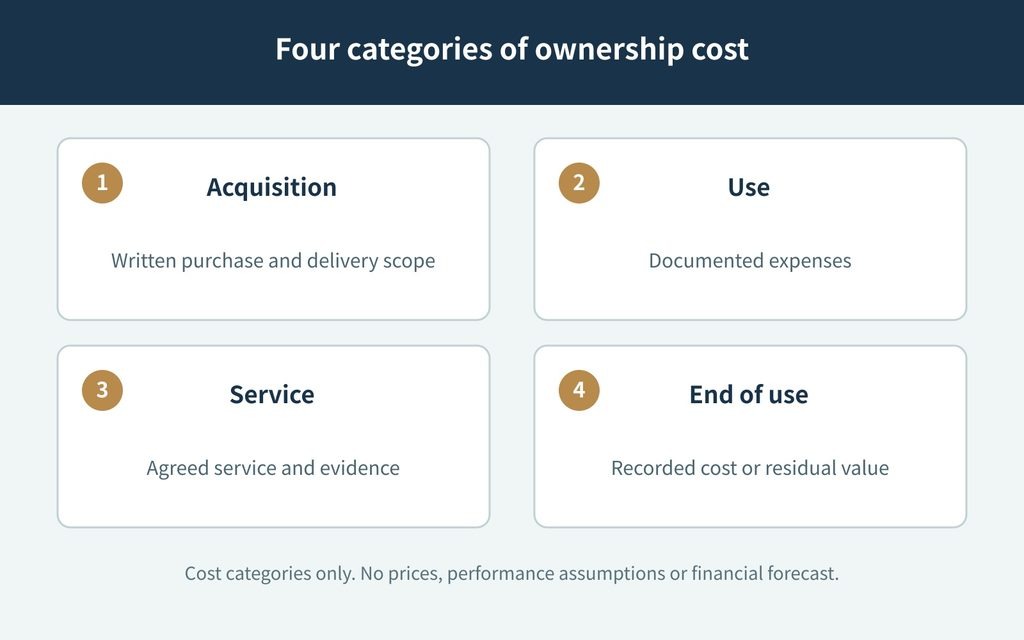
Cost categories only. No prices, performance assumptions or financial forecast.
The four categories in the information graphic show why a purchase price is only one part of the comparison. For example, a documented residual value may reduce a net comparison. However, do not insert a speculative resale value simply to make a quote look more attractive.
Treat interruptions and support expenses separately
An equipment owner might bear administrative or contracted business costs when an asset is unavailable. A recorded interruption cost is different from an unproven vehicle availability claim. Therefore, use the actual organisation’s verified accounting records or agreed support terms, not a generic availability estimate.
A 2015 Australian Antarctic Program article records work on its own tracked vehicles [S09]. It illustrates that owning equipment extends beyond acquisition. However, it gives no JJ117 service cost, lifetime or interruption figure.
A buyer can request a written description of warranty inclusions and exclusions and the intended civilian support relationship. In addition, distinguish an invoiced service from a service that is only proposed. Consequently, avoid counting the same amount in the purchase package and again as a separate expense.
Use a blank, comparable scenario worksheet
The included three-language workbook has a cost comparison sheet for three alternatives, each with nine ordinary accounting rows. The amount inputs are deliberately empty because the buyer must use actual records. Apply the same currency, reference period and scope across the alternatives.
The simple net-total formula adds the eight expense lines and deducts a documented residual-value line. However, the worksheet displays no total until all nine amounts for that scenario are present. Enter zero only when the responsible buyer has evidence that the line is not applicable.
For example, if one proposal includes training while another does not specify it, mark the second entry unresolved; do not replace the unknown with zero. The worksheet is an illustrative undiscounted document comparison, not a financial forecast, tax calculation or investment recommendation.
Know what is still outside the quotation
Comparable totals can support a discussion only when the underlying documents are consistent. Verify accounting treatment, dates, currency conversion and relevant local charges with the organisation’s finance team. Likewise, label estimates and commercial commitments differently.
In particular, no generic article can establish a particular equipment life, fuel expenditure, repair interval, guaranteed availability or future residual value. Record the responsible source for those amounts if they are genuinely relevant to a civilian transaction.
Finally, request general civilian product and commercial documentation through JINJIA [S0C]. Ask for the written scope and exclusions and keep the worksheet as an evidence register. In the end, transparent assumptions matter more than the lowest unsupported number.
Request general civilian quotation and service-scope information.
Frequently asked questions (FAQ)
A: The documented cost of acquisition, use, services and end of use, considered on a consistent basis.
Q: Does the equipment price equal total ownership cost?
A: No. Other agreed and recorded expense categories may apply.
Q: Should missing cost items be set to zero?
A: No. Leave unknown amounts blank. Enter zero only with evidence of non-applicability.
Q: Can historical maintenance records predict JJ117 ownership cost?
A: No. They describe a separate third-party fleet.
Q: Can I compare totals in different currencies or periods?
A: Not directly. Use a consistent basis confirmed by your finance team.
Q: Is the included cost table a JINJIA quotation?
A: No. It is an empty, illustrative document comparison aid.
References and evidence scope
S25: European Commission — Life-cycle costing — Public guidance explaining purchase, use and end-of-life costs; no model-specific prices or financial forecast.
S09: Australian Antarctic Program — New heart for an old faithful (2015) — Historical account of work on its own Antarctic vehicles; no JJ117 maintenance or cost evidence.
S0: JINJIA / Response Mobility — Tracked Utility Vehicle — Manufacturer page; verified public product literature, not proof of the delivered civil configuration.
S0C: JINJIA / Response Mobility — Contact — Public brand contact page.