










A tracked vehicle polar tourism experience connects visitors with the story of polar travel. However, a tourist ride is a public-facing service, not a research expedition or rescue operation. The International Antarctic Centre in Christchurch offers a documented example of a Hägglund visitor experience. This article explains the visitor perspective and the distinction between an attraction, its operator and a vehicle manufacturer.
Contents
What makes polar experience tourism different?
The visitor experience starts before the ride
Separate the visitor service from the equipment brand
Public approvals and credible information
Where to find information and ask questions
Frequently asked questions (FAQ)
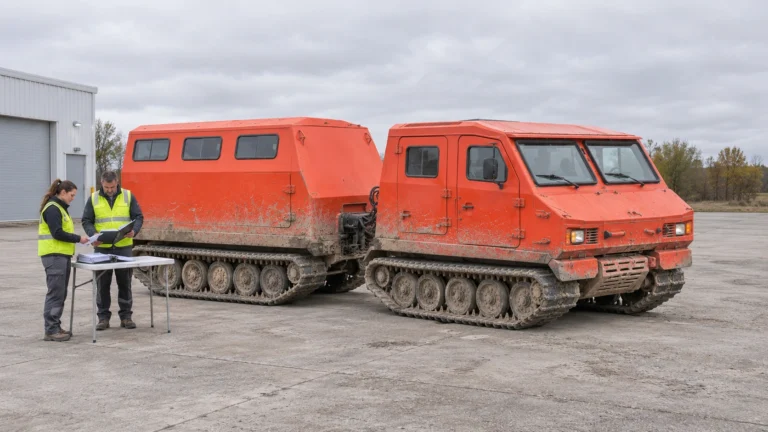
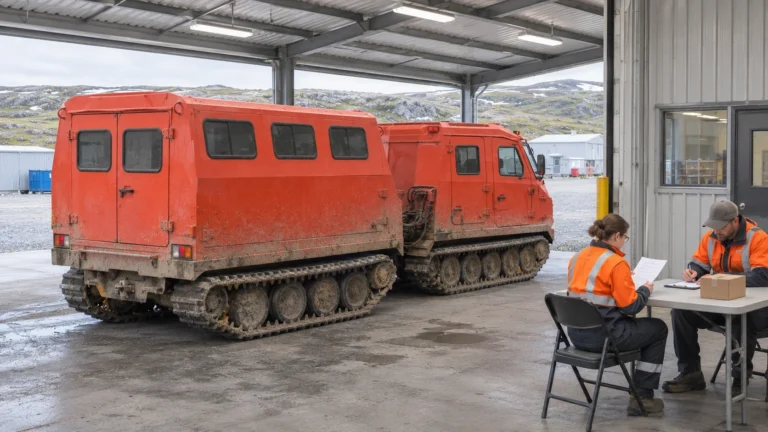
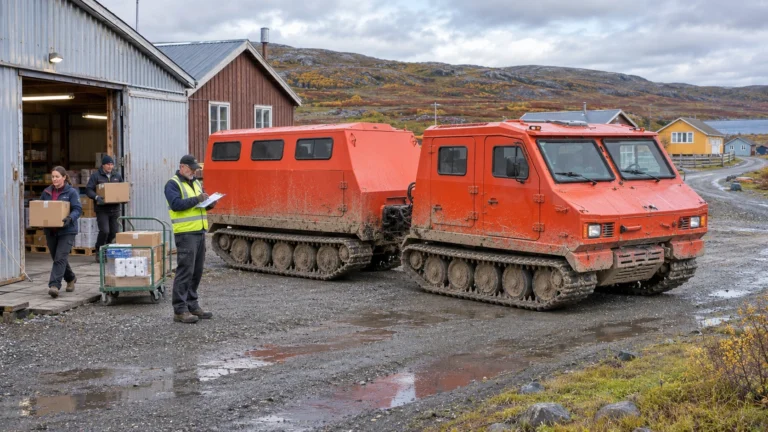
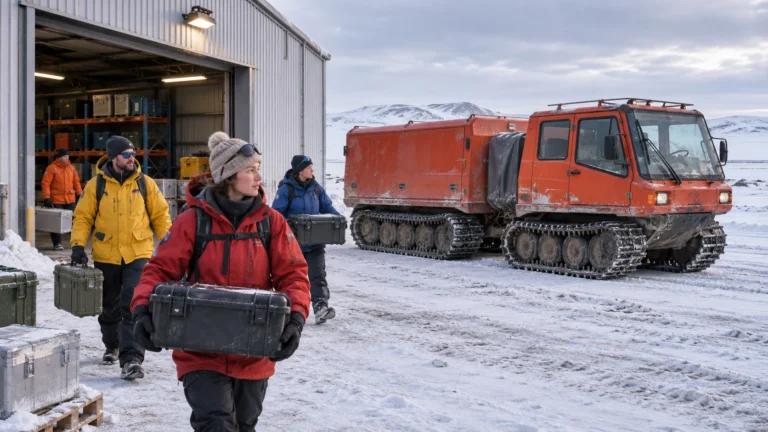
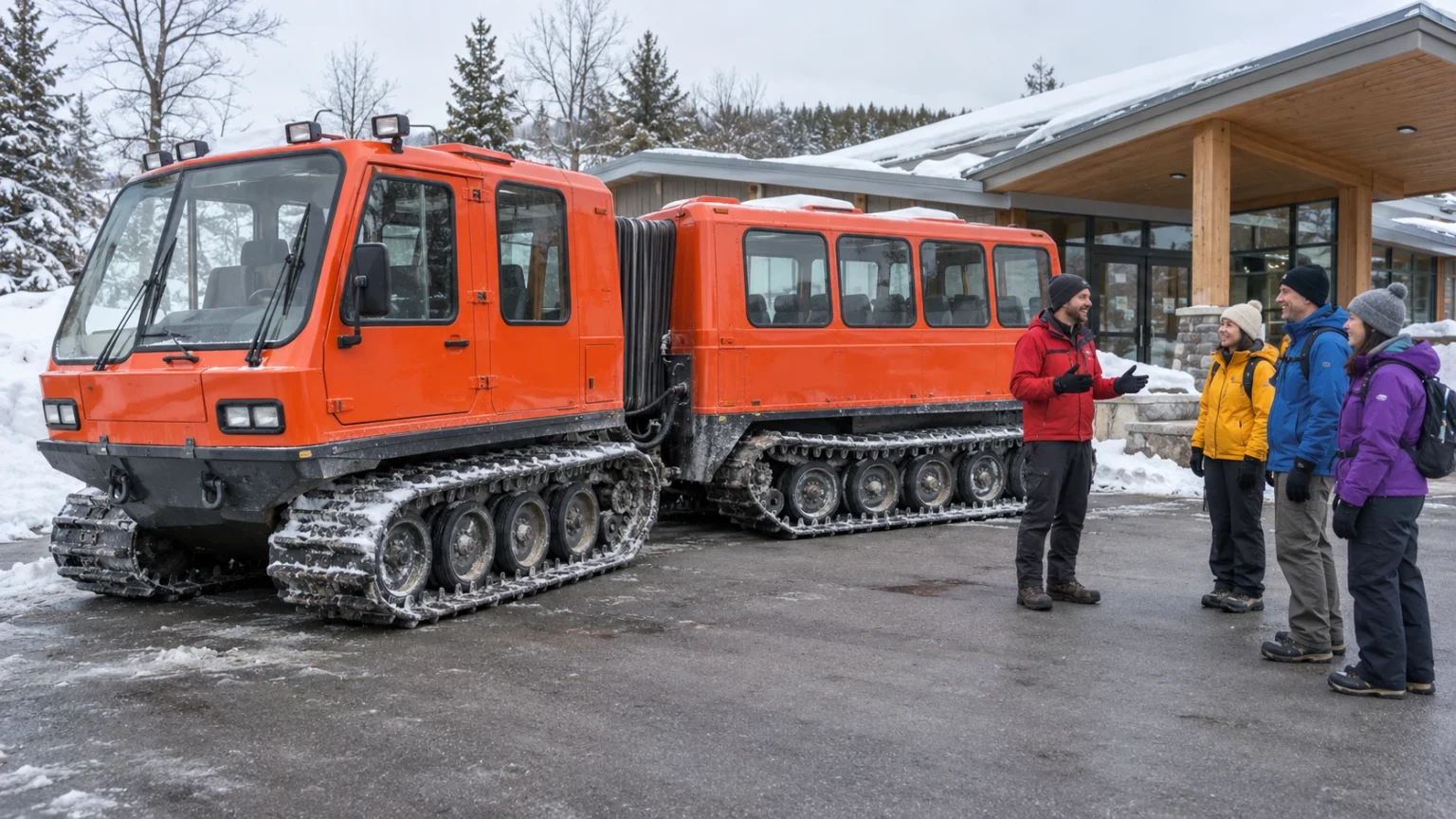
AI concept: visitors and a guide beside an orange two-section tracked carrier at an anonymous winter visitor centre. Not a documented JJ117 deployment.
What makes polar experience tourism different?
Polar travel can be difficult for the public to imagine. Consequently, an interpretive attraction can help people understand the history and human experience of polar science without requiring them to travel to Antarctica. A vehicle becomes part of the educational story alongside exhibits, guides and interpretation.
For example, the International Antarctic Centre in Christchurch, New Zealand, advertises a Hägglund ride as a visitor experience [S1]. Its own article about the mechanics behind the vehicle also illustrates the work supporting an attraction [S2]. These are third-party records, not JINJIA deliveries.
The Christchurch example is a visitor attraction in New Zealand. In contrast, a real Antarctic tourism journey has a different setting and regulatory context. Visitors should distinguish a themed experience from an actual expedition.
The visitor experience starts before the ride
Guests make decisions long before they see a vehicle. Therefore, clear descriptions of the activity, booking arrangements, expected accessibility and the availability of language assistance matter. Accurate information lets visitors decide whether an attraction suits their needs.
Moreover, families, older guests and visitors with disabilities may have different questions. An operator can publish contact details and explain how guests can request reasonable accommodations. A photograph cannot answer those questions on its own.
Information categories are separate. The graphic does not represent an approval or vehicle specification.
After the experience, interpretation can connect what guests observed with the broader history of Antarctic research. For instance, a guide can use photographs, maps and exhibits to explain how scientists live and work. A memorable visit need not depend on claiming extreme vehicle performance.
Separate the visitor service from the equipment brand
A visitor attraction includes more than its vehicle. In particular, the advertised experience, ticket office, staff communications and public feedback are parts of a service. The operator is the appropriate source for questions about that service.
Meanwhile, vehicle literature describes a product or product category. The manufacturer page does not establish that a particular visitor operation has approval. Likewise, the success of a historic attraction does not establish that a different vehicle can reproduce it.
These distinctions are especially useful for travel writers and destination managers. For example, a public-facing information sheet can identify who publishes each claim, when the information was updated and where visitors can ask questions.
Public approvals and credible information
WorkSafe New Zealand maintains a register of adventure activity operators [S3]. However, its framework does not necessarily apply to every attraction or every activity. An entry or a related public record must be understood in its actual jurisdiction and scope.
Accordingly, a visitor should ask the operator which public approvals or other applicable obligations govern the advertised service. The relevant authority and the operator are better sources than a generic vehicle brochure. Do not infer approval from an unrelated historical example.
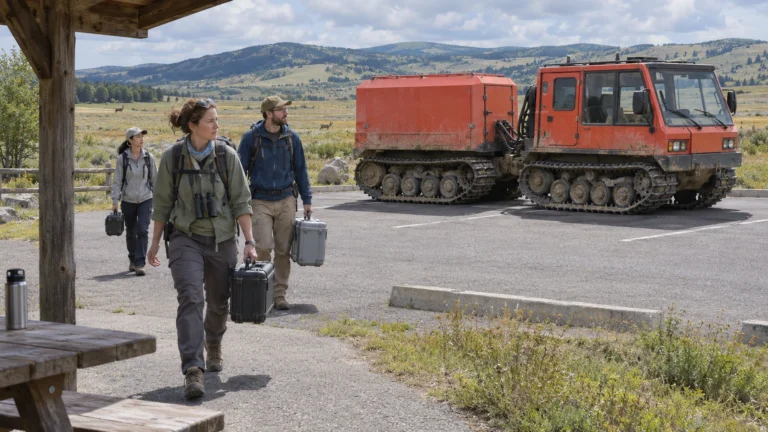
Similarly, a concept illustration must remain clearly labelled. The images and information graphic in this article illustrate a civilian tourism setting and categories of information, rather than documenting a real JJ117 tourist deployment.
Where to find information and ask questions
The International Antarctic Centre provides information about its own experience. For other destinations, consult their official visitor information and local authorities. In addition, check whether the advertised activity and accessibility information are current.
JINJIA publishes general tracked utility vehicle information [S4]. However, that literature is not a statement of tourism certification, passenger suitability or an endorsement by any attraction. No such approval is claimed in this article.
The accompanying visitor information worksheet helps readers organise public-facing questions and identify the publisher of each answer. Finally, contact the appropriate attraction for booking questions and the listed manufacturer contact for general product literature.
Contact JINJIA for general product literature.
Frequently asked questions (FAQ)
A: It is a tourism experience that uses tracked vehicles as part of a polar-themed visit or journey. The particular service depends on the destination and operator.
Q: Is the Christchurch attraction in Antarctica?
A: No. It is a visitor attraction in Christchurch, New Zealand. Its published ride is a third-party example.
Q: Does a historical example prove another product is approved?
A: No. It only establishes the scope of the documented example.
Q: Where should visitors ask about accessibility?
A: The attraction’s official visitor information and staff are the appropriate sources.
Q: Does a manufacturer brochure establish tourism approval?
A: No. Applicable public approvals depend on the actual operator, activity and jurisdiction.
Q: Is the orange carrier shown a documented JJ117 tourism vehicle?
A: No. The AI concept depicts a generic civilian visitor setting; it is not a delivery or an approved configuration.
References and evidence scope
S1: International Antarctic Centre — Hägglund rides — Operator description of its own attraction.
S2: International Antarctic Centre — The mechanics behind the Hägglund — Operator article about the support of its ride.
S3: WorkSafe New Zealand — Register of adventure activity operators — Public regulatory register; verify applicability and scope.
S4: JINJIA / Response Mobility — Tracked Utility Vehicle — Manufacturer literature, not a visitor-service approval.