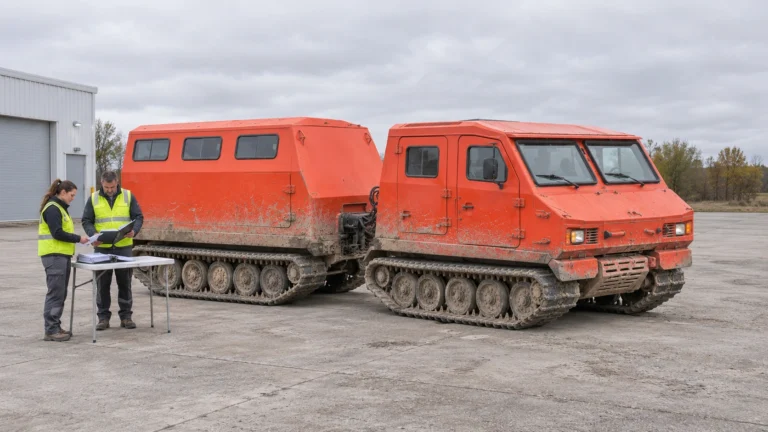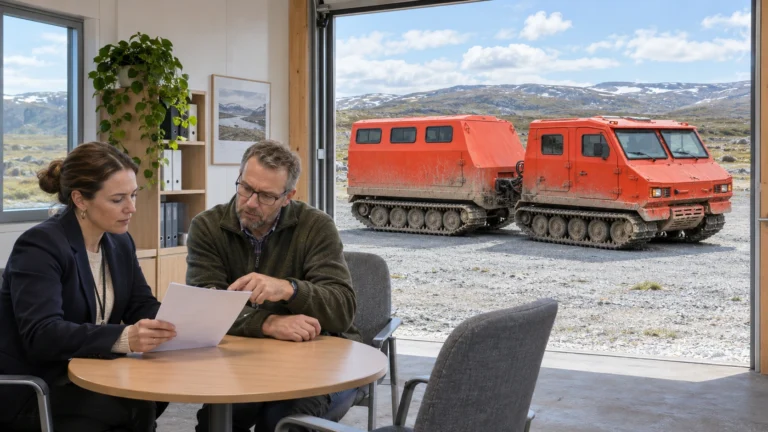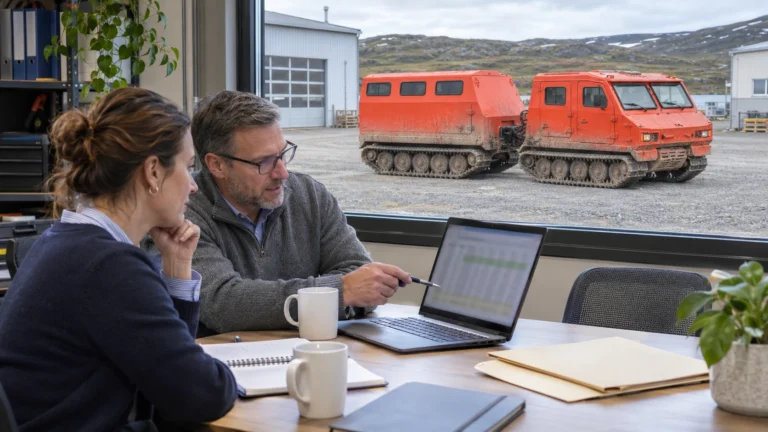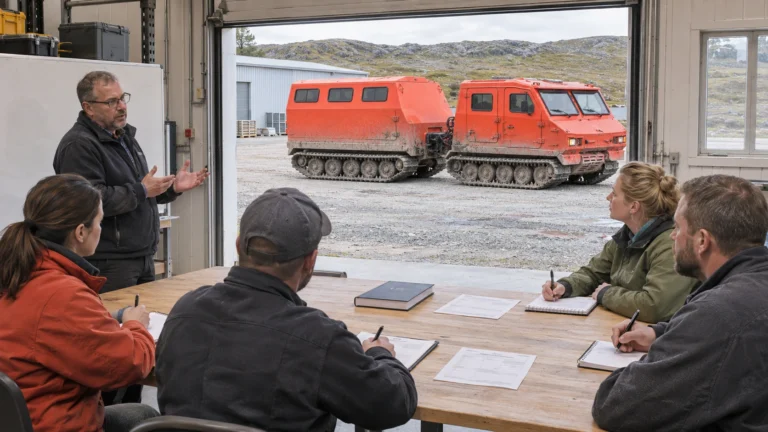











Tracked vehicles for remote community supplies are a transport category to consider for a properly authorised civilian service. However, recurring deliveries differ from a one-off disaster response: a community needs a dependable receiving organisation, a defined list of everyday goods and evidence of the agreed service. The vehicle itself does not determine whether the whole programme is feasible.
Contents
Recurring deliveries are different from emergency relief
Define the everyday goods and service boundary
Handover, public service and responsibilities
What evidence establishes a feasible civilian project?
Prepare the purchasing enquiry around the service
Frequently asked questions (FAQ)
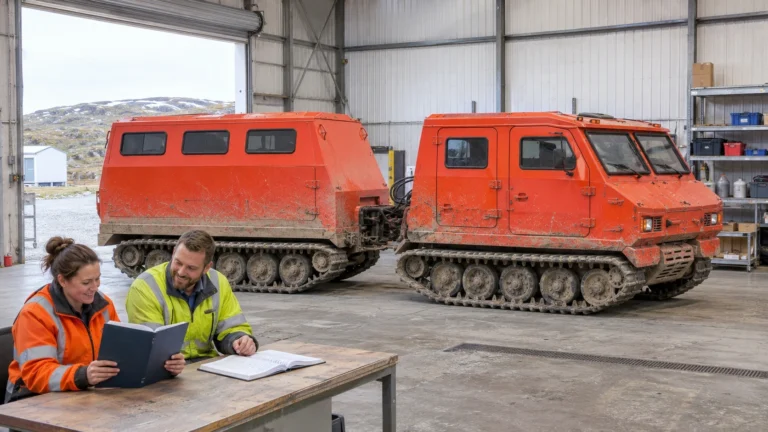
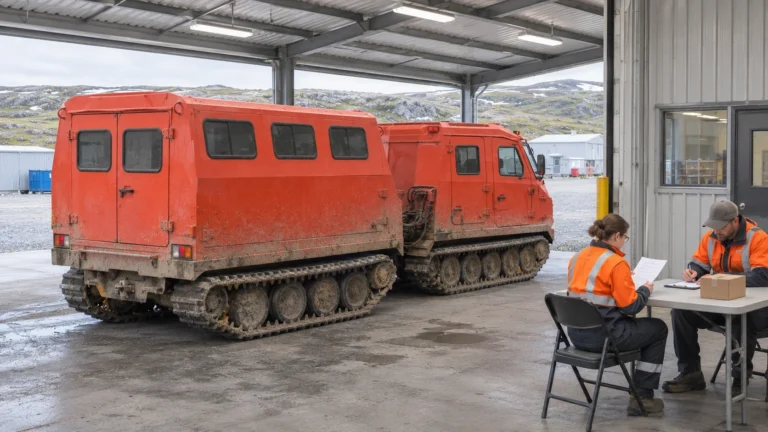
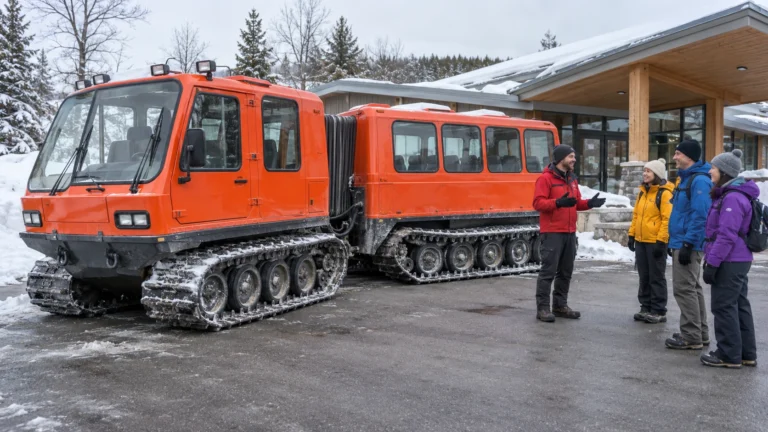
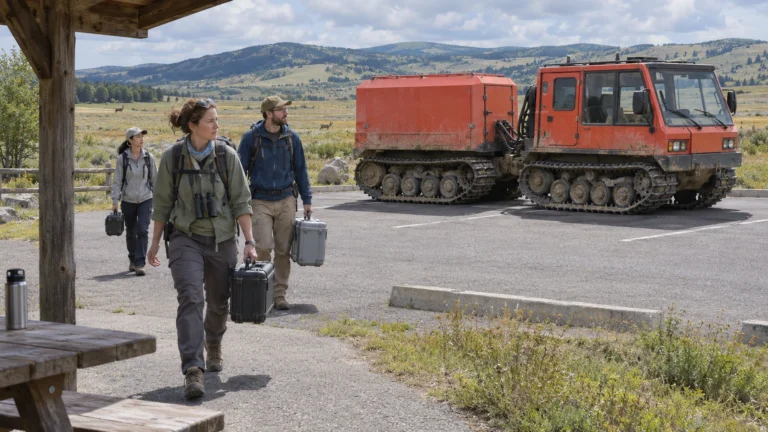
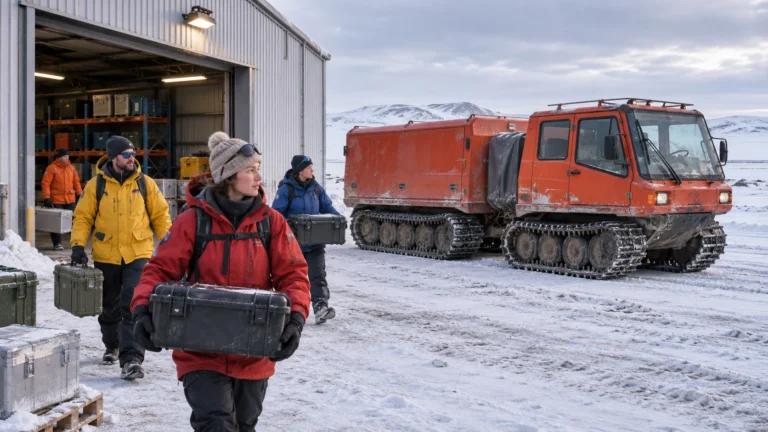
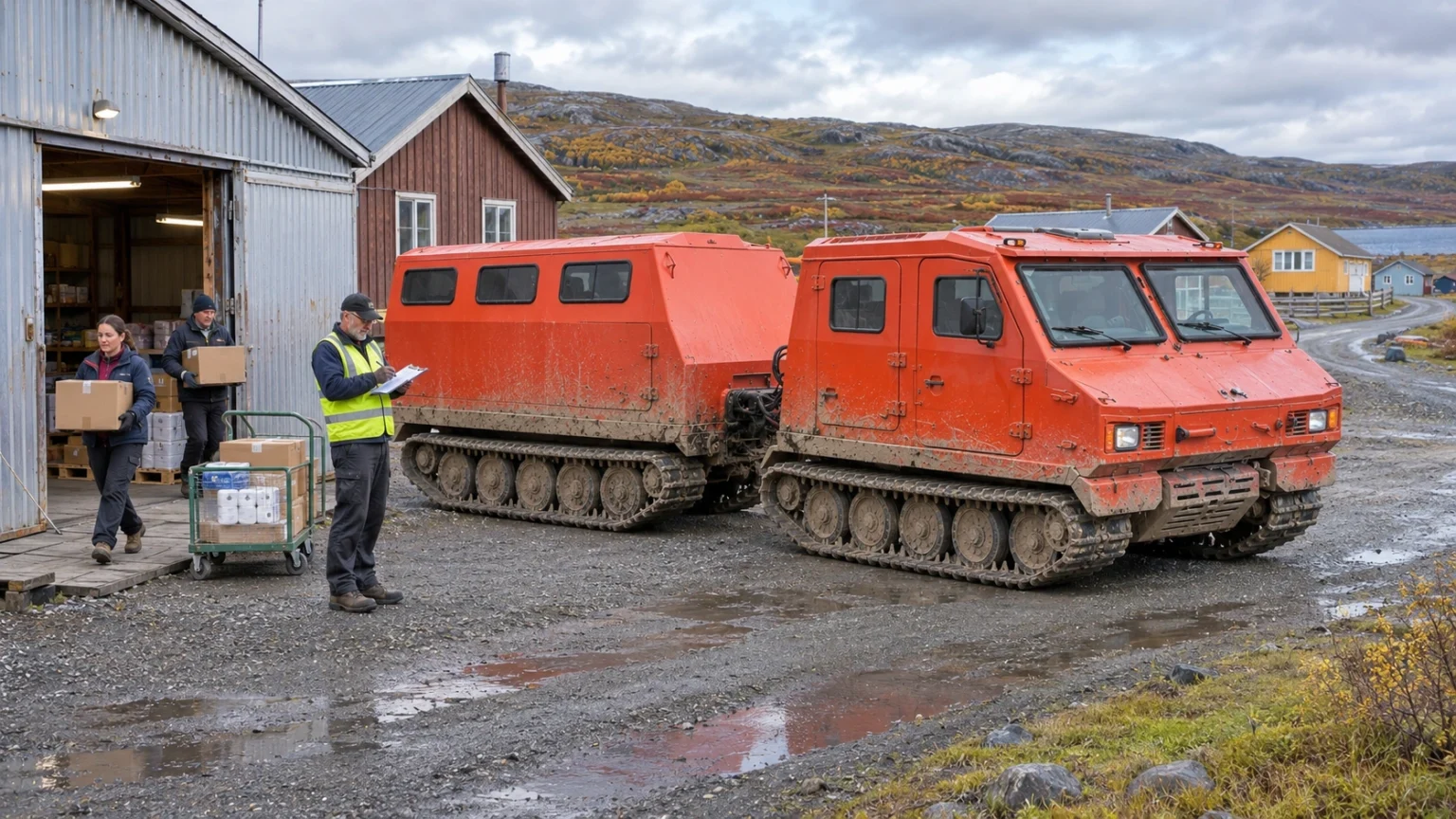
Community workers handle ordinary closed boxes beside a parked orange-red two-section carrier at a rural warehouse. AI concept of civilian use; not verified JJ117 equipment, delivery or actual event.
Recurring deliveries are different from emergency relief
A road disruption may create an immediate need for assistance. Routine community supply, in contrast, is an ongoing public or commercial service. It might involve a local shop, community centre or household goods provider. Therefore, start with the service that residents actually need, not simply a picture of extreme terrain.
Canada’s Nutrition North programme offers a useful civilian policy example. Specifically, its published description concerns access to food and other eligible essentials in northern communities [S22]. However, it neither identifies JJ117 nor prescribes a tracked vehicle. Instead, it highlights the continuing need for everyday goods.
Hydrus Innovations lists personnel and freight services among its Hägglunds fleet activities [S10]. Meanwhile, Bay Search and Rescue describes assistance during snow-related emergencies [S12]. The first explains a category of civilian commercial service; the second concerns emergency response. Yet neither source proves a recurring village delivery by JINJIA.
Define the everyday goods and service boundary
A community organisation can describe ordinary household supplies by category: shelf-stable packaged food, hygiene products, bedding and other accepted non-specialist items. In addition, it can identify requests that are outside the ordinary service, including goods that require separately qualified handling.
Separate requests for ordinary staff transport from those for goods. For example, a community employee attending a service appointment is not the same requirement as a box of household items. Therefore, the product literature should identify the actual offered civil configuration without treating a concept cabin as approval for passengers.
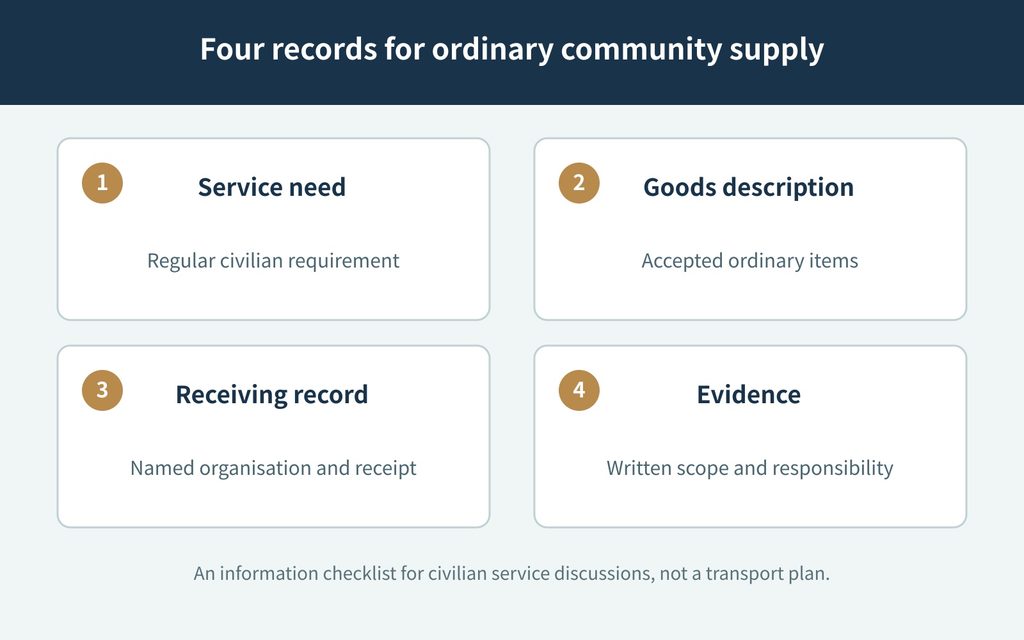
An information checklist for civilian service discussions, not a transport plan.
The companion information graphic groups four records that give the service a clear description. These categories are deliberately non-numeric. Instead, record the community’s actual requested delivery frequency in its own administrative worksheet. Do not turn a product image into a delivery promise.
Handover, public service and responsibilities
A receipt confirms that the receiving organisation recorded certain goods. However, a receipt cannot alone confirm a completed public service or a vehicle’s suitability. Consequently, keep the receiver’s acknowledgement separate from any equipment acceptance document.
The community organisation owns its description of what it accepts. The transport provider supplies its agreed service information, and the relevant public or site authority determines applicable permissions. For unusual goods, the appropriately qualified organisation must supply the relevant conditions.
Use a simple record showing the requesting organisation, receiving role, ordinary goods category and reference to the acknowledgement. As a result, the reader can distinguish an unresolved request from a completed handover. This distinction is especially useful when several community organisations share one supplier.
What evidence establishes a feasible civilian project?
The programme owner should be able to point to an actual civilian service requirement, an authorised receiver and an agreed scope. Moreover, commercial literature, purchase terms and confirmation of the required permissions answer different questions; record them separately.
Consider a hypothetical rural community store requesting ordinary packaged groceries and hygiene items. Its buyer may know the desired receiving schedule but lack a signed service proposal. In that case, the schedule belongs in the request column and the provider’s commitment remains unconfirmed. No estimated vehicle capacity or journey time is implied.
JINJIA publishes its tracked utility vehicle category [S0]. Nevertheless, an advertised category does not establish a local freight service, permitted passenger accommodation or performance in a specific environment. Those matters require the actual offered civil configuration and documentary approvals.
Prepare the purchasing enquiry around the service
The worksheet accompanying this article records the civilian purpose, requesting and receiving organisations, goods categories, desired delivery frequency, scope exclusions and responsible parties. The actual organisation therefore fills its own administrative record. Review it as a discussion record rather than a transport schedule.
When comparing offers, distinguish a vehicle purchase from a contract for an ongoing supply service. However, the documents supporting one are not automatically evidence for the other. Similarly, an occasional relief deployment is not a baseline for ordinary recurring service costs.
Finally, ask JINJIA for general civilian product literature and a written description of the proposed scope [S0C]. Keep outstanding approvals and information visible. The objective is a clear enquiry that the responsible organisations can assess without overstating what any carrier has already delivered.
Request general information for your routine civilian supply project.
Frequently asked questions (FAQ)
A: They are a vehicle category considered for lawful civilian transport; the continuing service depends on its actual provider, receiving organisation and permissions.
Q: How does routine supply differ from disaster relief?
A: Routine supply concerns repeated everyday service. Relief addresses exceptional needs during or after an emergency.
Q: What ordinary goods should the request describe?
A: Describe accepted categories such as packaged household goods and hygiene items; special handling belongs under separate qualified arrangements.
Q: Does a receipt confirm vehicle approval?
A: No. A receipt records goods received. Equipment approval and acceptance require their own evidence.
Q: Does Nutrition North Canada establish a JJ117 project?
A: No. It documents a community access programme, not use or delivery of JJ117.
Q: Can a supplier promise a delivery frequency from a brochure?
A: No. The buyer’s requirement and an agreed service commitment must remain separate.
References and evidence scope
S22: Government of Canada — How Nutrition North Canada works — A civilian programme for access to everyday necessities; it does not establish use of a particular tracked carrier.
S10: Hydrus Innovations — Hagglunds fleet — Operator describes civilian personnel and freight services; not an evidenced recurring village project or a JJ117 record.
S12: Bay Search and Rescue — Skills — Charity account of snow-related assistance; an emergency example, not routine freight service.
S0: JINJIA / Response Mobility — Tracked Utility Vehicle — Manufacturer page; verified public product literature, not proof of the delivered civil configuration.
S0C: JINJIA / Response Mobility — Contact — Public brand contact page.