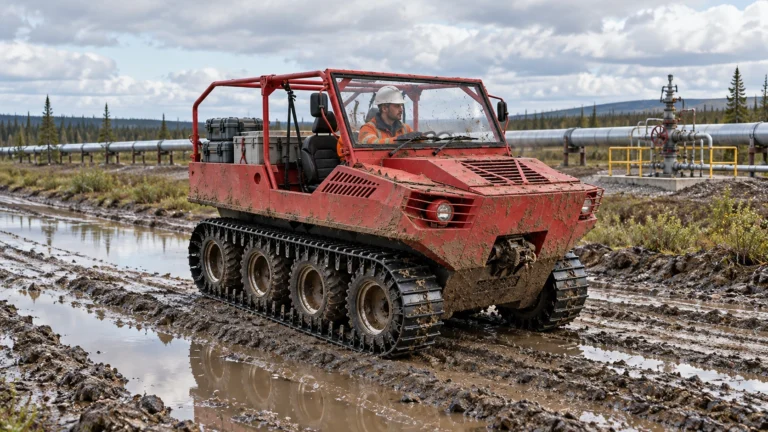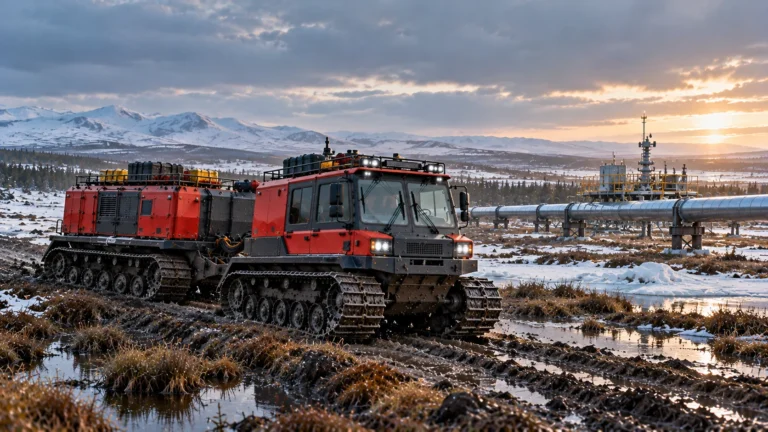


Choose the JINJIA 88E or 88D around the work that must happen at the destination and the fuel your operation can supply. The 88E combines gasoline-fuelled generation with electric propulsion and stated external-power capability. The 88D uses a diesel powertrain with hydromechanical steering. Compare their mission configurations separately, particularly when personnel, equipment and water crossings share the same route. [1–3]
1. Start with the mission and the vehicle type
A range extended vs diesel 8×8 comparison begins with two questions: does the crew need electrical power while travelling or working, and can the operating base reliably supply gasoline or diesel? Specify journey duration, stationary work, equipment demand and the return reserve before comparing purchase configurations.
Consider a utility crew carrying tools to a remote inspection point. If the crew must operate electrical equipment there, assess the complete power arrangement. If the task mainly transports people and tools within a diesel-supported operation, assess the 88D against that transport brief. These are planning examples, not customer deployments or a finding that either platform is universally better.
2. Identify what the evidence actually supports
For the 88E, JINJIA has confirmed the powertrain architecture and battery role. The public product page states external output up to 5 kW while driving, 20 kW continuously while stationary and 30 kW peak. These are company statements, not independent comparative test results. [1, 2]
For the 88D, the customer technical specification, version 1.0 dated 8 September 2026, documents the diesel engine, transmission, seating and base-vehicle parameters. Its figures remain subject to the specified configuration and test conditions. A published specification does not by itself establish a certification, a delivered customer configuration or performance under every operating condition. [3]
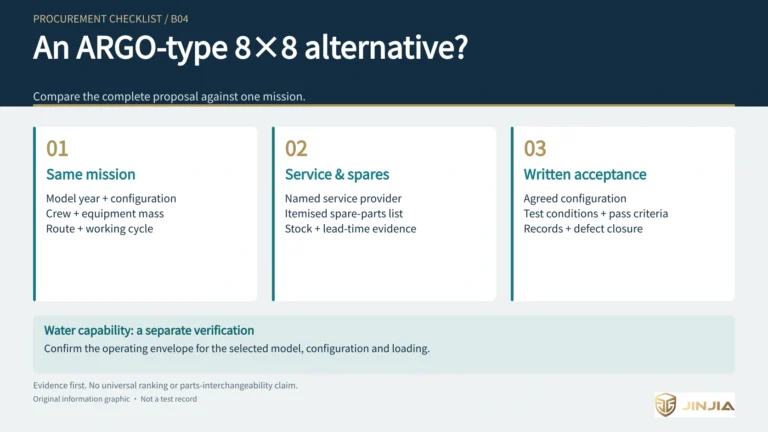
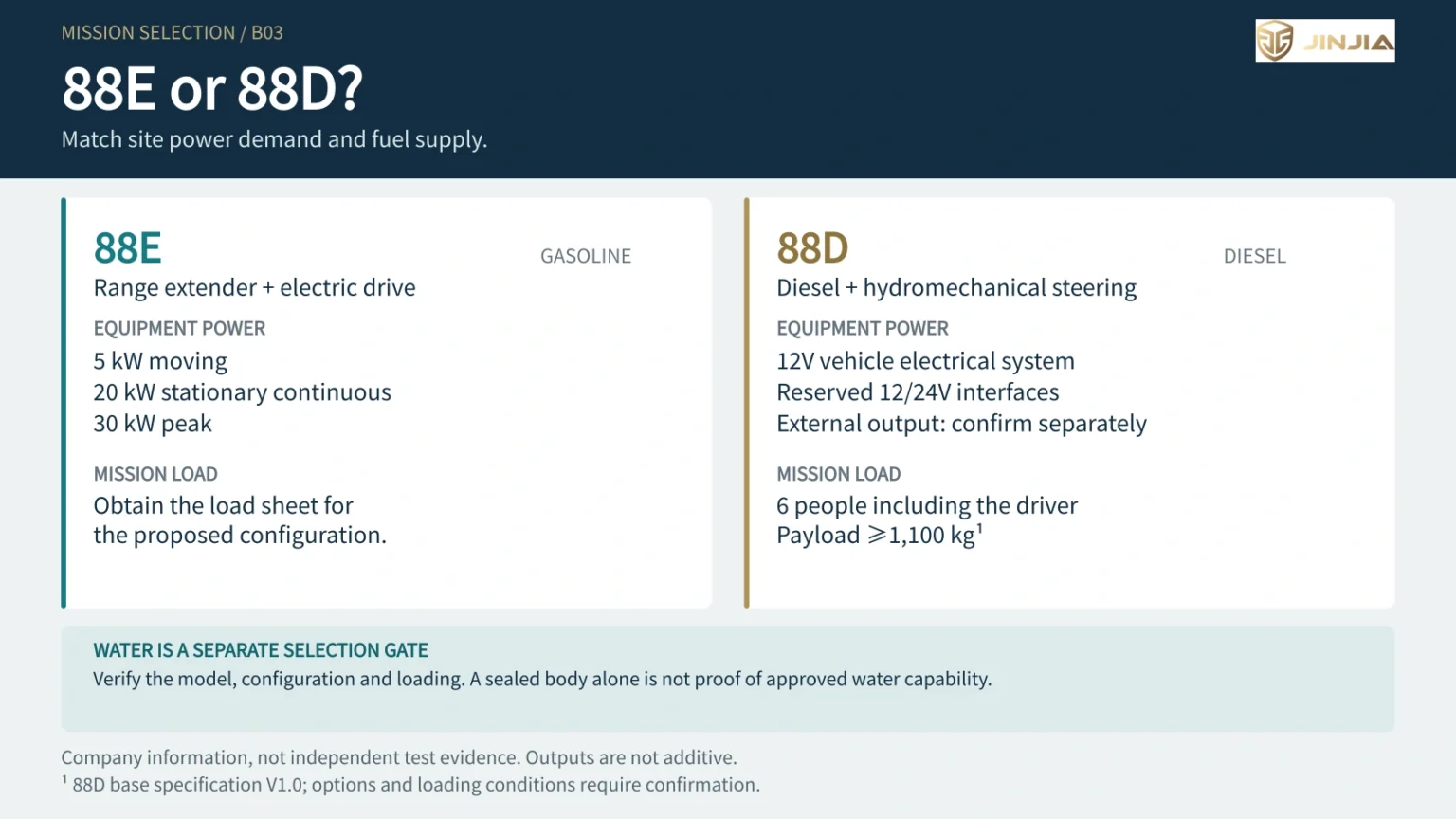
Original selection infographic: compare 88E gasoline range-extended drive and stated external output with 88D diesel drive and reserved electrical interfaces. Validate mission loading and water capability separately. Company information; not a test record.
3. Check each powertrain and power interface
The 88E uses gasoline to run a range extender that generates electricity. Two motors provide land propulsion; a third serves water propulsion. Its approximately 2 kWh battery is a buffer, and the mains-charging connection is mainly intended to replenish a depleted battery. Do not infer a long battery-only operating range from that connection. [2]
The 88D has a 1.408-litre, four-cylinder turbocharged, intercooled diesel engine and a dual-flow hydromechanical steering/transmission system. Engine output, torque and fuel-consumption figures require confirmation for the proposed variant. [3, pp. 3–5]
| Selection question | 88E | 88D |
| Fuel organisation | Gasoline supply for the range extender | Diesel supply for the engine |
| Equipment electricity | Stated 5 kW moving; 20 kW stationary continuous; 30 kW peak | 12V vehicle system; reserved 12/24V mission interfaces |
| What remains to be checked? | Voltage, connectors, load compatibility, duty cycle and peak duration | Available external output and any additional power installation |
The three 88E output figures describe different operating conditions; they are not additive. The 88D specification lists a 1.2 kW alternator, which is not a guaranteed net external-power outlet. Do not transfer the 88E output figures to the 88D. [1–3]
4. Confirm mission load separately
The 88D specification lists six occupants including the driver in a 2+4 layout, base curb mass ≤1,750 kg without optional equipment, and payload ≥1,100 kg. Confirm the mass definition, fitted options and loading conditions in the quotation. An eight-person configuration requires a separate engineering review; it is not the documented standard arrangement. [3, pp. 2, 6–9]
For a planning example only, six people at an assumed 100 kg each consume 600 kg. Against a 1,100 kg payload planning baseline, that leaves 500 kg before other counted items and options. Clothing, personal protective equipment, tools, spares and installed equipment can change the result. This arithmetic is not an approved loading plan.
Obtain the corresponding approved load sheet for the proposed 88E. Compare the same occupants, equipment and route, rather than assuming identical payload because both vehicles have eight wheels. Neither this comparison nor the 88D curb-mass figure establishes an approved gross vehicle weight.
5. Validate water capability by model
The 88E has a dedicated water-propulsion motor in its confirmed architecture. That identifies a propulsion function; it does not establish the permitted water payload, operating conditions or an approved crossing plan for the selected configuration. [2]
The 88D specification describes a sealed, boat-shaped body, but does not supply approved wading depth, water payload, freeboard, stability limits or water speed. A sealed body alone is insufficient evidence for an operational flotation claim. Do not describe the standard six-person land seating as approval to carry six people afloat. [3, pp. 3, 7]
If water travel is essential, make configuration-specific documentation and an agreed acceptance demonstration a selection gate. If that evidence is unavailable, plan a land route or separately validated water transport. Neither platform should be assigned a water mission from an illustration.
6. Define boundaries and compare alternatives
No like-for-like test supplied for this article establishes which platform has lower fuel cost, longer range, less noise or better productivity. Build a representative duty cycle and request measured results. The 88D document’s −10°C to +55°C operating range is a published specification, not proof of independent hot-climate certification. [3, p. 6]
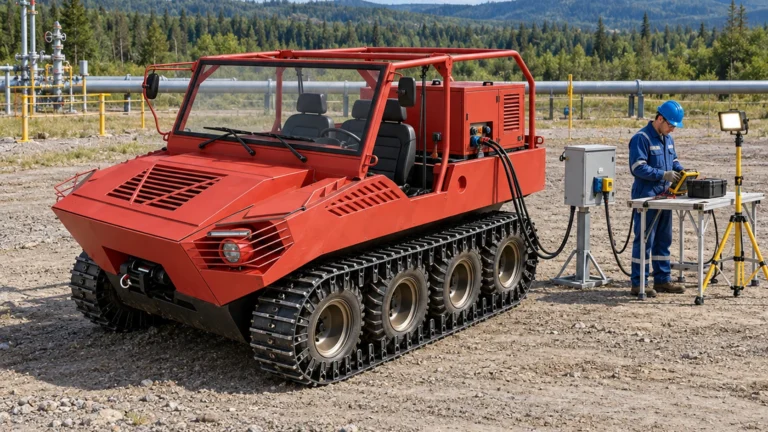
Where external electricity matters, compare the 88E arrangement with the complete alternative: a transport vehicle plus a suitably specified power source. Include installation mass, interfaces, starting demand, work duration, refuelling and maintenance support. A separately mounted generator on an 88D would be an additional configuration requiring integration review. Do not claim hazardous-area suitability without the applicable evidence.
7. Use a one-page mission brief
Before requesting a quotation, provide: (1) route and surface conditions; (2) occupants including the driver and their equipped mass; (3) equipment dimensions, mass and mounting needs; (4) running and starting electrical demand, voltage and connectors; (5) travel and stationary working time; (6) gasoline or diesel availability and refuelling arrangements; (7) any proposed water segment; and (8) acceptance criteria, local servicing and return reserve.
Ask for a separate configuration sheet for each candidate. The outcome should be a documented match between mission and vehicle, with unresolved requirements visible before an order.
For the architecture behind this comparison, read how a range-extended 8×8 works. Related topics in this series cover payload planning, acceptance trials and procurement specifications. Send your route, mission load and working conditions for an 8×8 configuration discussion.
Frequently asked questions (FAQ)
A: Assess the 88E against the actual equipment load and duty cycle, using the company-stated output conditions. Compare it with a fully specified alternative power arrangement. Output ratings alone do not establish compatibility.
Q: Can the 88D provide the same 20 kW stationary output?
A: That is not established in the 88D specification. Its vehicle electrical system and reserved interfaces do not substantiate the 88E external-output figures. Request a separate power-system proposal.
Q: Does the 88D’s sealed body prove it can carry six people across water?
A: No. The documented six-person layout is not an approved afloat loading condition. Water capability and the selected loading arrangement require separate verification.
Sources and further information
[1] JINJIA, Amphibious Utility Vehicle. Public company product page, checked 9 November 2026; used here for the 88E external-output statements.
[2] JINJIA company-confirmed 88E product baseline: gasoline range extender, two land-drive motors and one water-propulsion motor, approximately 2 kWh buffer battery and replenishment charging. Company information; not independent test evidence.
[3] JINJIA, 88D Diesel 8×8 Technical Specification, version 1.0, 8 September 2026, pp. 2–9. Manufacturer technical document supplied for customer evaluation; request the current approved configuration sheet before procurement.