

An oilfield UGV/AGV pilot should answer a purchasing question: can the selected vehicle, instruments and operating method deliver a useful task on this site? For a JINJIA Delta evaluation, agree the task, configuration and acceptance evidence before the vehicle arrives. Then use representative runs to decide whether to proceed, change the scope or stop.
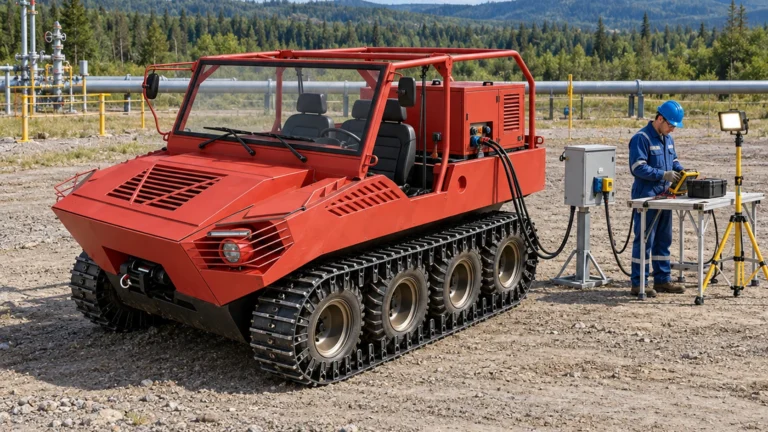
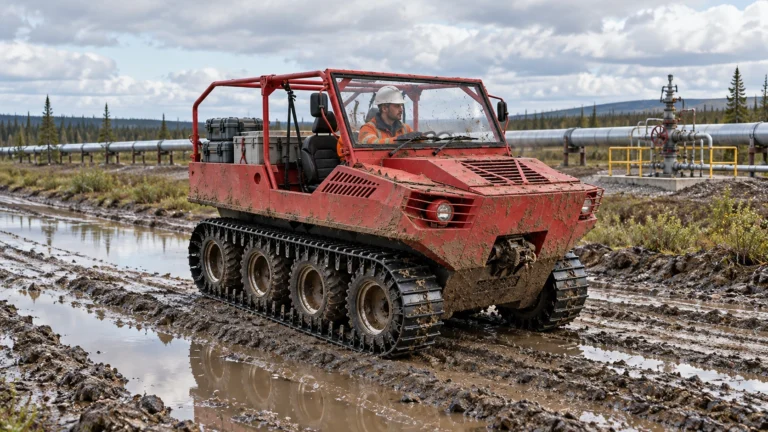
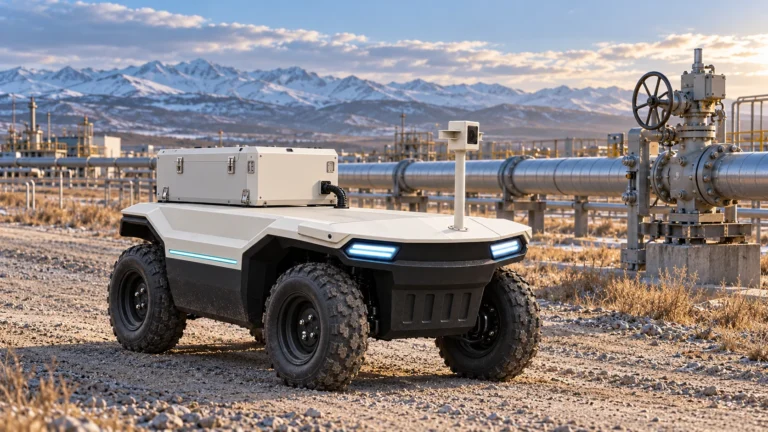
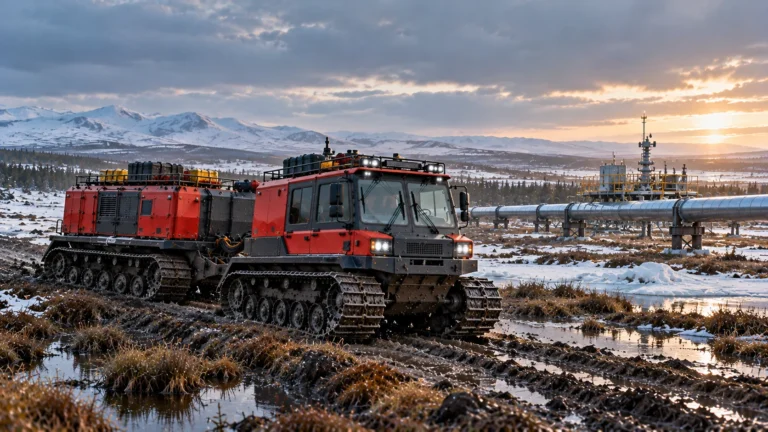
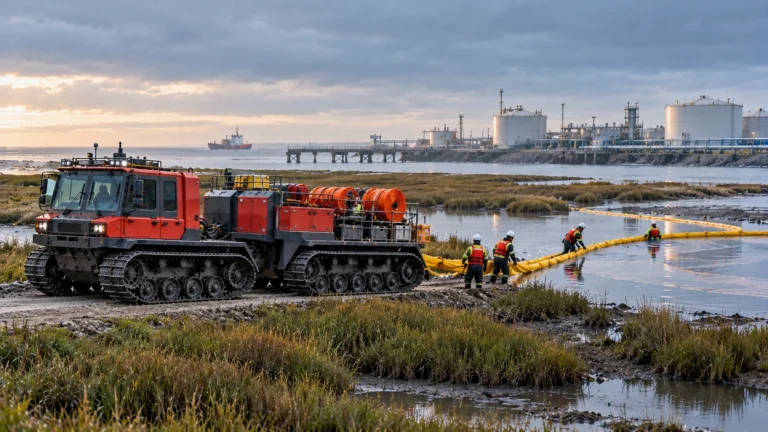
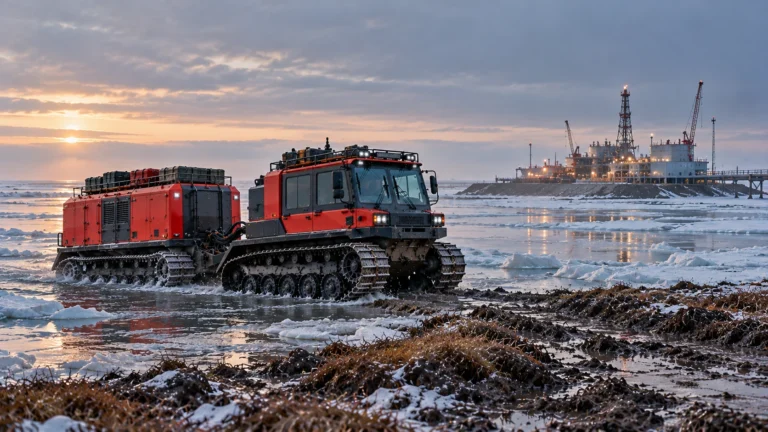
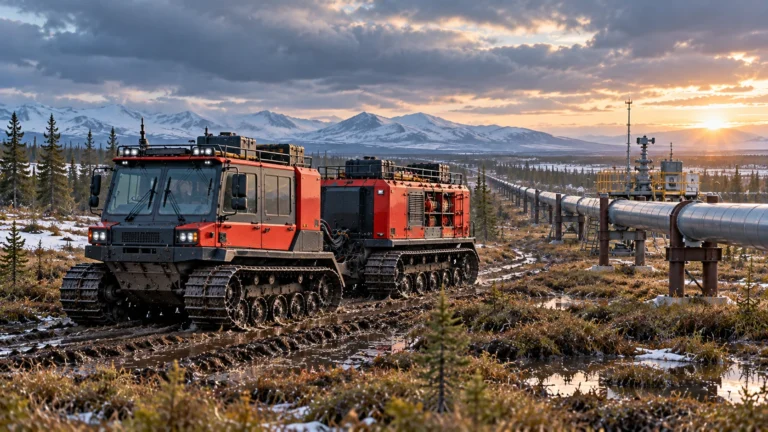
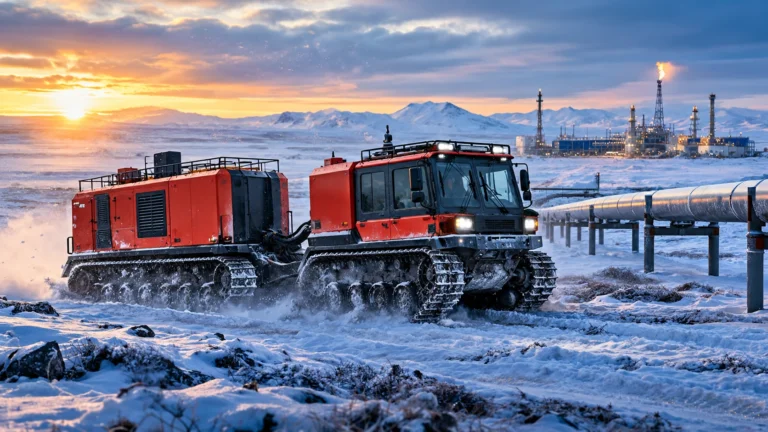
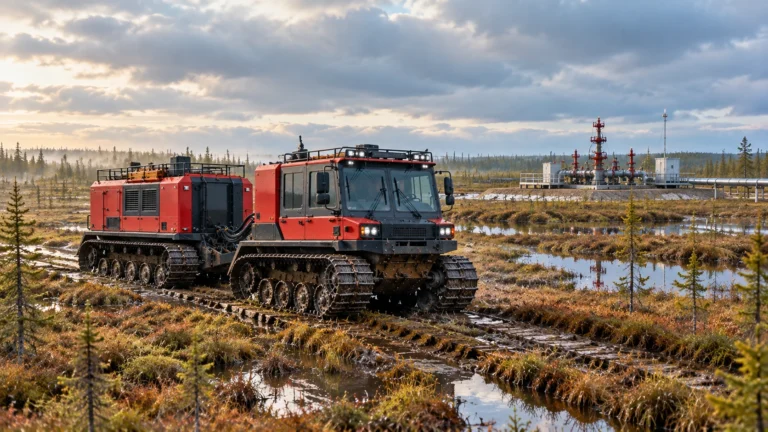
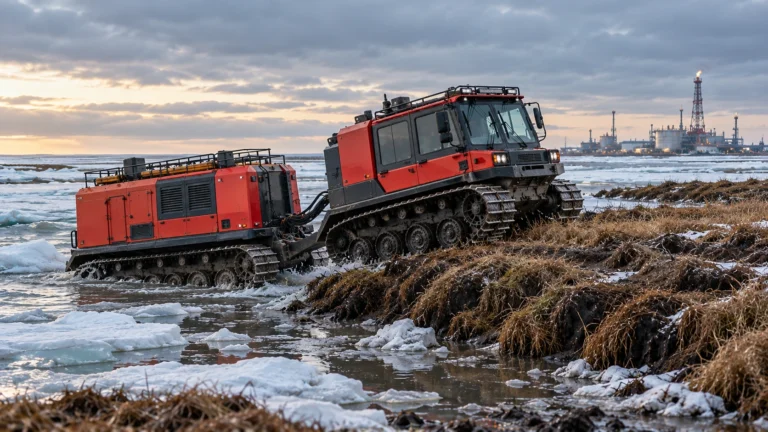
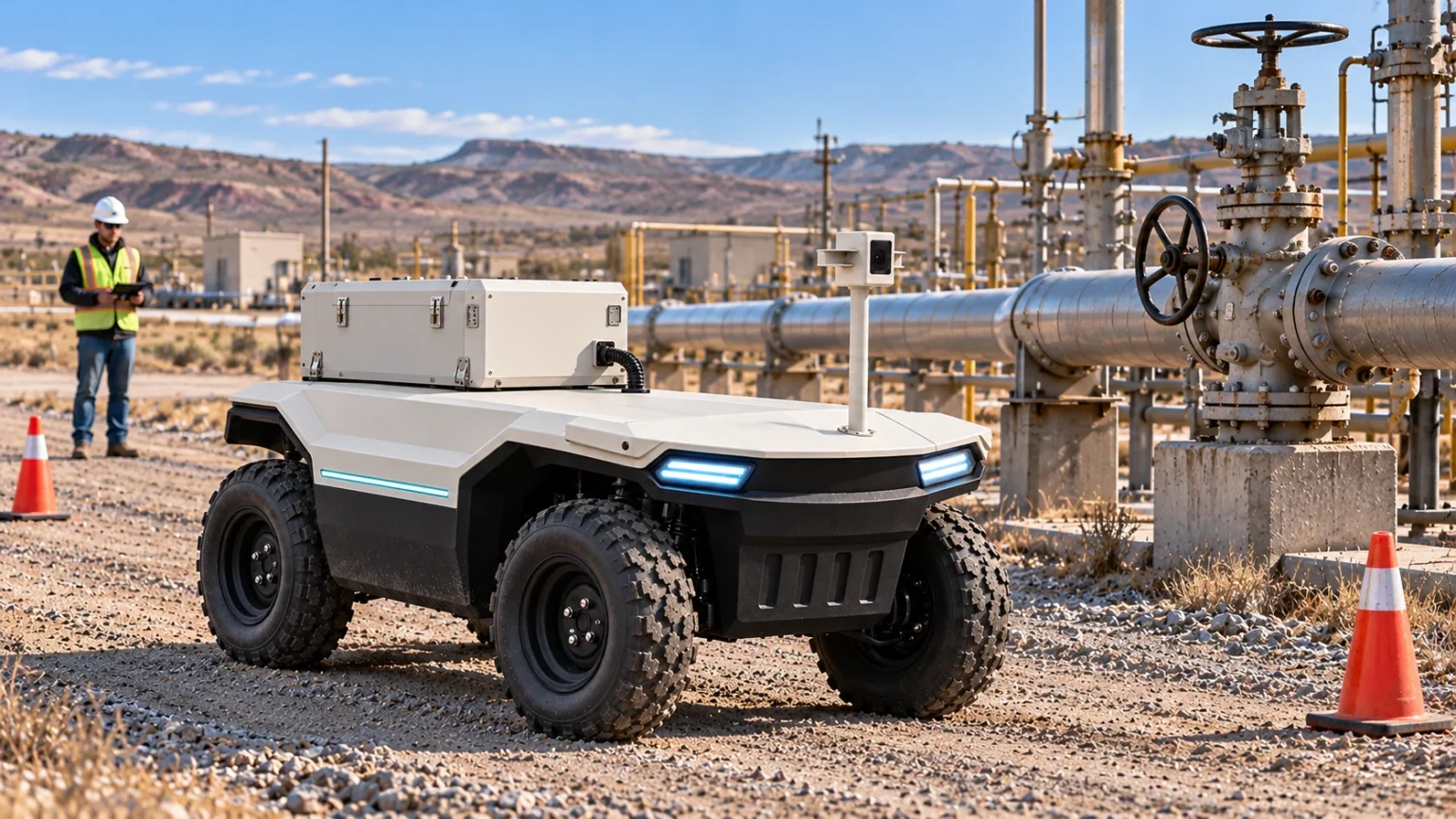
AI-generated concept, not a Delta field test or deployment. The proposed inspection pod and mast need project-specific confirmation.
A short demonstration rarely answers that question. Clear ground, a nearby operator and attractive video can conceal the work needed for charging, intervention and data review. A useful pilot includes those activities in the comparison.
Key takeaways
• Choose one task and a permitted operating area.
• Agree acceptance criteria before equipment selection.
• Measure the complete shift, including human support and data handover.
• Base the next purchase decision on recorded results and unresolved issues.
First define one task and its boundaries
Start with a task such as recording external-condition images at nominated observation points. Describe its starting point, required stops and completion condition. Avoid combining inspection, gas measurement, transport and independent navigation into one undefined trial.
Record the route, operating hours, personnel interactions and existing method. The asset owner should identify access restrictions and responsible people. Start where equipment suitability and permissions are understood. Any classified hazardous-area requirement needs separate approval for the exact equipment configuration before entry.
Keep the baseline comparable. If people currently inspect ten assets and the proposed robotic task observes only five, report that difference. Otherwise, an apparent time saving may simply reflect less work.
Next agree evidence and acceptance criteria
Ask the receiving maintenance team what would make the task useful. Criteria might cover required viewpoints, readable asset identifiers, usable images, operator involvement and handling of missed observations. Agree how to record each item and who accepts it.
Separate route completion from task completion. Driving past an asset does not establish that its condition record is useful. Log unsuccessful stops and interventions even when the operator later resolves them. Set project-specific thresholds together rather than importing an unsupported universal pass rate.
Before mobilisation, record the decision options: proceed, revise a defined element, or retain the existing method. This prevents a trial from drifting into repeated demonstrations without a clear conclusion.
Then specify the Delta configuration being evaluated
A compact four-wheel Delta observation platform can be a starting point where the route and instrument package fit that configuration. Confirm the mission load, mounting arrangement, battery provision, controls and communications. Document what the quotation includes and what requires additional integration.
Record the vehicle configuration and software version. A visible mast does not establish a particular thermal or gas-measurement capability. Similarly, remote control, assisted operation and autonomous navigation are different scopes. Identify the proposed method and evaluate it accordingly.
If the task suggests another Delta model, request its current technical and commercial information. Do not carry trial conclusions from one configuration to a different platform or payload without reviewing the changes.
After that test the route and operator interventions
Survey the route before the first operational run. Mark crossings, obstructions, communication screening and places where the operator may need a different position. Include the site’s responsible team in the operating plan.
During each run, record control-link interruptions, observation quality, blocked sections and reasons for assistance. Agree a controlled procedure for checking communication loss and recovery. Verify the selected system’s actual response rather than assuming a guaranteed return or obstacle response.
Repeat the task under conditions that represent the intended work. Choose those conditions with the site team; an evaluation should remain within agreed limits. A successful clear-day run provides evidence for that run, not automatic approval for every season or operating area.
Fifth evaluate the complete shift and data handover
Include pre-use checks, instrument installation, travel, observation stops, energy replenishment, cleaning, recovery arrangements and data transfer. Measure operator time alongside vehicle time. Robotics may transfer work from walking to remote driving and image review; the comparison should show where that work goes.
Use the same definition of a completed task for both methods. Have the receiving team check the exported records, including asset identifier, time, observation point, image reference and exception note where required.
A controlled file export may be sufficient initially. Treat an API or maintenance-system connection as a separate integration deliverable with agreed access, data ownership and support responsibilities. Demonstrate the required exchange and obtain acceptance from the receiving team.
Finally turn the record into a purchasing decision
Compare the cost of a useful completed task. Include equipment, selected instruments, communications, software, training, energy, service support and recovery effort. Use pilot observations to identify recurring costs and local support needs.
Close the review with the tested configuration, conditions, completed tasks, exceptions and outstanding changes. Assign an owner and completion condition to each change. A revised payload, route or operating method may need another bounded test.
The result may support expansion, a simpler configuration or continued use of the current process. A clear decision is more valuable than an impressive demonstration that leaves responsibilities and costs unresolved.
Discuss a Delta evaluation with JINJIA
JINJIA is visiting ADIPEC 2026 to discuss practical energy-sector applications. For a Delta evaluation discussion, share the task, route, mission load, shift pattern, communication conditions, acceptance priorities and expected quantity.
Explore Delta UGV/AGV platforms or contact JINJIA to define the next technical step.
Project inputs: Operating terrain | Required payload | Environmental conditions | Intended application | Estimated quantity.
For a wider crew-and-tool transport decision, see our tracked vehicle selection method. Evaluate the Delta observation system against its own defined task. See our exhibitions and industry visits for the event context.
Frequently asked questions(FAQ)
A: Choose one useful task with a clear completion condition, such as delivering acceptable observation records from specified points on a permitted route.
Q: How long should a pilot last?
A: There is no universal duration. Allow enough representative task cycles to evaluate the agreed shift, interventions, replenishment and data handover.
Q: Does a camera mast prove thermal or gas-detection capability?
A: No. Confirm the selected instrument, mounting and measurement method. The mast’s appearance does not identify its sensing capability.
Q: Must the first trial use autonomous navigation?
A: No. Select the operating method that fits the task. Evaluate remote control, assisted functions or autonomous operation as distinct scopes.
Q: Can a standard platform enter a classified hazardous area?
A: Do not assume suitability. Confirm the exact equipment’s applicable approvals and the site’s authorisation before planning entry.
Q: What should procurement receive at the end?
A: A record of the tested configuration, conditions, accepted tasks, interventions, costs, outstanding actions and an explicit recommendation to proceed, revise or stop.
References
• JINJIA Delta UGV/AGV platforms