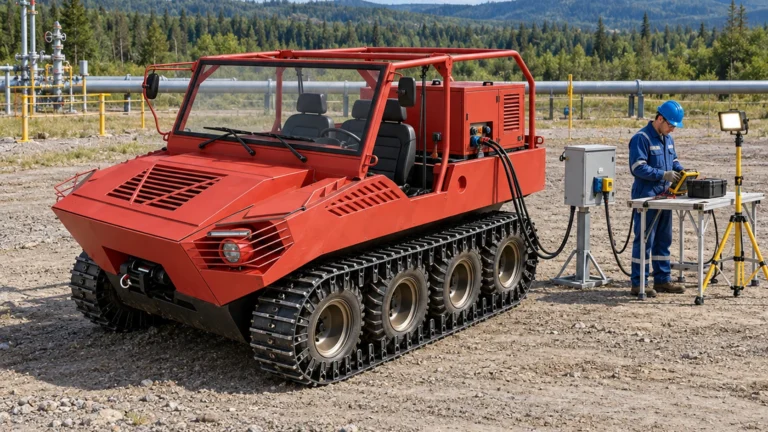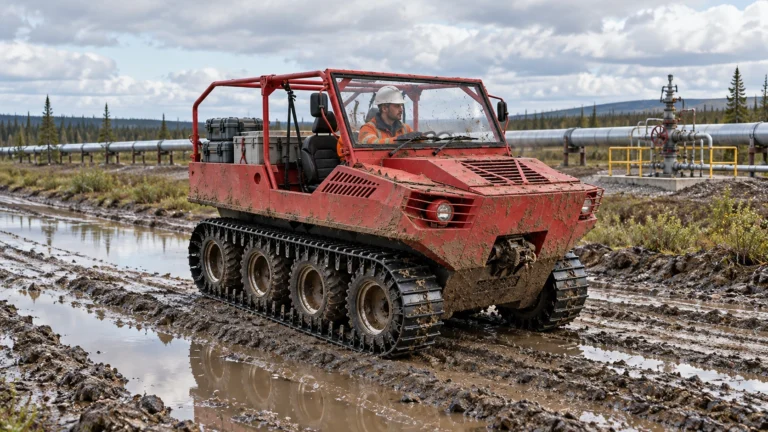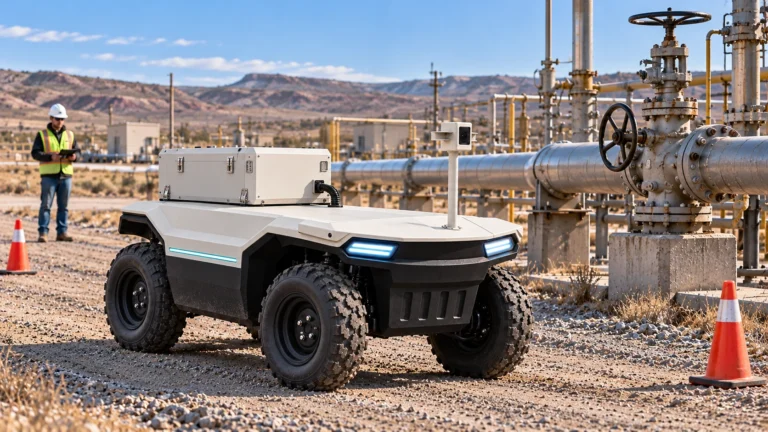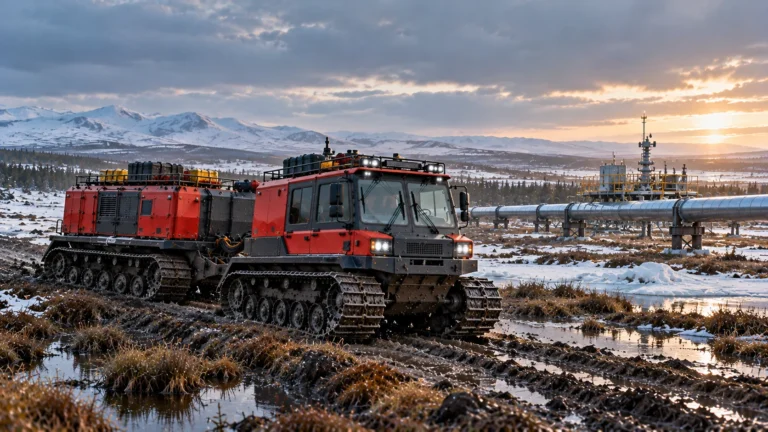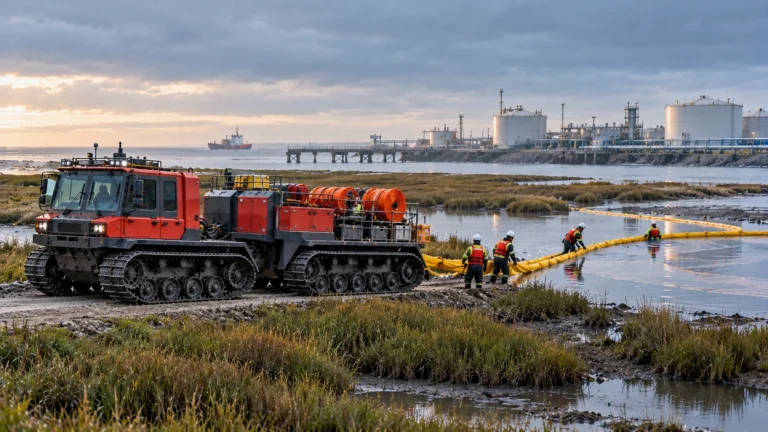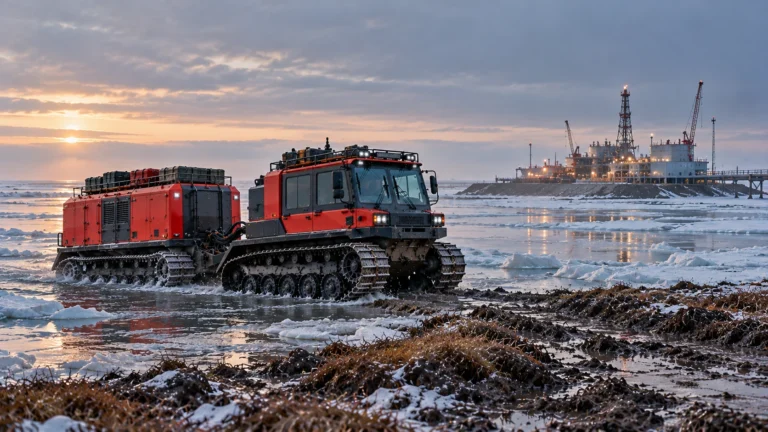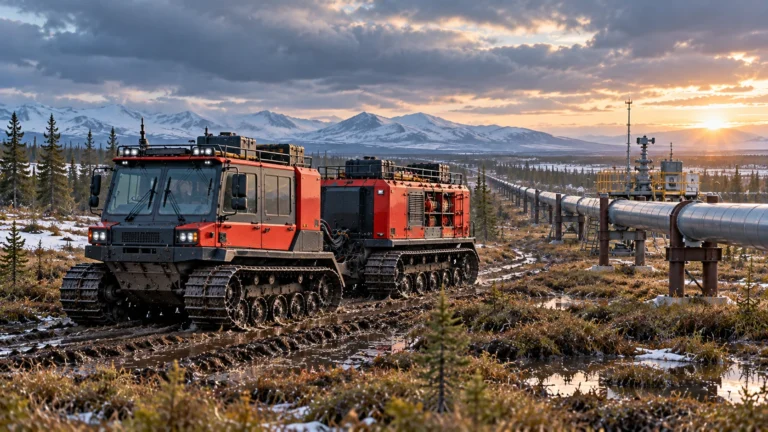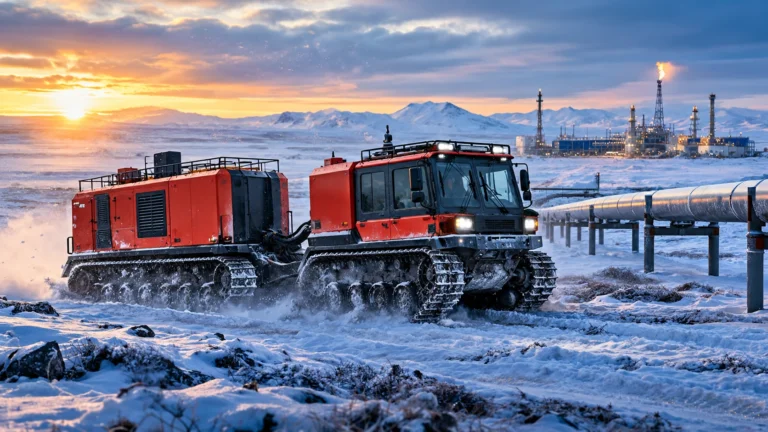


A pipeline patrol UGV/AGV can help an inspection team collect comparable observations along an approved route. Its value comes from placing the right instrument at the right asset, then returning a record that maintenance staff can review. For a JINJIA Delta application, define those observations before choosing the sensor, communications and control configuration.
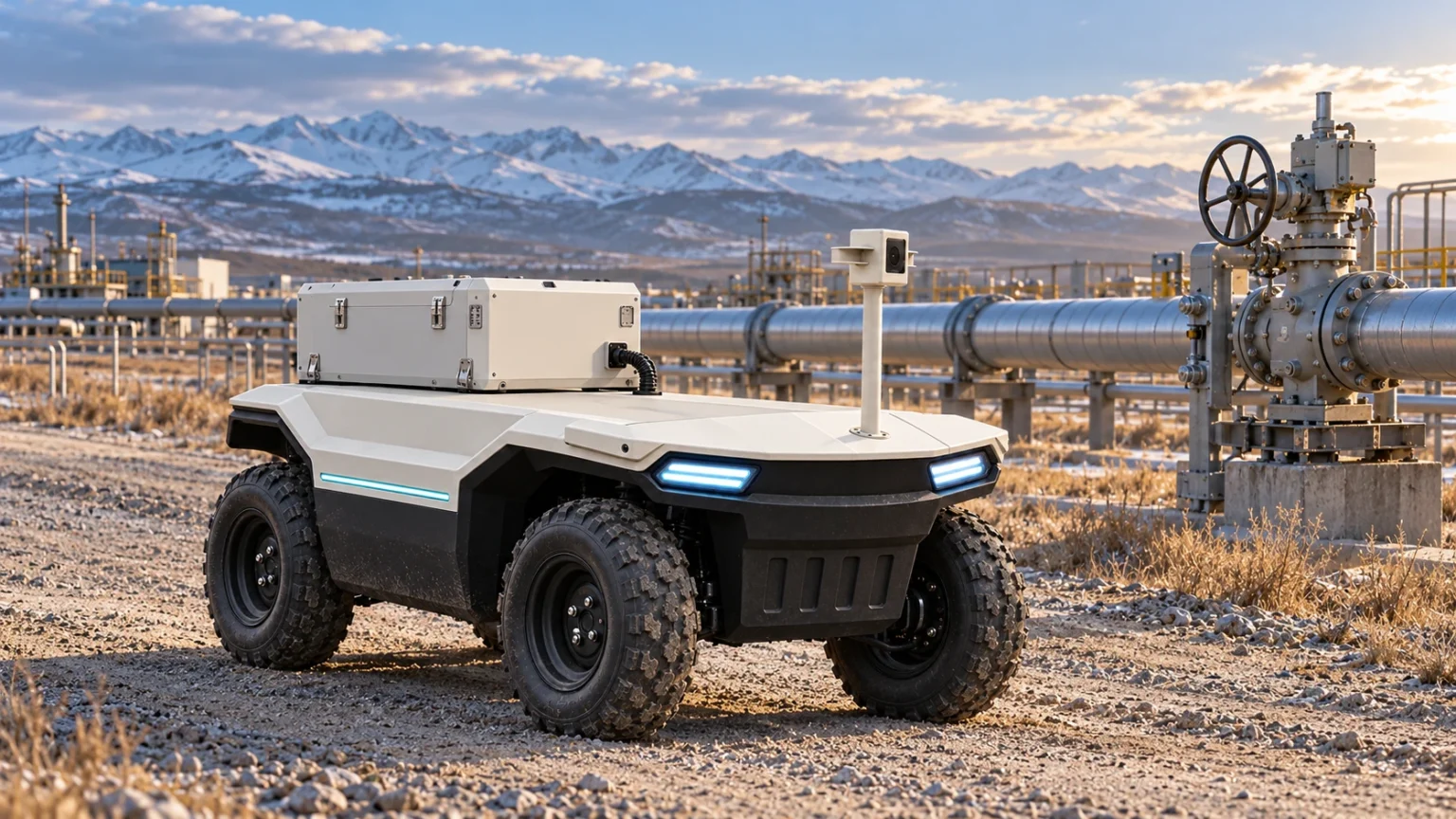
AI-generated concept, not a Delta field test or deployment. The proposed inspection pod and mast need project-specific confirmation.
The practical problem is often the distance between a service road and several scattered observation points. Walking takes time. Fixed cameras cover specific views. A crew vehicle may carry more equipment than a routine visual check needs. Meanwhile, photographs from different visits can lack the context needed to compare changes.
At a glance
• Define each observation point and the maintenance decision it supports.
• Select the Delta configuration around the route and instrument requirements.
• Record asset identity, viewing conditions and incomplete observations.
• Send findings to a named reviewer and a clear follow-up process.
Start with the observation point
Consider an illustrative route beside a pipeline service corridor, a fenced equipment area and an external valve observation point. The team wants to document accessible external conditions from permitted positions. Examples include a damaged fence, a change in a visible support or an unreadable asset label.
For each point, specify the asset identifier, required view, stopping position and evidence to collect. Reading a label needs a different distance from recording an overview. Establish which questions the route can answer and which require another inspection method. A mobile observation task should have a clear completion condition.
Give Delta a defined inspection job
A compact wheeled Delta configuration can place a selected observation payload at suitable positions without sending a crew vehicle to every stop. This can support repeated checks where the route, access permissions and operating conditions suit the proposed platform.
Review the instrument, mounting arrangement, equipment mass and power demand together. The illustrated task configuration uses a proposed inspection pod and a single mast; its appearance does not identify the sensor or establish a measurement function. Specify the actual equipment in the project configuration. Keep observation work separate from carrying crews, heavy maintenance tools or a different task module.
Make one visit comparable with the next
Separate transit sections from observation stops. Transit planning covers access, crossings and interaction with people or maintenance traffic. An observation stop defines the information to collect. Use stable stop identifiers that match the asset register.
Each record should connect the asset, time, viewing direction, image and operator note. Where comparisons matter, use a consistent position and suitable camera settings. Record visibility problems or restricted access as incomplete observations. Otherwise, a route may appear complete while leaving the maintenance team without the evidence it requested.
Agree on the record format before collecting large volumes of footage. A short, identifiable image set can be easier to use than video that requires a reviewer to reconstruct the whole route.
Choose an instrument for the question
Visible-light imaging can document accessible external conditions for human review. A selected thermal instrument can support a defined temperature-observation task. However, FLIR guidance explains that factors such as distance, atmosphere and surface emissivity affect measurement. Reflective metal needs careful interpretation; a bright thermal feature alone does not diagnose a fault.
Ordinary thermal imaging also differs from optical gas imaging and calibrated gas measurement. Each needs suitable instruments and procedures. If the requirement concerns a leak, first define the substance, detection objective and evidence required. Then assess the measurement chain. Vehicle mobility by itself does not establish gas detection, leak quantification or pipeline-integrity certification.
Keep the operator connected to the task
Check communications along the proposed route, including sections screened by structures, vegetation or terrain. Determine what the operator must see while travelling and while collecting an observation. Assess control availability, video quality and delay where the task actually takes place.
Remote operation, assisted navigation and an autonomous route are different scopes. Confirm the functions of the selected build rather than inferring them from a sensor mast. Establish what happens when the route is blocked, communications fail or positioning becomes uncertain. Include a practical means to recover the platform and retain unfinished observations for follow-up.
Turn an observation into maintenance action
Name the person who reviews incoming records and the team that receives an exception. A finding should carry enough asset context to become an actionable work item. Define how that item closes and where the result stays available for later comparison.
A structured file export may meet an initial requirement. Direct integration with maintenance or security software needs a separate scope covering data format, permissions and support responsibilities. Judge the usefulness of the observation by whether the receiving team can make its decision, not simply by the quantity of images collected.
Start on permitted routes outside classified hazardous areas unless verified equipment suitability and site authorisation support another scope. Electric drive alone does not establish explosion protection. The site owner’s requirements and applicable local rules determine the operating boundary.
Discuss your pipeline observation task
JINJIA’s planned visit to ADIPEC 2026 provides a setting to discuss these requirements with energy operators and service partners. The task definition remains useful beyond the exhibition.
To scope a pipeline patrol UGV/AGV application, send JINJIA the route, asset list, required observations, instrument needs, communications conditions and operating schedule. Explore Delta UGV/AGV platforms or contact JINJIA to discuss a suitable configuration.
Project inputs: Operating terrain | Required payload | Environmental conditions | Intended application | Estimated quantity.
For crew and tool transport, see remote pipeline maintenance access. Delta observation is a separate task. See our exhibitions and industry visits for the event context.
Frequently asked questions(FAQ)
A: Choose a manageable permitted route with clearly identified observation points and a named reviewer. Include the return and recovery arrangements.
Q: Does a camera mast prove thermal or gas-detection capability?
A: No. Confirm the installed instrument, its measurement purpose and the conditions required to obtain usable evidence.
Q: Can Delta replace a pipeline-integrity inspection?
A: Mobile observations can support maintenance. They do not replace specialist integrity methods or mandatory inspections unless the specific method has been established and accepted.
Q: Does the platform operate autonomously?
A: Control and navigation functions depend on the selected configuration and route validation. Agree on the operating scope and intervention procedure.
Q: Can an electric UGV/AGV enter a hazardous area?
A: Electric propulsion does not establish suitability. Check equipment evidence, the area classification and the site’s authorisation before considering entry.
Q: What makes an observation record useful?
A: Connect a usable image to its asset, time, viewing conditions and reviewer. Record gaps and route findings to a defined follow-up process.
References
• JINJIA Delta UGV/AGV platforms
• FLIR thermographic measurement guidance
• FLIR optical gas imaging guidance