

A maintenance job can be small even when the access problem is large. An instrument case, replacement component or communications package may need to reach a remote energy asset after a service road becomes waterlogged. Waiting for normal access can delay the work. Sending a larger carrier may introduce a different set of route, loading and mobilisation requirements.
An 8×8 amphibious oilfield access platform is worth evaluating for selected mixed land-and-water support routes. JINJIA’s platform combines wheeled all-terrain mobility with an amphibious configuration. Its role must be defined around the actual trip, the load and the conditions. It is an additional access option for an assessed mission, not permission to drive through any flooded road.
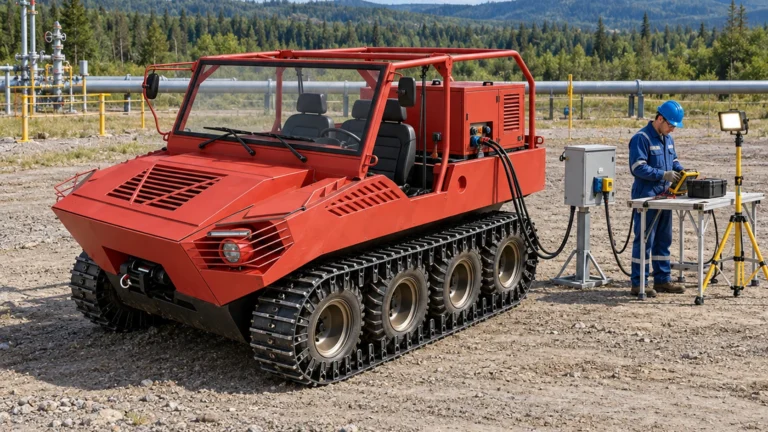
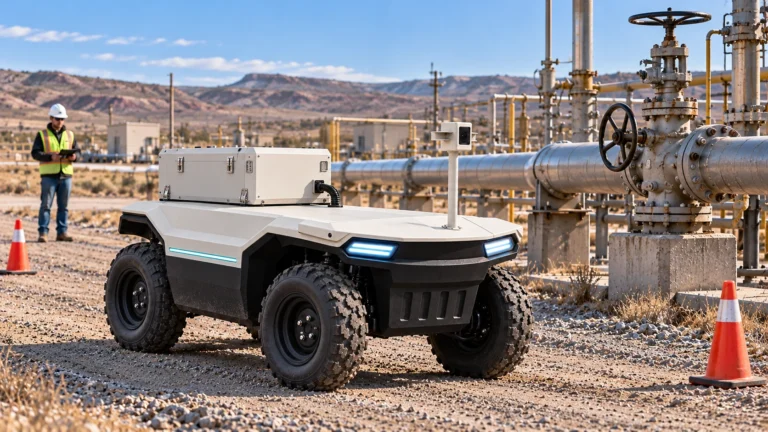
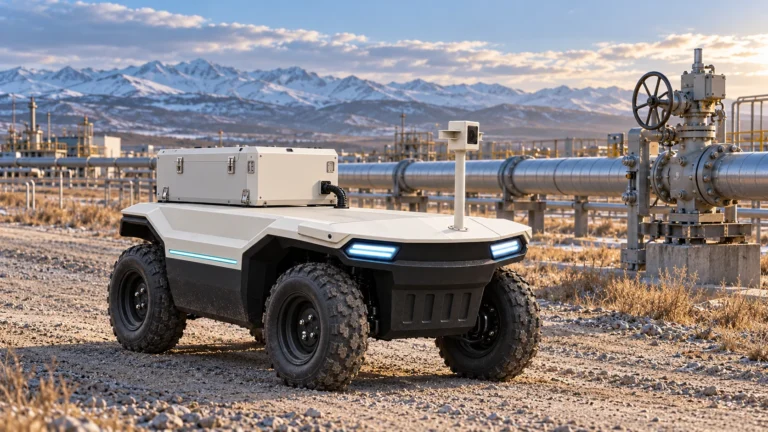
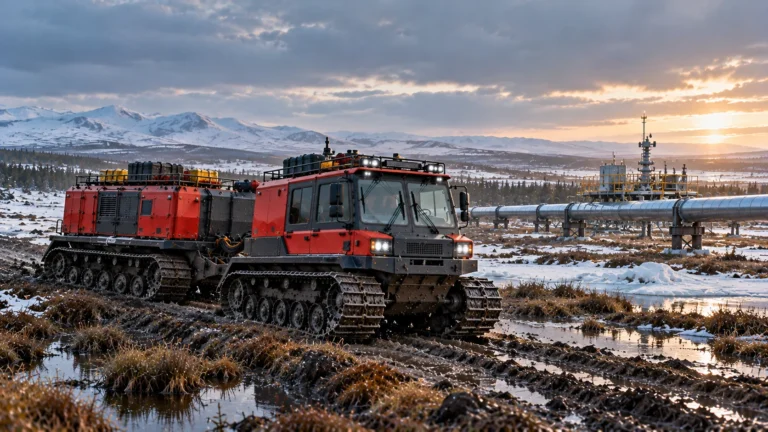
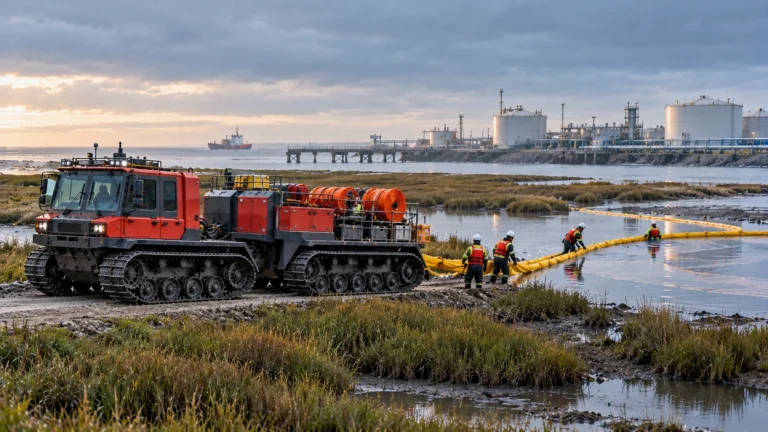
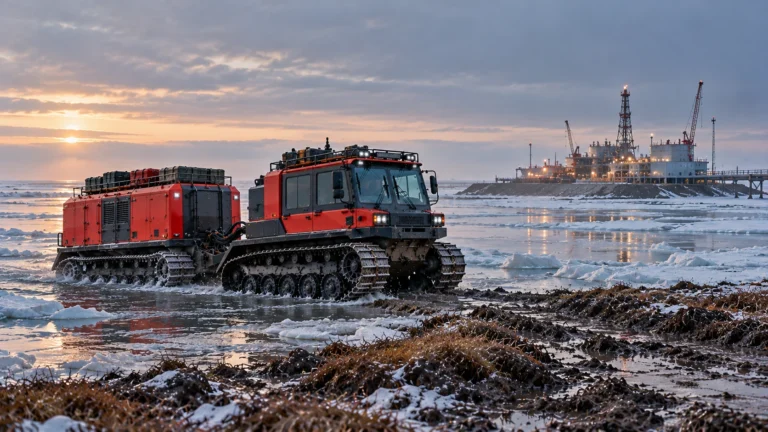
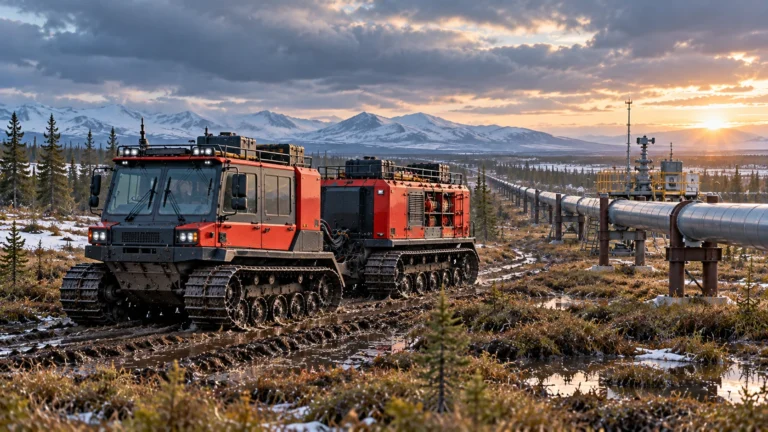
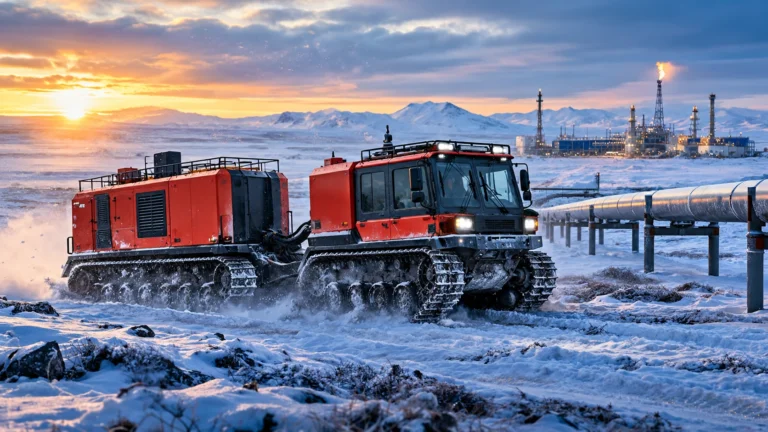
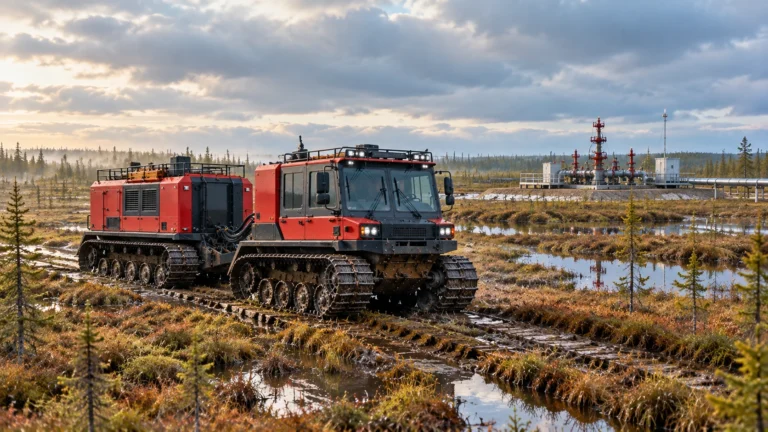
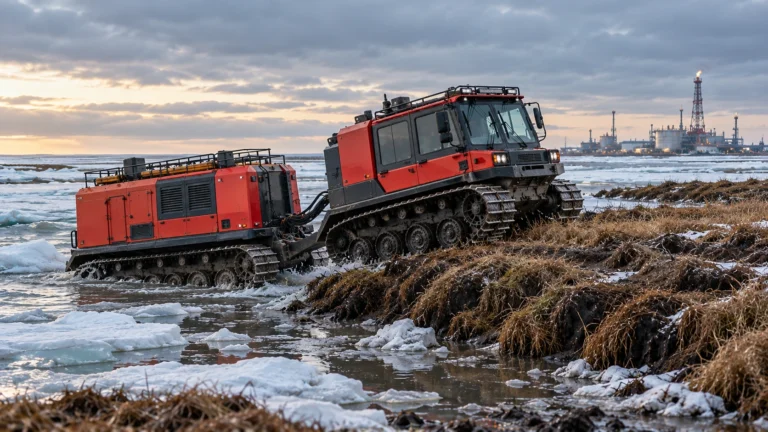
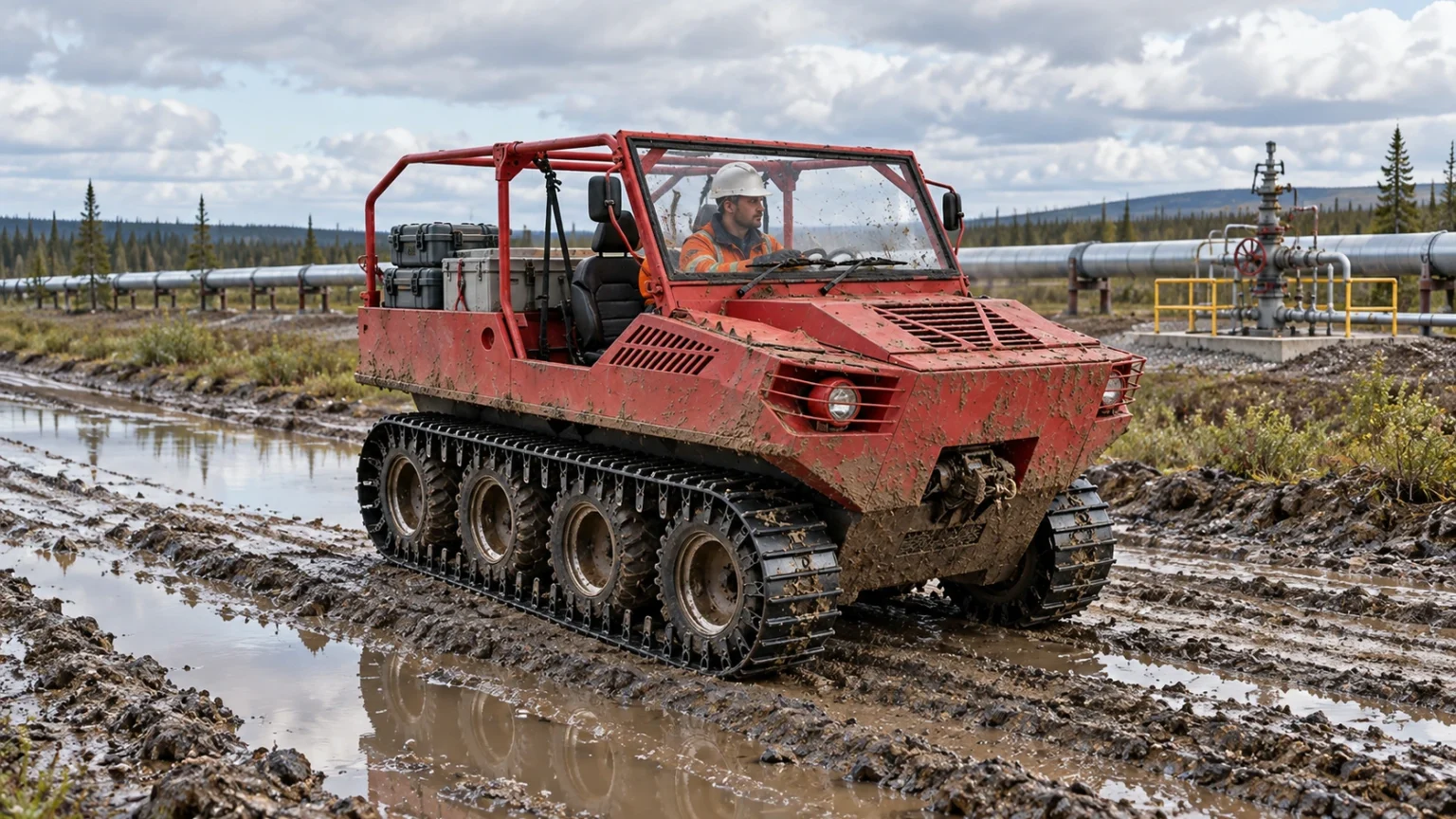
AI-generated application concept, not a customer deployment or test photograph. Shown payloads, tracks and electrical integration require configuration-specific confirmation.
At a glance
• Define the complete outward and return route.
• Separate land and water loading limits.
• Confirm the selected cargo and track configuration.
• Plan operator readiness and recovery.
Describe the journey as a chain of conditions
A remote-site trip may include firm gravel, soft shoulders, a waterlogged depression, an approach bank and a loading point. Treating all of these as one flooded section conceals the factors that determine whether the mission can proceed. A vehicle may negotiate one part while the next becomes the limiting condition.
Map the complete outward and return journey. Identify where people board, where equipment is secured and where a different transport method would be needed. Record how recent rain, erosion or ground saturation has changed the route. Include an alternative and a stop condition. The purpose of the assessment is to find a controlled way to deliver the task, including the possibility of choosing another method.
Match the platform to a small, defined support task
Useful starting points include moving packaged maintenance equipment between approved staging points or supporting a small field team on a permitted access route. Confirm the full mission load, including occupants, tools, protective equipment, fuel and any installed equipment. Seating, restraint and cargo arrangements must match the agreed configuration.
Land and water loading conditions should be reviewed separately. A land payload entry does not establish a water carrying allowance, and a photograph does not establish safe loading. The supplier’s configuration-specific limits, distribution requirements and operating procedures should control the plan. Keep the load definition narrow enough that the proposed trip can be demonstrated before routine use.
Understand what amphibious capability changes
An amphibious platform may create an access option where ground-supported travel alone is insufficient. It brings flotation, water propulsion and the transition back to land into the vehicle assessment. Each needs attention in the intended operating condition. A short water section can be decisive if the exit bank is unsuitable or there is no acceptable return route.
For JINJIA’s 8×8 platform, discuss the water environment, loading condition, propulsion configuration, crew procedures and recovery arrangements with the technical team. Do not infer open-sea service, flood-current capability or a particular bank-exit performance from the general amphibious description. An inland support scenario and an offshore rescue mission require different operating definitions.
Compare it with other access methods
The right comparison starts with the task. A boat may serve a route that has workable landings. A conventional utility vehicle may be suitable after the access road is restored. A tracked carrier may be a candidate for a different payload or ground condition. A compact amphibious platform may be useful where the assessed journey combines short land and water sections without a practical transfer point.
Compare loading and unloading, mobilisation, crew requirements, recovery, local support and the number of trips needed. Avoid assuming that the smallest platform always has the lowest total cost. Repeated small trips can be less useful than one larger movement; equally, a small defined job may not need a heavy logistics solution. Use the same delivered task for each comparison.
Separate access support from specialist response
Carrying tools does not make a platform a repair system. Carrying spill-control materials does not make it an oil-recovery vessel. Carrying a field team does not establish medical evacuation capability. Describe the vehicle’s contribution as access and transport unless the additional equipment, procedures and approvals have been defined.
The site’s safety team should determine where the vehicle may operate, including restrictions associated with process equipment and hazardous atmospheres. Electric drive or an amphibious hull does not itself establish hazardous-area suitability. Environmental access rules matter as well: keeping a route available should not depend on unapproved movement through a sensitive wetland or contaminated area.
Evaluate the route without turning a trial into an incident
Begin with document review and a site assessment. Use a controlled demonstration under agreed conditions, with the selected load and personnel arrangements. Confirm the operator’s training, communications, stop criteria and recovery plan before movement. Validate both directions of travel and the loading points, not just a visually impressive crossing.
Record what was actually demonstrated: configuration, mass basis, ground condition, water condition and any limitations. A successful trial at one location does not establish performance on an unknown flooded road. Reassess when conditions change. Unknown water, washed-out ground or an unsuitable exit may require postponement or another transport method, even when an amphibious platform is available.
Include readiness in the procurement decision
A contingency vehicle should be ready when the access disruption occurs. Ask how it will be stored, inspected, exercised and supported locally. Identify who maintains the selected powertrain, who checks the water-related systems and which spare parts must be available. Include cleaning and inspection after the proposed duty in the support plan.
Review the expected number of missions and the consequences of delayed access. That gives a more useful purchasing basis than an isolated maximum-speed figure. The outcome may be a dedicated vehicle, a shared support arrangement or a different access strategy. Suitability follows the mission and the readiness plan together.
Discuss a route-specific 8×8 support configuration
JINJIA is visiting ADIPEC 2026 to discuss field-mobility requirements with energy operators and regional partners. Send route photographs, the proposed load, land-and-water conditions, trip frequency and destination requirements. We can use them to define a configuration review and a suitable evaluation scope.
Explore the 8×8 amphibious platform — https://responsemobility.com/amphibious-utility-vehicle/
compare the role of tracked oilfield logistics — https://responsemobility.com/articulated-tracked-vehicles-for-oil-gas-operations-in-extreme-terrain/
or contact JINJIA — https://responsemobility.com/contact/
See our exhibitions and industry visits — https://responsemobility.com/exhibitions/ for the ADIPEC visit context.
Frequently asked questions(FAQ)
A: No. Establish the complete route, water conditions, exits and recovery arrangements before considering a specific configuration.
Q: Are land and water payloads interchangeable?
A: No. Obtain separate configuration-specific limits and loading instructions, including occupants, installed equipment and cargo distribution.
Q: Do the illustrations prove the track configuration is standard?
A: No. The over-tyre tracks are shown as a configuration concept. Confirm compatibility, mass and procedures for the selected vehicle.
Q: Is this an offshore rescue platform?
A: The article addresses assessed inland support routes. It does not establish offshore, surf or flood-current capability.
Q: Can the vehicle enter a hazardous area?
A: Only after the site checks the specific equipment evidence and authorises the task. Amphibious construction is not an explosion-protection approval.
Q: What should a buyer send JINJIA?
A: Share route photographs, the complete load, water and ground conditions, trip frequency and the required return arrangement.
Sources and further information
• JINJIA 8×8 amphibious utility platform — https://responsemobility.com/amphibious-utility-vehicle/
• OSHA oil and gas extraction hazards — https://www.osha.gov/oil-and-gas-extraction/hazards
• ADIPEC visitor information — https://www.adipec.com/visit/