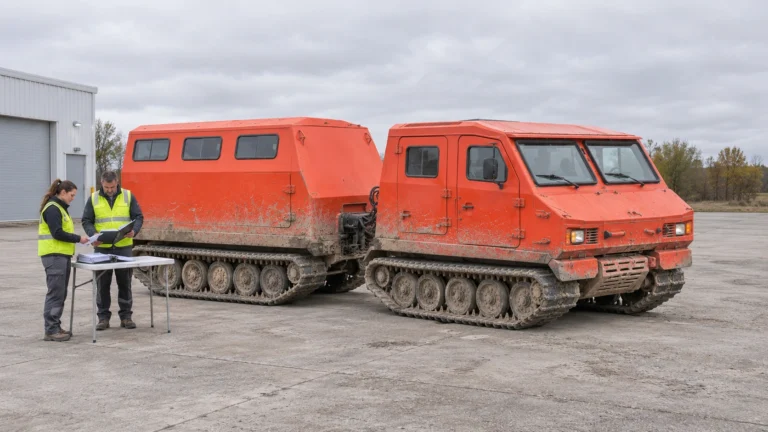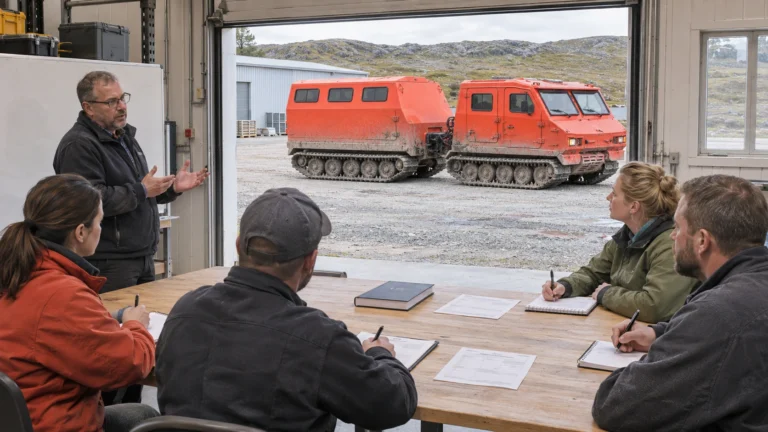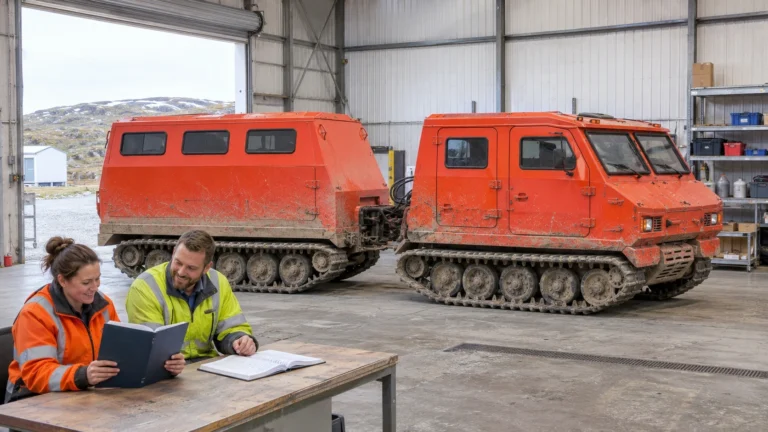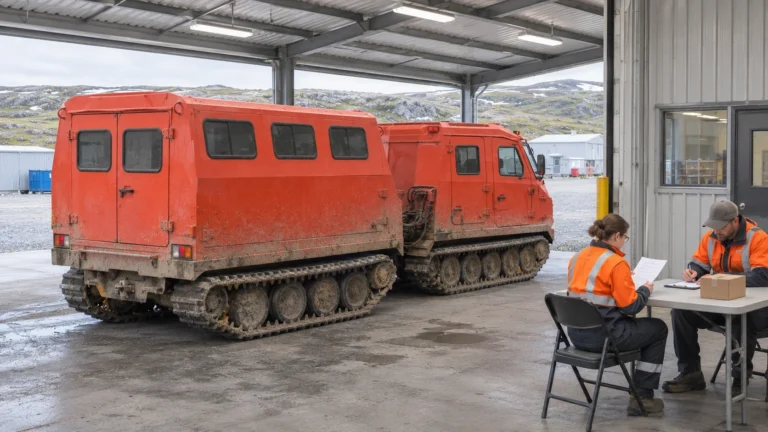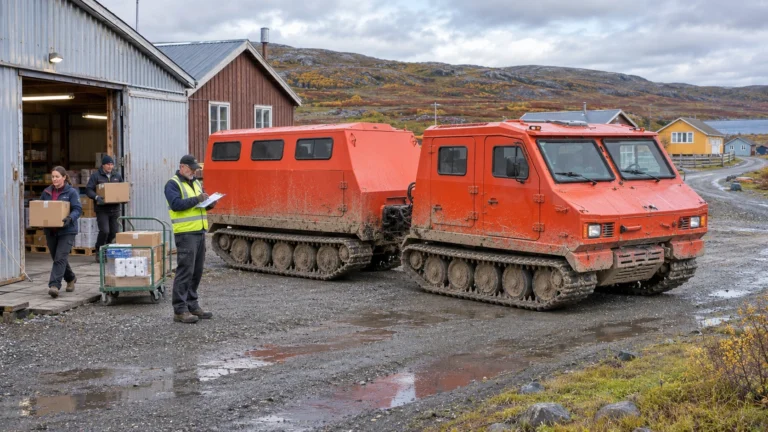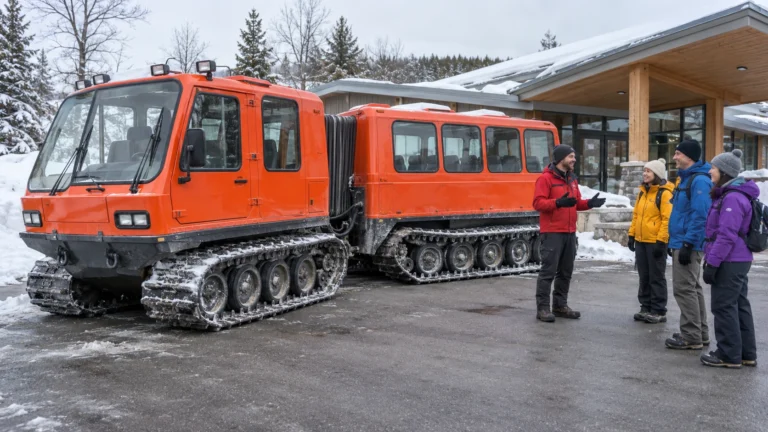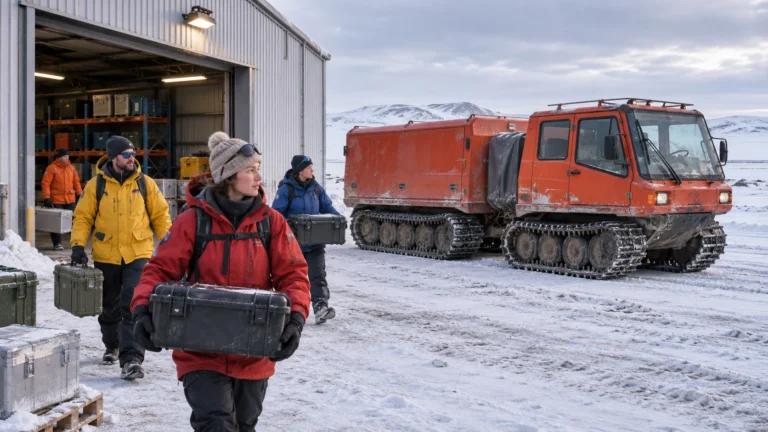












An articulated tracked vehicle RFQ is a structured request for quotation and supporting information. For a civilian buyer, its purpose is to establish a common written description and an auditable response. It is not evidence that any configuration is approved or that a particular capability is available. A good administrative record separates the intended service, the document request, the supplier response and the outstanding review.
Contents
Start with the civilian service purpose
Distinguish people and goods in the inquiry
Keep the approval context explicit
Request a clear set of delivery and service documents
Preserve the supplier response and the open questions
Frequently asked questions (FAQ)
Civilian procurement staff review ordinary documents at a desk with a parked, naturally weathered red two-section tracked utility concept visible in the background. AI concept of civilian use; not verified JJ117 equipment, delivery or actual event.
Start with the civilian service purpose
The same equipment category can appear in proposals with very different written commercial scopes. Therefore, begin the inquiry with the organisation and the ordinary civilian service it intends to provide, rather than copying a long description from an unrelated brochure.
For example, a community organisation and a public facility may both seek information about civilian personnel or goods transport. Each has a different internal approver and review process. Therefore, the inquiry should identify the organisation, its intended service and its authorised commercial contact.
JINJIA publishes a tracked utility vehicle category [S0]. However, a general product page is not a binding quotation. The project-specific configuration, suitability and contractual terms remain matters for qualified review and written confirmation.
Distinguish people and goods in the inquiry
Personnel transport and ordinary goods transport describe different civilian services. Explain which type of service the organisation is considering in plain language. Do not assume that an illustration of one service represents an approved version for the other.
For instance, an image may show a passenger compartment, or it may depict everyday supplies. However, neither image confirms the offered equipment or the terms of delivery. Instead, ask the supplier to identify the relevant written product description and its revision.
In addition, separate the buyer’s stated need from the supplier’s description. If the supplier has not answered a question, keep it in the open-question list. Likewise, a blank answer is not consent, and a concept image is not a configuration document.
Keep the approval context explicit
Civil purchases can involve both an internal commercial decision and separate applicable approvals. The responsible organisation must identify its own reviewers and seek qualified advice for the relevant rules. Consequently, a general article cannot decide whether a particular vehicle or service receives approval.
Record the name and date of each available approval document, its issuer and the scope it actually describes. For example, a document concerning a component should not automatically become a statement about the complete offered vehicle.
If an approval question remains unresolved, say so plainly. Therefore, the RFQ document register uses a distinct status for requested, received and reviewed items rather than a single check mark that could hide a missing decision.
Request a clear set of delivery and service documents
World Bank general guidance for goods contracts discusses contract administration, acceptance and warranty documentation [S24]. It illustrates why administrative records should accompany a transaction. However, the guidance is not a certification for a particular product and does not prescribe the terms of every civil purchase.
The supplied register groups the buyer’s request into purpose, approval context, administrative documents and supplier clarification. In particular, identify the written delivery document list, the scope of training documentation and relevant service or warranty terms. Meanwhile, keep proposals separate from signed agreements.
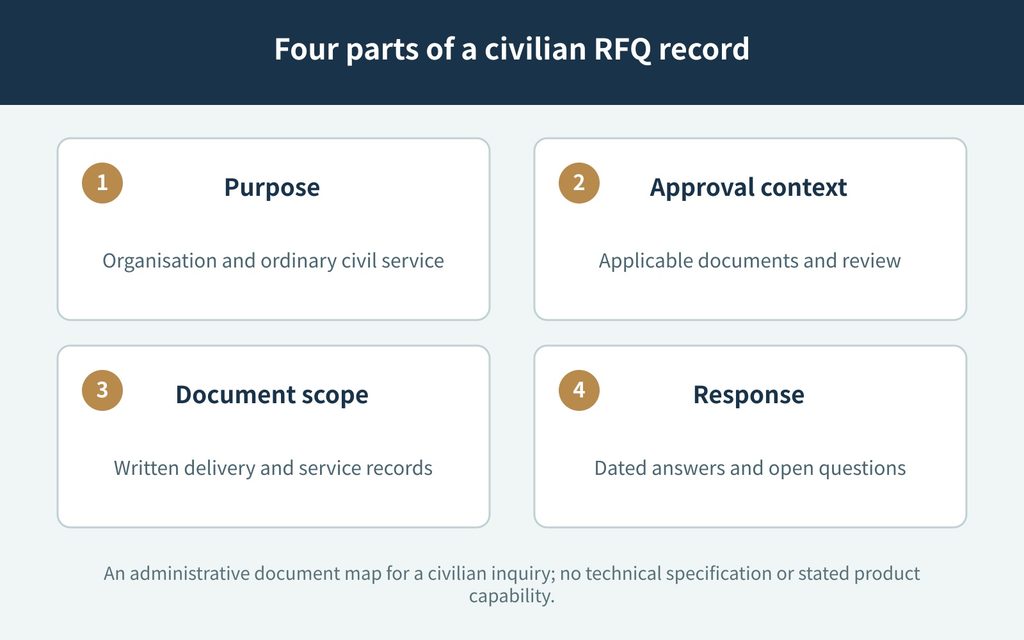
An administrative document map for a civilian inquiry; no technical specification or stated product capability.
For example, a publicly available service statement can help a buyer frame a question, but it does not resolve who has accepted responsibility under a proposed contract. Therefore, refer to the supporting document and mark the uncertainty. The diagram and workbook contain no prefilled technical parameters, prices or contractual promises.
Preserve the supplier response and the open questions
A usable RFQ file preserves the date, revision and responding organisation. Compare what was requested with what the supplier actually wrote. In particular, do not silently fill a missing response with information from a different product or historical example.
Before the organisation makes a decision, its authorised reviewers can distinguish an agreed item from an item that requires clarification. As a result, that record may accompany the delivery-document review discussed in B34 and the acceptance-evidence topic in B40.
Finally, use the public JINJIA contact page [S0C] for general civilian product literature and commercial documentation. Retain the actual written response because the value of the RFQ is a traceable conversation rather than an assumed promise of equipment capability.
Request general civilian product literature and written commercial information.
Frequently asked questions (FAQ)
A: It is a request for quotation and information that records the civilian buyer’s questions and the supplier’s answers.
Q: Does a concept image define the offered configuration?
A: No. Use the identified written description and revision.
Q: Can people and goods transport be treated as the same documented service?
A: No. Distinguish their civilian purpose and the relevant approved records.
Q: Does an RFQ establish local approval?
A: No. The responsible organisation must review the applicable approvals separately.
Q: Does general contract guidance set the actual warranty?
A: No. The signed, applicable commercial terms determine the agreed scope.
Q: What if an answer is missing?
A: Leave the question open, identify the responsible reviewer and retain the supplier’s written clarification when received.
References and evidence scope
S24: World Bank — Contract Management: Procurement Guidance (June 2024), goods contracts — General public procurement guidance on contract administration, receipt/acceptance and warranty information; not model certification or a requirement for every contract.
S0: JINJIA / Response Mobility — Tracked Utility Vehicle — Manufacturer page; verified public product literature, not proof of the delivered civil configuration.
S0C: JINJIA / Response Mobility — Contact — Public brand contact page.