










Articulated tracked vehicle acceptance evidence is the set of actual documents supporting the authorised civilian acceptance decision for an identified supplied item. The file distinguishes a demonstration record, a delivery receipt, an acceptance decision and applicable certification. Each has a different scope. A photograph, historic example or report concerning another version cannot replace the relevant evidence.
Contents
Identify the supplied item and document revision
Read a report within its stated scope
Separate goods receipt, acceptance and certification
Record discrepancies without changing the evidence
Do not present a demonstration as a certification
Frequently asked questions (FAQ)
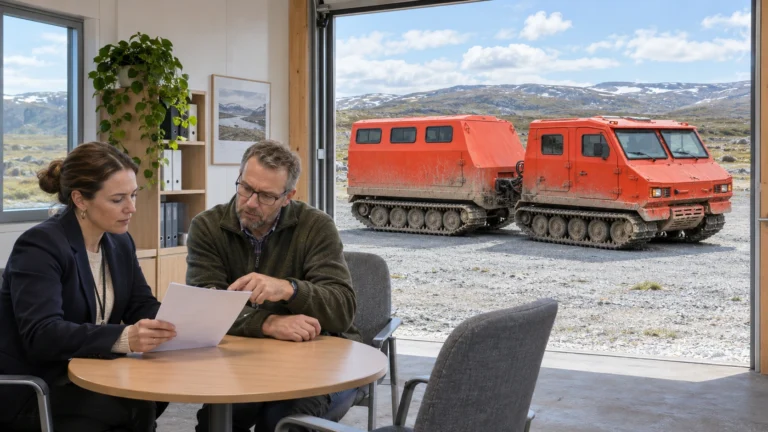
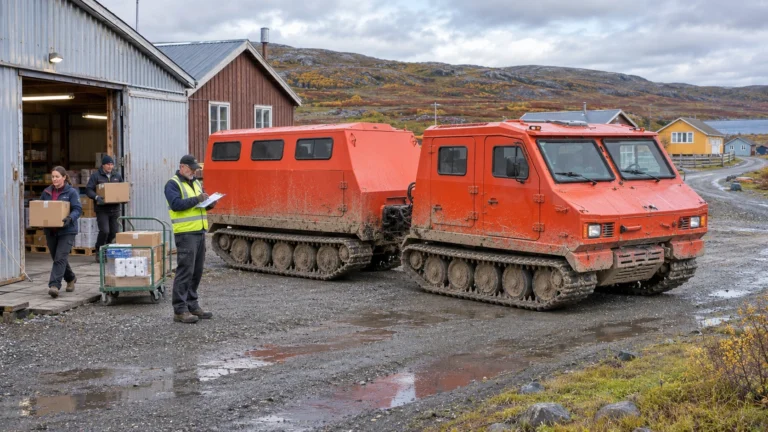
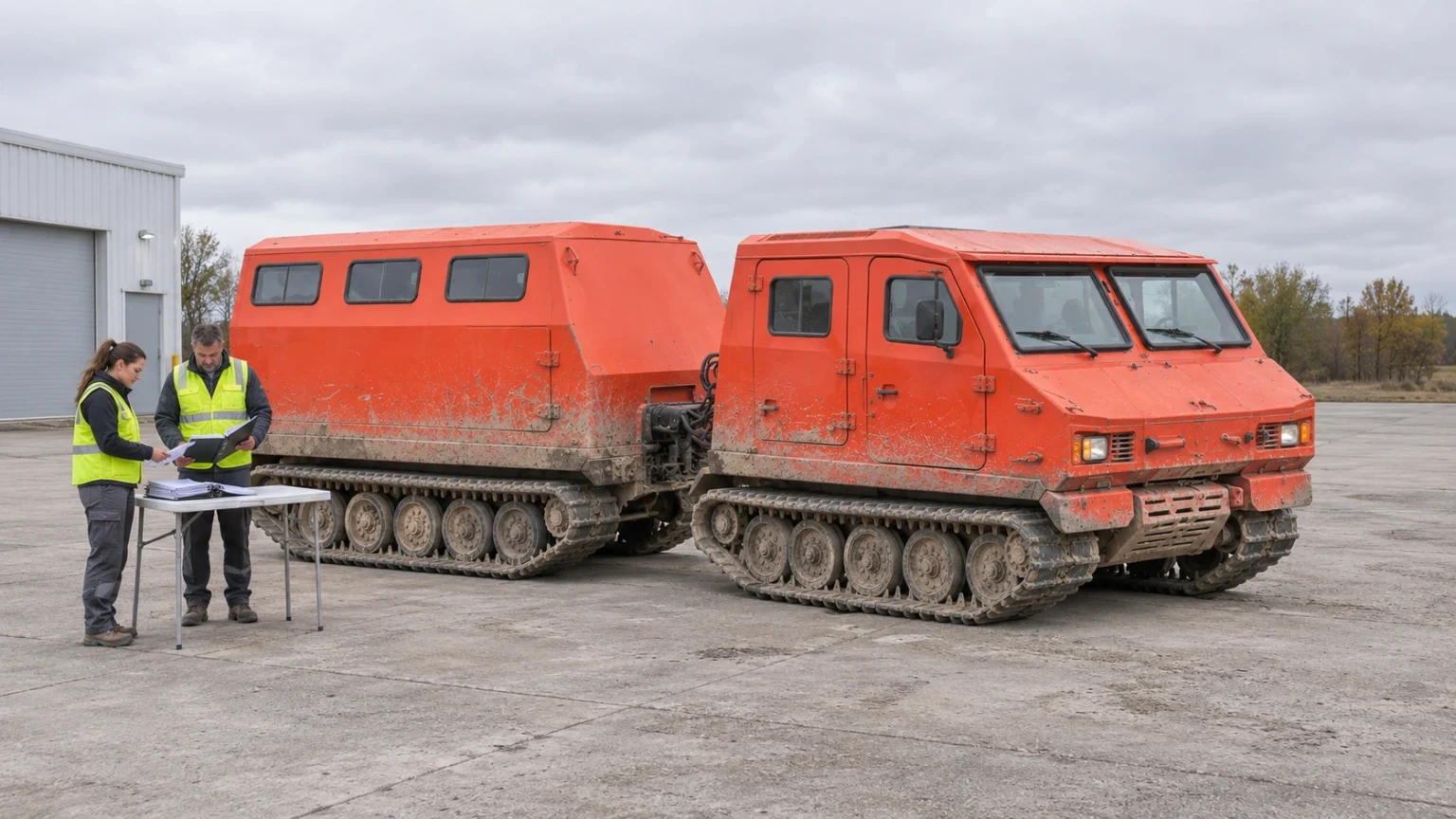
Civilian quality and purchasing staff discuss a document folder beside a parked weathered red two-section tracked utility concept at an ordinary receiving facility. AI concept of civilian use; not verified JJ117 equipment, delivery or actual event.
Identify the supplied item and document revision
Acceptance starts with the object described by the contract, not a general image of the vehicle category. Therefore, retain the actual written civil configuration description and its applicable revision. Match any record to the subject it identifies.
For example, an illustration can help a reader recognise the appearance of a category. However, it may depict a concept, a sample or a different version. Therefore, a picture cannot establish which equipment arrived, the approved configuration or the applicable conditions.
The previous JINJIA topic B34 discusses delivery and receipt documents, and B38 deals with the records of a civil inquiry. Instead, use those actual records to establish identity rather than claiming capability or approval from a resemblance to another product.
Read a report within its stated scope
Different types of evidence answer different questions. A document about an individual event may describe that event accurately, while a report concerning one item or revision does not necessarily apply to another. Consequently, the issuer, date, identified subject and stated scope matter.
For example, a 2015 Australian Antarctic Program station report describes an exercise at Davis [S08]. Similarly, another article records work on its own older equipment [S09]. Both are third-party historical records rather than evidence of a JJ117 demonstration, acceptance decision or certificate.
In addition, distinguish a promotional claim from an independent document with an identified scope. Avoid generalising a result or an approval to another civil variant without appropriate evidence. This article does not set test methods or assess engineering performance.
Separate goods receipt, acceptance and certification
World Bank goods-contract guidance discusses delivery, acceptance and warranty information in the context of contract management [S24]. As an example, it illustrates an important documentary distinction. However, the applicable contract, responsible qualified reviewers and relevant rules govern the particular transaction.
A receipt acknowledges what the receiving record actually states. However, a receipt cannot by itself establish that every contractual condition has been accepted. In contrast, formal acceptance records a decision by the relevant authorised party. Certification, in contrast, refers to the identified certificate and the scope of its issuer.
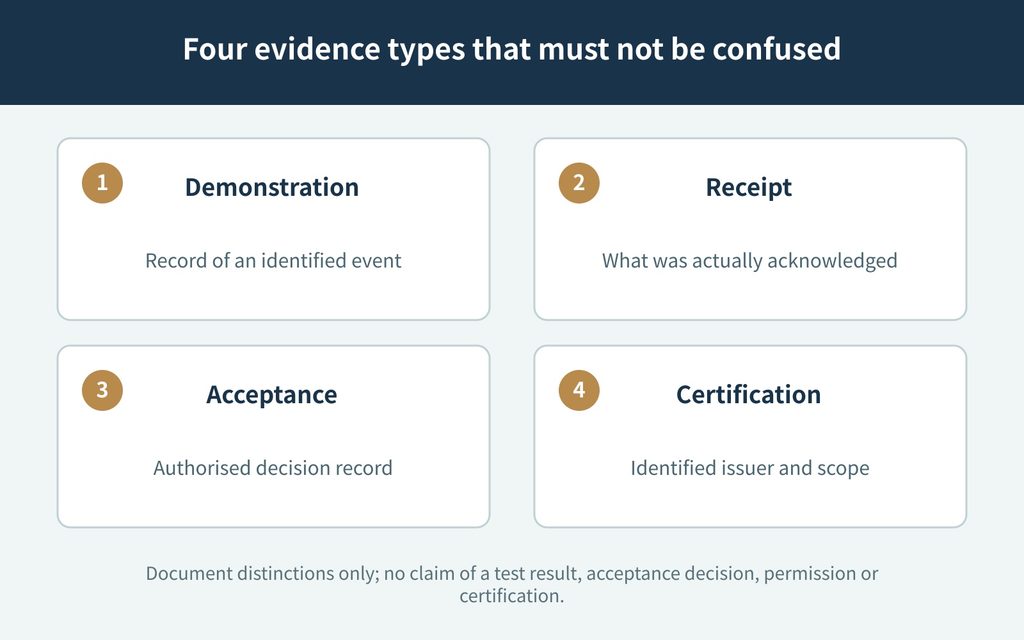
Document distinctions only; no claim of a test result, acceptance decision, permission or certification.
The diagram summarises these distinct evidence types. An organisation should not turn a photo of a demonstration into a signed receipt, or a receipt into certification. Instead, keep the original record and its context rather than relabelling it to imply a broader result.
Record discrepancies without changing the evidence
A good record distinguishes what a document shows from what is still disputed. For example, an identified supplied-item description and a report might refer to different revisions. In that case, record the distinction and actual references rather than adjusting the record to match an expected result.
The included trilingual register preserves the evidence type, issuer, date, subject, reviewer, recorded response and status. A blank decision remains unresolved because the record is neither a test plan nor an acceptance decision.
Where a responsible reviewer later records a resolution, keep both the original discrepancy and the written decision. Therefore, a reader can distinguish the original issue from the actual closure. The register makes no decision on behalf of the buyer or an approving authority.
Do not present a demonstration as a certification
Certification claims deserve particularly exact language. Quote the identified applicable document and its actual scope only when reviewed. However, if evidence is missing, state that the matter is not confirmed. A claim that an entire civilian product is certified cannot rest on an image, an exercise story or a report for an unrelated subject.
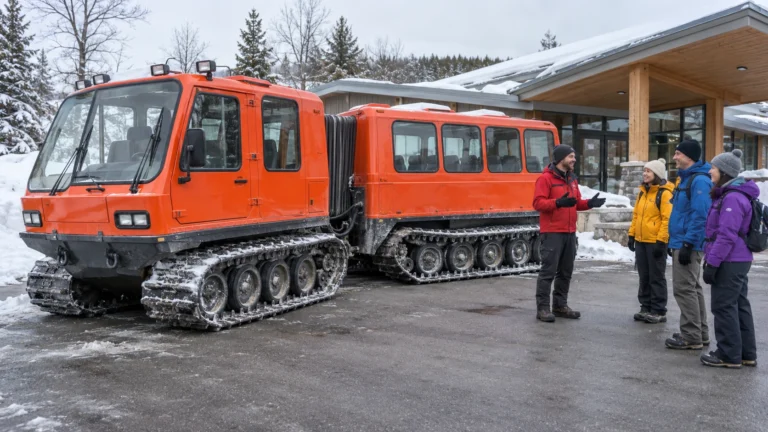
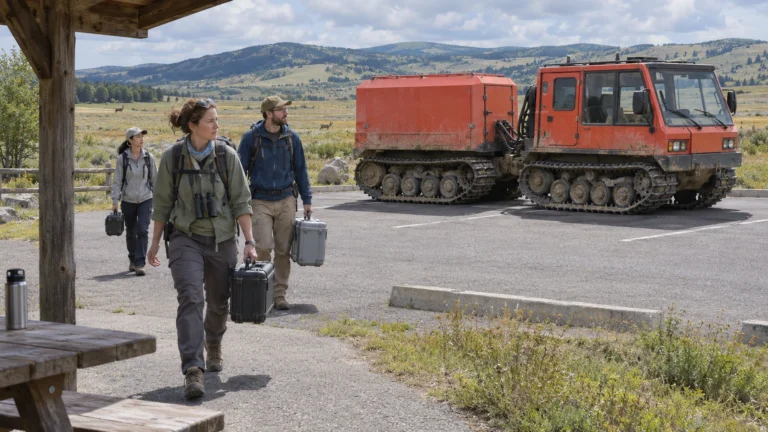
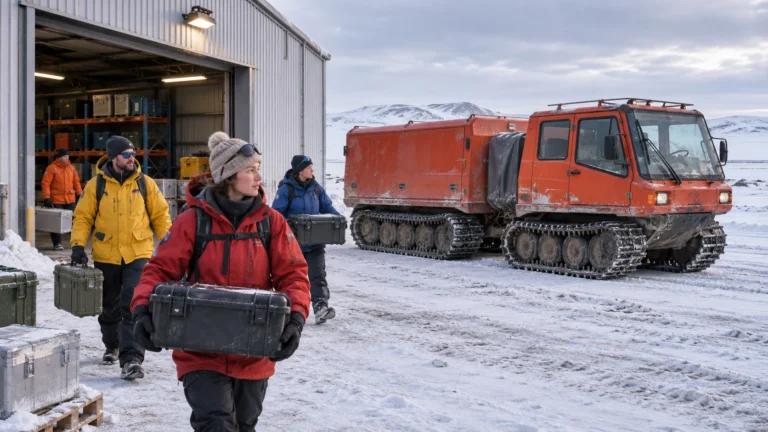
The JINJIA tracked utility vehicle category page provides general manufacturer information [S0]. It does not, however, evidence acceptance of a particular delivery. The accompanying red vehicle scene is an AI concept of a civilian document review, not a photograph of a certified vehicle, an actual test or a delivered consignment.
Finally, the public contact page [S0C] is available for general civilian product literature and authorised documentation. In short, the principle for this final topic is traceability: refer to the actual record, preserve its scope and leave missing evidence unconfirmed.
Request general civilian product and authorised commercial documentation.
Frequently asked questions (FAQ)
A: Actual identified documents supporting an authorised acceptance decision for the supplied civilian item.
Q: Does a demonstration equal a certification?
A: No. A demonstration documents an event; certification has its own identified scope and issuer.
Q: Does a receipt prove formal acceptance?
A: Not by itself. Review what the receipt states and retain the authorised acceptance decision separately.
Q: Can a report for a different version apply automatically?
A: No. Check the identified subject, revision, issuer and actual scope.
Q: How should discrepancies be recorded?
A: Keep the original evidence, record the difference and retain the responsible reviewer’s actual decision or open status.
Q: Is the article or workbook a certification?
A: No. They are general civilian editorial and document-record materials, not a test result, approval or acceptance decision.
References and evidence scope
S08: Australian Antarctic Program — This week at Davis, 3 July 2015 — Station report describes an exercise and training, not a real incident or a certificate for another vehicle.
S09: Australian Antarctic Program — New heart for an old faithful (2015) — Historical account of work on its own Antarctic vehicles; no JJ117 maintenance or cost evidence.
S24: World Bank — Contract Management: Procurement Guidance (June 2024), goods contracts — General public procurement guidance on contract administration, receipt/acceptance and warranty information; not model certification or a requirement for every contract.
S0: JINJIA / Response Mobility — Tracked Utility Vehicle — Manufacturer page; verified public product literature, not proof of the delivered civil configuration.
S0C: JINJIA / Response Mobility — Contact — Public brand contact page.