










Civilian rear-section descriptions may refer to passenger space or an ordinary cargo body. However, a picture or a modular product-family description does not prove that a particular arrangement is offered, interchangeable or authorised. This guide explains how to distinguish the vocabulary and the underlying documentation.
Contents
Rear-section terminology in civilian materials
People and ordinary goods: two kinds of description
Distinguish confirmed material from concepts
Records supplied with civilian product information
Administrative handover and unresolved descriptions
Frequently asked questions (FAQ)
References and source boundaries
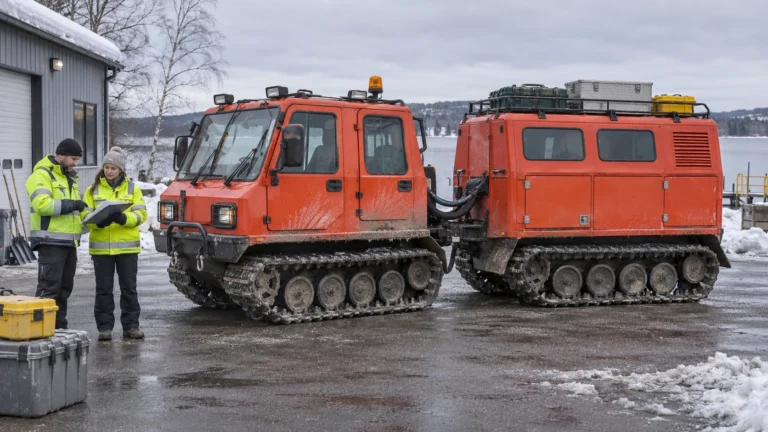
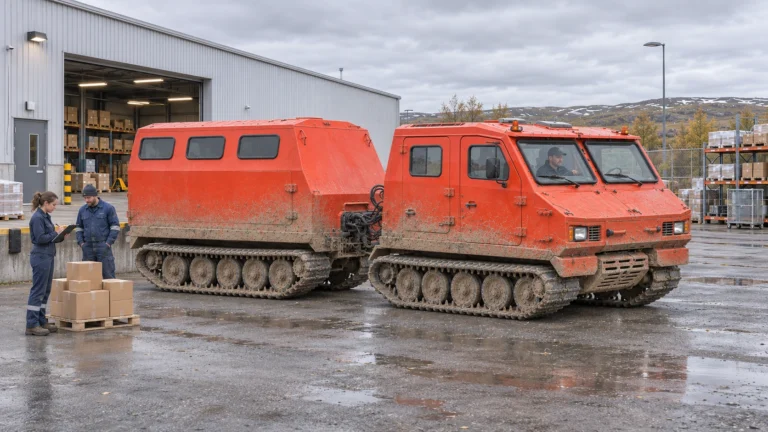
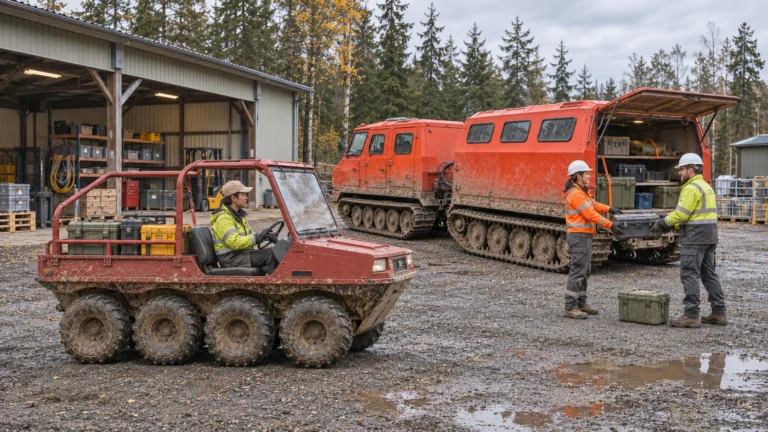
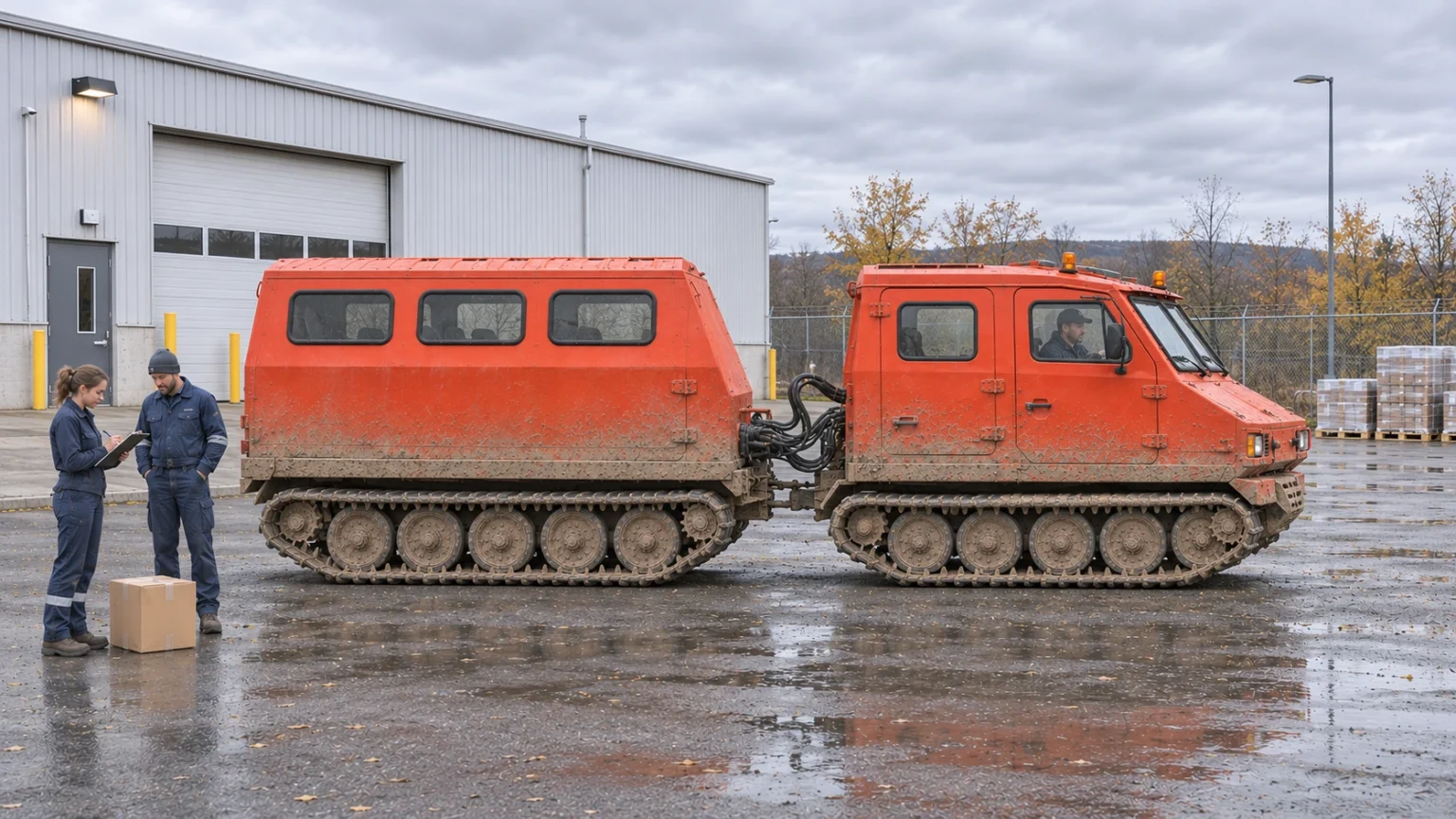
AI concept: generic civilian carrier at a fleet depot. Not a delivered JJ117 or a verified module.
Rear-section terminology in civilian materials
The rear section is one of the visible bodies of a two-section carrier. In manufacturer literature, terms such as passenger body and cargo body describe different purposes. They are labels, not a complete engineering specification.
JINJIA presents the JJ117 family on its tracked utility vehicle product page [S1]. The published descriptions refer to different versions. Nevertheless, a family description alone cannot establish that every illustrated body is available or compatible with another version.
The broader category article [S3] provides background on tracked utility vehicles. Here, the focus is the wording attached to rear-body descriptions rather than how a vehicle is modified.
People and ordinary goods: two kinds of description
A passenger description concerns accommodation for people. By contrast, ordinary cargo terminology refers to goods. Neither description establishes numerical capacity, simultaneous carriage or an approved use.
As a third-party example, Hydrus Innovations describes civilian personnel and freight services associated with its Hägglunds fleet [S2]. This illustrates the variety of service names; it is not evidence of a particular JINJIA body or of interchangeability.
The depot scene below represents generic civilian terminology. It is not a photograph of delivered JJ117 variants or a demonstration of a conversion.
Distinguish confirmed material from concepts
An editorial concept, a catalogue image and a dated record are different kinds of material. First retain the image caption and source. Then note whether the original publisher identifies a particular model or only provides a general illustration.
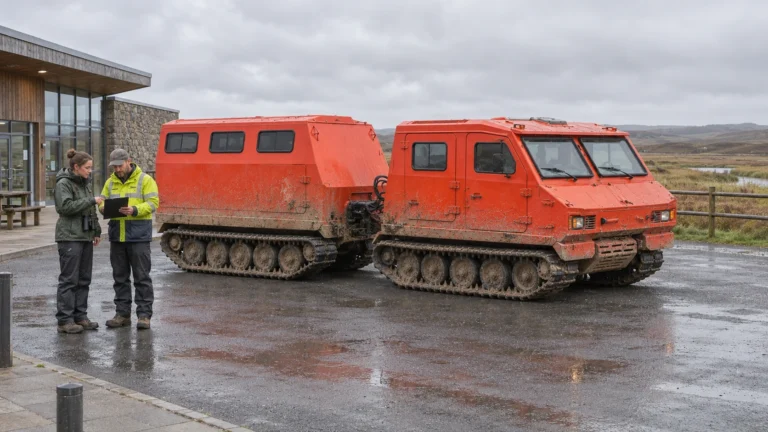
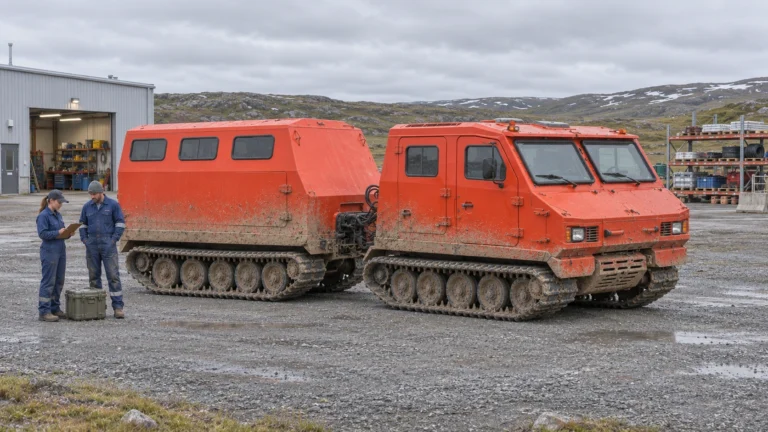
For example, an image with windows may suggest a passenger space to a reader, but appearance alone cannot confirm an occupancy arrangement. Similarly, an enclosed box may illustrate ordinary freight without proving its purpose, approval or compatibility.
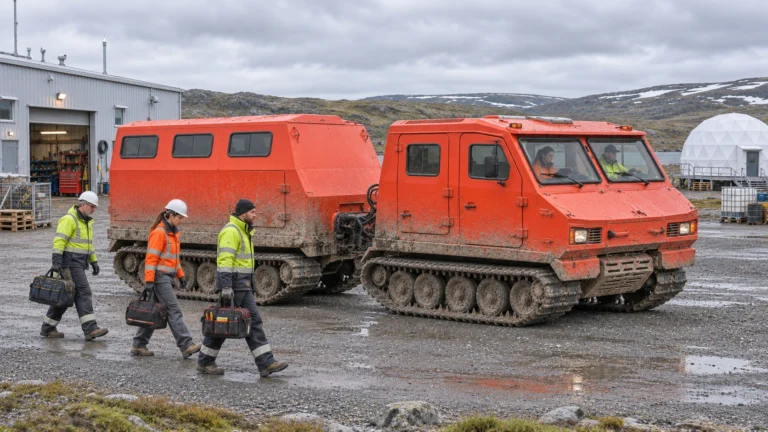
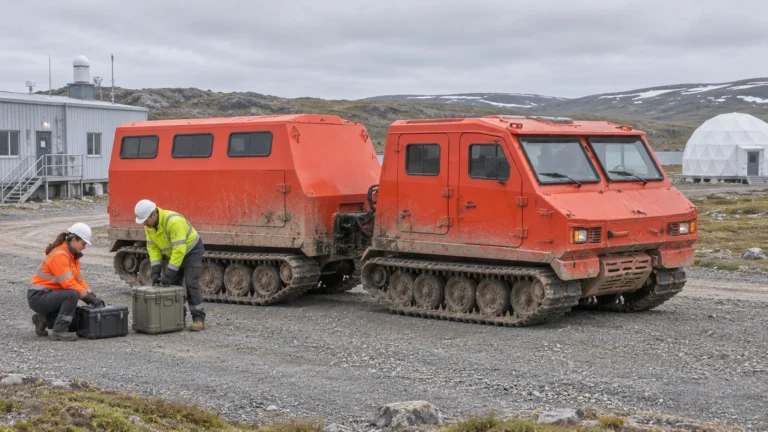
The concept image supplied with this article retains its illustrative description in every language. The four-card diagram separates the terms without implying a technical relationship.
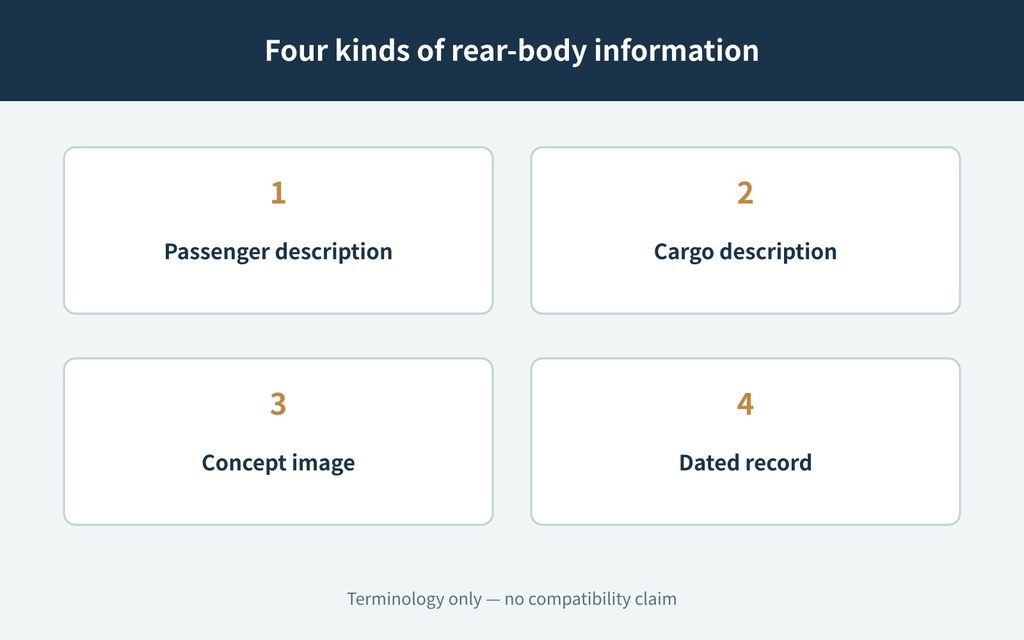
Editorial terminology only; no dimensional, installation or compatibility information.
Records supplied with civilian product information
In an ordinary fleet archive, document titles and revisions help readers locate the correct reference. A manufacturer publication, a clarification and an image caption each retain their source and date. If the records differ, do not silently combine them.
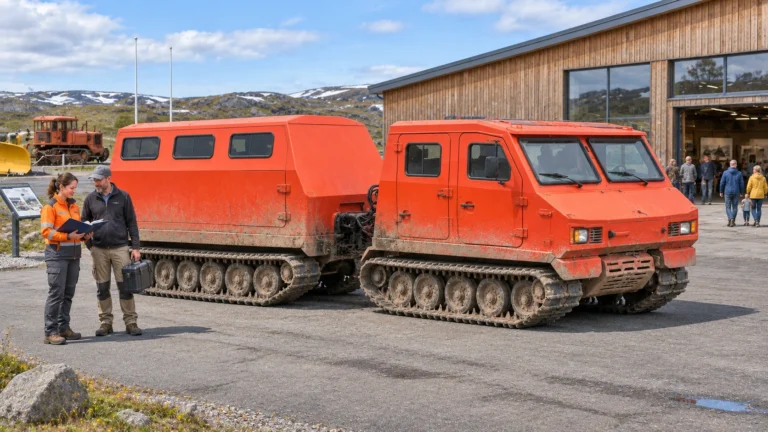
The accompanying blank record sheet separates the original wording from its source and any editorial clarification. It is intended for document consistency, rather than identifying a suitable module or designing a configuration.
Where a statement remains unconfirmed, an archive should preserve that status. Accordingly, a picture should never be promoted into a confirmed specification merely because its appearance seems plausible.
Administrative handover and unresolved descriptions
An administrative handover records what documents have been received and by whom. A catalogue label is not a substitute for a signed record; the receipt of a document does not itself establish technical approval.
The public JINJIA contact page [S4] provides a general information entry. Questions about the meaning of a published description can be recorded separately from the original text.
Ultimately, clear terminology helps readers understand product material. It does not determine body compatibility, loading, installation or operating permission.
View the published contact information for general documentation questions.
Frequently asked questions (FAQ)
A: No. A family label does not establish compatibility. The article makes no such claim.
Q: Can a photo confirm a passenger arrangement?
A: No. The source caption may describe it, but a photograph alone is not supporting documentation.
Q: Does a cargo-body description establish its numerical capacity?
A: No. It identifies a category of material, not a numerical allowance.
Q: Is the pictured vehicle an actual JJ117 delivery?
A: No. It is a labelled AI concept of generic civilian vehicles.
Q: What should the accompanying record sheet contain?
A: Source wording, document identification, date and clarification status. It is not a configuration design tool.
Q: Where can readers find the published product description?
A: The JINJIA product page [S1] and contact page [S4] are public information entries.
References and source boundaries
S1: JINJIA / Response Mobility — Tracked Utility Vehicle — Public manufacturer product introduction; not independent evidence or a compatibility statement.
S2: Hydrus Innovations — Hägglunds fleet — Third-party civilian service description; not a JINJIA result.
S3: JINJIA — What Is a Tracked Utility Vehicle? — Broad vehicle-category background.
S4: JINJIA — Contact — Published contact information; no approval implied.