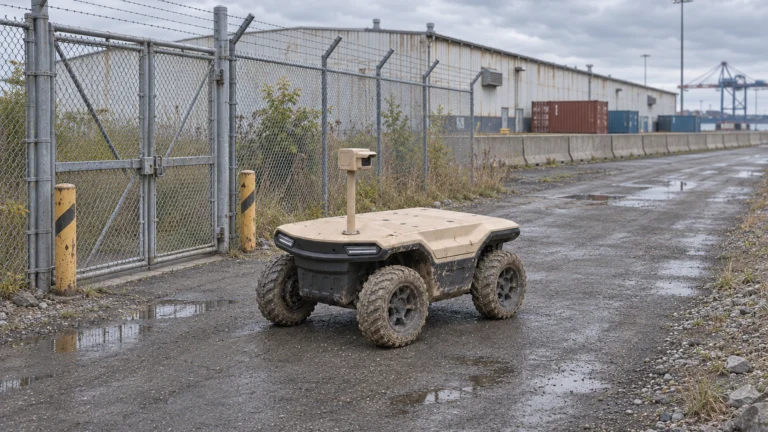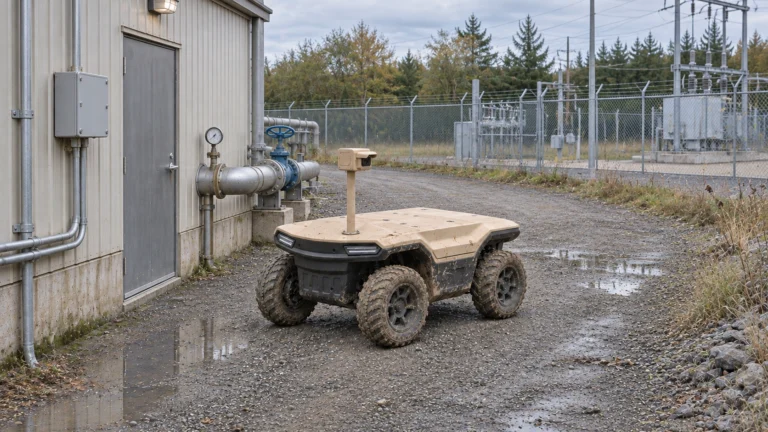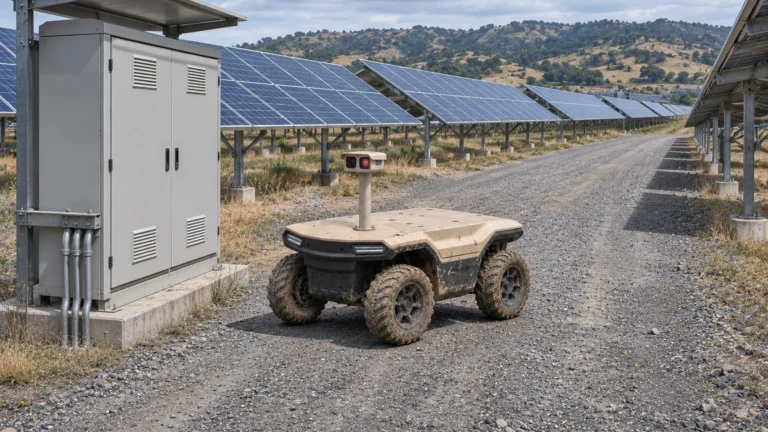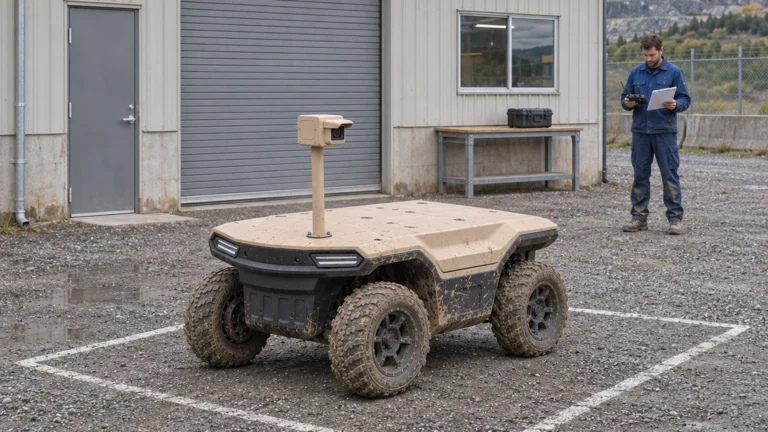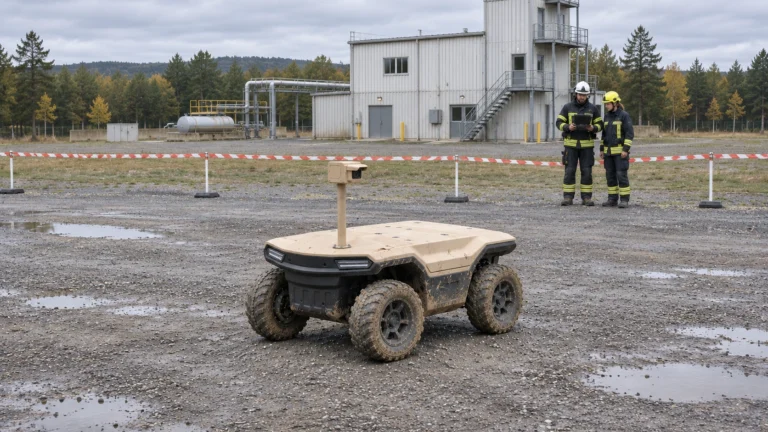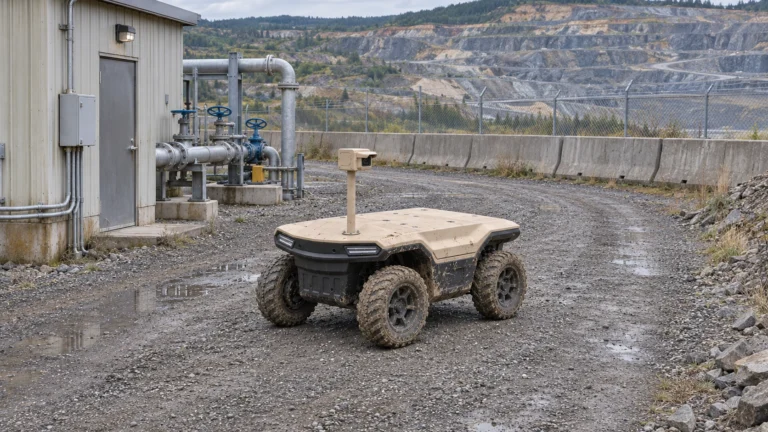


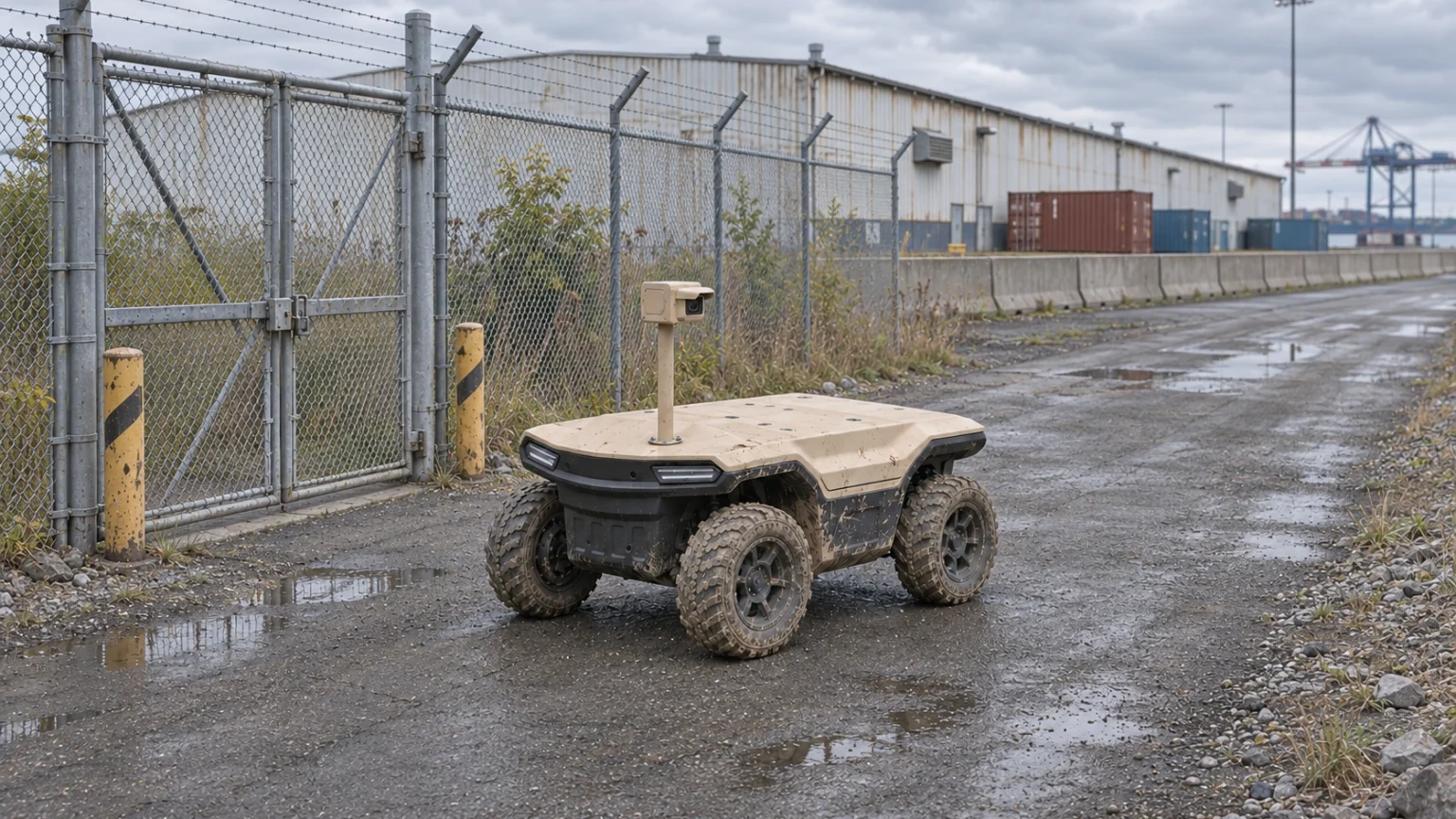
A port perimeter patrol robot needs a defined observation gap and a permitted route. The presence of autonomous cargo transport does not by itself establish a security-robot requirement. Start with the warehouse edge, fence section or service gate that existing patrols and cameras do not cover adequately. Then ask whether a mobile observation position would close that specific gap.
Delta 150 is JINJIA’s four-wheel UGV in the 150 kg payload class. A logistics security AGV is a proposed task configuration with an agreed camera payload and operating boundary. Here AGV means Autonomous Ground Vehicle; Automated Guided Vehicle is another industrial usage. This guide describes planning, not a port deployment or permission to share active loading lanes.
At a glance
• Identify a security observation gap before selecting mobility.
• Separate controlled patrol lanes from cargo traffic and loading work.
• Count accepted observations and intervention time, not distance alone.
Contents
Map warehouse edges and perimeter blind spots
Separate production roads from low-traffic routes
Define gate, night and dwell observations
Agree permissions for trucks, people and access
Give the control room a reviewable record
Measure useful coverage and intervention workload
Frequently asked questions (FAQ)
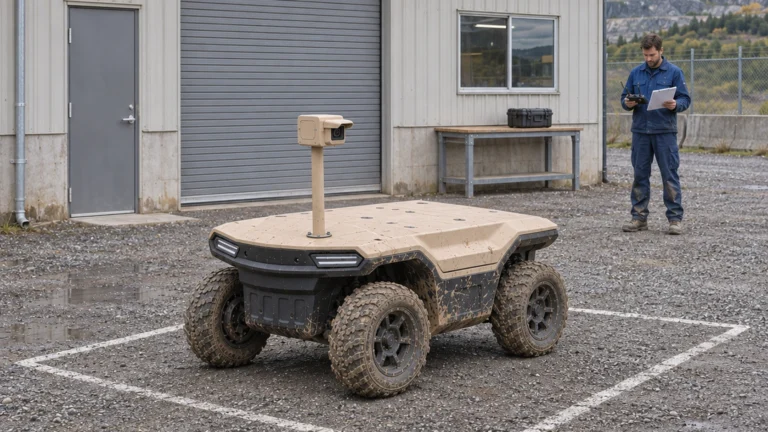
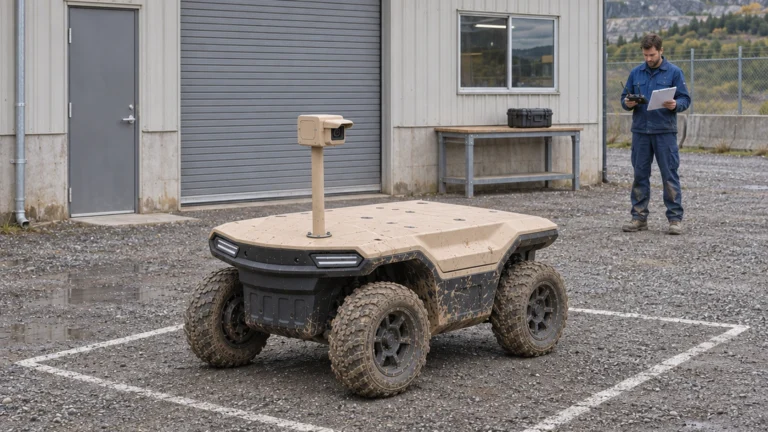
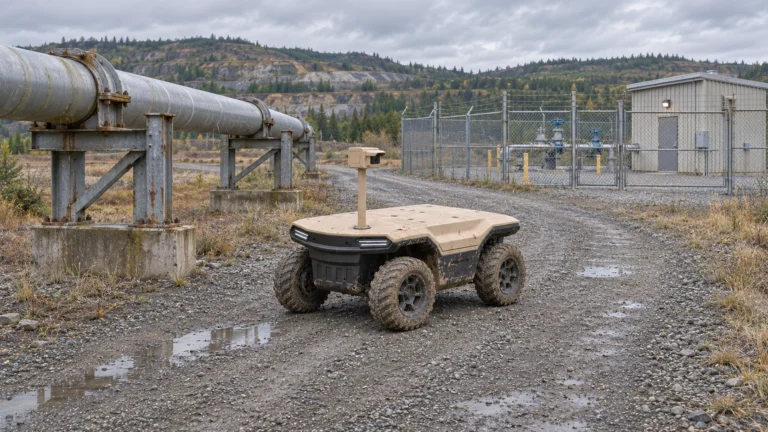
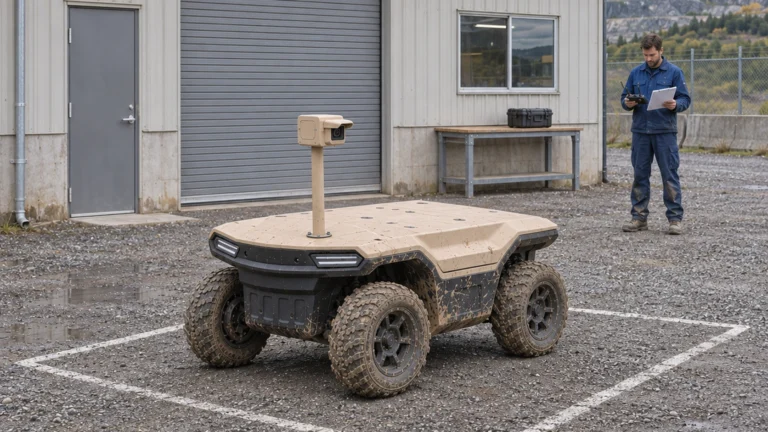
AI concept: proposed task-equipped Delta 150; configuration subject to confirmation.
Map warehouse edges and perimeter blind spots
Mark each observation question on the current security map: a fence corner, closed service gate, warehouse rear elevation or approach hidden by stored materials. Record what must be visible and who needs the information. A robot passing nearby does not prove that the view answers the question. Compare the proposed position with existing fixed-camera views and patrol records before adding equipment.
For example, a hypothetical quiet warehouse service lane may offer a useful view of a fence recess. Check seasonal vegetation, parked trailers, stacked goods and lighting changes at that point. Keep a stable point ID and note any obstruction. The first objective is a usable observation from an authorised place, not full-site autonomous coverage.
Separate production roads from low-traffic routes
Port traffic combines vehicle movement, loading activity and restricted sight lines. HSE’s port guidance identifies these as practical concerns. Review the proposed robot path with the terminal or logistics operator. Prefer a controlled service corridor with defined access and a recoverable stopping location. A low traffic count alone does not make a route controlled.
Map every crossing, reversing area, loading interface, quay edge and temporary diversion that could affect the route. Specify who can close or release a crossing and how the robot stays outside an unavailable section. Do not assume that obstacle sensing or remote steering establishes permission to mix with reach stackers, trucks or forklifts. A site change must trigger a route review.
Define gate, night and dwell observations
For each point, state the camera direction, target detail, dwell and maximum useful age of the record. A gate-status question may require a closer or different view than general fence presence. Test the received image in the actual night lighting and weather conditions. Headlights, wet surfaces, mist and backlighting can change whether an operator can interpret the scene.
Keep a missed or blocked observation visible in the report. If the required view is unavailable, use an approved alternative or ask for human review rather than marking the point complete. Test any proposed thermal or analytic function separately against a defined question; a heat source or detected object does not establish identity, authorisation or an incident.
Agree permissions for trucks, people and access
Document whose route rights take priority, how delivery drivers and contractors receive instructions and what happens during shift changes. HSE’s separation guidance supports reviewing routes and crossings as site conditions change. The port operator should approve the arrangement for this exact robot, payload and recovery procedure. This article sets no universal clearance or traffic rule.
Separate image observation from access decisions. The control room or authorised staff should verify a person, truck or gate request using the existing process. Do not equip the workflow with assumed automatic entry approval. Define who may request robot movement, take control, close a task and authorise a restart after an interruption.
Give the control room a reviewable record
Send point ID, original observation time, location, useful view, quality status and the question requiring review. Distinguish live imagery from stored footage delivered after a link interruption. Agree who reviews the record, how urgent findings reach a responder and how the result is closed. A camera stream without an assigned response process leaves the security gap unresolved.
Start with an approved manual handover if the video or event-system interface is unverified. Confirm identity, permissions, timestamps, data retention and error handling before claiming integration. Preserve incomplete and rejected records. A successful image transfer proves a transport step; it does not prove that the operator received, interpreted and acted on the required observation.
Measure useful coverage and intervention workload
Define the scheduled observation opportunities by point and time window. Count an opportunity as accepted only when its agreed view, timing and review requirements are met. Report missed checks and reasons alongside successes. Keep unique perimeter coverage separate from repeated kilometres; driving the same clear stretch again does not cover a blocked corner.
Also log remote-review minutes, gate assistance, crossing holds, recovery, charging, cleaning and maintenance. Compare the full workload with the existing patrol baseline under comparable conditions. Continue only if the observation gap closes within the operator’s service and resource limits. Send JINJIA the perimeter coverage map, traffic rules and current patrol shifts to discuss a bounded configuration.
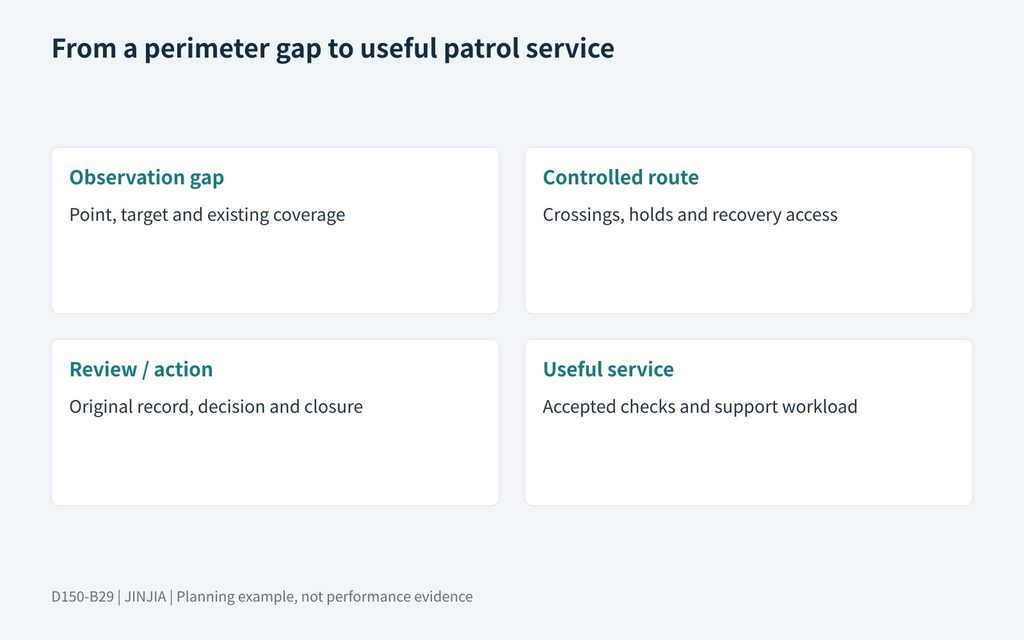
JINJIA planning framework; example inputs are not test results.
| Planning layer | Evidence to retain |
| Observation gap | Point, target and existing coverage |
| Controlled route | Crossings, holds and recovery access |
| Review / action | Original record, decision and closure |
| Useful service | Accepted checks and support workload |
Send the perimeter coverage map, traffic rules and current patrol shifts to scope a Delta 150 task.
Frequently asked questions (FAQ)
A: No. Security observation gaps, route permissions and response ownership need their own assessment.
Q: Is a quiet lane automatically suitable?
A: No. Confirm access control, crossings, stopping and recovery with the site operator.
Q: Can the robot share an active loading lane by default?
A: No. This guide grants no traffic permission or validated mixed-traffic capability.
Q: Does a camera detection identify an authorised visitor?
A: No. Detection, identification and access approval are separate tasks.
Q: What counts as useful coverage?
A: A scheduled point and time window with an accepted view and required review, with misses recorded.
Q: Which labour should the comparison include?
A: Review, crossing and gate assistance, recovery, charging, cleaning and maintenance, as well as patrol time.
Sources and further reading
Platform context; integration scope requires project confirmation.
HSE — Transport safety in ports
General port traffic context: vehicle movements, restricted visibility and loading areas. UK guidance is not a global legal rule or Delta approval.
HSE — Separating pedestrians and vehicles
Route separation, crossings and changing site conditions inform the task-planning questions; no universal lane dimensions adopted.