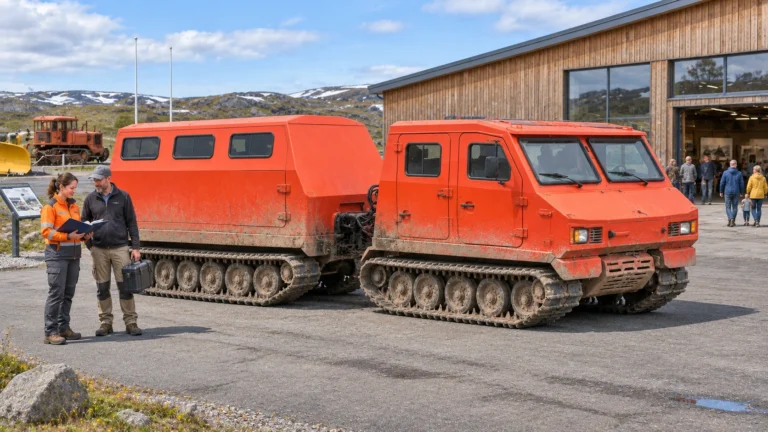











An articulated tracked vehicle is a type of tracked transport machine with connected vehicle sections that can move relative to one another. In a common two-section layout, a front cab and a rear load body each have their own track units. Civilian users consider this category when people, supplies or equipment need to reach a permitted worksite. The layout alone does not prove a particular payload, water capability, certification or suitability for a route.
Contents
What the two vehicle sections represent
Civilian transport applications
When to consider it — and when not to
Evidence a buyer should request
Frequently asked questions (FAQ)
References and source boundaries
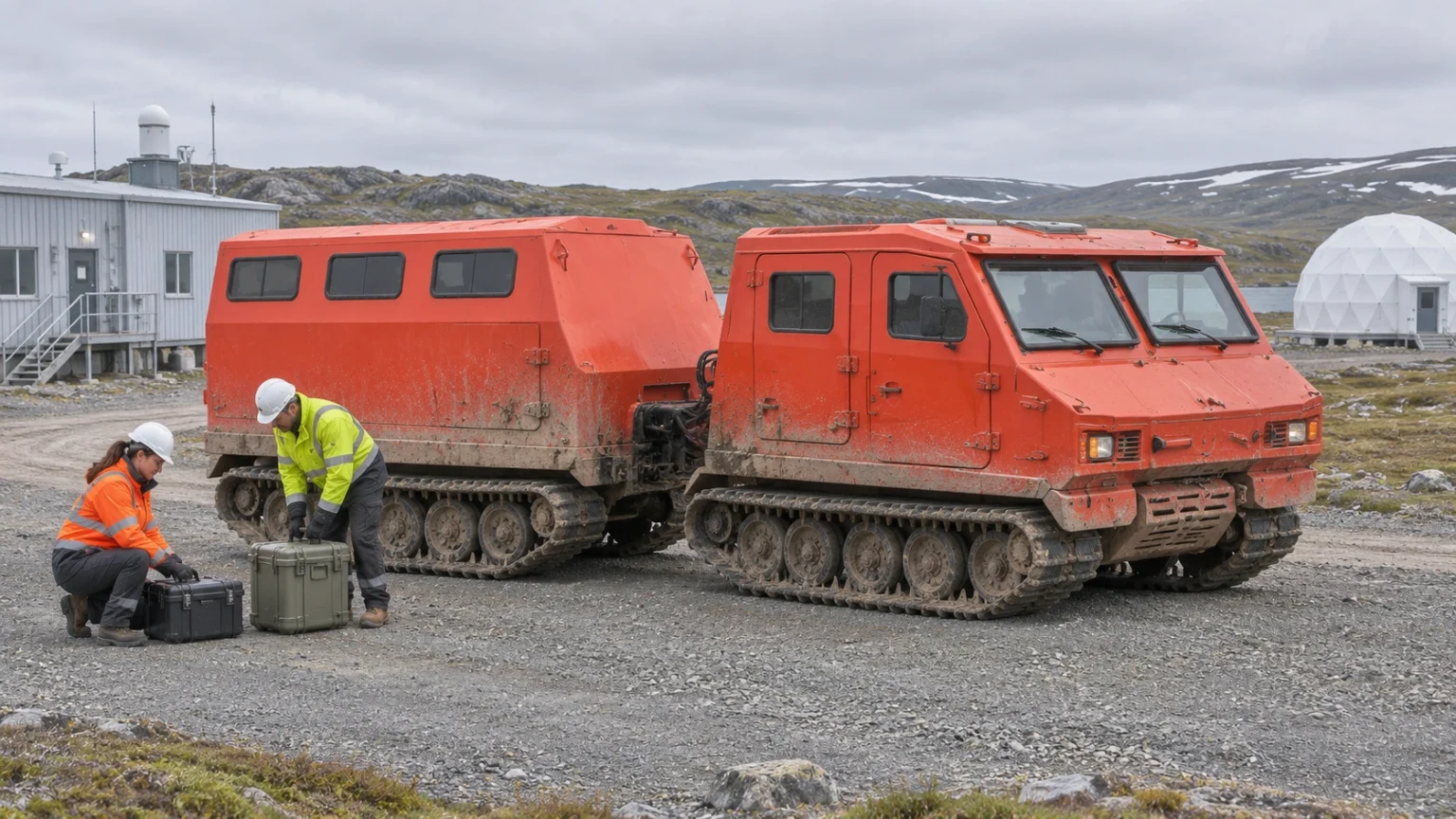
AI concept illustration of a civilian two-section tracked transport vehicle at a research depot. Not a photograph of a delivered JJ117 or an approved configuration.
Definition and terminology
The terms tracked utility vehicle and articulated tracked vehicle describe different levels of classification. A tracked utility vehicle is a broad category that includes single-body and multi-section machines. An articulated tracked vehicle is a narrower category distinguished by its connected vehicle sections. A trailer attached to a conventional crawler is not automatically an articulated carrier in the same sense.
In international procurement, buyers may encounter articulated tracked carrier, two-section tracked carrier and all-terrain tracked transporter. These names overlap but do not specify a standard load rating or configuration. Therefore, use the name to identify the category; use the supplier’s approved model documents to identify the actual vehicle.
JINJIA’s existing general tracked-utility-vehicle article introduces the wider category [S5]. This article answers the separate question of what makes the articulated type distinctive.
What the two vehicle sections represent
The visible distinction is the separate front body, rear body and connection between them. A typical front section contains the operator’s cab. Depending on the model, the rear section may provide passenger space or an enclosed or open cargo body. Each section has its own ground-contact track assemblies in the common two-section layout.
However, appearance does not establish the steering mechanism, drivetrain, permitted relative movement or compatibility of a particular rear body. Different manufacturers use different designs. For that reason, an external photograph is useful for recognizing the category, not for reading engineering specifications. The accompanying illustration is a simplified visual explanation, not a drawing of an exact production vehicle.
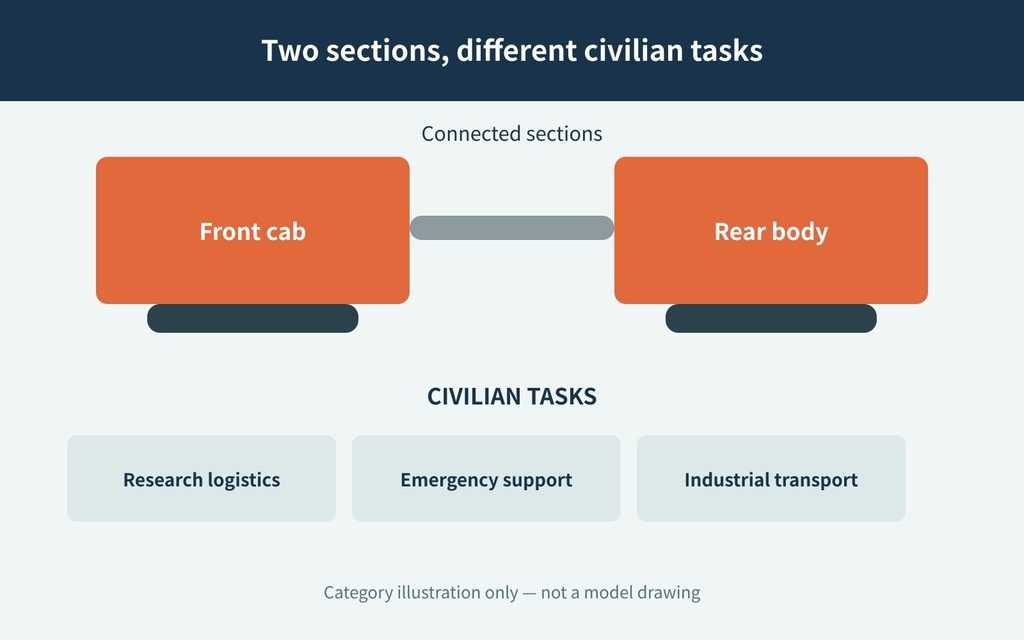
A category-level diagram, not a model-specific technical drawing.
A civilian buyer should ask for the model identifier and the offered body configuration before treating any pictured arrangement as available. Separate the front cab, rear body and load documentation in the order record. This also prevents a marketing photograph of one variant from being used as evidence for another.
Civilian transport applications
Polar research: the Australian Antarctic Program reports using Hägglunds vehicles since 1983 for Antarctic activities, including transport of people, scientific equipment and supplies [S1]. This is a documented example of the vehicle category in scientific support, not a record of JINJIA deployment.
Emergency transport: Bay Search and Rescue describes use of its tracked rescue vehicles to support local medical responders in snow-affected areas [S2]. The relevant purchase question is the authorised transport task, separate from medical or specialist rescue certification.
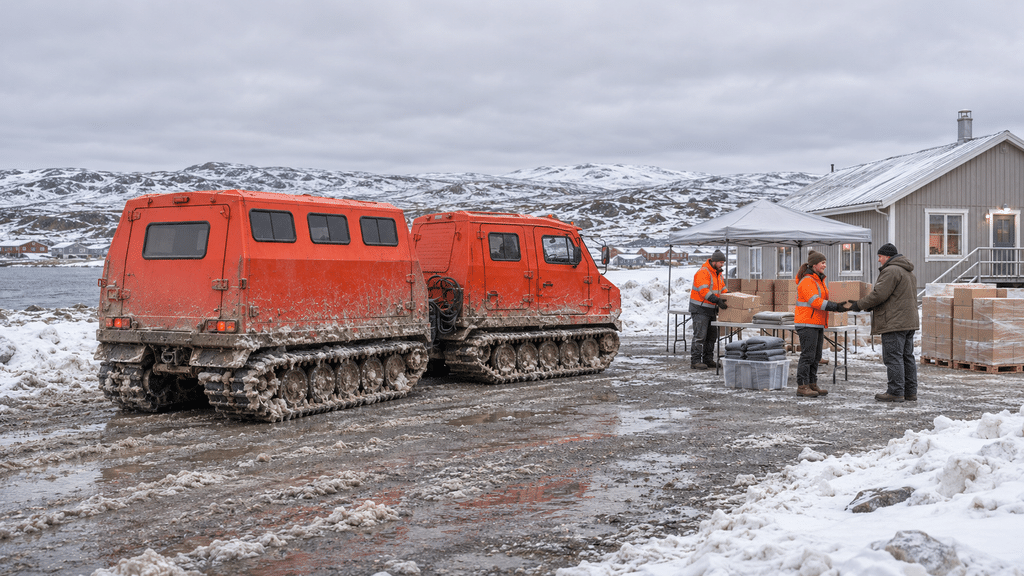
Illustrative relief logistics, not a documented deployment.
Industrial support: Canadian operator Hydrus Innovations lists personnel and freight transport and forestry-related support among its services using Hägglunds vehicles [S3]. This illustrates that the same broad vehicle category may serve different civilian bodies and tasks. It does not establish that every model offers the operator’s configurations.
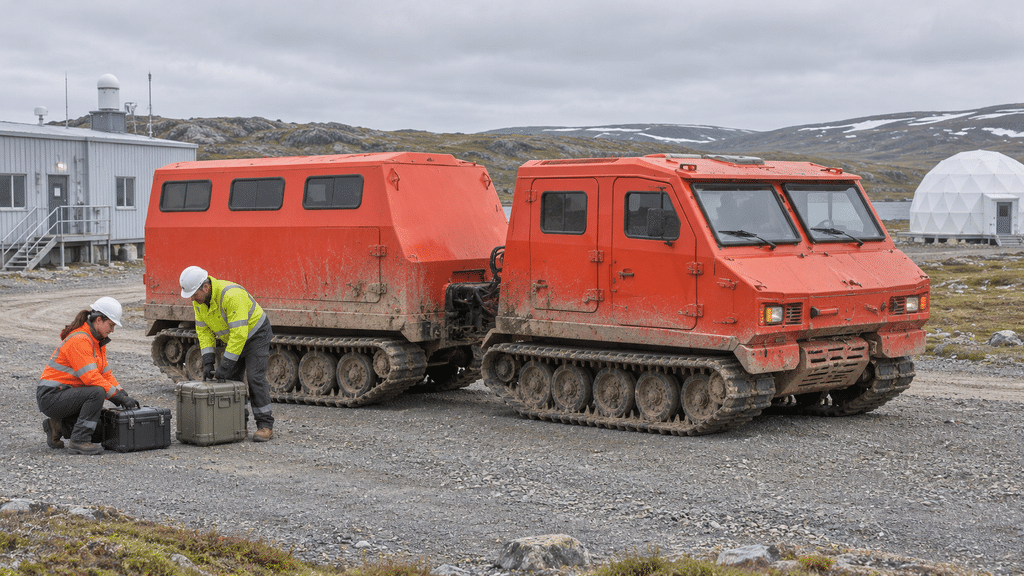
Illustrative forestry transport, not a documented deployment.
For a mine, forestry operation or public-service contractor, a useful starting point is the work to be completed: people delivered, ordinary tools handed over or supplies received at an authorised location. In contrast, a headline about terrain alone is not a transport requirement.
When to consider it — and when not to
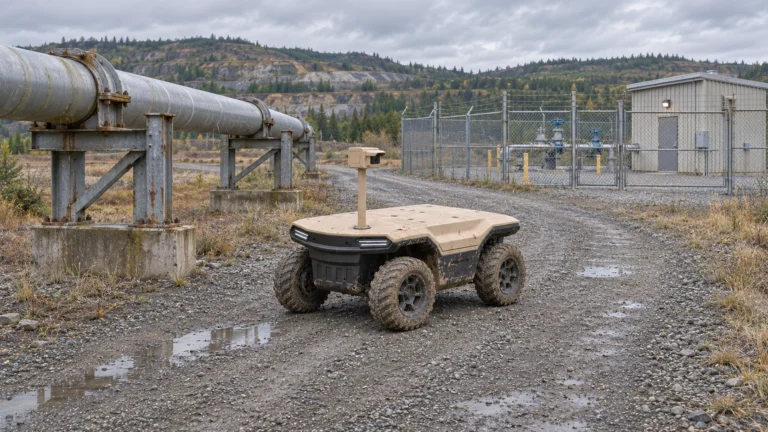
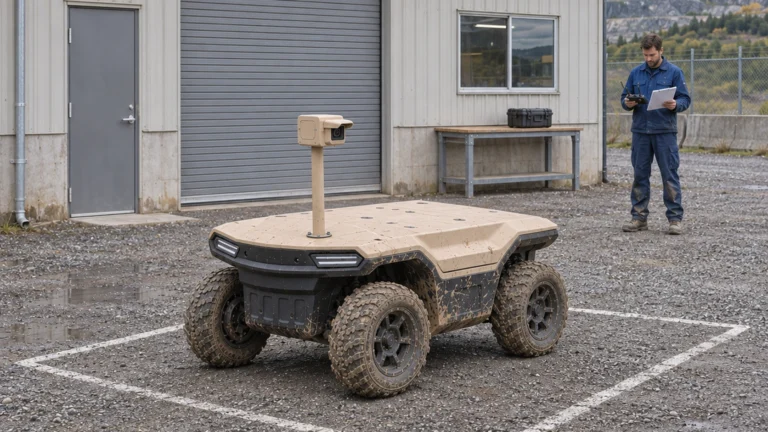
An articulated carrier is one possible transport category, not the automatic choice for every remote site. First decide whether a vehicle is needed at all. If a light utility vehicle already meets the approved task, a larger carrier may be unnecessary. If the work is a small observation task rather than transporting people or materials, a separate inspection tool may be more suitable.
Conversely, if the buyer needs both personnel and ordinary cargo transport, a supplier may be asked to explain which approved body arrangement suits that duty. The decision still depends on the delivered configuration, site authority and supporting documents. No category label guarantees safe operation on soft ground, in floodwater or in severe weather.
Moreover, the previously published light 8×8 comparison [S6] provides the broader category decision. This article intentionally does not duplicate that comparison or promise performance in particular conditions.
Evidence a buyer should request
Start with a brief that identifies the intended civilian task, people and ordinary items to be transported, receiving location type, required delivery documents and the organisation responsible for site approval. The workbook accompanying this article provides a blank terminology and task record. It does not calculate a capability or substitute for professional approval.
Next ask the supplier for the exact model designation, the applicable body configuration, authorised usage documentation and the source of each specification. Record which information is a published description, which is a signed specification, and which still requires validation. In addition, agree who will provide the appropriate manuals, training and support documentation.
JINJIA / Response Mobility presents the JJ117 on its tracked utility vehicle product page [S4]. The page provides a manufacturer description of the platform. The photographic concept in this article illustrates a proposed civilian use, not a delivered configuration or proof of field performance. Contact JINJIA with a civilian transport requirement to request the applicable approved information.
Discuss a civilian transport requirement with JINJIA / Response Mobility.
Frequently asked questions (FAQ)
A: No. The broader category includes single-body vehicles. Articulated vehicles have connected sections that can move relative to one another.
Q: Are both sections always identical?
A: No. Body purposes and arrangements vary by model. Confirm the offered configuration in supplier documents.
Q: Does an articulated carrier automatically operate in water?
A: No. The category name does not establish water capability or permission. Obtain applicable model documentation and competent authority approval.
Q: Can the rear body carry both people and equipment?
A: Only if that arrangement is documented and approved for the particular vehicle and use. Do not assume it from a photograph.
Q: Are the historical examples JINJIA customer deployments?
A: No. The examples concern named third-party organisations and are used to explain civilian applications of the category.
Q: What is the first step when considering a JJ117?
A: Define the civilian transport task and request the applicable model and configuration documents from JINJIA.
References and source boundaries
S1: Australian Antarctic Program — Hägglunds tracked vehicles — Government research programme: historical scientific transport context.
S2: Bay Search and Rescue — Skills — Rescue organisation: reported civilian assistance in snow; no JJ117 performance claim.
S3: Hydrus Innovations — Hagglunds — Operator describes its own services; no proof of individual incidents or JINJIA configuration.
S4: JINJIA / Response Mobility — Tracked Utility Vehicle — Brand product description; model-specific capabilities and approvals require separate documentation.
S5: JINJIA — What Is a Tracked Utility Vehicle? — Existing category article; shared terminology, not independent test evidence.
S6: JINJIA — Light 8×8 or Articulated Tracked Vehicle — Existing platform comparison; linked for scope separation.