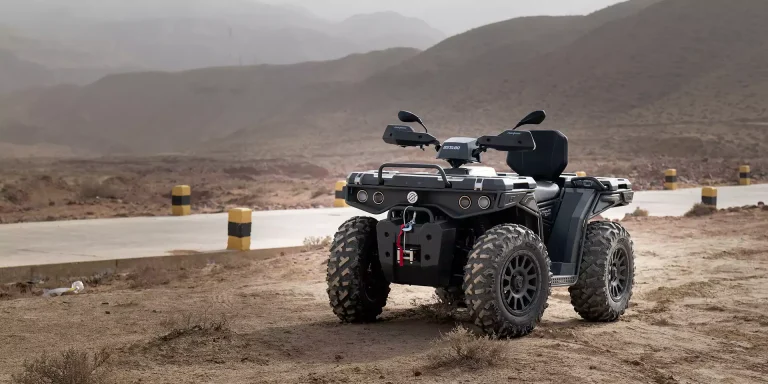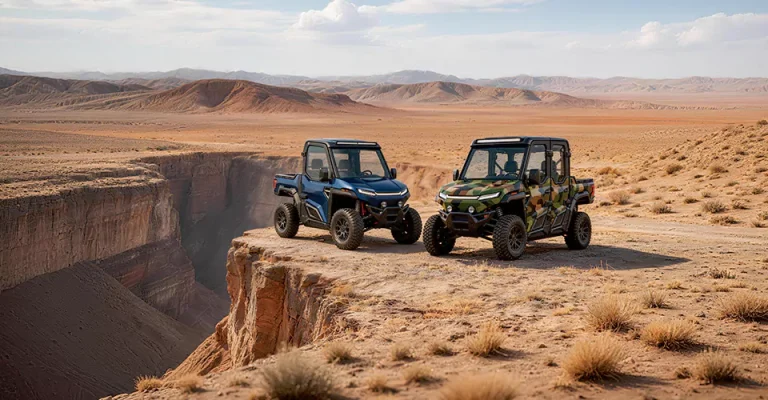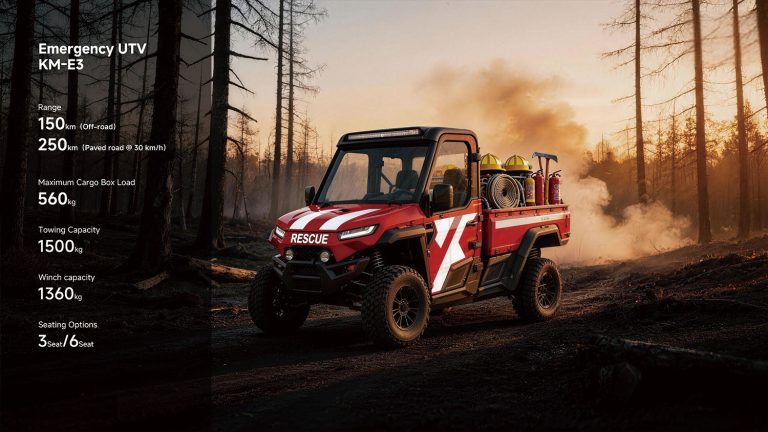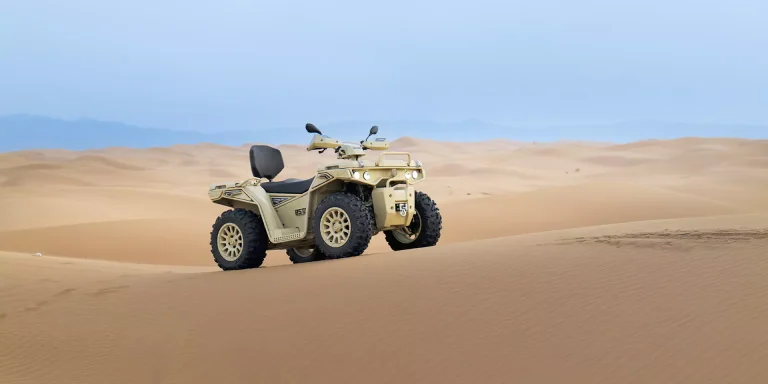











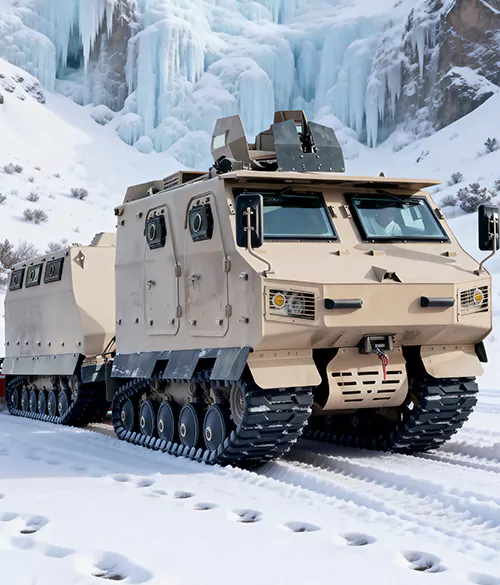
All-terrain vehicles (ATVs) are designed to handle difficult surfaces, but “all-terrain” does not mean “unstoppable.” Deep mud, soft ground, waterlogged trails, and wetlands can challenge even capable off-road vehicles.
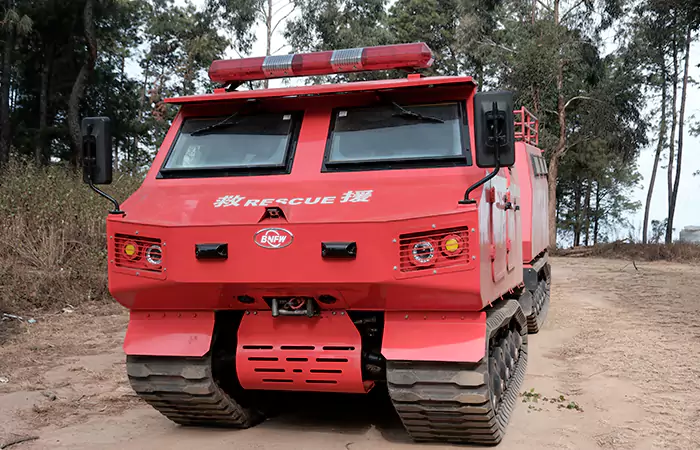
When a conventional ATV becomes stuck, an amphibious vehicle can offer a different approach. With features such as multiple driven wheels, low ground pressure, buoyant construction, and water mobility, amphibious vehicles are designed to operate in environments where ordinary off-road vehicles may struggle.
Can an All-Terrain Vehicle Get Stuck in Mud?
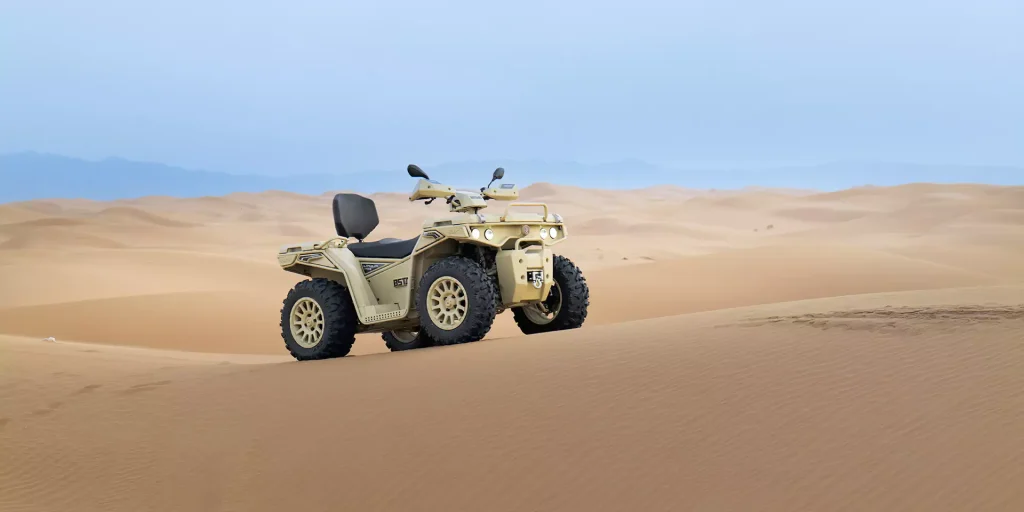
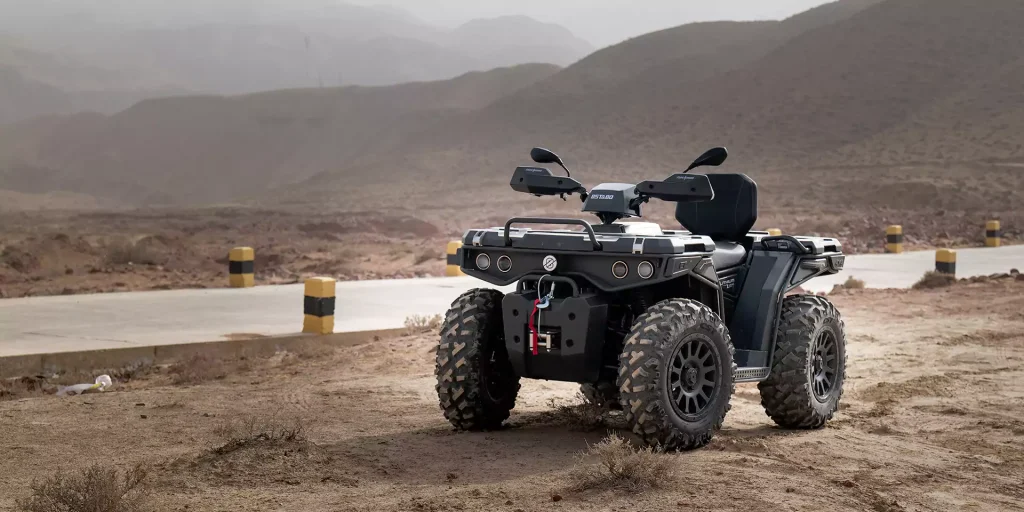
Yes. An ATV can get stuck in mud when the ground becomes too soft or deep for its tires and drivetrain to maintain sufficient traction.
Several factors can increase the risk:
- Deep mud: Tires can sink below the surface and lose effective traction.
- Soft ground: The vehicle’s weight can cause it to sink into the terrain.
- Insufficient ground clearance: Mud, roots, and debris can contact the underside of the vehicle.
- Limited traction: Once the tires begin spinning, they may dig deeper into the mud.
- Waterlogged terrain: Wetlands and flooded areas can be difficult for conventional vehicles to cross safely.
Even vehicles with four-wheel drive can become immobilized when the terrain exceeds their traction and flotation capabilities.
Why Do Vehicles Get Stuck in Mud?
The main problem is the interaction between vehicle weight, tire contact area, and ground conditions.
When a vehicle enters very soft ground, its tires can sink into the surface. As the vehicle sinks, rolling resistance increases. If the tires cannot generate enough forward force, they may spin without moving the vehicle forward.
In severe conditions, the vehicle can become effectively high-centered or buried in mud.
This is where vehicle design becomes especially important.
How Amphibious Vehicles Handle Extreme Terrain
Amphibious vehicles are designed to approach difficult terrain differently from conventional off-road vehicles.
1. Multiple Driven Wheels
Many amphibious vehicles use 6×6 or 8×8 configurations, providing multiple points of traction.
An 8×8 amphibious vehicle, for example, distributes driving force across eight wheels. This can improve traction and help the vehicle maintain forward movement on soft or uneven terrain.
2. Lower Ground Pressure
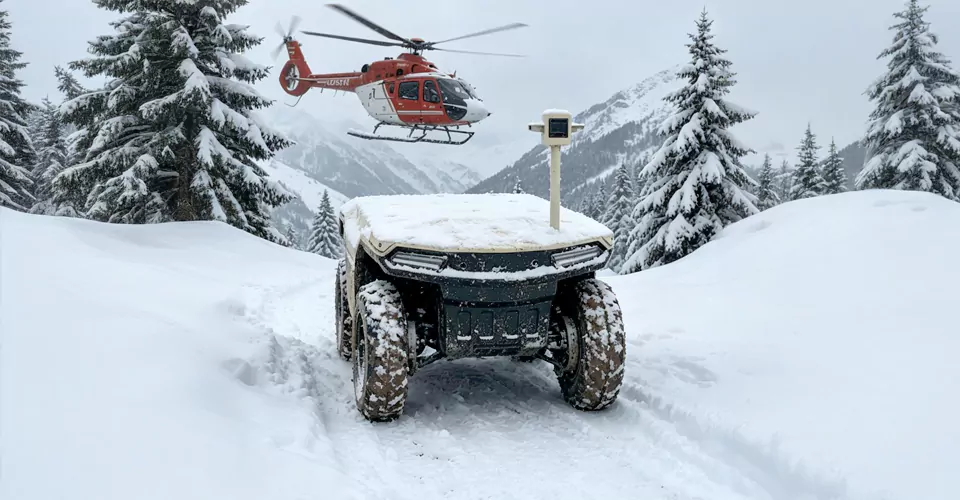
Ground pressure is an important factor when traveling across mud, sand, snow, and wetlands.
A vehicle with a larger overall contact area can distribute its weight more effectively. This helps reduce the tendency to sink into soft ground.
This principle is similar to walking across soft snow with wide snowshoes rather than narrow shoes.
3. Specialized Tires
Amphibious vehicles may use large, low-pressure tires designed for soft terrain.
These tires can provide a larger contact footprint and help the vehicle maintain mobility on surfaces where conventional tires may sink or lose traction.
4. Buoyant Vehicle Design
The biggest difference between an amphibious vehicle and a conventional ATV is its ability to float.
When the terrain becomes flooded or turns into a water obstacle, an amphibious vehicle can transition from ground travel to water travel rather than treating water as an obstacle that must be avoided.
5. Water Propulsion
Many amphibious vehicles use specialized propulsion systems to move through water.
Depending on the vehicle design, propulsion may come from the wheels, propellers, water jets, or other systems.
This allows the vehicle to continue moving after leaving solid ground.
From Mud to Water: A Different Mobility Strategy
Consider a flooded wetland.
A conventional ATV may be able to travel across relatively firm ground but eventually reach an area where the surface is too soft. Continuing forward can cause the tires to sink and spin.
An amphibious vehicle can approach the same environment with a different mobility strategy:
Firm ground → soft terrain → mud → shallow water → deeper water
Instead of stopping when the ground disappears, an amphibious vehicle is designed to continue operating across the transition.
This land-to-water capability is one of its biggest advantages in extreme environments.
Amphibious Vehicle vs. Conventional ATV
| Feature | Conventional ATV | Amphibious Vehicle |
|---|---|---|
| Off-road capability | Good to excellent | Excellent |
| Mud mobility | Depends on conditions | Designed for soft terrain |
| Ground pressure | Varies | Often optimized for soft ground |
| Water operation | Limited | Designed for water |
| Deep water crossing | Generally unsuitable | Capable, depending on design |
| Typical configuration | 4×4 | 6×6, 8×8, or similar |
| Main advantage | Compact off-road transportation | Land-and-water mobility |
An ATV can be an excellent choice for trails, farms, recreational riding, and general off-road transportation. An amphibious vehicle becomes more valuable when the operating environment includes deep mud, wetlands, flooded areas, or frequent water crossings.
Where Are Amphibious Vehicles Useful?
Flood and Emergency Response
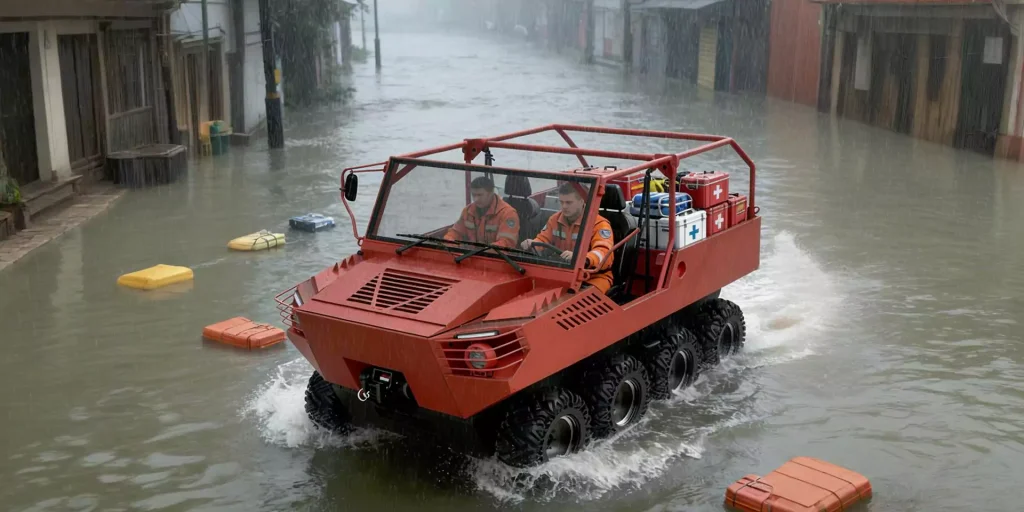
Flooded roads and soft ground can make conventional transportation difficult. Amphibious vehicles can help emergency teams reach affected areas and transport personnel, supplies, and equipment.
Search and Rescue
During rescue operations, teams may need to cross mud, marshes, rivers, or flooded terrain. An amphibious vehicle can provide access to areas that are difficult to reach using conventional vehicles.
Wetland and Environmental Operations
Researchers, environmental teams, and field workers may need to operate in marshes and wetlands where traditional vehicles can cause excessive ground disturbance or become immobilized.
Forestry and Remote Work
Forestry operations often involve muddy trails, uneven ground, and areas with limited road infrastructure. An amphibious vehicle can provide transportation for workers and equipment across challenging terrain.
Agriculture and Land Management
Some agricultural and land-management applications involve soft or waterlogged ground. A suitable amphibious vehicle can provide mobility without relying entirely on established roads.
How to Reduce the Risk of Getting Stuck
Even an amphibious vehicle has operating limits. Proper vehicle selection and driving practices remain important.
Before entering extreme terrain, consider:
- Assess the ground conditions.
- Choose tires appropriate for the terrain.
- Avoid unnecessary high-speed driving through deep mud.
- Check the vehicle’s payload capacity.
- Understand the vehicle’s water operating limits.
- Follow the manufacturer’s operating and recovery procedures.
The right vehicle should always be selected based on the actual terrain, payload, water conditions, and intended application.
Conclusion
Yes, an all-terrain vehicle can get stuck in mud. Four-wheel drive and aggressive tires can significantly improve off-road performance, but they cannot eliminate the limitations created by extremely soft or flooded terrain.
Amphibious vehicles solve this challenge by combining off-road mobility with water-crossing capability. Multiple driven wheels, low ground pressure, specialized tires, buoyant construction, and water propulsion allow them to operate across a wider range of environments.
For applications involving mud, wetlands, flooding, remote terrain, and frequent land-to-water transitions, an amphibious vehicle can provide a level of mobility that conventional ATVs cannot.
For information about amphibious and special-mobility vehicle solutions, contact Jinjia Special Equipment at info@responsemobility.com.