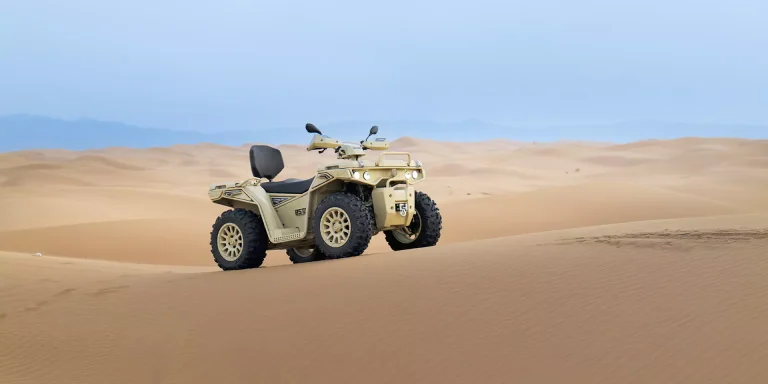











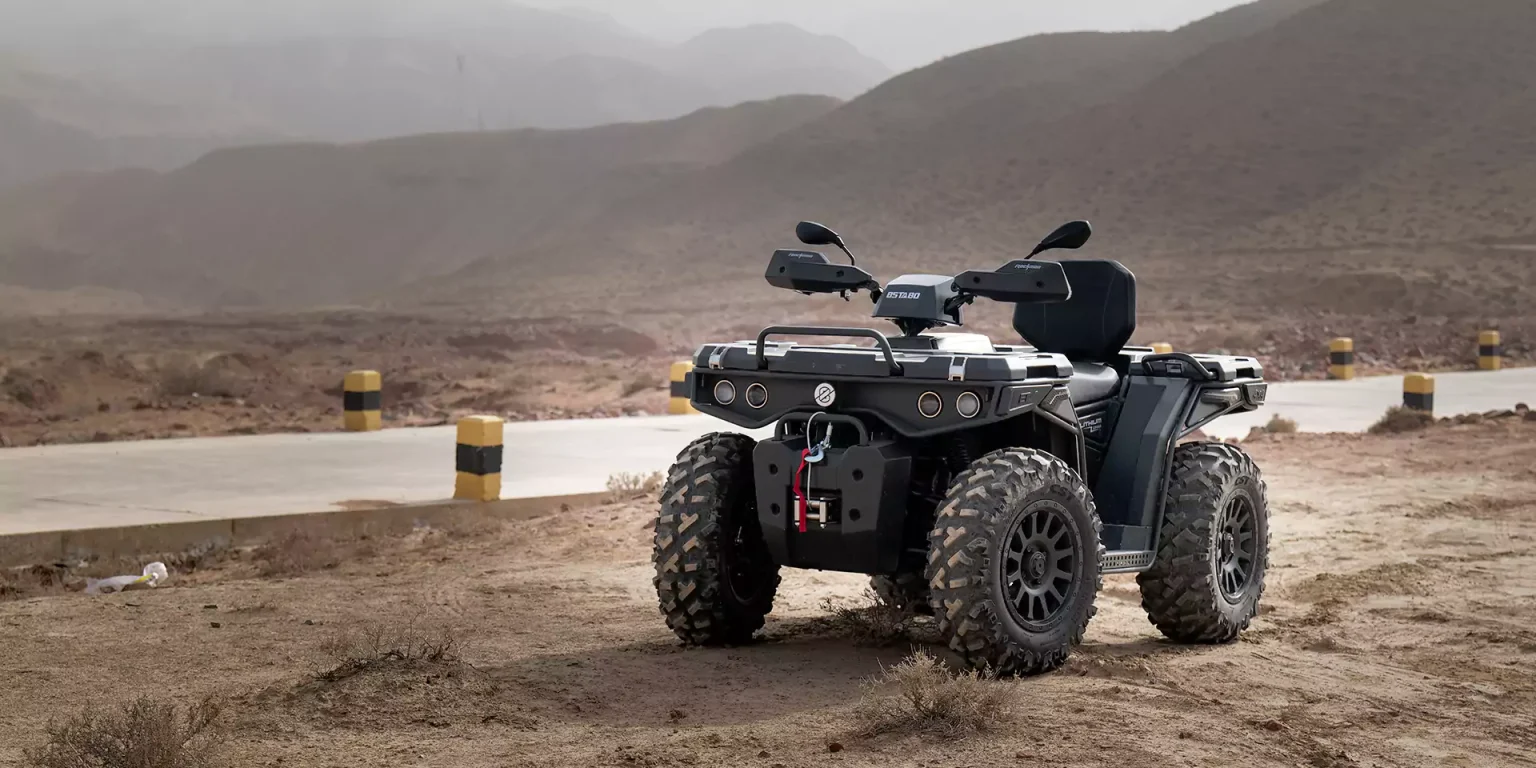
All-terrain vehicles (ATVs) are motorized vehicles designed to travel across a wide range of surfaces and challenging terrain. Unlike ordinary road vehicles, ATVs are built for off-road mobility and can operate on surfaces such as mud, sand, gravel, grass, snow, and uneven trails.
ATVs are commonly used for transportation, agriculture, forestry, recreation, maintenance, and other applications where conventional vehicles may have difficulty reaching.
What Is an All-Terrain Vehicle?
An all-terrain vehicle, commonly called an ATV, is a compact off-road vehicle designed to travel over different types of terrain.
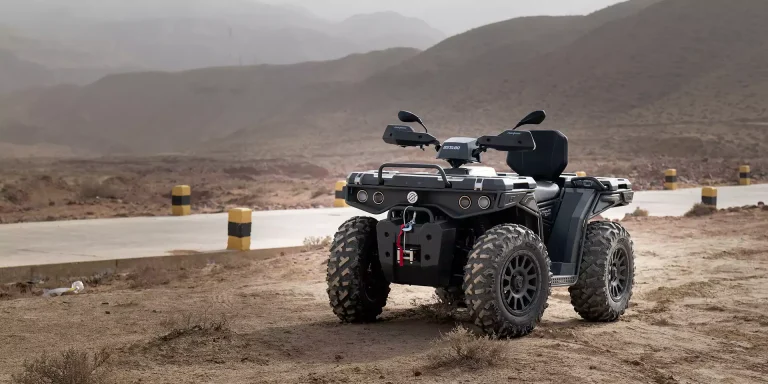
Most traditional ATVs have four wheels and are controlled using handlebars. They typically feature:
- Four-wheel drive or two-wheel drive
- Low-pressure off-road tires
- High ground clearance
- Independent or specialized suspension
- Compact dimensions
- A strong and lightweight frame
The exact design depends on the intended application.
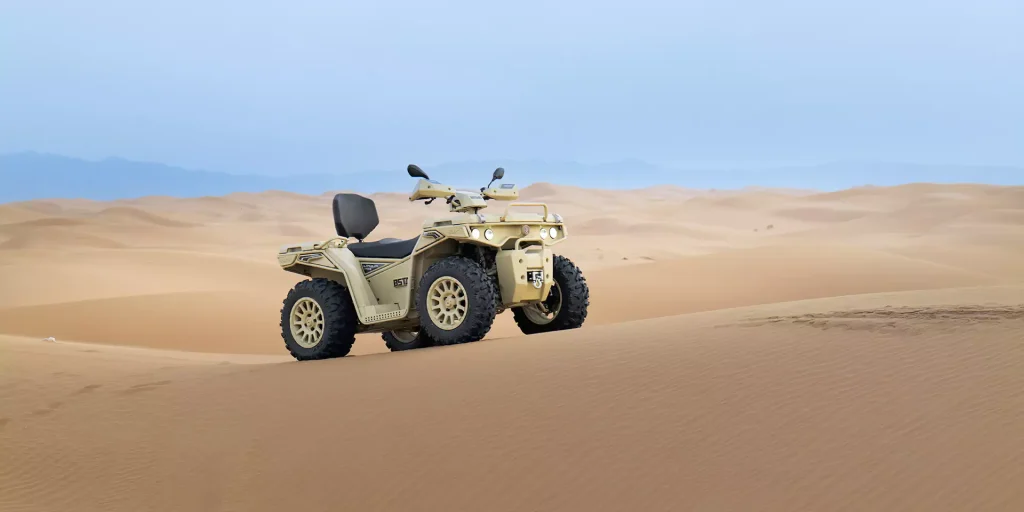
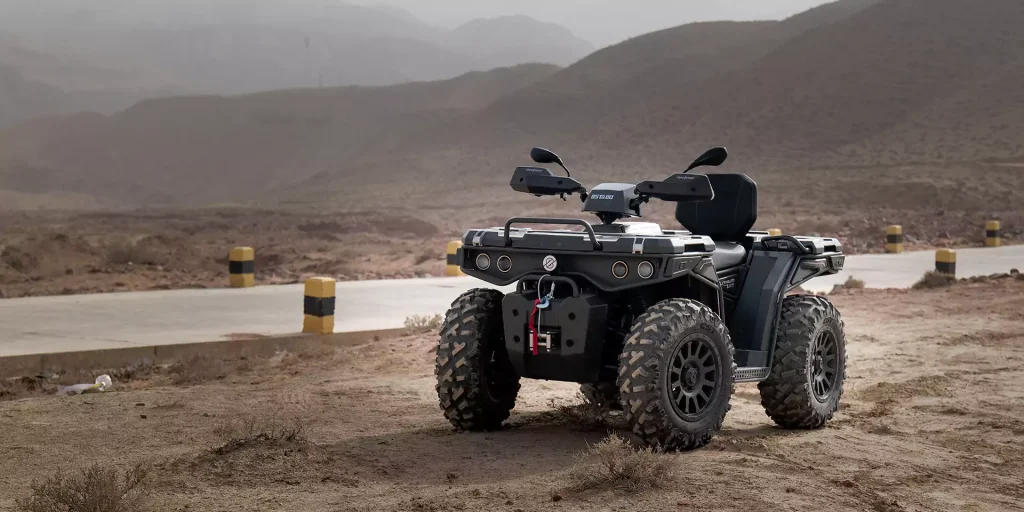
How Do All-Terrain Vehicles Work?
ATVs use a combination of engine power, drivetrain, tires, suspension, and ground clearance to maintain mobility away from paved roads.
Engine and Drivetrain
The engine provides power to the drivetrain, which transfers power to the wheels. Many utility ATVs offer selectable four-wheel drive to improve traction on mud, slopes, and loose surfaces.
Off-Road Tires
ATV tires are designed with tread patterns that help provide traction on loose and uneven surfaces. Tire pressure can also affect performance, particularly on sand and soft ground.
Suspension
The suspension system helps the vehicle maintain contact with uneven terrain while improving ride comfort and stability.
Ground Clearance
Higher ground clearance helps an ATV pass over rocks, roots, ruts, and other obstacles without easily contacting the ground.
Common Types of All-Terrain Vehicles
Utility ATVs
Utility ATVs are designed for practical work rather than primarily recreational riding.
They are commonly used in:
- Agriculture
- Forestry
- Property maintenance
- Hunting
- Construction support
- Farm transportation
They may include racks, towing equipment, winches, or other accessories for carrying tools and materials.
Sport ATVs
Sport ATVs are designed primarily for recreational riding and performance.
They typically emphasize:
- Acceleration
- Handling
- Suspension performance
- Lightweight construction
- Maneuverability
They are commonly used on designated off-road trails and recreational areas.
Youth ATVs
Youth ATVs are smaller vehicles designed for younger riders. Their engine size, speed, and dimensions are generally lower than those of full-size ATVs.
They should always be operated according to applicable age, safety, and manufacturer requirements.
Specialized ATVs
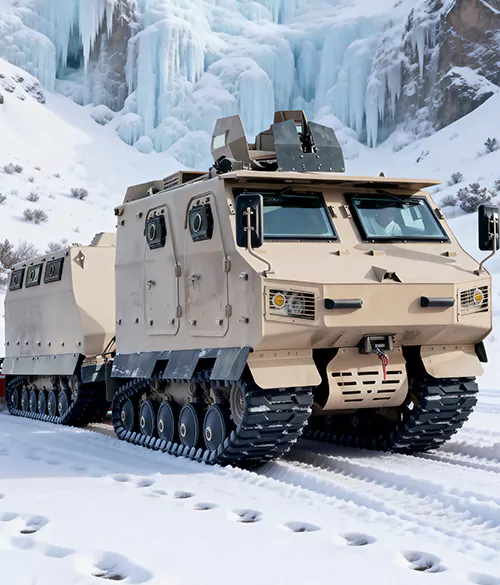
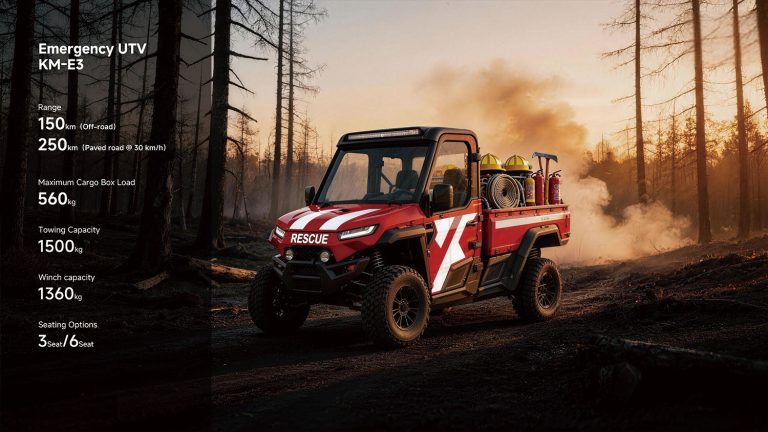
Some all-terrain vehicles are modified for specific professional applications. These may include vehicles designed for emergency response, military support, remote-area transportation, or specialized field operations.
Where Are All-Terrain Vehicles Used?
ATVs are highly versatile because they can reach locations that may be inaccessible to standard vehicles.
Agriculture
Farmers can use ATVs to inspect fields, transport tools, monitor livestock, and move around large properties.
Forestry
ATVs can help workers access forest trails and remote work areas where larger vehicles may be difficult to operate.
Recreation
Off-road enthusiasts use ATVs for recreational riding on suitable trails and designated off-road areas.
Search and Rescue
Specially equipped ATVs can help rescue teams transport personnel and equipment across difficult terrain.
Property and Facility Maintenance
ATVs can be useful for maintaining large properties, parks, outdoor facilities, and remote infrastructure.
What Terrain Can an ATV Handle?
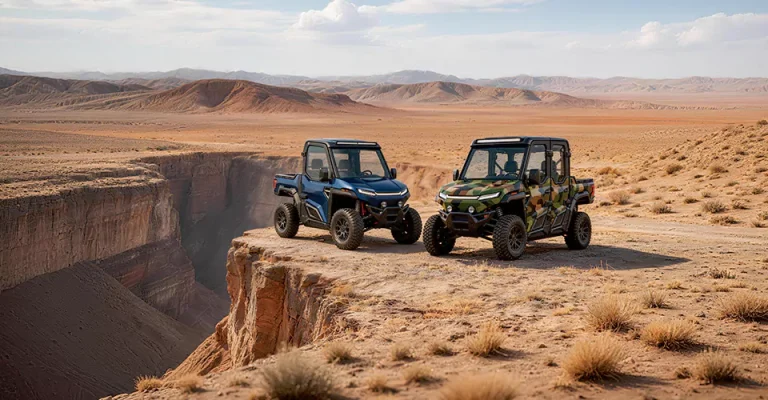
The exact capability depends on the vehicle, tires, payload, and operating conditions. In general, ATVs can be used on:
- Dirt trails
- Gravel
- Grass
- Sand
- Mud
- Snow
- Rocky terrain
- Forest trails
However, all-terrain does not mean every terrain.
Extremely deep mud, deep water, swamps, steep slopes, and unstable ground can exceed the capabilities of a conventional ATV.
Can an ATV Drive Through Water?
ATVs can cross some shallow water obstacles when designed and operated appropriately, but they are not normally amphibious vehicles.
Deep water can cause problems such as:
- Loss of traction
- Engine or electrical damage
- Water entering the air intake
- Loss of vehicle stability
- Difficult recovery
For applications that regularly require travel through deep water, flooded areas, or wetlands, an amphibious vehicle may be a better solution.
ATV vs. Amphibious Vehicle
| Feature | ATV | Amphibious Vehicle |
|---|---|---|
| Typical configuration | 4 wheels | Often 6×6 or 8×8 |
| Off-road mobility | Excellent | Excellent |
| Mud capability | Good to excellent | Designed for extreme terrain |
| Water operation | Limited | Designed for land and water |
| Deep-water operation | Generally unsuitable | Possible, depending on design |
| Main purpose | Recreation and utility work | Specialized land-and-water mobility |
The best choice depends on the operating environment. An ATV is often ideal for trails and general off-road work, while an amphibious vehicle is better suited to applications involving extreme mud, wetlands, flooding, and water crossings.
Advantages of All-Terrain Vehicles
ATVs offer several important advantages:
Compact size: They can access narrow trails and areas where larger vehicles cannot.
Good maneuverability: Their small dimensions make them easy to maneuver around obstacles.
Off-road capability: Specialized tires, suspension, and drivetrain systems allow them to travel across challenging surfaces.
Versatility: ATVs can be equipped with racks, trailers, winches, and other accessories for different tasks.
Lower operating cost: Compared with many larger specialized vehicles, ATVs can provide a relatively simple transportation solution for off-road work.
Limitations of ATVs
Despite their versatility, ATVs have limitations.
They may struggle in extremely deep mud, soft wetlands, deep snow, or significant water crossings. Payload capacity is also limited compared with larger utility vehicles.
For operations that require transportation across both land and water, an amphibious vehicle can provide a more suitable solution.
Conclusion
All-terrain vehicles are versatile off-road machines designed to provide mobility across a variety of challenging surfaces. Their compact size, traction, suspension, and maneuverability make them useful for recreation, agriculture, forestry, maintenance, and many professional applications.
However, conventional ATVs have limits. When operations involve deep mud, flooded terrain, wetlands, or regular water crossings, an amphibious vehicle may offer greater mobility and flexibility.
For specialized all-terrain and amphibious mobility solutions, contact Jinjia Special Equipment at info@responsemobility.com.