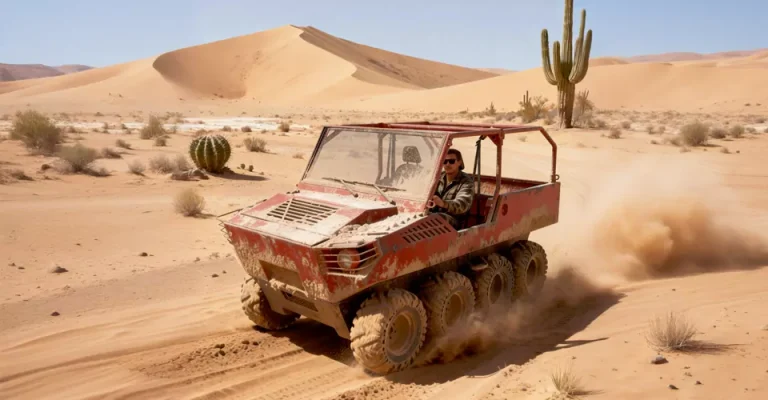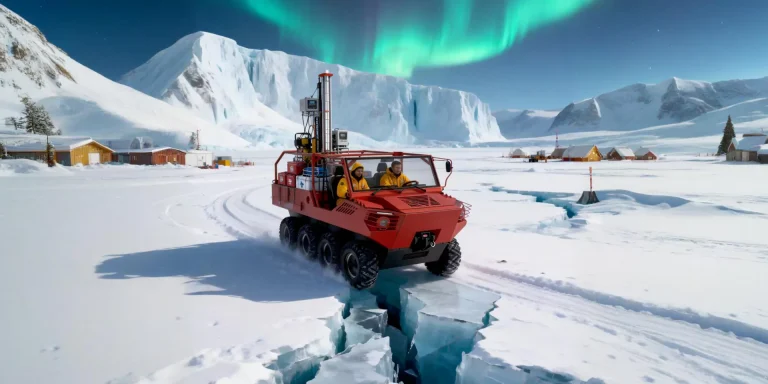











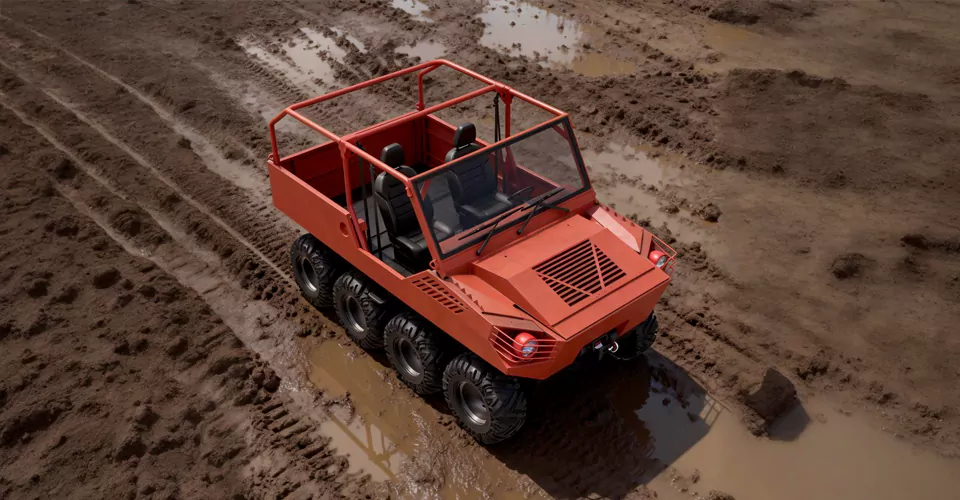
Amphibious vehicles are unique machines designed to travel seamlessly on both land and water. Whether used for recreation, rescue missions, military operations, or industrial applications, these versatile vehicles offer mobility in environments where conventional vehicles cannot operate. But how exactly do amphibious vehicles work? This guide explains the key technologies and engineering principles behind these remarkable machines.
What Is an Amphibious Vehicle?
An amphibious vehicle is a vehicle capable of operating on both terrestrial and aquatic surfaces. Unlike traditional cars, trucks, or boats, amphibious vehicles combine the functions of both, allowing users to transition between land and water without changing vehicles.
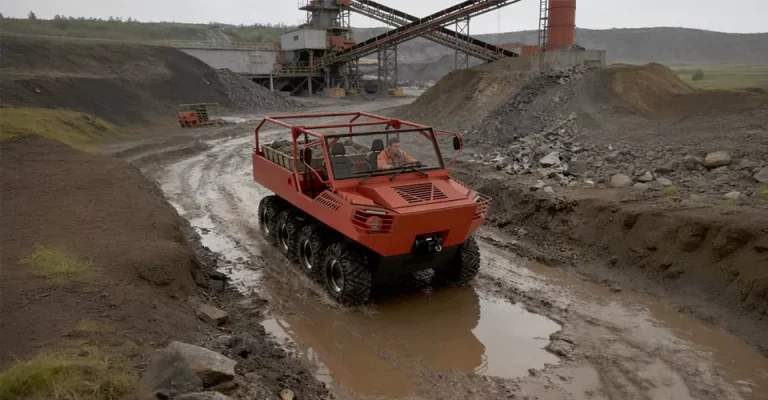
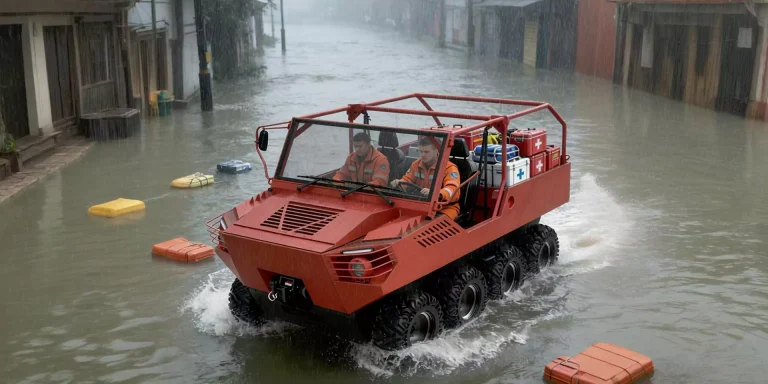
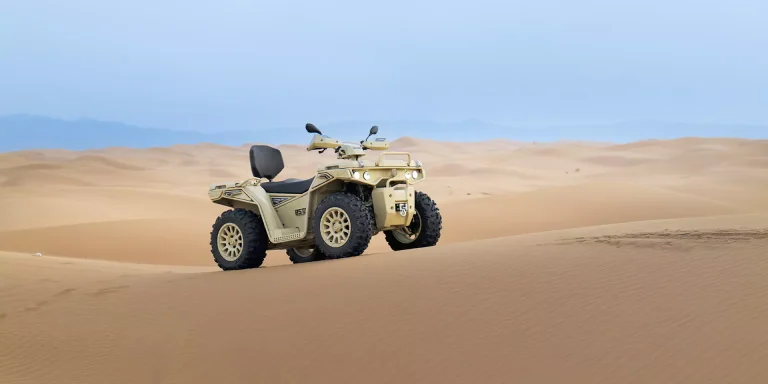
Examples include amphibious ATVs, rescue vehicles, military transport vehicles, and specialized utility carriers used in wetlands, marshes, and flood-prone areas.
The Basic Principle of Amphibious Vehicles
The core concept behind amphibious vehicles is simple: they must provide effective movement on land while also generating enough buoyancy and propulsion to travel through water.
To achieve this, manufacturers integrate three essential systems:
- A waterproof and buoyant body
- A land-based drivetrain
- A water propulsion system
These systems work together to ensure smooth operation in both environments.
How Amphibious Vehicles Float
One of the most important features of an amphibious vehicle is its ability to float.
Most amphibious vehicles use a sealed, watertight hull that traps air inside the body. According to Archimedes’ Principle, an object will float if it displaces a volume of water equal to its weight.
Manufacturers carefully design the vehicle’s body using lightweight materials such as:
- Aluminum alloys
- High-density polyethylene (HDPE)
- Fiberglass composites
- Marine-grade steel
The vehicle’s weight distribution is also engineered to maintain stability and prevent tipping while floating.
How Amphibious Vehicles Move on Land
When operating on land, amphibious vehicles function similarly to conventional off-road vehicles.
Depending on the model, they may use:
- Wheels and tires
- Rubber tracks
- All-wheel drive systems
- Electric or internal combustion engines
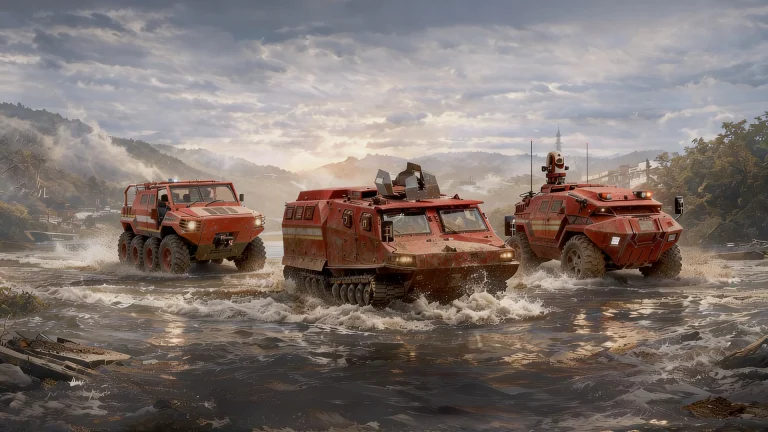
Tracked amphibious vehicles are especially popular for challenging terrain because they provide excellent traction on mud, snow, sand, and soft ground.
Power is transferred from the engine to the wheels or tracks through a standard drivetrain, enabling the vehicle to climb slopes, cross rough terrain, and carry heavy loads.
How Amphibious Vehicles Move in Water
Once the vehicle enters the water, a separate propulsion system takes over.
Common water propulsion methods include:
Paddle Tires or Tracks
Many amphibious ATVs use specially designed tires or tracks that act like paddles. As the wheels rotate, they push against the water and propel the vehicle forward.
This system is simple, reliable, and requires minimal maintenance.
Propellers
Larger amphibious vehicles often use marine-style propellers mounted at the rear. These propellers generate greater thrust, allowing for higher speeds and improved efficiency in deeper water.
Water Jets
Advanced amphibious vehicles may utilize water jet propulsion systems. Water is drawn into the vehicle, accelerated by an impeller, and expelled through a nozzle to generate thrust.
Water jets offer excellent maneuverability and reduce the risk of damage from underwater obstacles.
Steering in Water
Steering an amphibious vehicle on water differs from steering on land.
Depending on the design, the vehicle may use:
- Differential wheel speed
- Rudders
- Adjustable water jets
- Independent track control
Some advanced models automatically switch steering modes when entering water, providing a smooth transition between environments.
How Amphibious Vehicles Transition Between Land and Water
One of the most impressive aspects of amphibious vehicles is their ability to move directly from land into water.
When approaching a shoreline:
- The vehicle enters the water slowly.
- The hull begins to float as buoyancy increases.
- The water propulsion system activates.
- The vehicle continues moving without stopping.
This capability makes amphibious vehicles invaluable for flood response, wetland operations, search-and-rescue missions, and remote-area transportation.
Common Applications of Amphibious Vehicles
Amphibious vehicles are used in a wide range of industries and environments:
Search and Rescue
Emergency responders use amphibious vehicles to access flooded communities and difficult-to-reach locations during natural disasters.
Military Operations
Military forces rely on amphibious vehicles for transporting personnel, equipment, and supplies across rivers, lakes, and coastal regions.
Agriculture and Forestry
Farmers and forestry workers use amphibious carriers to navigate wetlands, marshes, and muddy terrain where conventional vehicles may become stuck.
Recreation and Tourism
Amphibious ATVs are popular among outdoor enthusiasts who enjoy exploring rivers, swamps, lakes, and rugged off-road trails.
Industrial and Utility Work
Construction, mining, pipeline inspection, and utility maintenance companies often use amphibious vehicles in remote or waterlogged environments.
Advantages of Amphibious Vehicles
The popularity of amphibious vehicles continues to grow because they offer several unique benefits:
- Operate on both land and water
- Reduce transportation limitations
- Access remote and difficult terrain
- Improve efficiency during rescue operations
- Minimize the need for separate land and water vehicles
- Provide excellent off-road capability
Conclusion
Amphibious vehicles work by combining a buoyant, watertight hull with land-based drivetrains and specialized water propulsion systems. Whether using paddle tires, tracks, propellers, or water jets, these vehicles are engineered to travel seamlessly between land and water environments.
From emergency response and military operations to recreation and industrial applications, amphibious vehicles provide unmatched versatility in challenging terrain. As technology continues to advance, modern amphibious vehicles are becoming more capable, efficient, and valuable across a growing range of industries.
If you are interested in amphibious vehicles or customized special equipment solutions, you can contact JINJIA Special Equipment at panjun@responsemobility.com for more information and professional support.