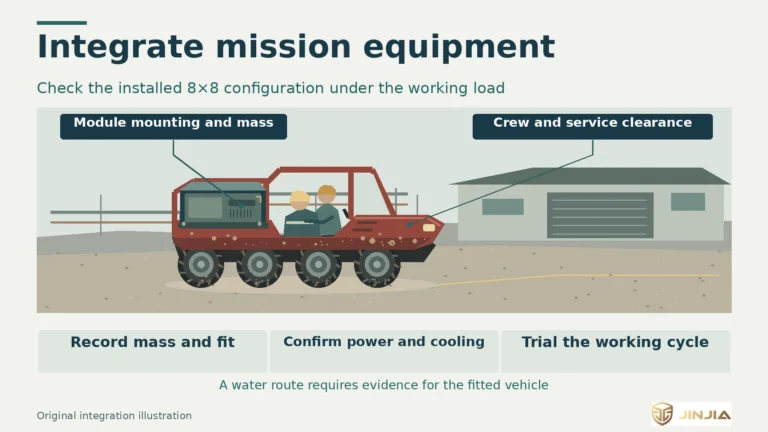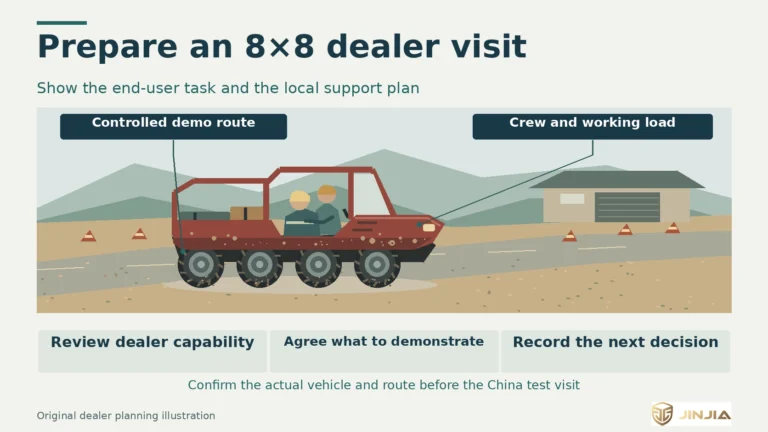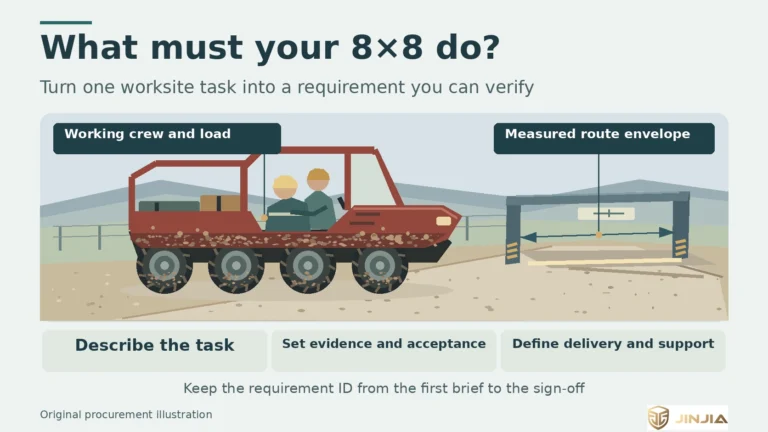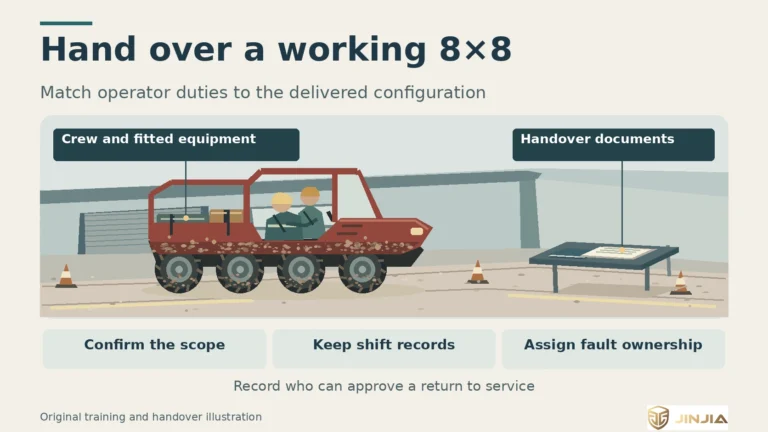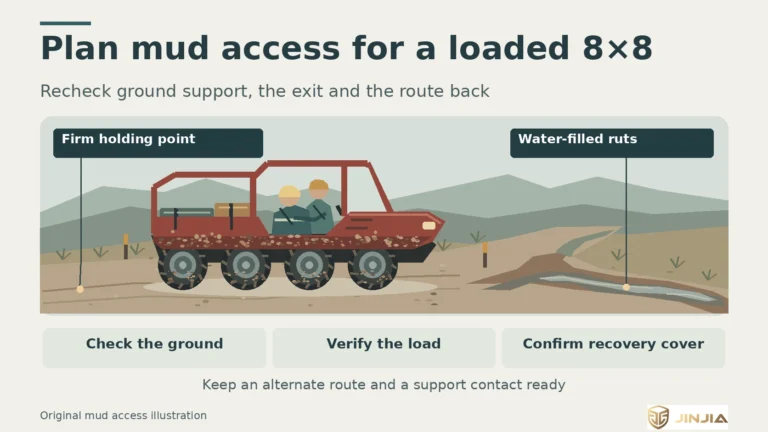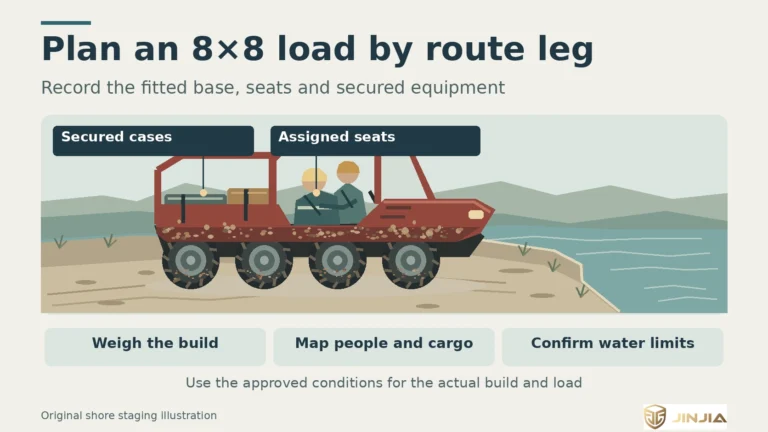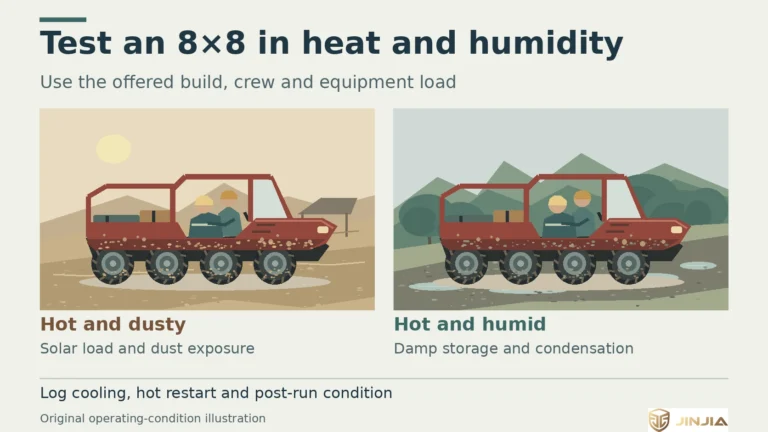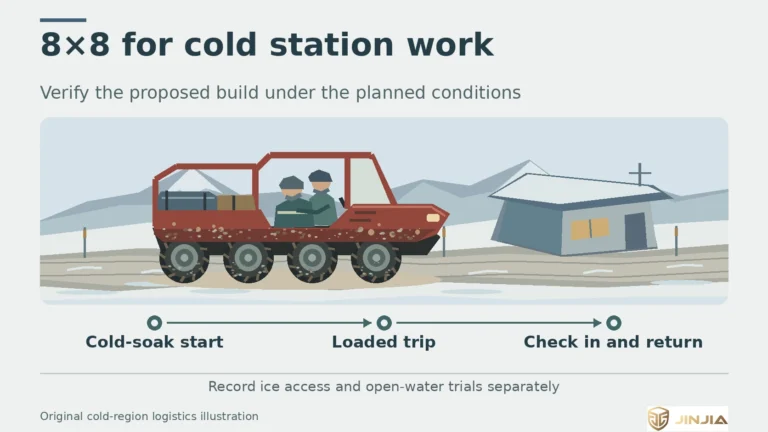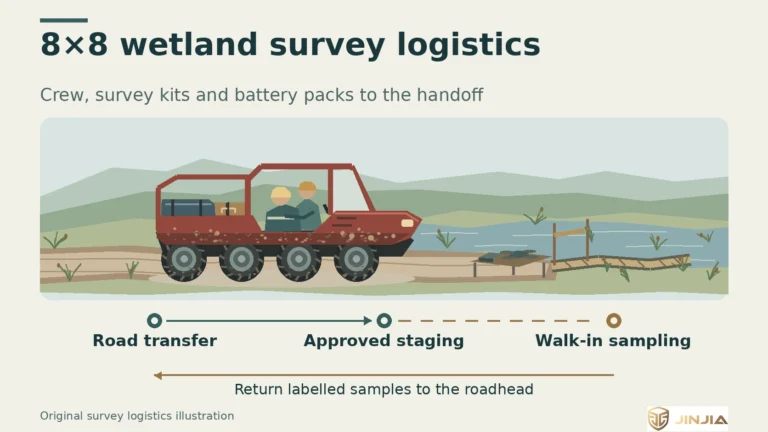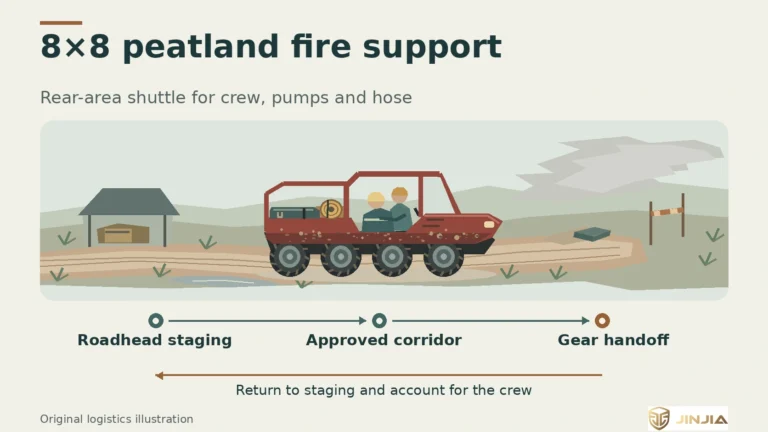


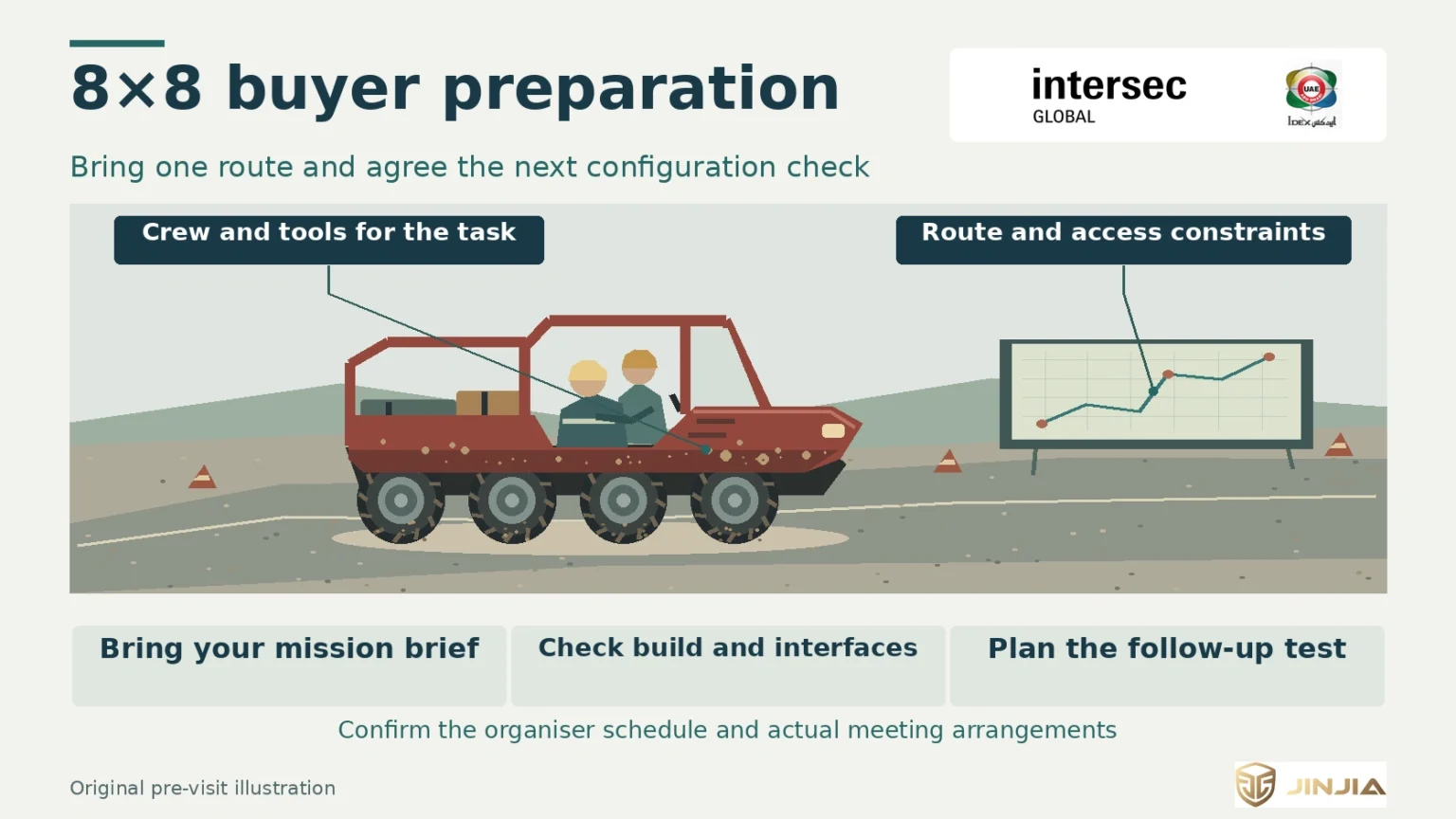
Buyer preparation illustration. Bring one route, working load and interface question to the meeting.
1. What should an 8×8 buyer prepare before the UAE shows?
Bring one real mission and the conditions that decide whether an amphibious 8×8 is suitable. A useful meeting starts with the people, equipment and route for that job. It ends with a proposed vehicle configuration, the evidence reviewed and a short list of checks for a follow-up trial.
Use INTERSEC for discussions around emergency response, fire service support and civil protection. At IDEX, use the same brief to review mobility, auxiliary power and delivery arrangements where relevant to the intended procurement. Identify whether the 88E range-extended electric or 88D diesel platform is being discussed. Agree what has to be demonstrated for the actual build.
2. Start with dated event and platform information
Check the organiser’s visitor information for INTERSEC Global at Dubai World Trade Centre and IDEX at ADNEC Centre Abu Dhabi. Use the official pages for the event schedule, location and admission requirements. Confirm any JINJIA meeting, available vehicle and viewing arrangements directly before making travel plans. [B35-E1, B35-E2, B35-E3]
JINJIA’s platform comparison explains the difference between the range-extended 88E and diesel 88D. The 88D civil technical file identifies a six-person standard layout, including the driver. Ask for the build being proposed to you, with the agreed seats, equipment, interfaces and operating scope recorded in writing. [S91, S92]
3. Bring the mission and route information
Prepare a route sketch with the access point, constraining sections, work location and handover. For a flood response team, mark where personnel and secured equipment are loaded and where the route changes from land to water. For facility support, describe the inspection or service point and when the equipment must operate. Include seasonality and the actual route conditions likely to drive the purchase decision.
Record occupants, tools and supplies by working mass and position. If the 8×8 will power a device, bring its nameplate, operating duration and starting requirement. Mark the duties that need power while moving and those performed on the spot. Attach photos of the route or work area when available. A small set of specific inputs makes a short meeting easier to use.
4. Check the configuration and interfaces during the meeting
Ask the supplier to write down the exact configuration under discussion, and whether a feature is seen, documented or awaiting a build-level check. Use the same questions at either show. In the IDEX discussion, capture three separate decisions for the procurement file.
| IDEX review | What to put in the meeting note |
| Mobility | Proposed crew, working load, terrain and evidence that matches the route |
| Auxiliary power | Equipment duty, supply interface, running and starting needs, and check at the actual working point |
| Delivery | Proposed configuration, delivery point, documents, training, parts and the person who owns handover |
A displayed vehicle, model, drawing or video answers different questions. Note what you actually saw and which records relate to the quoted configuration. For land and water operation, verify the relevant limits independently. Identify the operating conditions for each offered power output before choosing tools or making procurement assumptions.
5. Arrange a follow-up test in China
Turn the meeting record into a request with your team, preferred dates, working language and the decision the test should inform. Ask which vehicle can be made available, how closely it represents the proposed build, and which checks can be run. Agree the crew and load, route, observable criteria, record format and qualified attendees before booking.
For arrival at a work point, one check could record a fully loaded land approach and stationary operation of the agreed device. If water operation is in scope, ask for the exact vehicle and load to be assessed and agree the scope, conditions and authority responsible for that part. Keep trial observations, items deferred and changes needed. Assign a decision owner and next date after the visit.
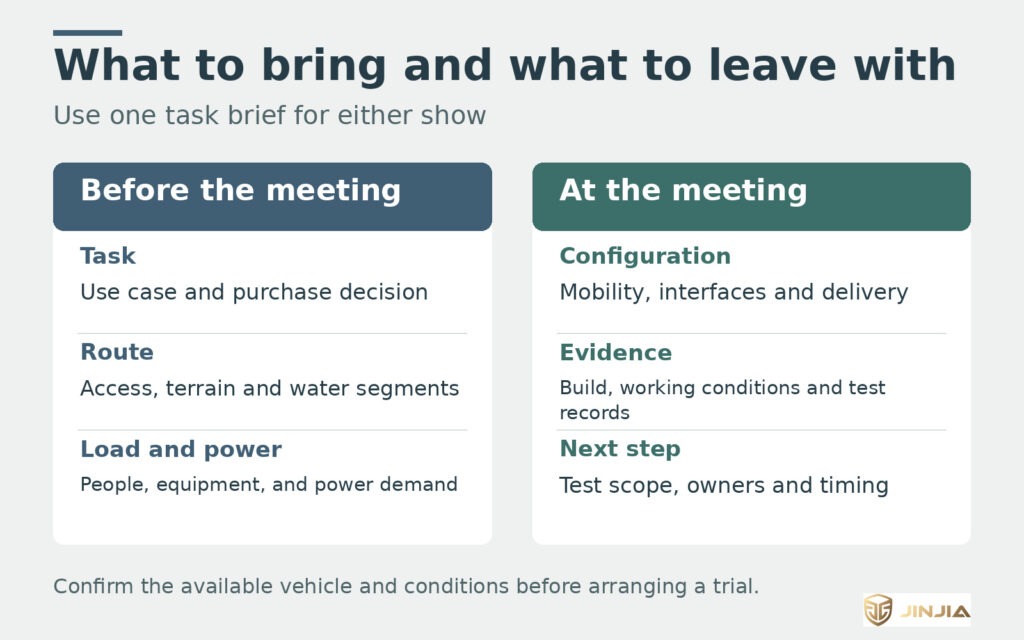
Use a route and equipment brief to structure the meeting. Leave with documented checks and owners.
6. Record limits and compare alternatives
Keep the proposed build, viewing arrangements and test plan in the meeting notes as items to confirm. A display does not establish delivered configuration, lead time or field performance. Confirm those items against the supplier’s written proposal and configuration-matched records. Ask which training, spares and service responsibilities travel with the vehicle to the destination.
If the route or interface cannot be represented at a follow-up test, ask for a configuration pack first. Alternatives include a controlled local assessment or a land-only vehicle with a separate craft for the water segment. Compare them against the same mission, crew, load and evidence needs.
7. Take this one-page buyer checklist
• State one mission and the purchase decision the meeting should support.
• Mark the route, bottlenecks and any intended water segment.
• List the people, cargo, mounted equipment and proposed working loads.
• Bring interface data and indicate when each powered load operates.
• Record the mobility, auxiliary power and delivery checks with supporting evidence.
• Agree the next validation step, the people responsible and the decision date.
Send your mission and route brief to JINJIA when requesting a meeting or follow-up assessment.
Review 8×8 field-power planning
Frequently asked questions (FAQ)
A: Bring one route and mission sheet with crew, load, interfaces and the purchase question. Add any available route photographs and current constraints.
Q: Which dates and venue should I use?
A: Check the organiser’s live visitor pages for INTERSEC Global or IDEX and confirm your JINJIA appointment separately.
Q: What should an IDEX buyer record?
A: Keep a note of the proposed build, mobility and route evidence, auxiliary power and its conditions, and delivery, parts, training and service responsibilities.
Q: What can I confirm from a display?
A: Record visible features and the materials available there. Ask which checks were made on the proposed working configuration.
Q: How should a China follow-up test be prepared?
A: Confirm people, timing, vehicle, working load, route, test observations and who owns the next decision. Agree what can be checked before booking the trip.
Q: Can an on-land observation support a water operation decision?
A: Request separate evidence for the fitted vehicle, actual load and intended water conditions. Confirm the approval and trial scope before using that route segment.
Sources and further information
[S91] JINJIA 88D Civil / Industrial Technical Specification · V1.0 · 8 September 2026 · pp. 7–9
[S92] JINJIA · 88E and 88D 8×8 platform selection (EN)
[B35-E1] Messe Frankfurt · INTERSEC Global visitor information (EN)
[B35-E2] ADNEC Centre Abu Dhabi · IDEX 2027 official event listing (EN)
[B35-E3] IDEX · Plan your visit (EN)