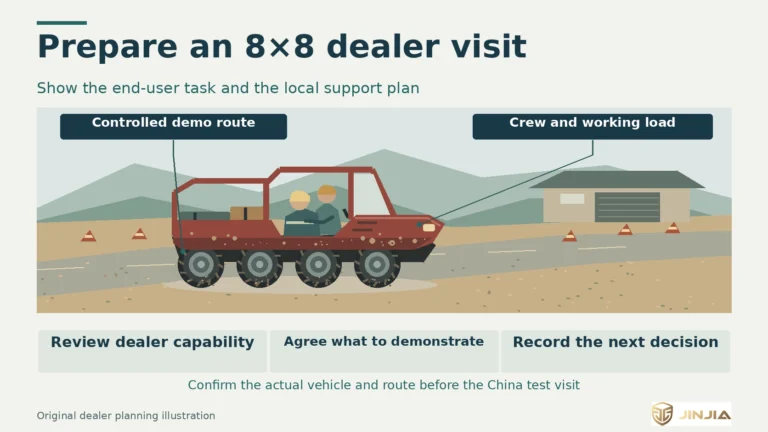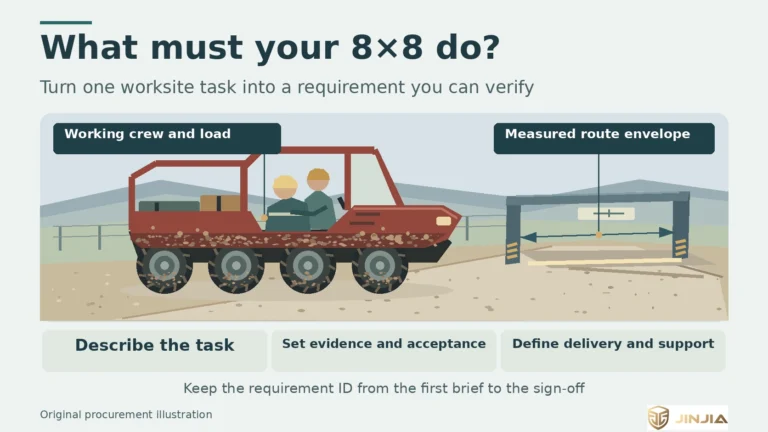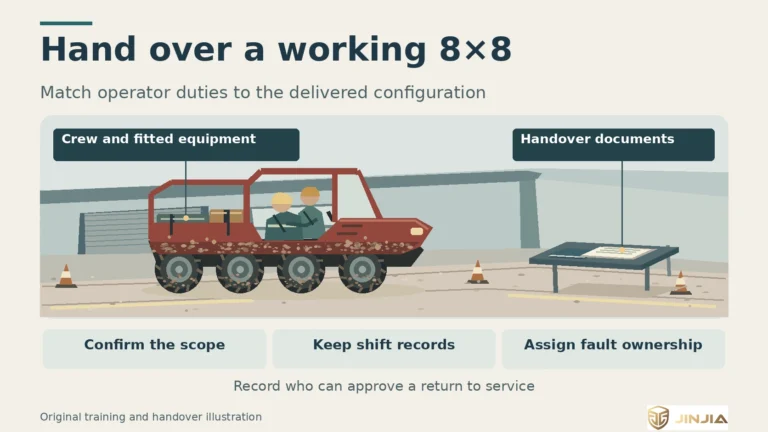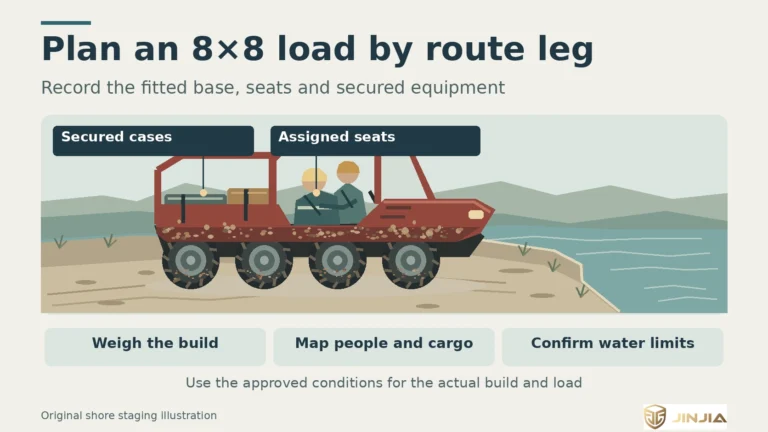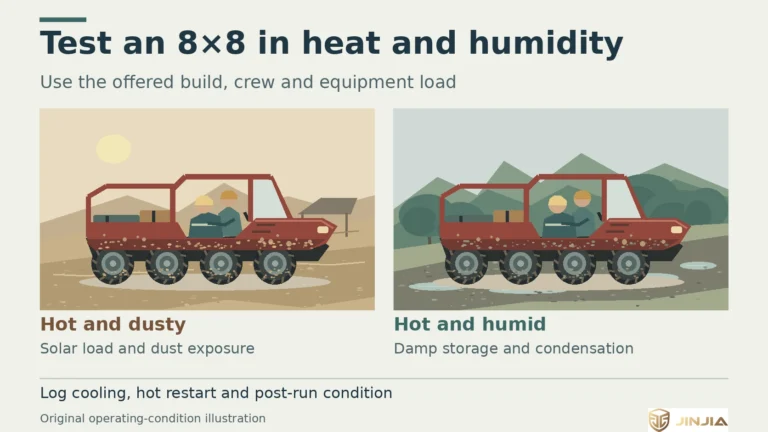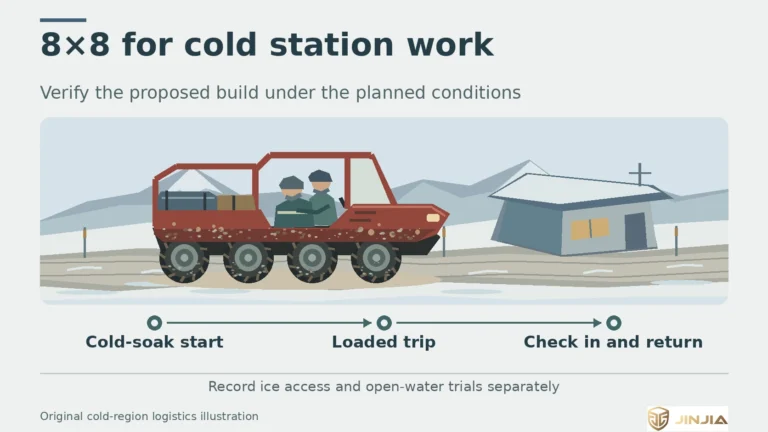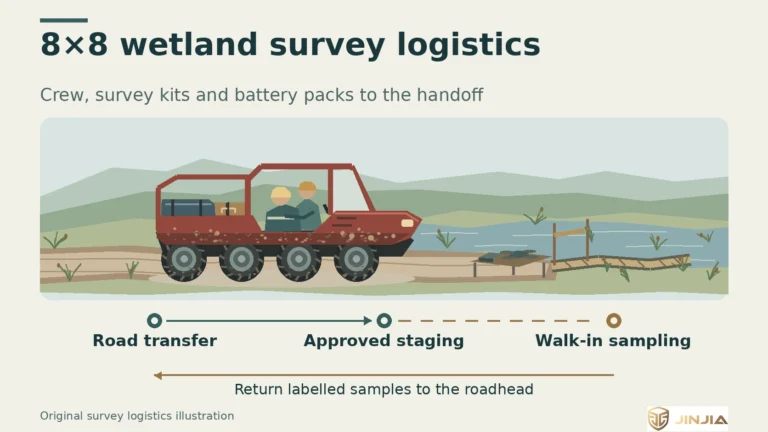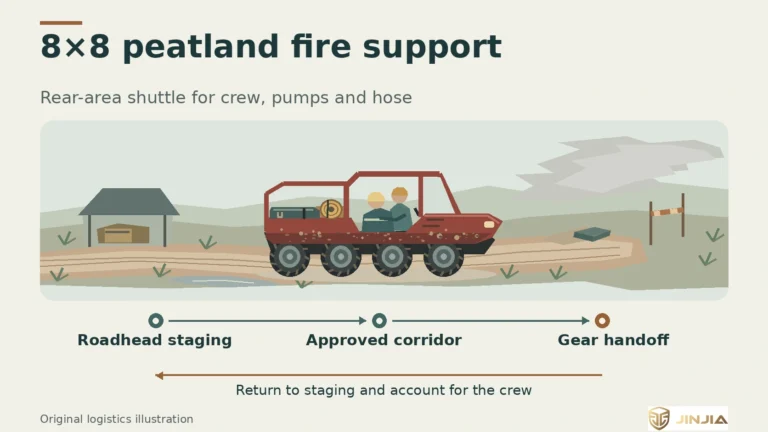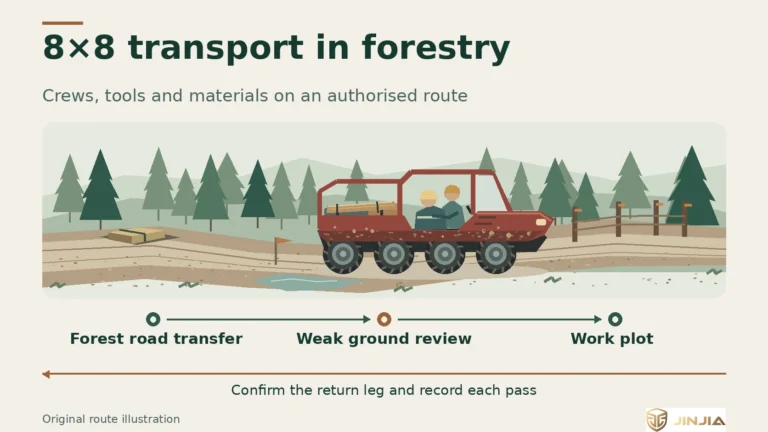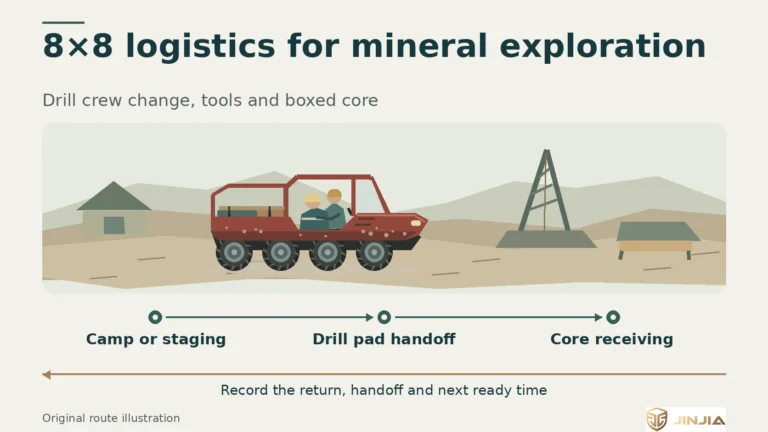


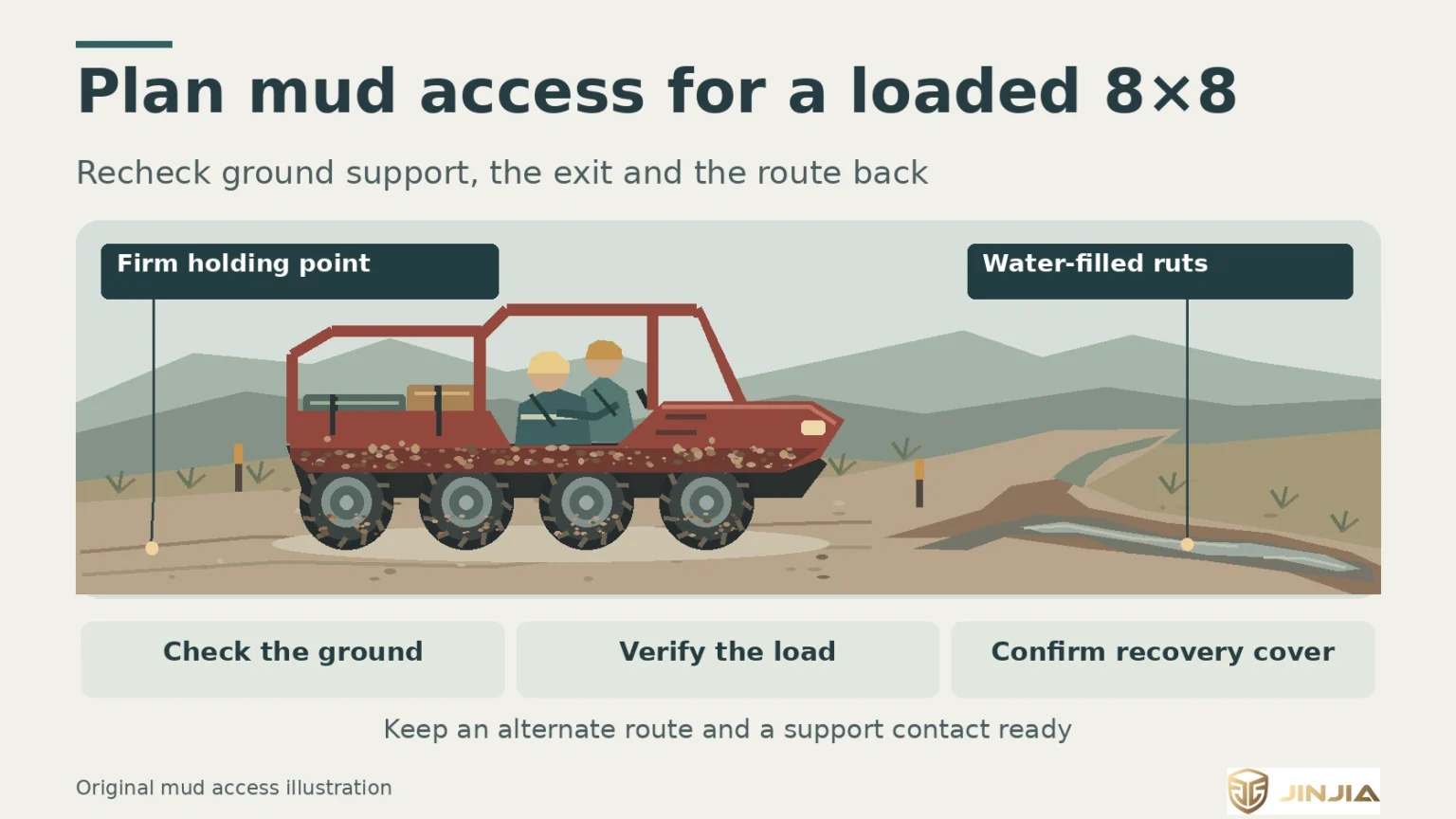
Stage the loaded 8×8 on firm ground while the team reassesses ruts, the return route and recovery access.
Can an all-terrain vehicle get stuck in mud?
Yes. A conventional ATV can lose grip, sink or end up resting on its underbody. Can an amphibious vehicle get stuck under a working load? It faces the same risks on soft ground, even with eight driven wheels. Check ground support and clearance for the loaded vehicle on the outbound and return legs.
Start with the job. A light ATV may suit one operator travelling an established trail. A crew-carrying amphibious 8×8 is a candidate when people and equipment have to travel together and the route may include separately assessed wet or water sections. Plan the muddy approach, turnaround and return before committing the vehicle.
What the 88E and 88D specifications establish
The JINJIA 88E uses range-extended electric drive. The 88D is a diesel 8×8 for crew transport and field support. Its civil and industrial specification says the published mobility figures apply to the base configuration and identifies load distribution, tyres and surface condition as factors in actual performance. The specification lists an electric winch among the optional equipment. These manufacturer records identify the platform and scope of the offered equipment. Request a route trial on the proposed build to assess mud access. (S91 · S92)
Ask for the configuration sheet and the applicable operating manual before comparing offers. If a supplier cites a demonstration, check whether it identifies the vehicle, tyres or tracks, actual load, soil condition and route. A short demonstration of movement can leave those details unresolved.
Recheck soil and the route after conditions change
Record the ground type, rain and drainage, existing ruts and the support available at bends, exits and turning areas. Sticky clay, saturated fill and a soft layer over firm ground can behave differently on the same route. Standing water can conceal washed-out sections or deep ruts. Compare the access road and the ground your support vehicle will need. A reconnaissance report from an earlier shift may be obsolete after rain or repeated traffic. (B24-E1)
Mark a firm holding point and an alternate route. Agree who reopens or closes each section and what triggers reassessment. Progressive rutting, visible ground failure, lost steering control or an unverified exit are reasons to pause and reassess. Recheck return access after unloading, additional rain or other traffic. Standing water, wheel-supported wading and an operation afloat each need their own route and vehicle assessment.
Match mission load, tyres and track options
Use the as-fitted vehicle mass and list the crew, personal protective equipment, cargo and recovery kit. Record where the load sits and how it is secured. Start with the offered wheel and tyre specification. Use the manufacturer’s instructions for the fitted tyres, rims and load. If tracks are offered for the selected build, record them as an option and check the combination of vehicle, track and tyres as a separate configuration.
| Configuration item | Record in the offer | Recheck on the representative route |
| Fitted mass and mission load | Weigh ticket, people, equipment and load positions | Rutting, clearance and controlled return with the working load |
| Tyres and wheels | Exact tyre and wheel specification and approved settings for the load | Traction and steering on the approach, bends and exit |
| Optional track kit | Compatibility, added mass, clearances and supplier restrictions | Turning, braking, surface damage and any affected water-use limit |
A suitable track kit can spread load over a larger contact area. Changes in mass, clearance and resistance can affect steering, braking and the next section of the route. Compare the actual fitted set with the wheeled build on the same representative route and load. Obtain separate evidence for any change in water capability.
Arrange qualified recovery before dispatch
Name a trained recovery lead, the supporting vehicle or provider and a route it can use. Obtain the offered vehicle’s manufacturer-approved recovery points, mounting limits and approved equipment instructions. Record the condition and identification of the winch and other equipment, the decision authority, communications, a controlled area and the escalation contact. Ask the qualified lead to confirm the recovery method for the site. (B24-E2 · B24-E3)
The winch listing alone describes a component. Confirm the whole recovery system in writing for the selected build and method. A normal towing or transport tie-down point needs explicit manufacturer approval for a recovery load. If the vehicle becomes immobilised, stop further attempts and notify the designated lead. Unstable ground, an uncontrolled area or an unconfirmed load path call for specialist assistance. After a recovery, record crew welfare and have the affected vehicle and equipment inspected before reuse.
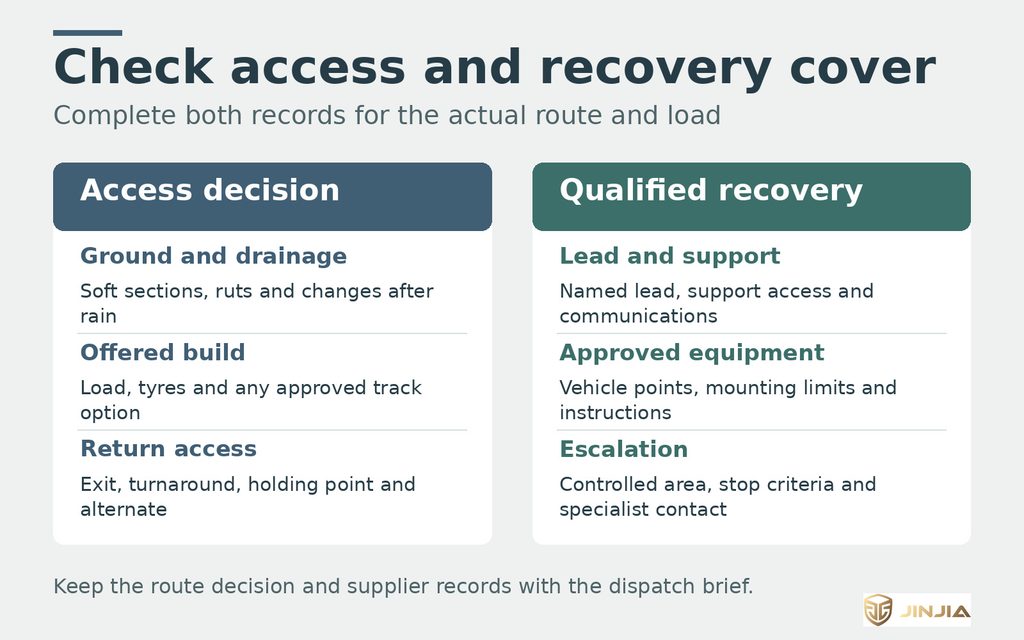
Document the route under load and confirm qualified recovery cover before dispatch.
Review limits and plan alternatives
If no loaded evidence is available for the proposed soil and conditions, keep the segment conditional. Compare a firmer route, a shore or road transfer, smaller loads in separate trips, a delayed departure or a suitable tracked carrier with verified support. Each alternative needs its own access and recovery review. Agree a representative loaded route check, operator control criteria and stop points with the site team. Record the conditions and the outcome so the approval applies to a defined configuration and route.
Give procurement a one-page access and recovery brief
• Route and conditions. Mark soft sections, the exit, turnaround, the return route and the rain or traffic changes that require reassessment.
• Build and working load. Attach the weigh ticket, people and cargo positions, tyres and any approved track option.
• Access decision. Identify the route owner, holding point, criteria for pausing and the agreed alternate route.
• Recovery cover. Record approved points and equipment documentation, the qualified lead, support access and escalation contact.
• Evidence and sign-off. Attach the loaded route record, owner and date. Identify unresolved sections before dispatch.
Send your route, mission load and working conditions to JINJIA. See the ATV mud overview for the lighter vehicle context and the 88E and 88D comparison for configuration choices. Contact JINJIA
Frequently asked questions (FAQ)
A: Check ground support, drainage, ruts, bends, the exit and turning points. Ask who reassesses outbound and return access after rain, repeated traffic or visible changes.
Q: How should load tyres and track options be documented?
A: Record the fitted weigh ticket, crew and cargo positions, tyre and wheel specification, and the manufacturer’s load-specific settings. List track kits as an option when offered and verify the installed combination separately.
Q: What evidence is needed for a qualified recovery plan?
A: Obtain the manufacturer’s approved recovery points and equipment instructions. Record the qualified lead, support access, equipment checks, communications, controlled area and escalation contact.
Q: Can a loaded 8×8 get stuck even if the wheels still turn?
A: Yes. The wheels can lose traction while the vehicle sinks or the underbody bears on the ground. Pause and reassess rather than continue repeated attempts.
Q: Are tracks standard on an amphibious 8×8?
A: Start with the wheel and tyre specification offered for that build. If a track kit is available, identify it as an option and request compatibility, handling and water-use evidence for the fitted combination.
Q: Does an optional winch establish the vehicle’s recovery capability?
A: A winch is one component. The supplier and qualified lead should confirm the approved points, attachments, equipment, ground, method and safe area for that vehicle and site.
Sources and further information
[S91] JINJIA | 88D Civil / Industrial Technical Specification, v1.0, 8 September 2026, pp. 2, 6–8 · company source
[S92] JINJIA | 88E Amphibious Utility Vehicle specifications
[B24-E1] UK HSE | Temporary workplaces and unprepared roadways
[B24-E2] WARN Industries | Basic guide to winching
[B24-E3] ACCC Product Safety | Motor vehicle recovery straps guide