










Tracked utility vehicles are used to transport people, tools and ordinary supplies in civilian workplaces where normal road access may be limited. Common uses include forestry and wildfire logistics, disaster support, agriculture, infrastructure, mining, energy sites and winter operations. Some operators also offer supervised visitor experiences. The right vehicle depends on the actual transport task, the approved site conditions and the documented configuration—not on the presence of tracks alone.
Contents
Main uses of tracked utility vehicles
Personnel transport and cargo transport are different tasks
How the JINJIA product range fits the question
Documented civilian cases: three distinct tasks
Conclusion: identify the task before selecting a vehicle
Frequently asked questions (FAQ)
References and further reading
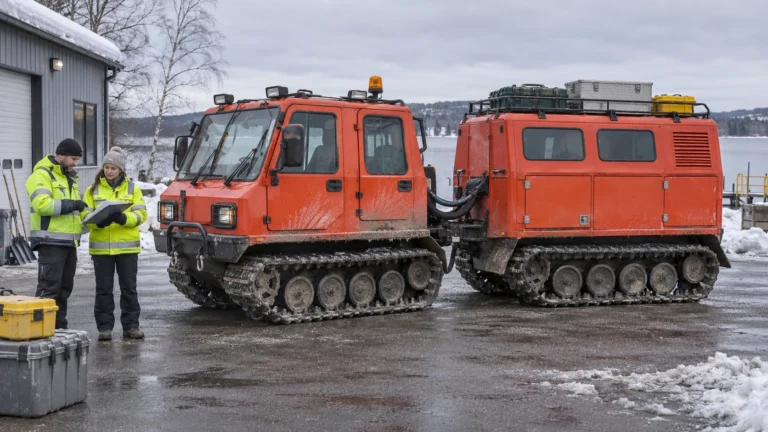
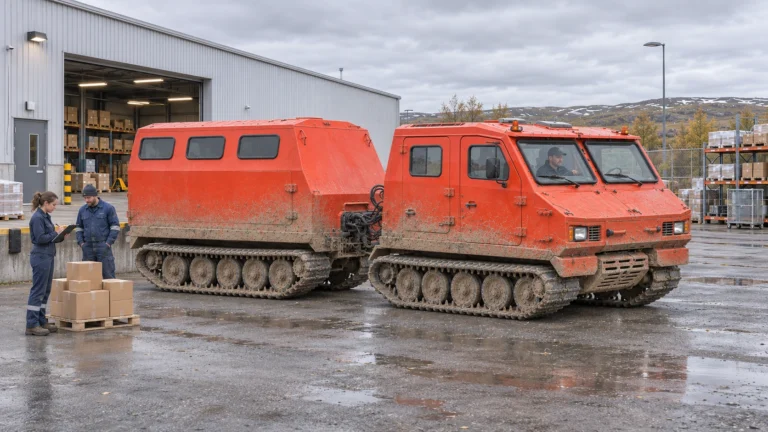
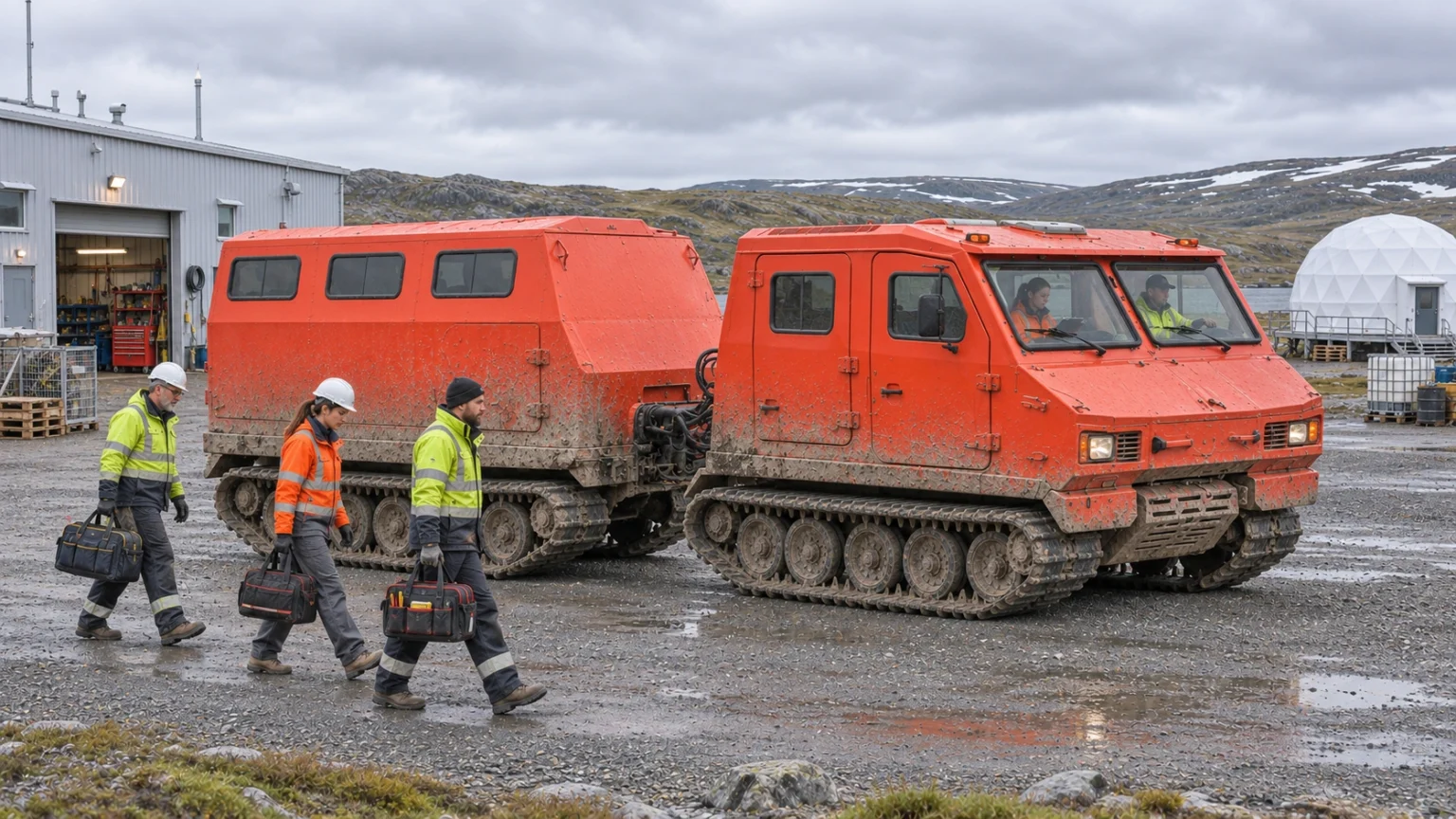
AI concept of a contemporary civilian two-section tracked transport at a maintenance depot; not an actual JJ117 delivery or verified body configuration.
Main uses of tracked utility vehicles
The term covers a broad family of machines, from compact single-body carriers to larger two-unit articulated vehicles. Tracks can spread a load over a contact area, but the presence of tracks does not guarantee a particular ground pressure, low environmental impact or suitability for every surface. For a separate definition, see the JINJIA category article [S6].
Forestry and wildland fire support: civilian crews may require personnel transfers, tool transport and routine equipment supply between authorised locations. A tracked utility vehicle is a possible transport category, not a promise of firefighting or safe access to an active fire.
Search and rescue: civil emergency organisations may need transport support at designated reception points during snow disruptions, floods and other disasters. A transport platform is not inherently an ambulance or a certified water-rescue craft.
Agriculture and construction: moving tools, materials and maintenance staff can be relevant tasks at farms and worksites. However, the selected carrier should match the documented task and site requirements. Tracked machines should not be presumed to cause less soil damage in every situation.
Mining, energy and infrastructure: personnel shuttles and ordinary stores transport are relevant civilian requirements at remote industrial facilities. In addition, winter maintenance and research programmes may consider tracked utility platforms when normal access is restricted. Tourism is a separate use case, with its own passenger-service approvals.
Personnel transport and cargo transport are different tasks
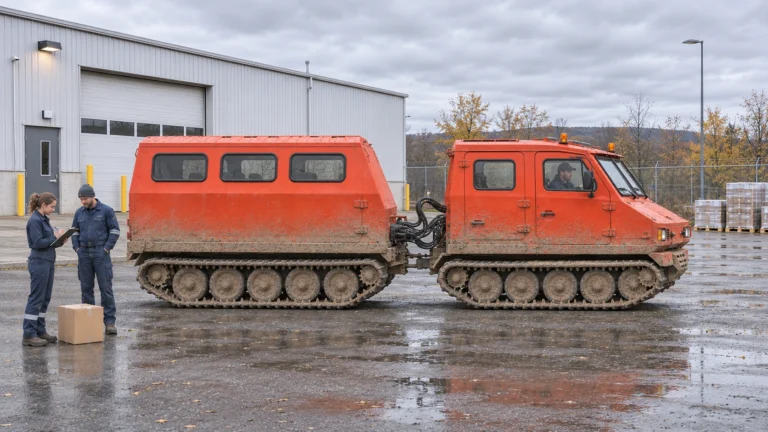
Start with what must arrive at the destination. A crew transfer needs an approved seating arrangement, safe passenger accommodation, a defined receiving point and clear responsibility for passengers. A cargo transfer instead needs a documented body arrangement and appropriate load accounting.
Moreover, the payload of a vehicle platform is not always the weight of usable goods inside a module. The weight of the body and its contents must be treated according to the supplier’s approved definition. Do not assume that the same body is suitable for people and cargo merely because both fit within a broad vehicle class.
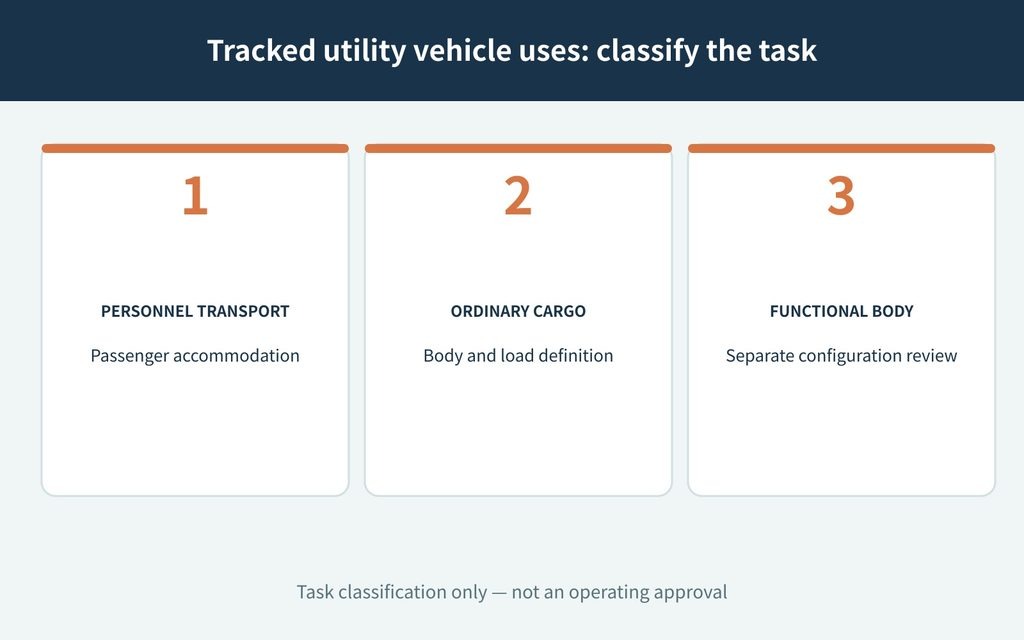
Editorial task classification, not a model specification or operating approval.
For industrial transport, make a separate entry for crew, equipment and ordinary supplies. An ambulance, passenger-tour vehicle or specialised working module requires a configuration-specific review. The accompanying task classification workbook makes these distinctions explicit.
How the JINJIA product range fits the question
JINJIA identifies its JJ117 platform on the Tracked Utility Vehicle product page [S7]. It is a two-section product family intended for civilian transport and configurable bodies. The current product discussion should start from the manufacturer’s approved documentation for the requested passenger or cargo configuration.
The passenger body and cargo body serve different purposes. Also, enclosed and open rear bodies must not be treated as equivalent for every operating condition. Final delivery configuration depends on the agreed product documentation. The public overview does not substitute for a signed specification.
If an ordinary utility vehicle already meets the authorised task, a larger articulated vehicle may not be needed. Conversely, a buyer considering a dedicated articulated transport platform should first identify the task category. The purpose of this article is to organise the question, not to rank vehicles by unverified technical performance or repeat a general vehicle comparison.
Documented civilian cases: three distinct tasks
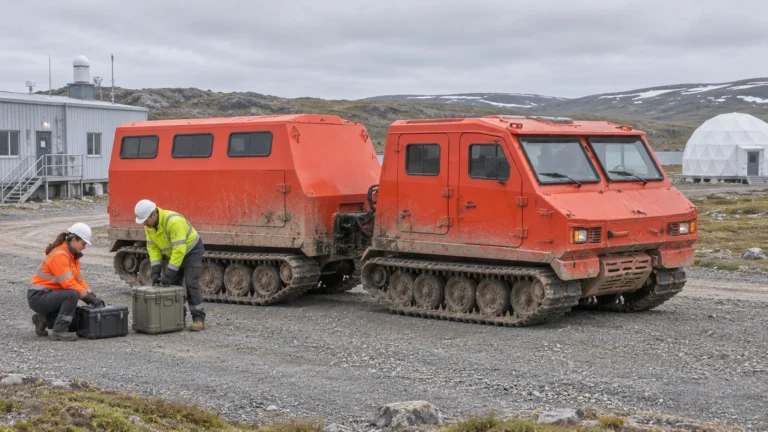
Research personnel: the Australian Antarctic Program describes its use of Hägglunds for scientific field support and logistics [S1]. This is a public example of a civilian research organisation using tracked vehicles for people and equipment. The use belongs to that programme, not to JINJIA.
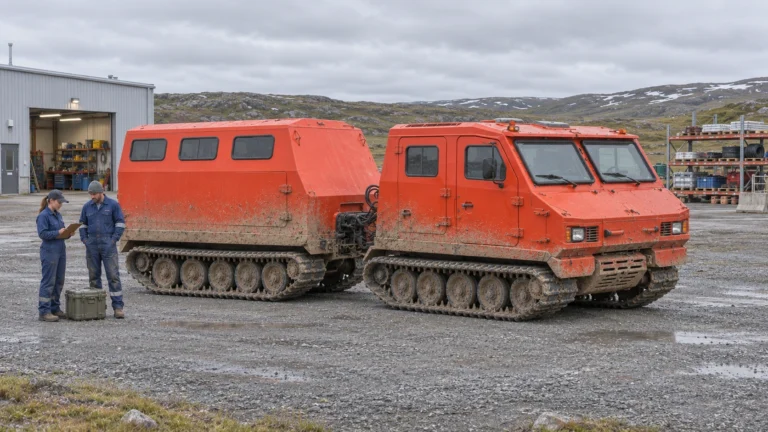
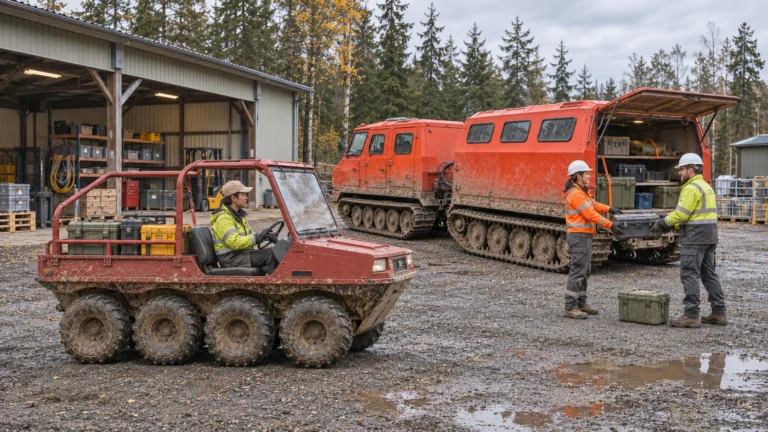
Cargo: Canadian operator Hydrus Innovations describes using its Hägglunds fleet for crew transport and cargo forwarding, as well as support services for forestry and infrastructure [S2]. The account illustrates different ordinary transport tasks, without verifying the exact equipment of another manufacturer.
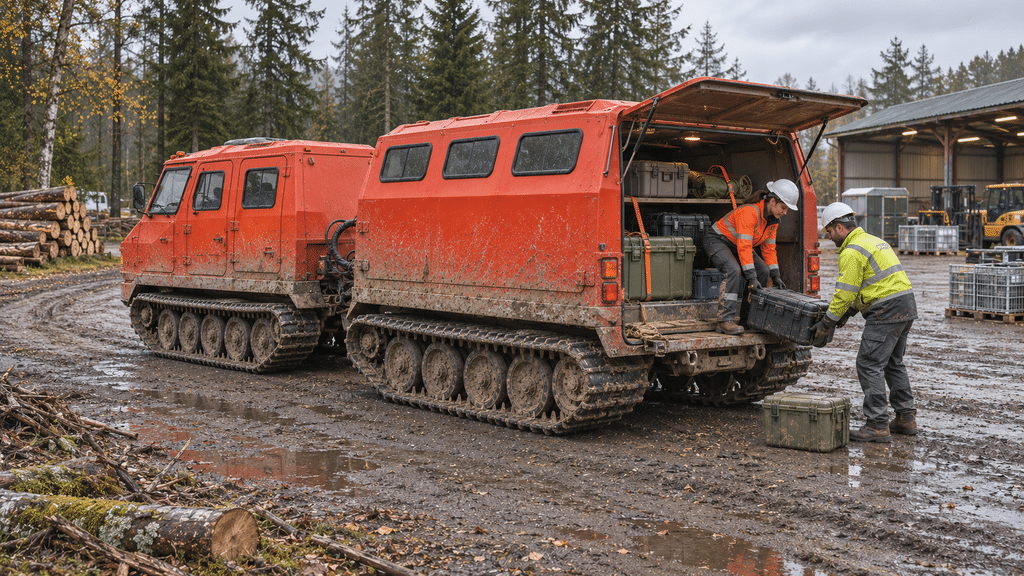
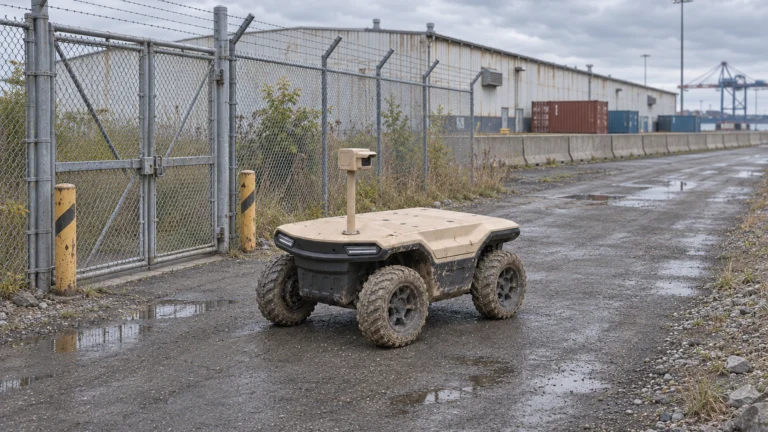
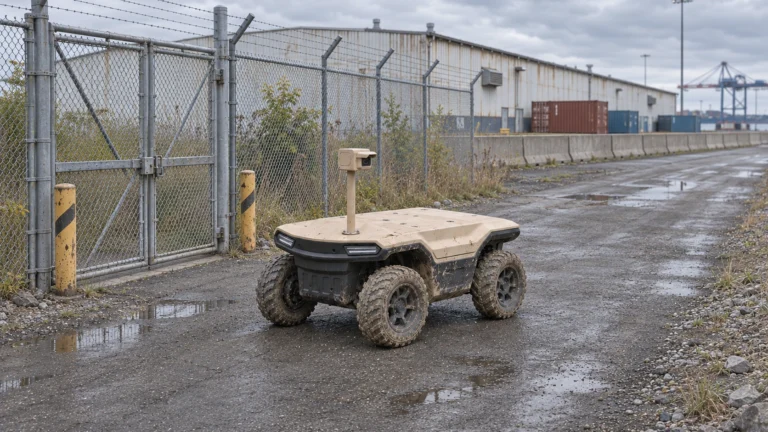
Illustrative civilian cargo transport; not a confirmed module or documented delivery.
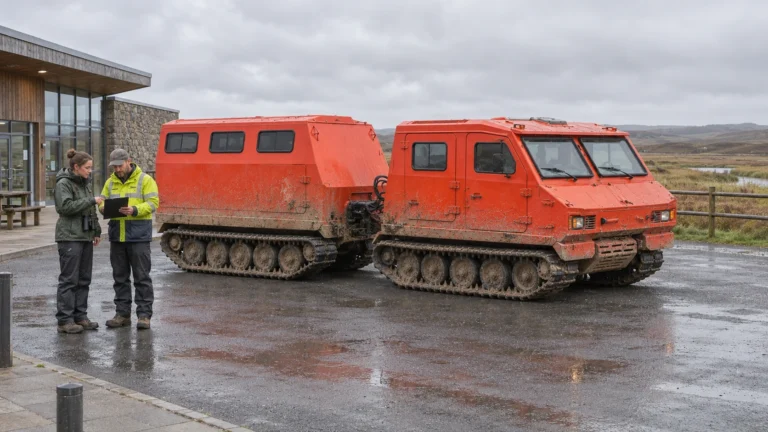
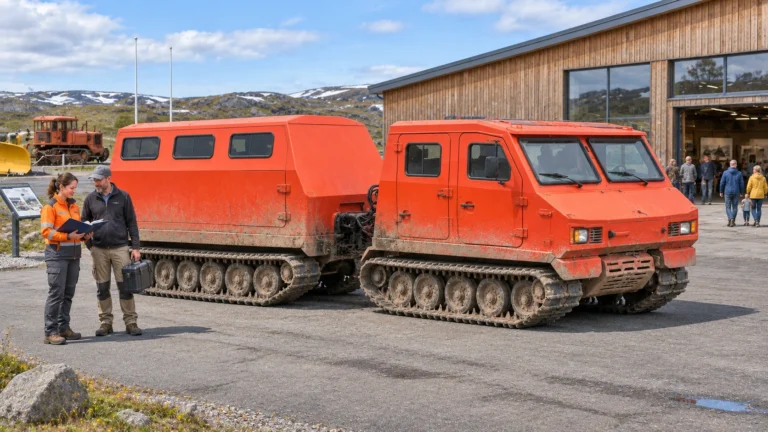
Visitor transport: the International Antarctic Centre in Christchurch describes its supervised Hägglunds visitor experience and the maintenance work associated with its fleet [S4, S5]. This is a documented tourism example, not evidence of a JJ117 tourist-service approval.
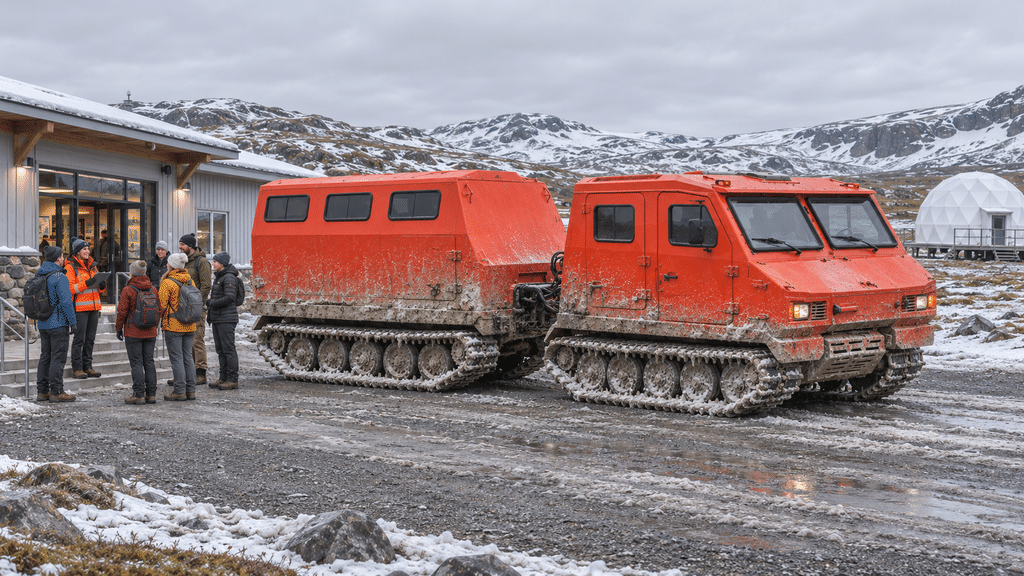
Illustrative visitor reception; not a documented tourist operator or approval.
Civil emergency support also appears in the public training and service descriptions of Bay Search and Rescue [S3]. The organisation’s account is relevant to the category; it does not certify another carrier for a particular emergency. All images in this article are contemporary AI concept illustrations, not photographs of the named organisations.
Conclusion: identify the task before selecting a vehicle
First classify the requirement as personnel, ordinary cargo or a separately approved functional body. Record the intended civilian activity, receiving location type, requested configuration and the available approval records. Next, identify who must verify the actual product documents. The workbook provides editable fields for this discussion.
Finally, use the JINJIA product page and contact channel to request the relevant civil configuration [S7, S8]. Keep supplier confirmation, documented third-party examples and concept images separate. This task-first approach creates a clear entry to the articulated tracked vehicle series and prevents a broad use list from becoming a blanket performance promise.
Describe your civilian transport requirement to JINJIA.
Frequently asked questions (FAQ)
A: Civilian transport of people, tools and ordinary supplies for worksite, research, agriculture, industrial, disaster-support and winter needs.
Q: Are all tracked utility vehicles articulated?
A: No. A tracked utility vehicle is a broad category; articulated two-unit vehicles are one design family.
Q: Is payload the same as cargo inside the rear body?
A: Not necessarily. Confirm whether the rating includes the body, passengers, equipment or goods.
Q: Can every tracked vehicle be used for a tourist service?
A: No. The specific passenger configuration, operator approvals and applicable requirements must be confirmed.
Q: Does a rescue case prove that every tracked vehicle can work in floodwater?
A: No. It records a particular organisation’s activity, not a universal operating approval.
Q: Where should a buyer start with JJ117?
A: Identify the civilian task, then request the applicable approved passenger or cargo configuration and current documentation from JINJIA.
References and further reading
S1: Australian Antarctic Program — Hägglunds tracked vehicles — Public government research programme; people and scientific supply transport.
S2: Hydrus Innovations — Hagglunds fleet — Civilian operator describes crew and cargo services; no performance transfer.
S3: Bay Search and Rescue — Skills — Civil emergency organisation’s public service and training description.
S4: International Antarctic Centre — The Mighty Mechanics — Tourism operator’s fleet maintenance context.
S5: International Antarctic Centre — Hägglunds Field Trip — Visitor experience description; not a JINJIA approval.
S6: JINJIA — What Is a Tracked Utility Vehicle? — Existing category explanation; complementary search intent.
S7: JINJIA / Response Mobility — Tracked Utility Vehicle — Manufacturer product entry; product descriptions are not independent validation.
S8: JINJIA — Contact — Manufacturer contact endpoint.