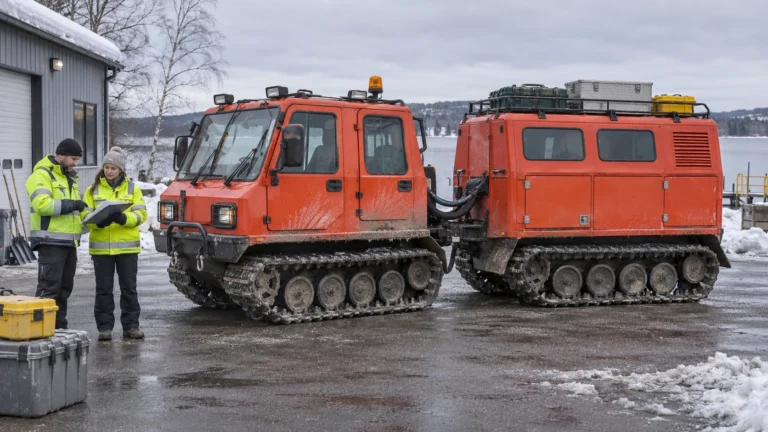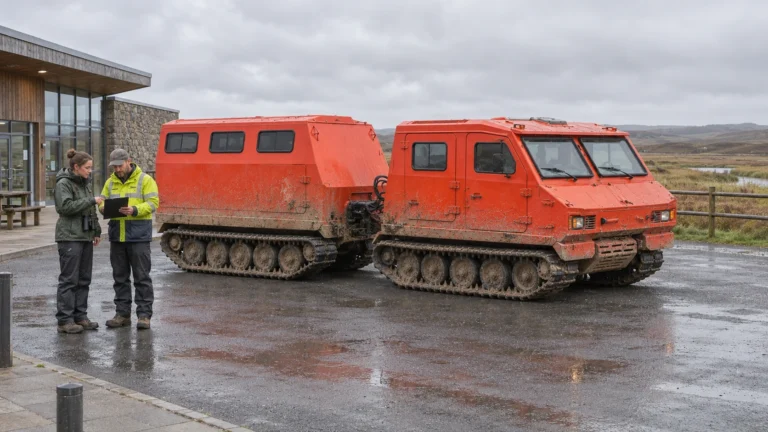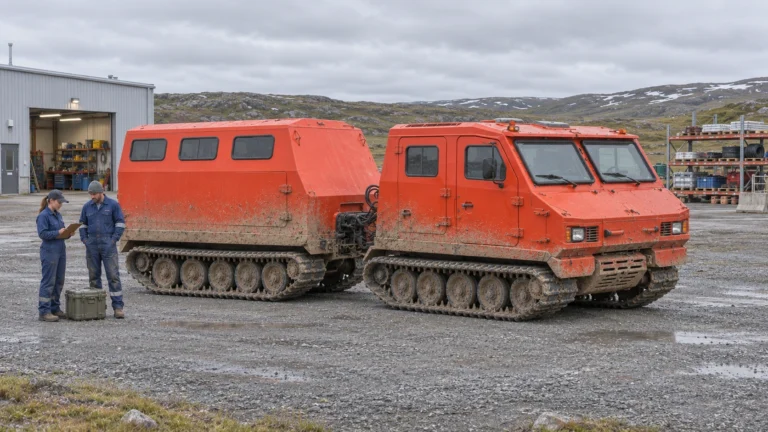











Vehicle weight, payload and passenger information describe different aspects of a civilian vehicle. In an articulated tracked vehicle payload specification, a mass entry labelled only “Weight” does not, by itself, establish a payload rating. Likewise, a passenger description does not establish a cargo allowance. This article explains the terms and how to read their documentation without inferring performance.
Contents
What do vehicle weight and payload mean?
People and goods: separate descriptions
Preserving records of the stated fields
When published statements appear inconsistent
Written clarification and source boundaries
Frequently asked questions (FAQ)
References and source boundaries
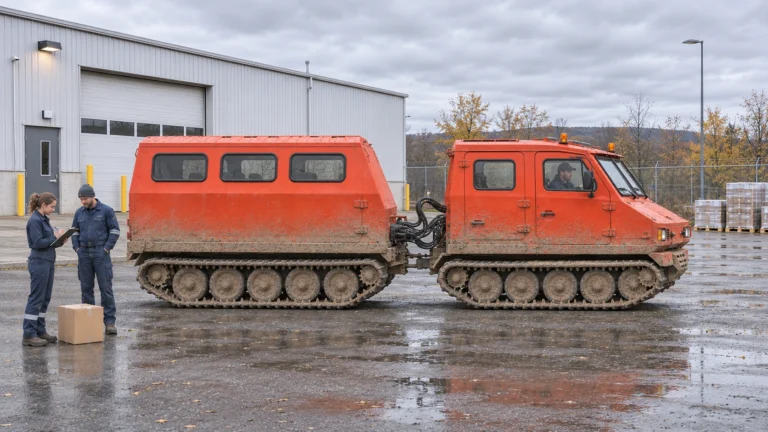
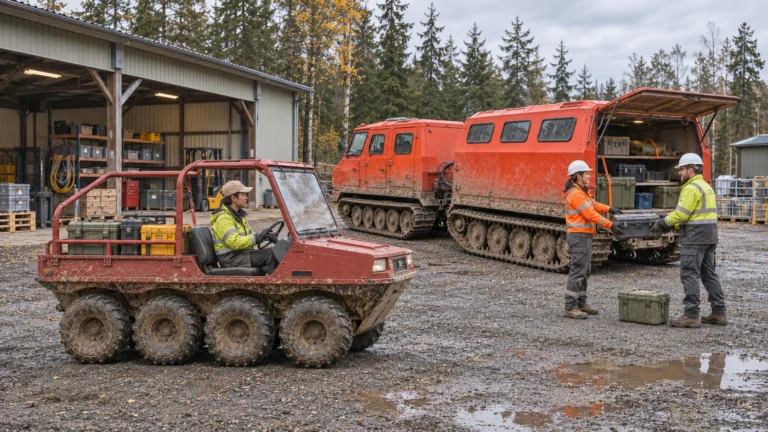
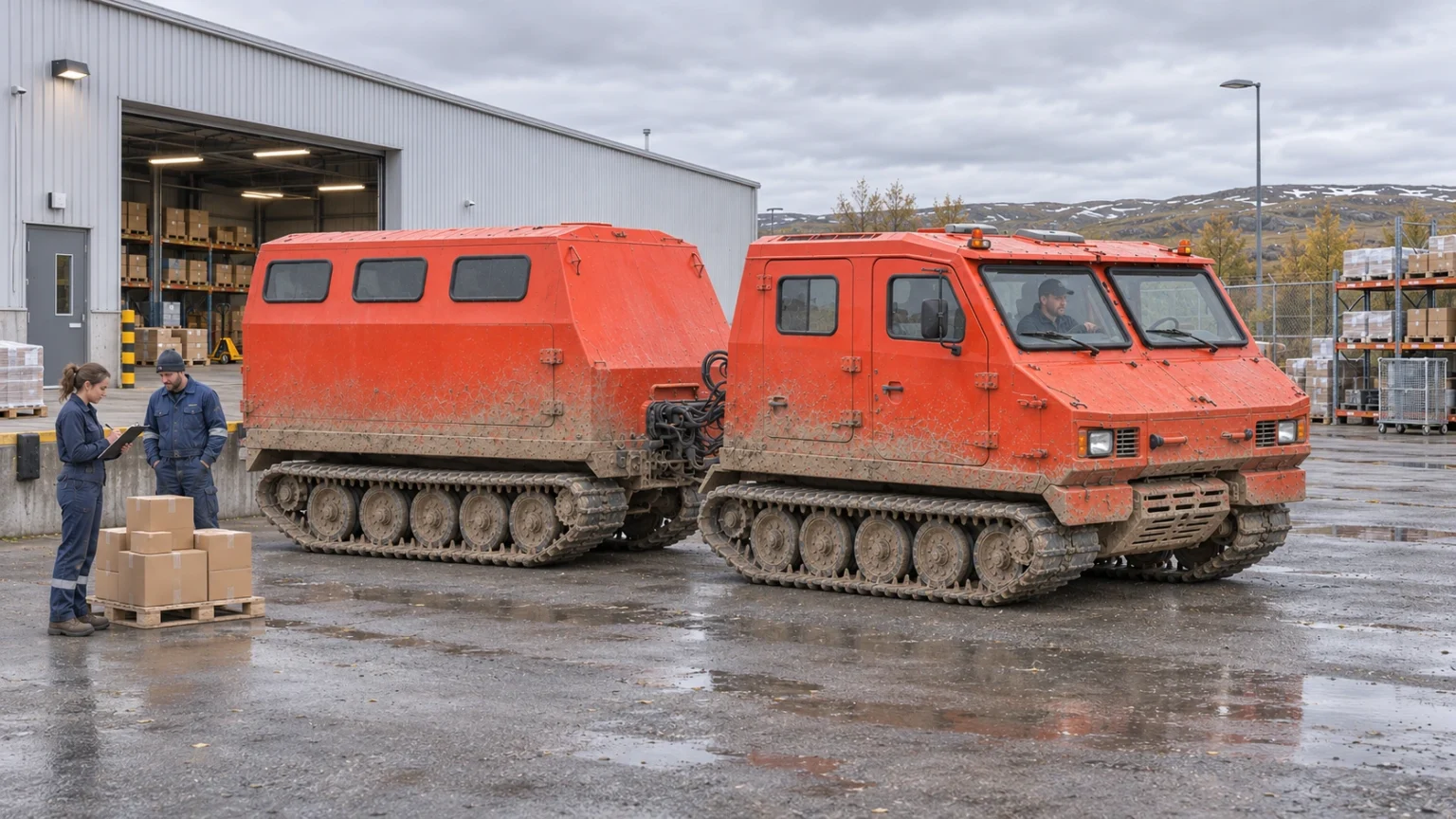
AI concept: a civilian warehouse supply handover beside a parked two-section carrier. Not a delivered JJ117, a load test or an operating procedure.
What do vehicle weight and payload mean?
Published vehicle literature often presents several mass-related terms. Vehicle weight may refer to a particular condition of the vehicle, but the heading alone does not identify that condition. Payload is a different concept: a stated carrying allowance under the definition used by the issuing document. Therefore, the two labels should not be treated as synonyms.
For terminology context, the 2017 ANSI D.16 road-traffic classification manual distinguishes actual loaded vehicle weight from a manufacturer’s rated loaded weight [S2]. That distinction is helpful for understanding language. However, the road-vehicle classification does not certify or define the permitted operation of an articulated tracked vehicle.
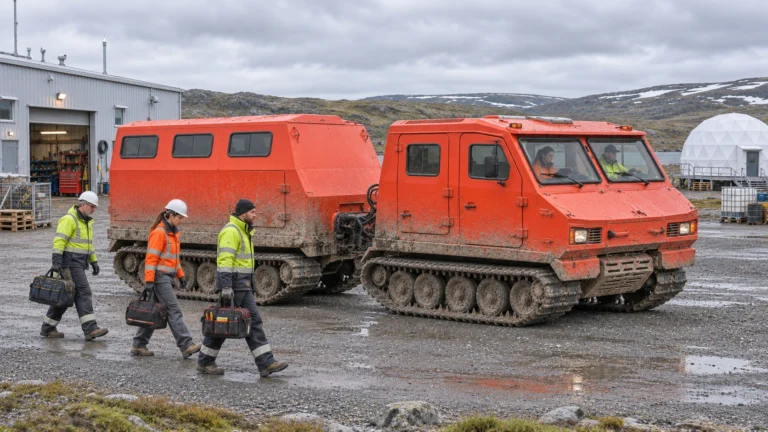
The JINJIA tracked utility vehicle page [S1] is a manufacturer product introduction. Its use of separate weight and occupancy labels illustrates why a reader should retain the original field names rather than inventing a label. The illustrations below use no performance figures.
People and goods: separate descriptions
People and goods are distinct subjects in transport documentation. A passenger description identifies the stated occupancy arrangement, whereas an ordinary goods description identifies cargo or equipment as a type of transport activity. Neither heading supplies the missing information in the other.
For example, Hydrus Innovations publicly describes civilian personnel and freight services associated with its Hägglunds fleet [S3]. This gives context for the two categories. It is not a JJ117 performance record or evidence that the same configurations apply to other vehicles.
An ordinary warehouse handover illustrates the language difference. A box of supplies has a delivery description, while the people receiving it have their own role. The fictional image is an editorial illustration, not an operational procedure or vehicle test.
Preserving records of the stated fields
A useful reading record keeps the label exactly as written, its source title, date and relevant edition. When the document identifies a particular vehicle version, preserve that identification instead of applying the wording to other versions.
For clarity, mark whether an entry describes a person, a type of goods, an unspecified mass field or a manufacturer statement. Separate a direct quotation or paraphrase from the reader’s interpretation. This is particularly important in translated product materials, where similar terms may have different meanings.
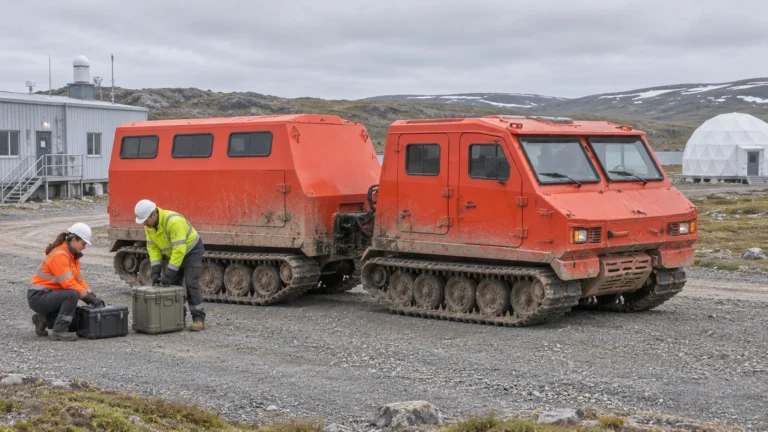
The accompanying blank records workbook documents information sources and wording. It is not a load sheet, a payload computation or a method for establishing carrying capacity.
When published statements appear inconsistent
Sometimes two publications use different terms for information that appears similar. Moreover, an older brochure may lack the definitions found in a later edition. If so, preserve both statements and their dates. Do not transform a vague weight label into a more specific rating.
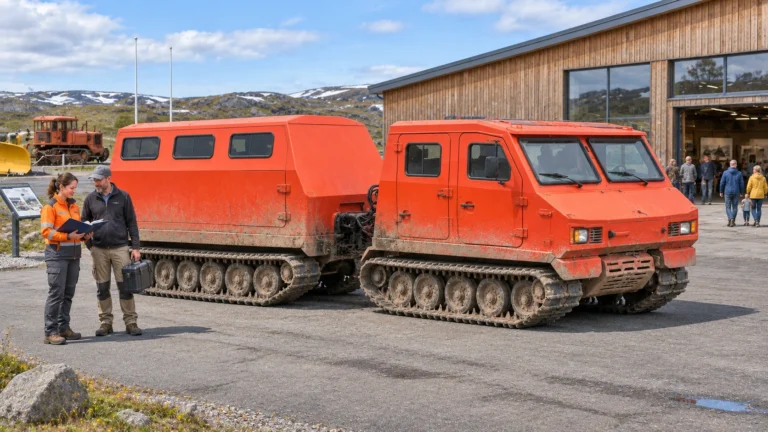
The terminology illustration groups four labels into separate cards: vehicle weight, loaded weight, payload and passenger description. This makes their different meanings easier to see. It does not establish an arithmetic relationship or a numerical limit.
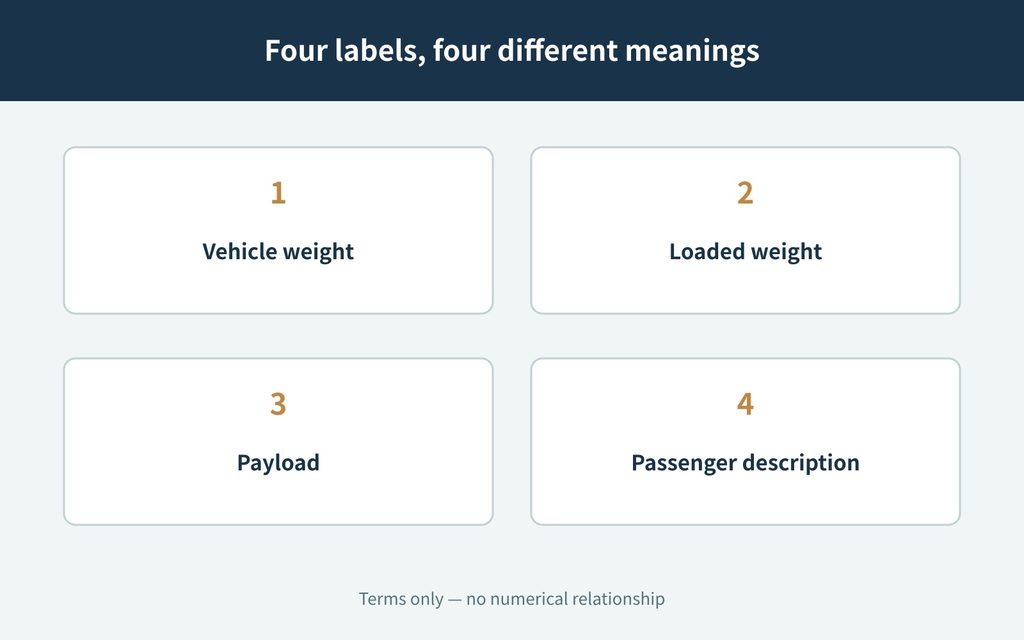
Terminology illustration only; no quantitative relationship or carrying approval.
The existing tracked utility vehicle category article [S4] provides general background. In contrast, this article addresses the narrower question of interpreting written mass and occupancy labels.
Written clarification and source boundaries
Where wording remains ambiguous, record the exact source and the question about its meaning. The issuer’s written explanation is a separate record that should retain its date and stated scope. A later explanation should not erase the earlier published text.
The published contact page [S5] is the entry for general questions about company documentation. A product family name, a concept image and a public description should not be read as an approval of loading or carriage.
In short, distinguish the field name from the meaning stated by its source. If that meaning has not been established, leave it unresolved rather than presenting an inferred number as a confirmed specification.
View the published contact information for general documentation questions.
Frequently asked questions (FAQ)
A: No. Vehicle weight and payload are separate terms. A generic mass field without a definition does not establish a carrying allowance.
Q: Is actual loaded weight the same as a rated weight?
A: No. The ANSI road-traffic terminology distinguishes actual weight from a manufacturer’s stated rating; it is not a JJ117 certification.
Q: Does a passenger description establish a goods allowance?
A: No. Passenger and freight information describe different subjects. Neither implies an undocumented allowance.
Q: Can a photo establish a rating?
A: No. A photo can illustrate a vehicle category or scene; it does not establish numerical capability.
Q: What if two brochures use different terminology?
A: Keep both documents and their stated dates. Record the ambiguous wording rather than interpreting it as a confirmed value.
Q: What does the attached workbook do?
A: It records source wording, document revisions, and clarification status. It does not calculate or approve loads.
References and source boundaries
S1: JINJIA / Response Mobility — Tracked Utility Vehicle — Manufacturer public product description; no independent payload or approval inference.
S2: ANSI D.16-2017 — Manual on Classification of Motor Vehicle Traffic Crashes — Road-traffic classification terminology, section 2.2.22–2.2.23; not a JJ117 or off-road applicability standard.
S3: Hydrus Innovations — Hägglunds fleet — Third-party description of civilian services; not a JINJIA performance record.
S4: JINJIA — What Is a Tracked Utility Vehicle? — Existing broad category explanation, complementary to this terminology article.
S5: JINJIA — Contact — Published contact information; no claim of a response or approval.