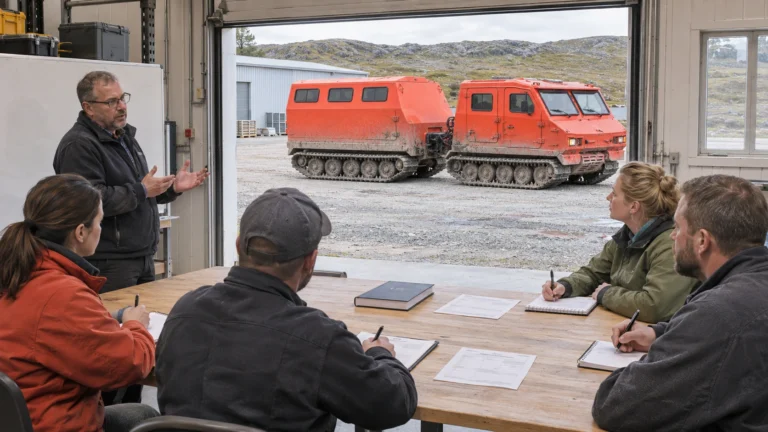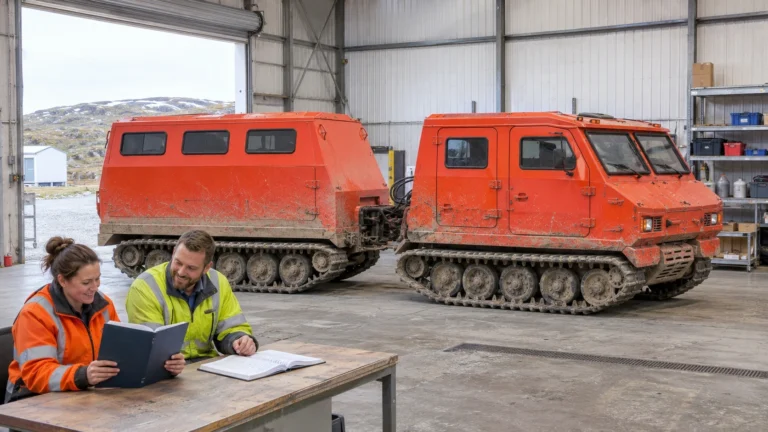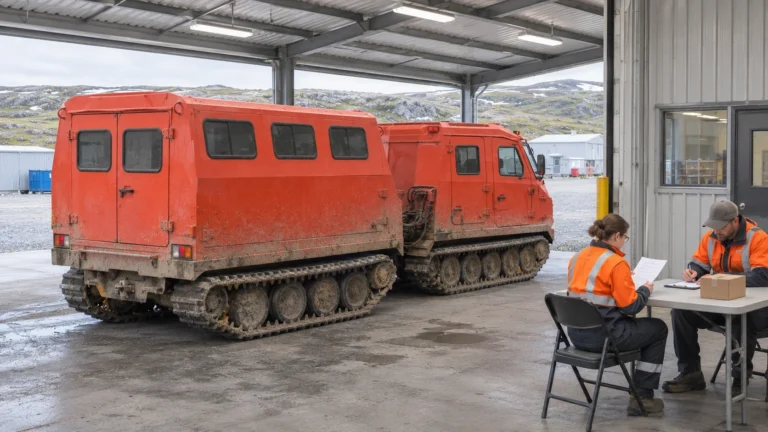











Arctic oilfield tracked transport is a term used in industry literature about cold-region logistics. However, winter imagery and vehicle terminology cannot establish approval for a specific facility or demonstrate a completed project. This article distinguishes civilian warehouse activities, occupational health information and public product literature from project-specific records.
Contents
People and ordinary materials in winter
Worker health, approvals and service documents
General cold-climate information and industry articles
Public information and further reading
Frequently asked questions (FAQ)
References and source boundaries
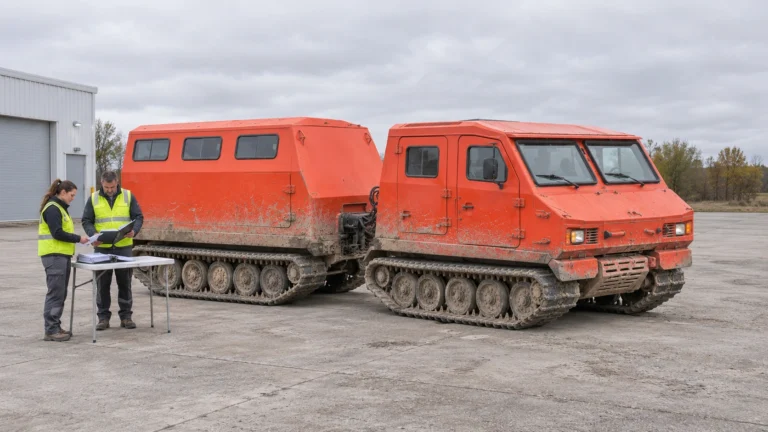
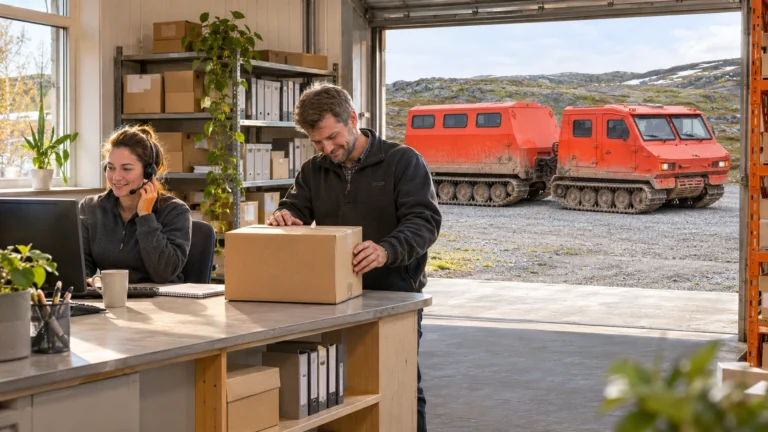
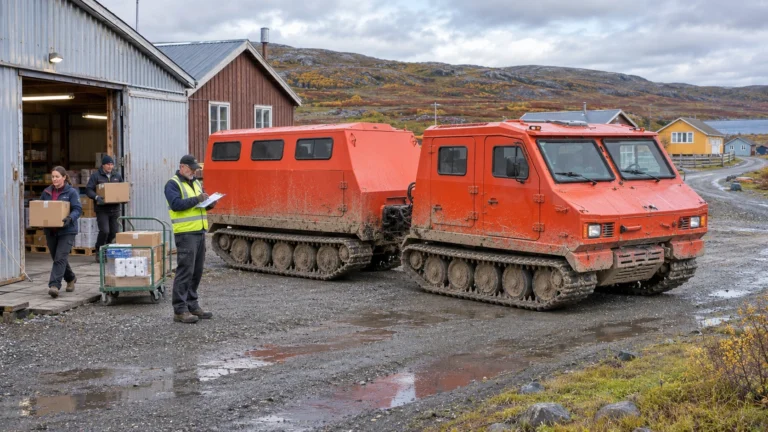
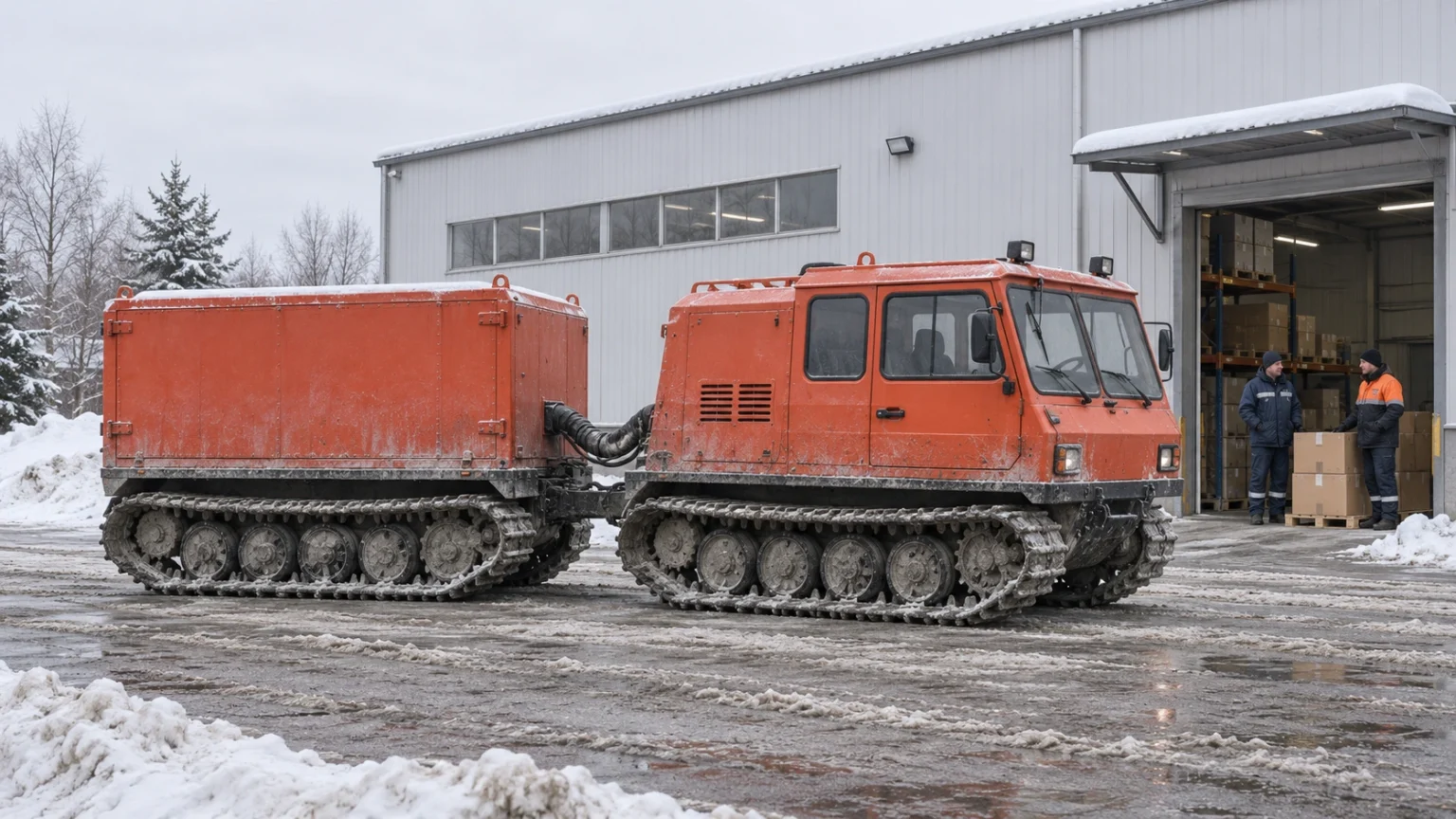
AI concept: generic civilian articulated carrier, winter-clad warehouse staff and closed cartons at an anonymous snowy commercial warehouse. Not an oilfield, verified JJ117 delivery or test.
Cold-region industry context
The Arctic is a geographical region, while a cold climate describes environmental conditions. Consequently, an article about winter work need not describe a particular Arctic industrial site.
Industry publications often use logistics terminology to describe activities concerning people and goods. The words indicate a general subject, not a verified location or contract.
For instance, a photograph of a commercial warehouse after snowfall can illustrate winter working conditions without depicting a production site. Such an image also cannot establish the date, destination or status of an industrial delivery.
People and ordinary materials in winter
Winter workwear and closed commercial cartons are common civilian warehouse subjects. However, an illustration of these objects does not constitute a personnel record or a receipt for goods.
Cold stress is a worker-health issue. NIOSH explains that outdoor exposure and cold indoor workplaces can affect health [S1]. Thus, a photograph of someone wearing a winter jacket cannot establish that an occupational health assessment has taken place.
The concept illustration accompanying this article depicts a generic civilian articulated carrier, warehouse staff and ordinary cartons in a snowy setting. It is not a photograph of an Arctic oilfield, a documented delivery or an actual JJ117 test.
Worker health, approvals and service documents
NIOSH describes the occupational health challenges of oil and gas extraction as complex [S2]. Its research has a different purpose from a supplier brochure. In particular, it is not a certification of any vehicle or industrial project.
Moreover, general cold-stress material addresses the health of workers. It is not a statement of facility permission. A service document concerns the subject defined by its issuer, while a formal approval is a separate administrative decision.
The graphic below separates winter context, worker health, product literature and official records. These four information categories explain the meaning of documents rather than a work or transport process.
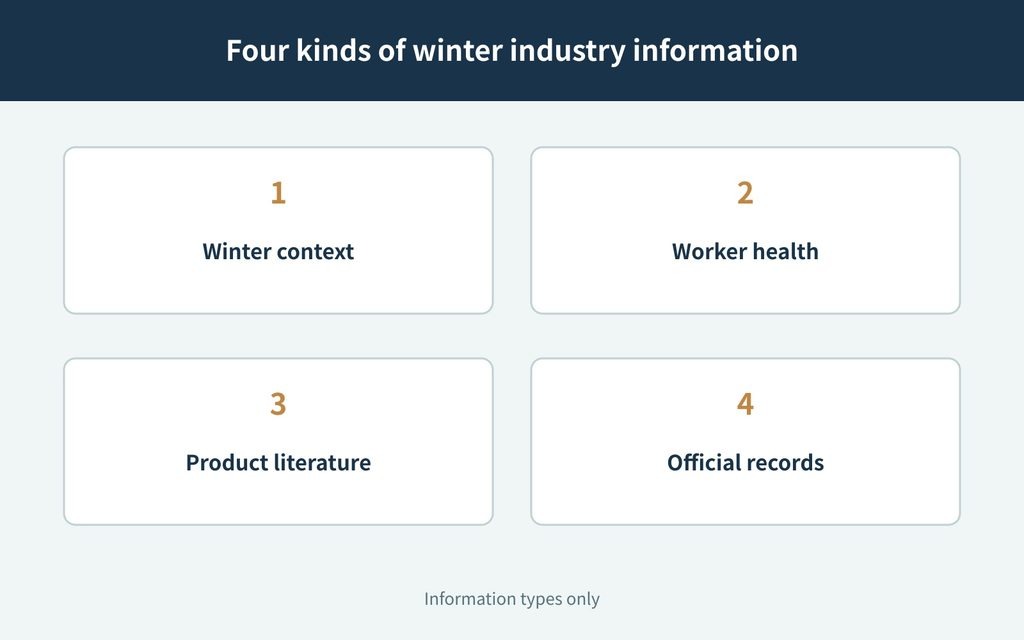
Information categories only; not a transport or site process.
General cold-climate information and industry articles
A general cold-climate article covers winter conditions and their meaning independently of any one industry. By contrast, an industry article places public information within a distinct commercial vocabulary.
The JJ117 series includes a separate general cold-climate subject and an oil and gas overview. Their editorial roles are different from this article, which concentrates on winter worker welfare and the interpretation of civilian logistics descriptions. A manufacturer source [S3] remains a product description.
In addition, any public records concerning service, approval or delivery retain the meaning of their original wording. A general article cannot turn such terms into proof of actual performance.
Public information and further reading
Readers seeking general worker-health background can consult the two NIOSH sources below [S1–S2]. They are US public health resources, not a substitute for applicable local professional advice.
The companion document register records public titles, issuers, publication dates and stated subjects. It does not collect site information, transport arrangements or operational data.
In summary, this article explains winter industry language and the boundaries of public product information. JINJIA publishes general product and contact information on its website [S3–S4].
View the published contact information for general documentation questions.
Frequently asked questions (FAQ)
A: No. Arctic is a geographical term, whereas cold climate describes environmental conditions.
Q: Does a snowy warehouse image establish an oilfield delivery?
A: No. An illustration cannot establish a real project.
Q: Is cold stress a vehicle certification?
A: No. It is a worker-health issue.
Q: Does a service document prove site permission?
A: Not by itself. The original document subject and issuer determine its meaning.
Q: Where can readers find general winter worker-health information?
A: The NIOSH cold-stress resource below provides public background.
Q: What is the companion register for?
A: Keeping public document titles, issuers, dates and subjects in their original context.
References and source boundaries
S1: NIOSH — Cold Stress and Workers — US public information on cold-related occupational health; not a transport or vehicle guide.
S2: NIOSH — Oil and Gas Extraction Research — US public occupational health research overview; not industrial project approval.
S3: JINJIA — Tracked Utility Vehicle — Manufacturer product description only.
S4: JINJIA — Contact — Public brand contact information.