










The fastest way to weaken a promising national program is to scale it before it has been tested in the country’s hardest operating conditions. The second-fastest way is to run a technology demonstration that proves individual equipment works but says nothing about multi-agency command, lifecycle readiness or integration with existing national systems.
Indonesia needs a different path: a jointly governed reference architecture, three operationally distinct pilots, transparent baseline KPIs and a scale decision based on evidence.This approach matches BNPB’s 2025-2029 direction. The Strategic Plan emphasizes collaboration from national to regional levels, integrated early warning and emergency handling, community resilience, logistics and equipment, Pusdalops capacity and stronger interoperability. The program described here is not a parallel national platform. It is a method for validating the field execution layer beneath those priorities.
Six principles before procurement
- Indonesian ownership. BNPB governs the reference architecture, national interfaces, validation framework and scale decision.
- Protect systems of record. BNPB, BMKG, InaRISK, DIBI and Pusdalops data remain authoritative; SAE consumes and returns only approved operational information.
- Mission-based packages. Procure a verified response capability – people, platforms, modules, communications, training, spares and maintenance – rather than unrelated line items.
- Open interoperability. Approved existing radios, sensors, UAVs, UGVs and vehicles should connect through documented interfaces wherever technically and legally feasible.
- Baseline before target. Measure the current process before setting improvement thresholds.
Local capability transfer. Indonesian partners must be able to integrate, train, maintain, support and progressively localize the system.
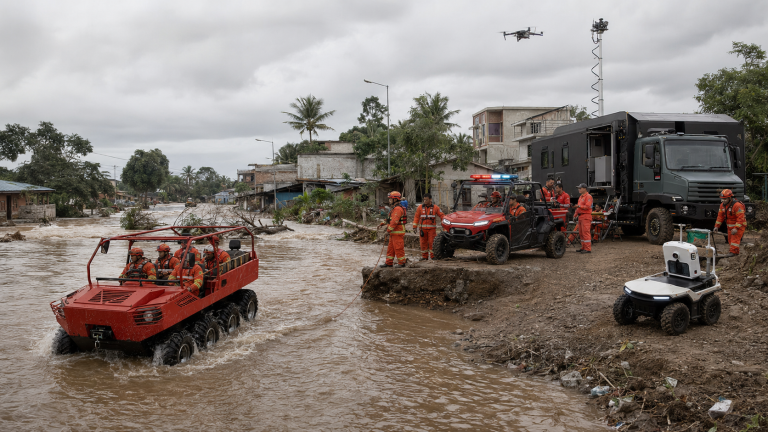
Pilot A – Greater Jakarta: urban flood and complex fire
Reference mission. Validate warning-to-tasking, dense urban access, flood evacuation, field energy, multi-agency common operating picture and robotic support in industrial or hazardous fire.
Potential participants. BNPB/BPBD and Pusdalops, relevant fire and rescue service, Basarnas, BMKG, health and public-works functions, infrastructure operators and other authorities selected by the government.
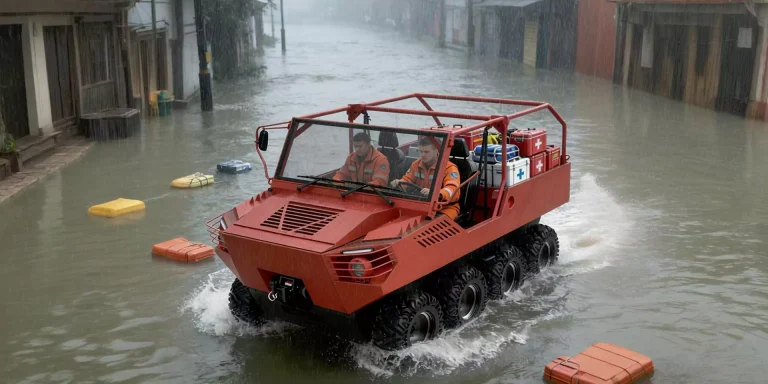
Capability mix. SAE field node; approved communications; amphibious 8×8 or other flood-access platform where appropriate; F120 high-mobility truck; fire-rescue UTV and compact mobility; pumps, lighting, energy, medical/cold-chain and evacuation modules; firefighting robot or UGV for a controlled hazardous-zone scenario.
What the pilot should prove. Can an authoritative warning become a named task? Can teams share route, shelter, water, hazard and asset status? Can the field cell continue during a power or connectivity interruption? Can robotic data be integrated into incident command rather than viewed on a separate screen?
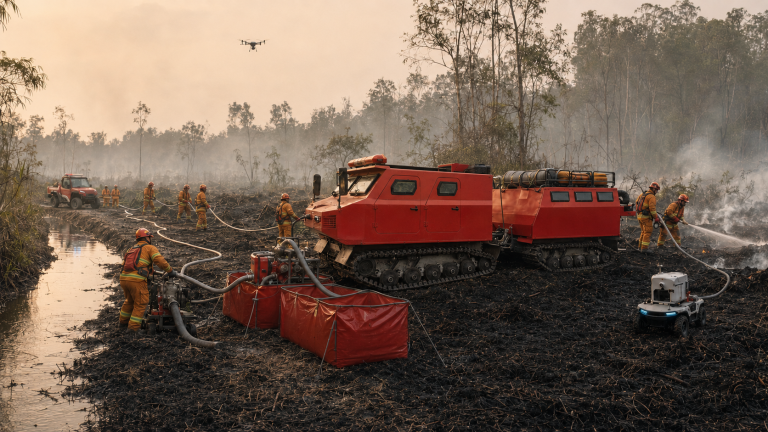
Pilot B – Kalimantan or Sumatra: peatland and forest fire
Reference mission. Validate detection-to-ground confirmation, soft-terrain access, water establishment, multi-shift sustainment, responder accountability and monitoring through operational closure.
Potential participants. BNPB/BPBD and Pusdalops, Ministry of Forestry/Manggala Agni, BMKG, local fire and emergency services, TNI/Polri support, community fire groups and other locally authorized partners.
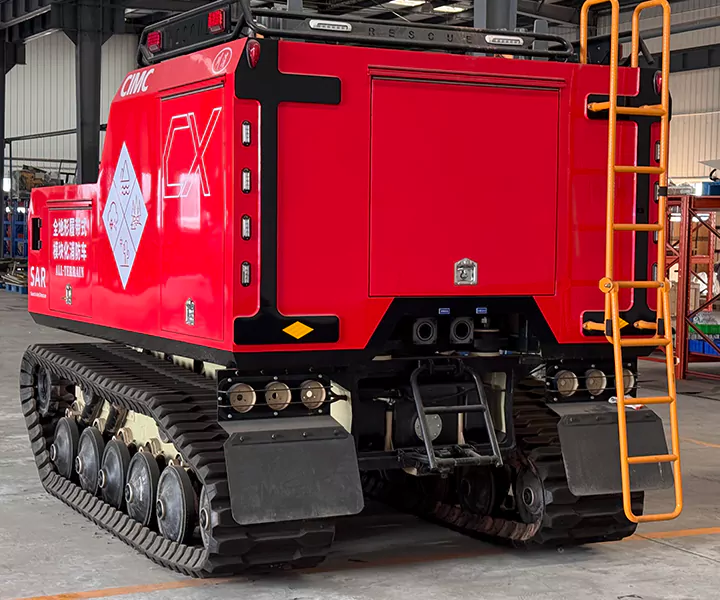
Capability mix. SAE edge node and mesh; BN117 or equivalent tracked/low-ground-pressure carrier; UTV and compact mobility; Delta 150 or tracked carrier for payload and reconnaissance; pumps, hose, flexible storage, field energy, lighting, UAV/thermal inputs and sustainment modules.What the pilot should prove. Can the operation maintain one picture of teams, pumps, water points, hose routes, thermal observations, hazards and tasks? Can the package move beyond the roadhead without exhausting the crew? Can maintenance and resupply support more than one shift? Is the after-action record complete enough to improve the next deployment?
Pilot C – Eastern Indonesia: first-72-hour multi-hazard resilience cell
Reference mission. Establish a local command, communications, reconnaissance, power, medical, water and logistics cell after an earthquake, tsunami, volcanic eruption or landslide has disrupted infrastructure.
Location principle. The theatre should be selected by BNPB using risk, access, institutional readiness and exercise feasibility. The concept is relevant to Nusa Tenggara, Sulawesi, Maluku and Papua, but the pilot site should not be predetermined by a supplier.
Potential participants. BNPB/BPBD and Pusdalops, Basarnas, BMKG and technical monitoring agencies, health and public works, local government, TNI/Polri support, telecommunications and utility partners, and community organizations.
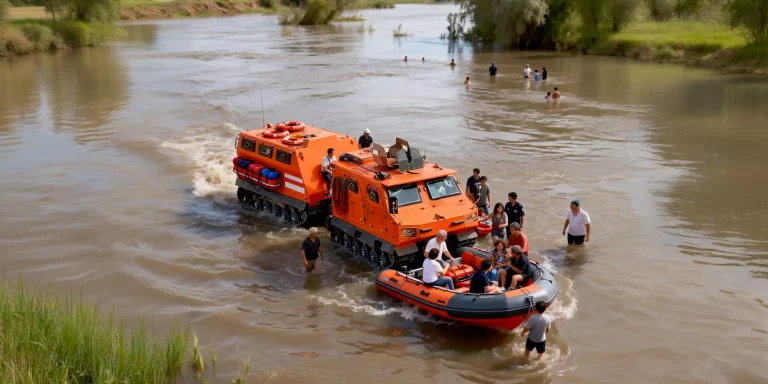
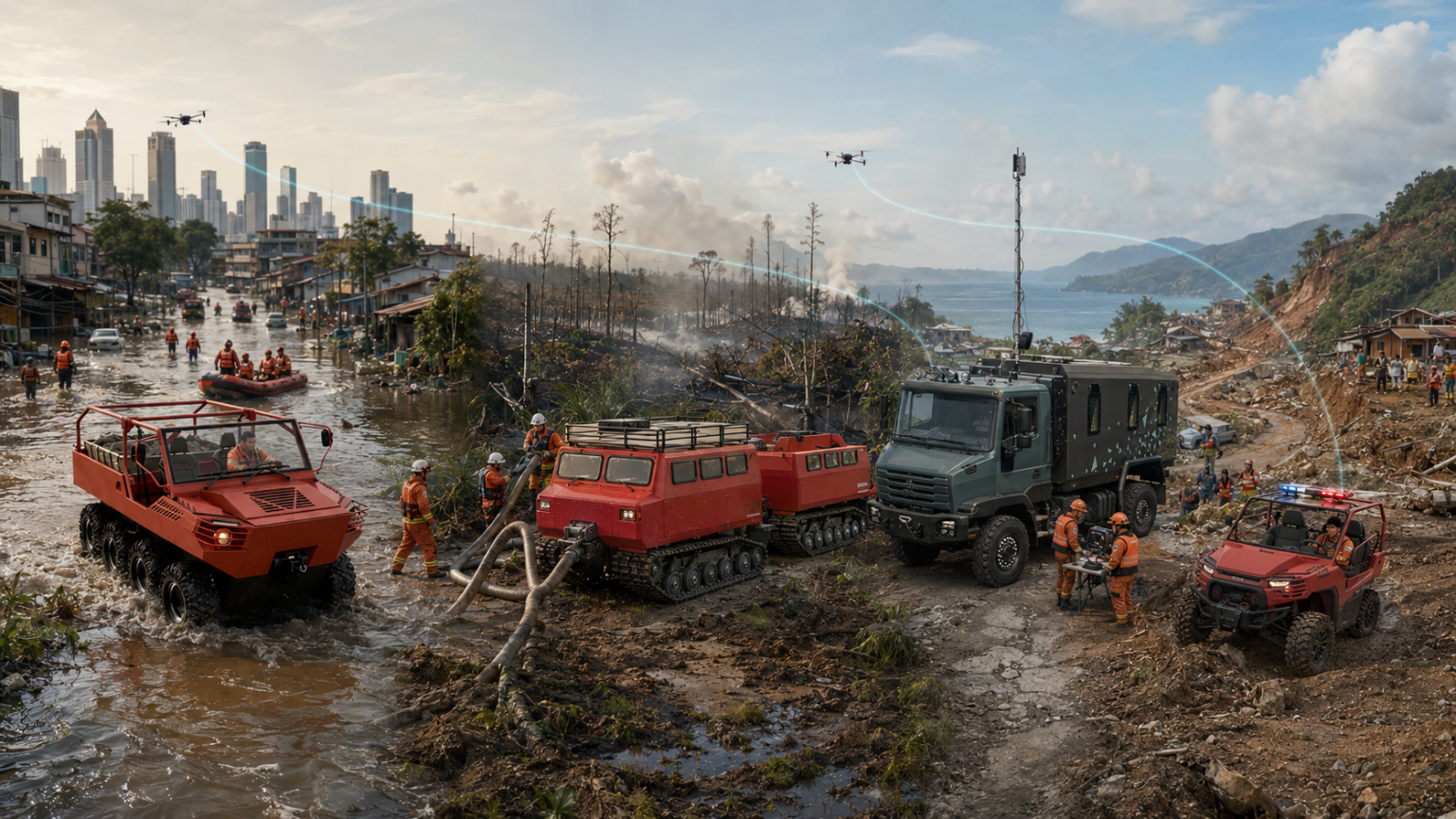
Capability mix. Deployable SAE edge node; mesh, satellite and approved radio options; F120 or other high-mobility logistics platform; 8×8 amphibious capability where water access requires it; compact mobility and UGV reconnaissance; mobile energy, lighting, water, medical/cold-chain, shelter and logistics modules.
What the pilot should prove. How quickly can a local common picture be established? Which critical loads can be sustained? Can route, bridge, shelter, casualty, supply and team status remain available when external infrastructure is interrupted? Can national reinforcement see and join the local operating model when it arrives?
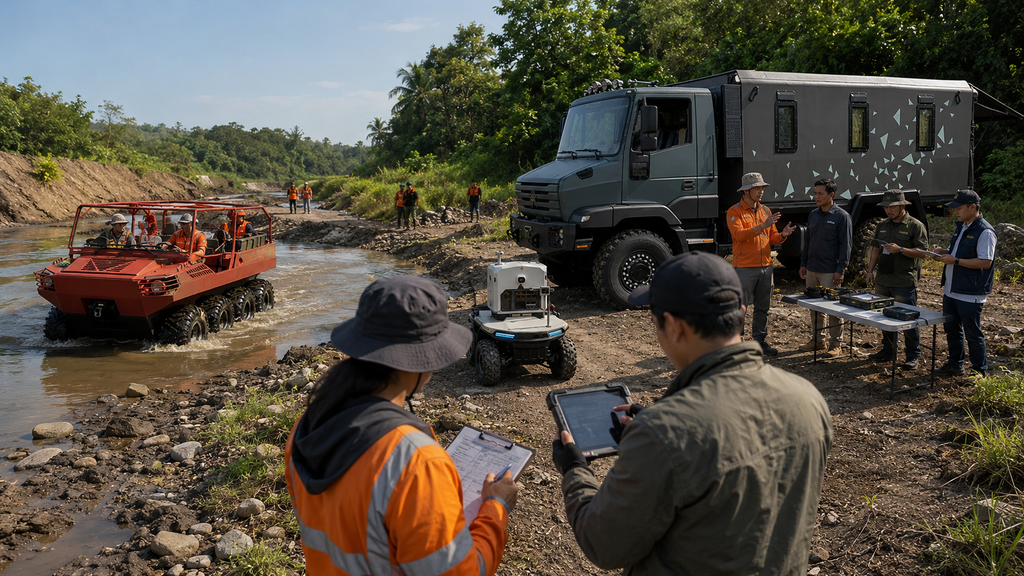
One scorecard across three different missions
| KPI family | Example measures | Why it matters |
| Time | Warning-to-tasking; field-network activation; first field confirmation; first critical capability on scene | Measures the complete response chain, not vehicle speed alone |
| Reach | Time and payload delivered beyond roadhead; flooded/soft-terrain sectors accessed; route status updated | Shows whether the system closes physical access gaps |
| Safety | Personnel accountability; SOS/evacuation handling; remote red-zone tasks; exposure and near-miss reporting | Tests whether technology reduces risk in operational practice |
| Coordination | Task acknowledgement/completion; cross-agency handover; common-picture availability; incident-log completeness | Demonstrates shared execution, not parallel screens |
| Readiness | Equipment availability; training qualification; spares; maintenance turnaround; multi-shift endurance | Protects lifecycle value after the demonstration |
| Interoperability | Approved systems connected; data exchange success; offline/online synchronization; user acceptance | Prevents a new information silo |
The scorecard should contain a small set of agreed definitions. For example, “field network active” must mean more than a device being powered on; it should require that a defined group of users can see and acknowledge the incident. “Responder accountability” must specify who is included and how stale position data is treated. Clear definitions make pilot results comparable.
The 36-month path
| Phase | Time | Core outputs | Decision gate |
| Co-design and baseline | 0-90 days | Governance charter, scenarios, system-of-record map, interface priorities, safety case and baseline KPI definitions | Approve pilot scope and authority |
| Integration and field pilot | 3-9 months | Localized SAE workflows, configured platform/module packages, training, tabletop, controlled exercise and initial field validation | Confirm technical and operational readiness |
| Multi-region validation | 9-18 months | Two additional pilots, seasonal testing, multi-shift sustainment, interoperability evidence and revised doctrine | Decide standard packages and gaps |
| National framework | 18-36 months | Reference architecture, procurement/acceptance framework, Pusdalops integration pattern, training and maintenance network, continuous-improvement cycle | Authorize scaled regional adoption |
Six workstreams must move together
Governance and doctrine
Define authority, information access, task ownership, offline decision rights, interagency handover and after-action responsibility. Technology must follow Indonesian command practice.
Data and integration
Map authoritative sources, minimum operational data, API priorities, cybersecurity, hosting, retention and synchronization. Begin with the smallest dataset required to support a real workflow.
Platforms and mission modules
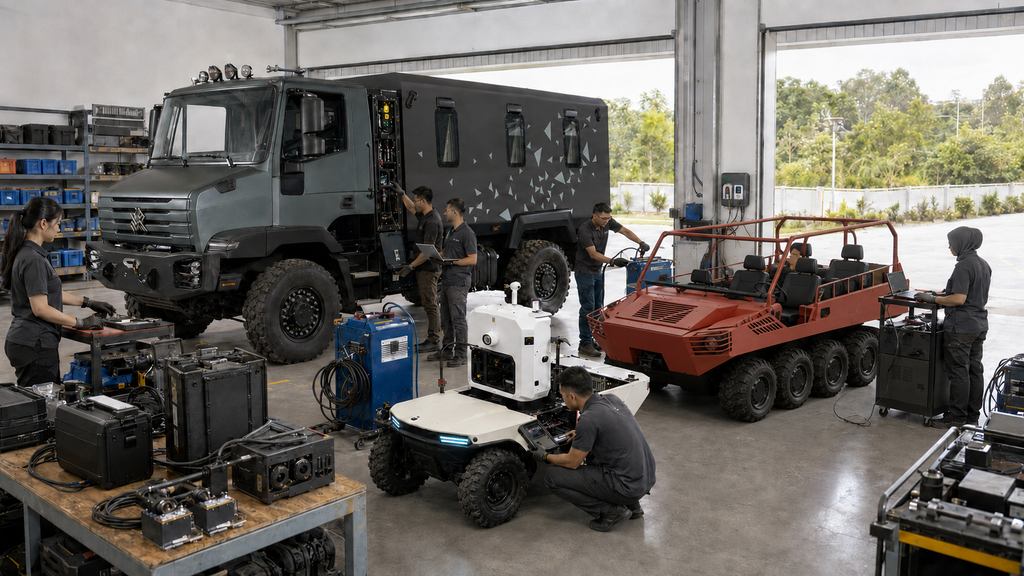
Select terrain-matched carriers and modules. Standardize interfaces, mounting, power, safety, communications and acceptance tests so that capability can evolve without replacing the whole fleet.
People and exercises
Use role-based training for commanders, operators, maintainers and field teams. Require a tabletop, controlled field exercise and after-action review for each pilot stage.
Lifecycle readiness
Define spares, preventive maintenance, battery/fuel plans, software support, calibration, storage, inspection and service-level responsibilities before the pilot begins.
Evidence and scale
Instrument the workflow, compare against baseline, record limitations and publish an Indonesia-owned validation report. Scale what is proven; redesign what is not.
Clear roles for a national partnership
| Stakeholder | Proposed role in the program |
| BNPB | Sponsor the reference architecture, national governance, system-of-record interfaces, pilot selection and scale decision |
| BPBD/Pusdalops | Own local workflows, operate pilots, validate usability and maintain regional readiness |
| BMKG and technical agencies | Provide authoritative warnings and approved technical data; validate downstream dissemination |
| Basarnas | Validate search, rescue, evacuation and first-response workflows within its mandate |
| Ministry of Forestry/Manggala Agni | Validate karhutla doctrine, ground operations and forestry-fire requirements |
| Fire and rescue services | Validate urban, industrial and local fire-rescue workflows |
| TNI/Polri and other supporting institutions | Participate according to Indonesian authority, incident structure and support requirements |
| Indonesian industry and academia | Local integration, cybersecurity, training, maintenance, localization and independent evaluation |
| Jinjia Special Equipment | SAE, mobility platforms, mission integration, documented interfaces, training and capability transfer |
Procure readiness, not a catalogue
A national tender or framework should describe capability packages and acceptance outcomes. A flood response package, for example, should specify access class, payload, evacuation function, field power, communications, SAE integration, operator training, spares, maintenance, exercise and KPI acceptance. This makes lifecycle cost and operational value visible.The same logic protects Indonesia from both extremes: a closed proprietary system that cannot integrate, and a collection of open components that has never been engineered or exercised as one response capability.
Why ADEXCO 2026 is the right starting point
ADEXCO describes itself as a pentahelix platform connecting government, industry, innovators and disaster-management stakeholders. That makes the 9-12 September 2026 event more than an equipment exhibition. It is an opportunity to convene the institutions that must jointly govern a national field architecture.
The proposed first outcome is simple: a BNPB-led technical working session, followed by one tabletop and field demonstration, then one reference pilot with agreed baseline KPIs. The program can grow only after Indonesian operators have produced the evidence.
Three pilots will not solve every national challenge. They can do something more valuable at the beginning: establish a common language for warnings, tasks, access, safety, readiness and interoperability. That is the foundation on which a national system can scale.
Any Terrain. Any Mission. One System. Powered by SAE.
Explore JINJIA solutions
- About Jinjia’s One-System approach: https://responsemobility.com/about/
- Situational Awareness System: https://responsemobility.com/situational-awareness-system/
- Emergency Response Solutions: https://responsemobility.com/solutions/
- Contact Jinjia: https://responsemobility.com/contact/
Sources
- BNPB Regulation No. 5/2025 – Strategic Plan 2025-2029 – policy alignment, strategic interoperability issue, Pusdalops, warning, logistics and equipment programs.
- BNPB – Collaborative disaster-management strategy 2025-2029 – collaboration from national to regional levels and resilience priorities.
- BNPB – Vision and Mission – emergency response and logistics/equipment mandate.
- BMKG – IDRIP closing and downstream warning chain – authoritative warning and Pusdalops-to-community chain.
- Basarnas – National search-and-rescue role – search, rescue, assistance and evacuation mandate.
- ADEXCO 2026 – Official Event Information and ADEXCO overview – event dates, venue and pentahelix positioning.