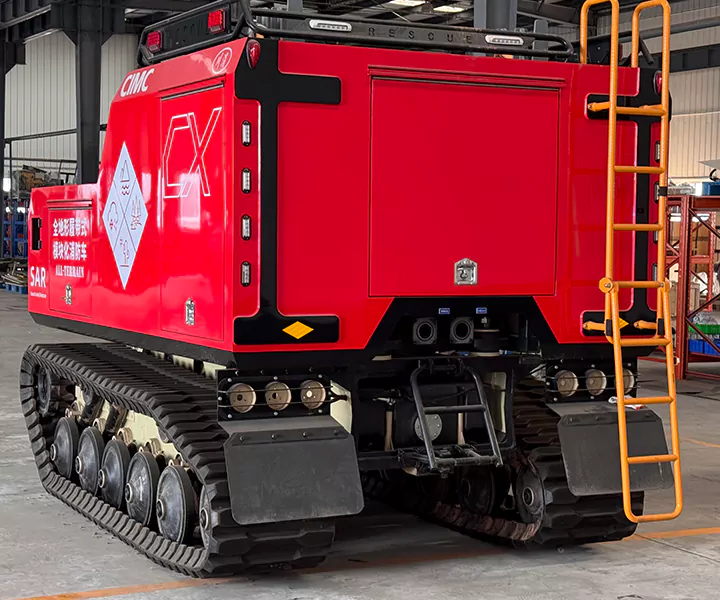


Reaching a remote maintenance point solves only part of the job. The team may still need lighting, communications, diagnostic equipment or a suitable temporary load supplied with electricity. Sending a vehicle and then organising a separate power arrangement can add handling, transport and set-up work. In some missions, mobility and power deserve to be planned together.
For 8×8 mobile field power, JINJIA’s range-extended amphibious platform offers a starting point for that discussion. Its published power-output figures distinguish supply while driving from continuous and peak supply while stationary. The useful question is how those capabilities match a defined work package, including its electrical interfaces and operating conditions.
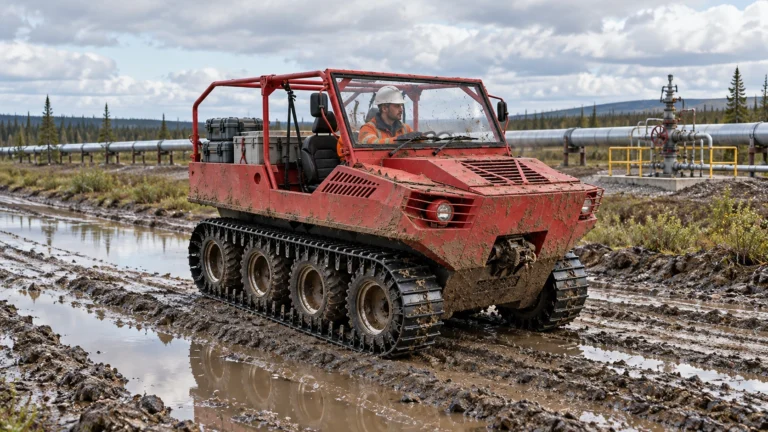
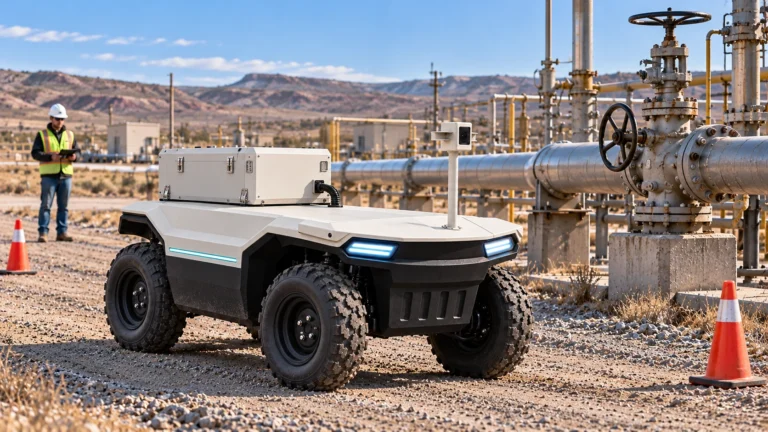
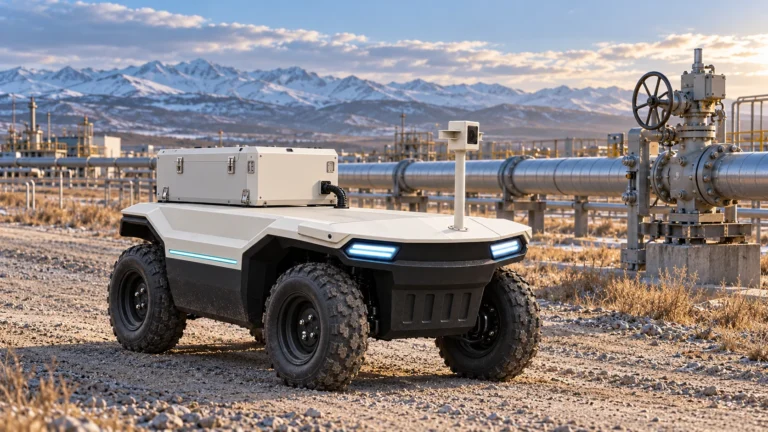
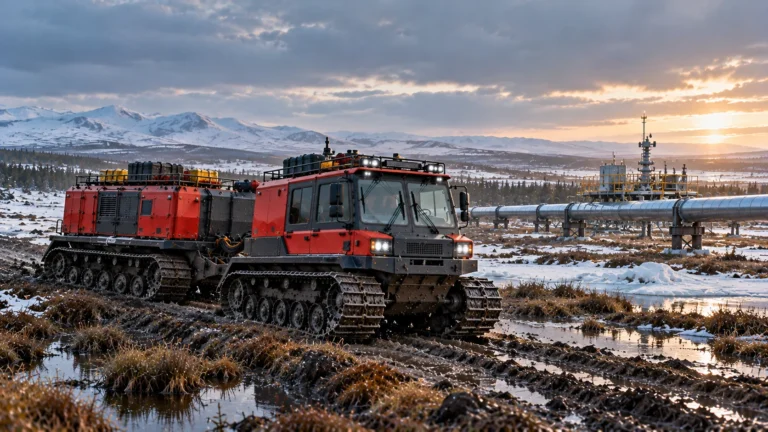
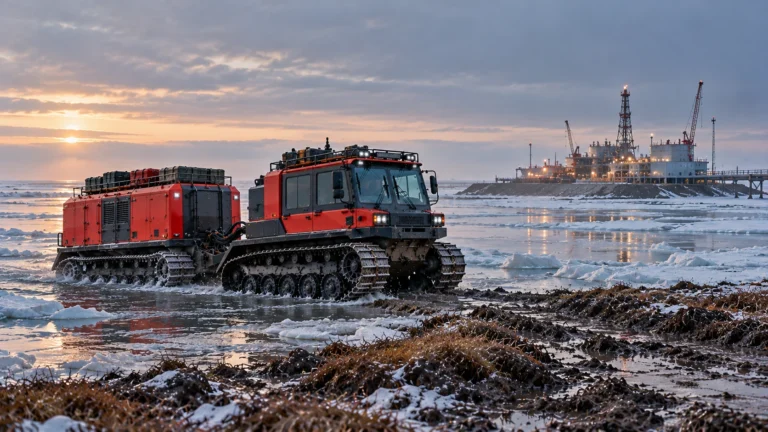
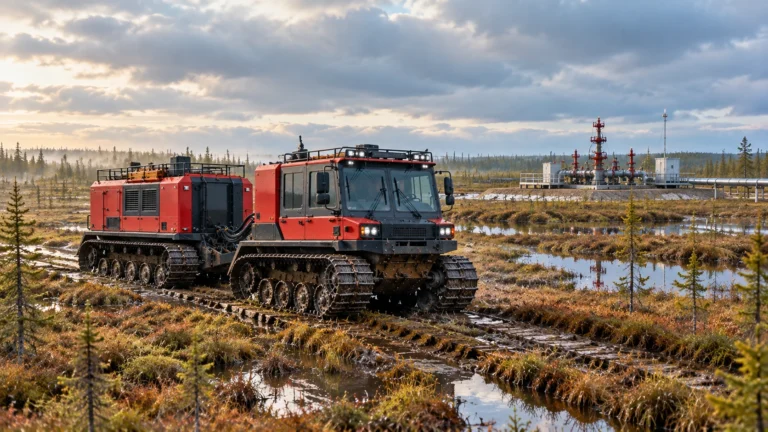
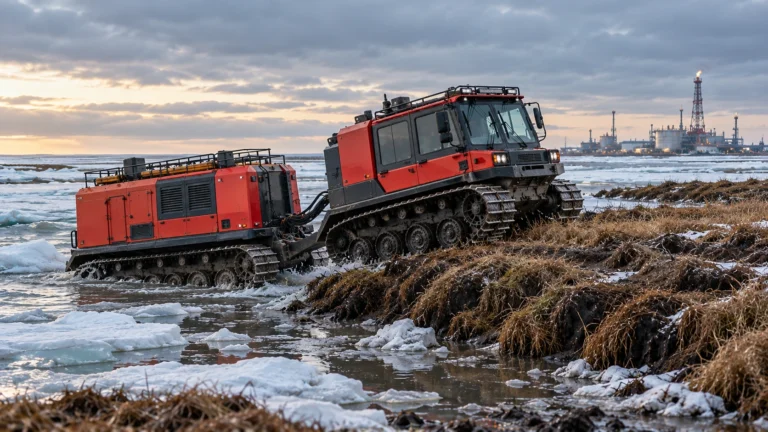
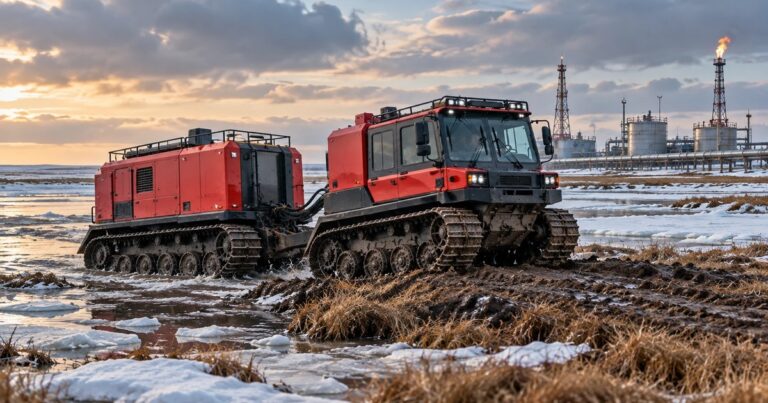
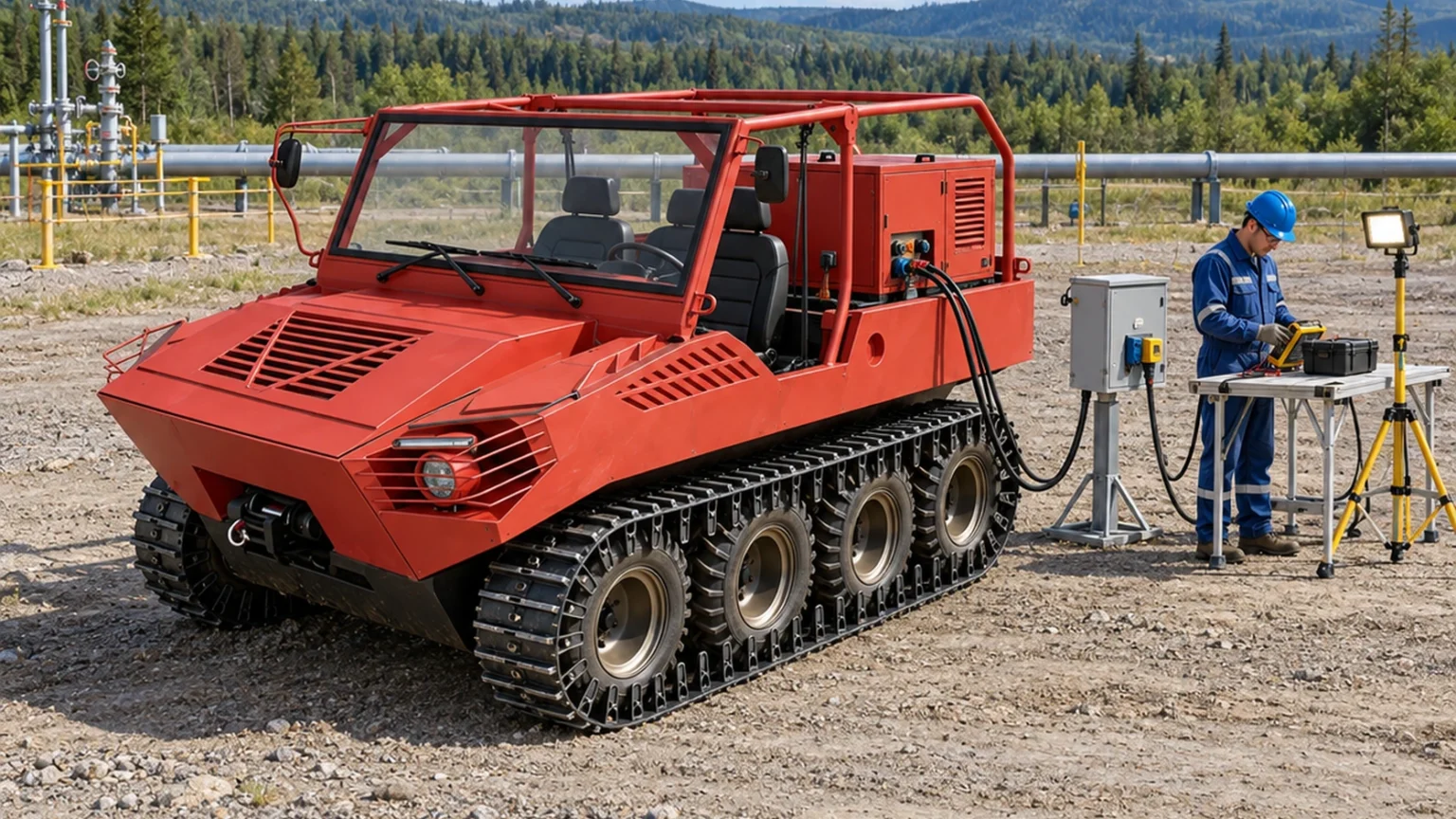
AI-generated application concept, not a customer deployment or test photograph. Shown payloads, tracks and electrical integration require configuration-specific confirmation.
At a glance
• List running, starting and simultaneous loads.
• Distinguish driving, stationary continuous and peak output.
• Confirm electrical interfaces and protection.
• Validate the actual work package in a dry approved area.
Start with the equipment list, not the peak number
A field-power brief should name each device and its electrical requirement. Record voltage, frequency, running power, starting or transient demand, expected operating time and whether loads must run together. Include communications and support equipment that can be overlooked when attention stays on the main tool.
For illustration, suppose a job lists 0.8 kW of lighting, 0.2 kW of communications, 1 kW of diagnostics and a 3 kW running load. The simultaneous running demand is 5 kW. If all operated at those loads for six hours, they would consume 30 kWh. This is a load-planning example, not the vehicle’s battery capacity or a promised six-hour runtime. Starting demand and actual duty cycles still need assessment.
Understand the three published output figures
JINJIA’s current product page states up to 5 kW external supply while driving, up to 20 kW continuous supply while stationary and 30 kW peak stationary supply. These figures describe different operating cases. A load that fits the stationary continuous figure should not be assumed to run while the vehicle is moving.
Likewise, peak power is not continuous power. Confirm the permitted peak duration and repetition, transient response and recovery conditions for the selected configuration. Ask for the electrical interface schedule and any environmental derating. The exact voltage, frequency, connector arrangement and protection should be agreed for the project rather than inferred from one catalogue output number.
Define what the mobile node will actually support
A useful first scope could be a maintenance staging point with approved lighting, communications and diagnostic loads. Other equipment should be assessed individually. A pump, for example, brings its own starting, control, fluid-handling and siting requirements. A camera or network device needs compatible supply as well as a data connection.
Keep the support role explicit. Supplying selected tools does not establish power for a whole production facility, an uninterrupted emergency system or medical equipment. If continuity matters, define the acceptable interruption, restart method and any separate backup requirement. A vehicle-borne source has to be evaluated as part of the field electrical system and working procedure.
Plan the route and the stationary work area together
The platform’s mobility may help move a support package to a suitable location, but the final work area still needs space, stable ground and an appropriate separation from process hazards. Locate equipment, people and cables so that the operation can be set up, supervised and cleared without creating a new access problem.
An amphibious configuration does not establish permission to use external electrical equipment in water. Treat transit, parking and power supply as separate operating conditions. Where water is part of the route, confirm the payload and procedures for that condition, then define the dry, approved location where the electrical task will occur. Flood response and energised electrical work should not be merged into an undefined promise.
Specify interfaces before adding mission equipment
A qualified project review should cover cable and connector compatibility, protective arrangements, bonding or earthing requirements where applicable, enclosure suitability and the receiving equipment’s instructions. The supplier and site team should agree the interface responsibilities and the evidence needed for acceptance. Avoid improvising a distribution system during delivery.
The range extender also makes fuel planning, ventilation, exhaust location, cooling and maintenance part of the support concept. OSHA’s oil-and-gas guidance identifies mobile engines and electrical equipment among potential ignition sources. The site determines where a proposed configuration may operate. No hazardous-area or explosion-protection approval is implied by the 8×8’s power-output figures.
Test the work package under representative conditions
Use the agreed device list to plan an acceptance exercise. Check load steps, the required simultaneous running condition, any permitted starting events and the equipment’s response to supply changes. Record ambient conditions and the selected operating mode. Define how the team will stop and restart the task and what will happen if the source becomes unavailable.
Confirm accessible controls, readable status information and a workable arrangement for cable storage and load securement. A successful demonstration should show the field task being completed, not simply an unloaded output panel. When the device list changes, review whether the previous test still represents the new job.
Compare the complete support operation
An integrated mobile node is not automatically better than a separate generator or a fixed supply. Compare the same job using each practical option. Include transport, set-up, fuel or energy, maintenance, operator time, operating restrictions and the consequences of taking the vehicle out of service for a stationary power task.
The integrated arrangement may be attractive where the mission requires both access and selected electrical support. A separate source may be preferable for a long stationary duty or where another vehicle must remain free. Use the measured duty cycle and local support arrangements to decide. Published peak power alone cannot establish whole-life savings.
Discuss a field-power configuration with JINJIA
During its ADIPEC 2026 industry visit, JINJIA welcomes discussions about practical support requirements for remote energy operations. Send the route, work location, equipment list, running and starting loads, duration and local electrical requirements. We can use those inputs to define an 8×8 configuration review and an acceptance scope.
Explore the 8×8 amphibious platform — https://responsemobility.com/amphibious-utility-vehicle/
review the range-extended vehicle introduction — https://responsemobility.com/what-is-an-8×8-amphibious-range-extended-ev/
or contact JINJIA — https://responsemobility.com/contact/with your field-support requirements.
See our exhibitions and industry visits — https://responsemobility.com/exhibitions/ for the ADIPEC visit context.
Frequently asked questions(FAQ)
A: No. The published stationary continuous figure is up to 20 kW; 30 kW is peak. Confirm peak duration and operating conditions.
Q: Can a stationary 20 kW load run while driving?
A: Do not assume so. The published driving output is up to 5 kW, a different operating case.
Q: Does 5 kW for six hours prove vehicle runtime?
A: No. It describes a 30 kWh load example, not battery capacity, fuel consumption or guaranteed runtime.
Q: Does the illustration show an approved power installation?
A: No. The cabinet, distribution arrangement and loads are application concepts requiring electrical design and project acceptance.
Q: Can external power equipment operate in water?
A: This article does not establish that use. Specify a dry approved work area and confirm the selected equipment instructions.
Q: What belongs in the electrical brief?
A: List voltage, frequency, running and starting loads, simultaneous demand, duration, connectors and local protection requirements.
Sources and further information
• JINJIA 8×8 amphibious utility platform — https://responsemobility.com/amphibious-utility-vehicle/
• OSHA oil and gas extraction hazards — https://www.osha.gov/oil-and-gas-extraction/hazards
• ADIPEC visitor information — https://www.adipec.com/visit/