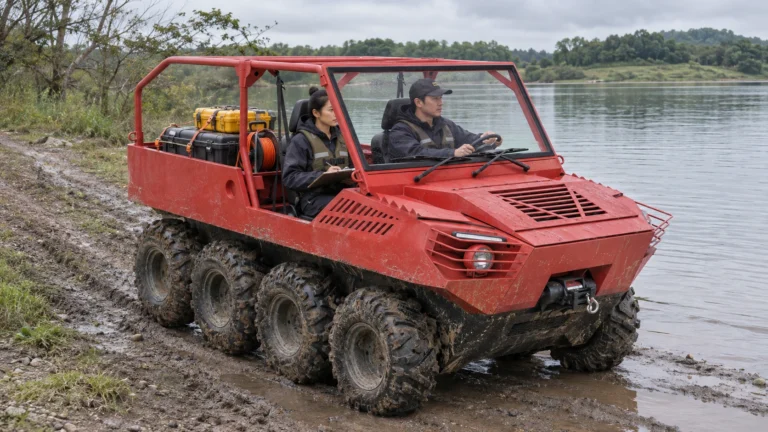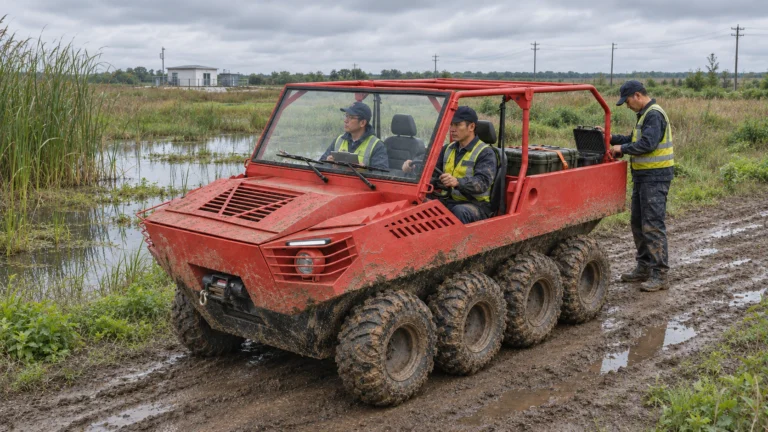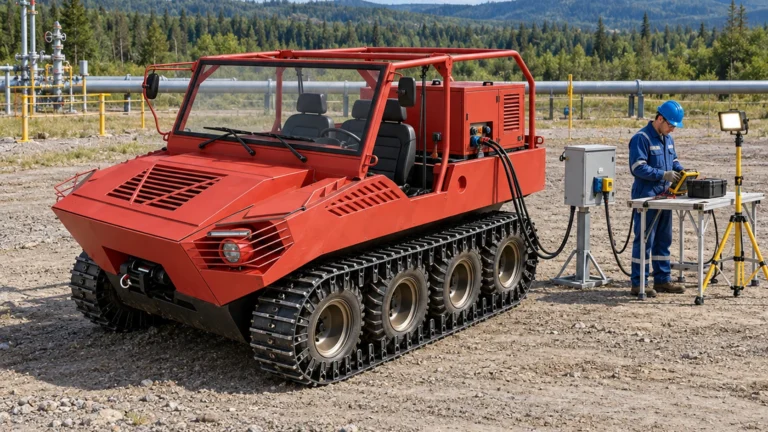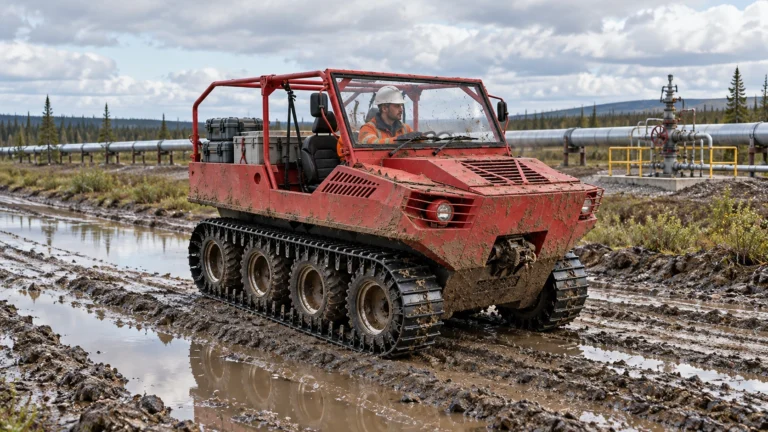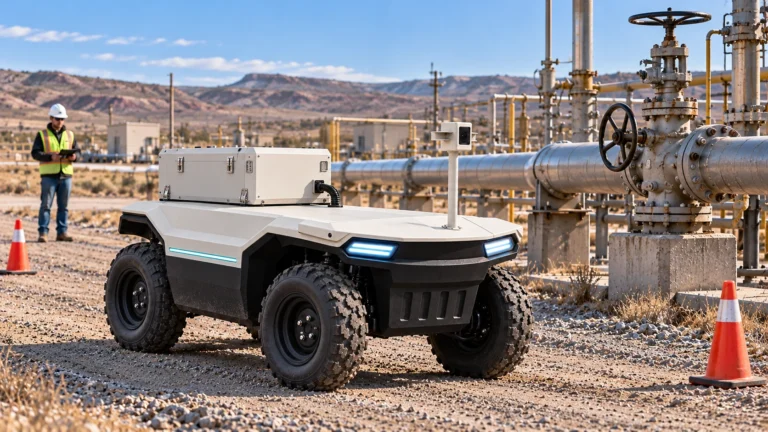


To assess an ARGO alternative amphibious vehicle, compare a named model and year with a defined alternative on the same mission. Verify local support and agree measurable acceptance conditions. Similar appearance, eight wheels or a lower base price cannot establish equivalent capability.
1. Define the vehicle and the procurement question
Define the work: transport a crew, carry a task module, or combine both. Record the route, equipped personnel, tools, working hours and water segments. Each configuration must meet that mission within documented limits.
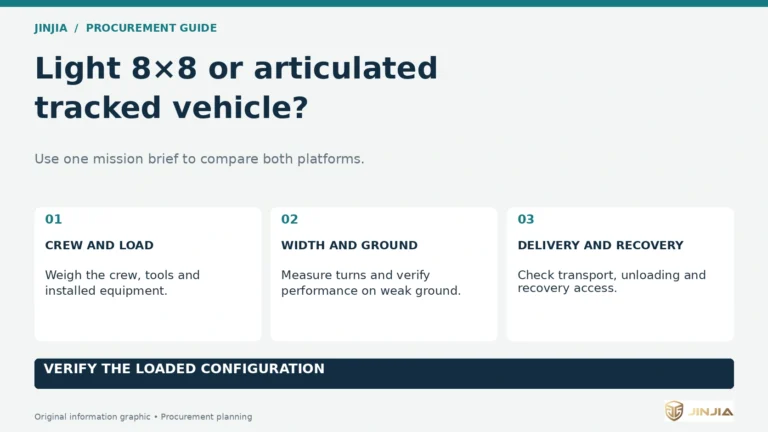
“ARGO-type” describes a compact 8×8 category here. ARGO is a separate brand; no affiliation, shared parts or interchangeability is implied. An optional track kit is not equivalent to a purpose-built tracked vehicle.
Evaluate JINJIA 88D and 88E separately. A sealed hull, propulsion component or seat count does not establish an approved water operating envelope.
2. Identify the evidence behind each statement
The named reference is the 2026 ARGO Aurora 950 8×8, with operator manual 100-0714 REV 0. Its maintenance section addresses scheduled servicing and adjustments for severe, wet or dusty use.[1] This illustrates the model-specific documentation to request; it is not a comparison test.
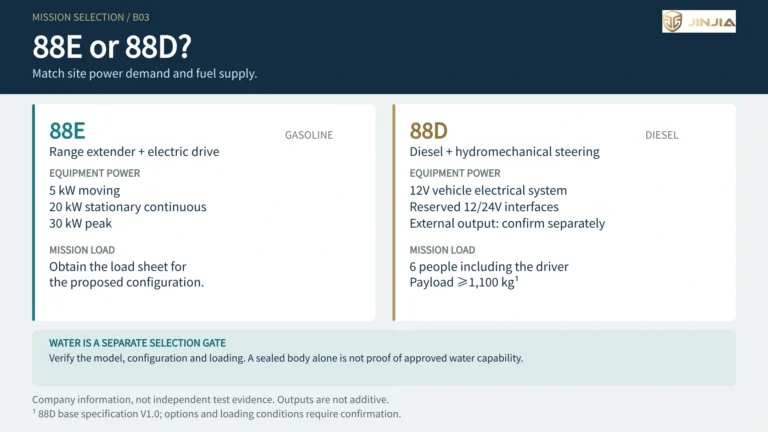
JINJIA 88D specification V1.0, dated 8 September 2026, states six standard seats including the driver and diesel propulsion.[2] The company-confirmed 88E baseline uses gasoline-powered generation and electric propulsion.[3] These are manufacturer statements, not independent comparative results.
Label evidence as manufacturer documentation, a binding configuration-specific supplier commitment, or a witnessed test record. Mark missing answers “not verified”; request evidence rather than substituting competitor values.
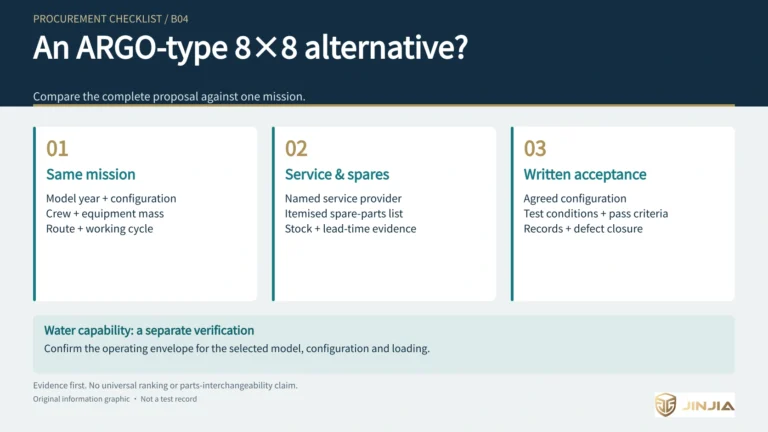
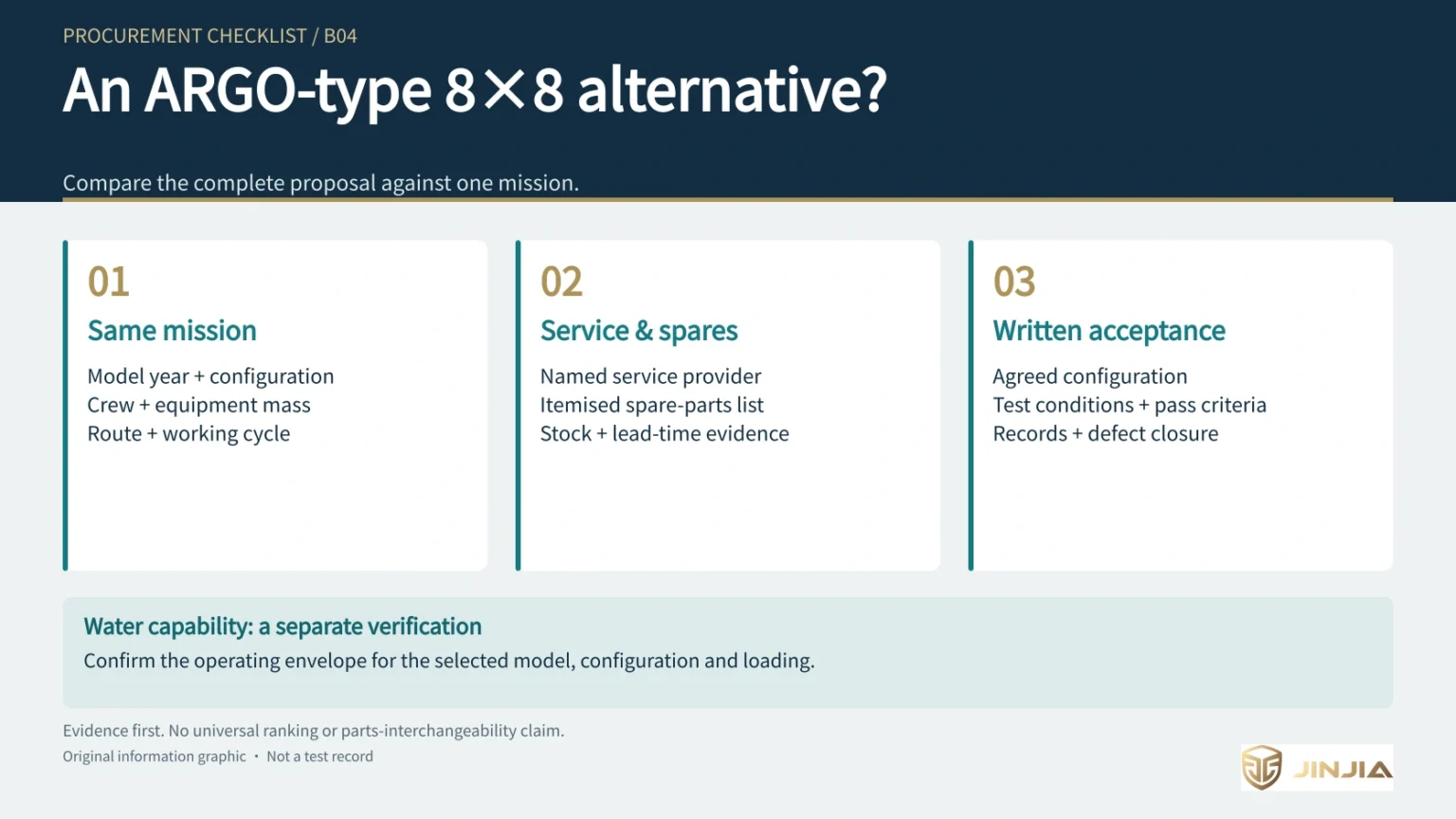
Original buyer-checklist infographic: compare the same mission and configuration, verify service and spare-parts evidence, then agree written acceptance. Water capability requires separate verification. No overall brand ranking or parts-interchangeability claim.
3. Compare under the same conditions and with defined configurations
Give every supplier the same mission sheet. Compare useful work delivered while recording different vehicle masses and architectures. Do not force equal gross masses or exceed any vehicle limit.
| Comparison item | Common requirement | Evidence for each offered vehicle |
| Identity and equipment | Exact model, year/version, tyres or tracks, options and task module | Dated configuration list and drawings |
| Load and space | Equipped crew mass; carried and installed equipment; loading position | Mass statement, permitted load distribution and usable seating/space |
| Route and duty | Surface, gradients, temperature, distance, stops and working time | Agreed route sheet and test method |
| Energy and equipment power | Available fuel; running/starting demand; simultaneous loads | Fuel requirements and defined output interfaces/duty limits |
| Water segment, if required | Separate approved configuration and operating conditions | Loading limits and supporting water-operation evidence |
| Commercial scope | Same destination, delivery basis and included work | Dated itemised quotation and exclusions |
Reconcile accessory weights and costs; clarify whether payload includes fuel, occupants and equipment. The 88D 12 V system and reserved 12/24 V interfaces do not establish usable external power.[2] Request an integration statement.
Use a common route and measurement procedure; record actual loading, ground conditions and operator inputs. Report differing test conditions. Compare prices only with their quotation date, configuration, destination and delivery terms; no price ranking is offered here.
4. Verify service and spare-parts availability
Identify the responsible service organisation, geographic coverage, trained staff and escalation route. Request first-service and annual schedules for both vehicle and module, including consumables, diagnostic tools, applicable software access and training. Use the offered model’s maintenance requirements.
| Support item | What to request | What makes the answer usable |
| Responsible service provider | Legal name, contact and coverage | Written responsibility for the delivery location |
| Initial spares | Part numbers, quantities and matching vehicle/version | Quoted kit and substitution approval process |
| Replenishment | Stock location and lead-time basis | Separate stocked, ordered and estimated items |
| Warranty and downtime | Coverage, exclusions, labour, travel, freight and claim process | Written terms for this model and contract |
| Escalation | Remote support, field intervention and repair route | Agreed response targets and named responsibilities |
For JINJIA, discuss dealer service with manufacturer technical support, then verify actual market resources. Do not assume local stock or response times. Obtain 88D-specific warranty terms rather than applying 88E terms. No ARGO parts compatibility is claimed; verify identifiers and approved catalogues.
5. Put acceptance conditions in writing
Agree a configuration-controlled acceptance annex before ordering. Identify the vehicle, equipment, location, loading, environment, measurements, witnesses, pass/fail criteria and records. Assign defect correction, retesting, acceptance authority and payment or delivery hold points.
Separate document review, factory acceptance and site acceptance. Factory checks cover identity, completeness, installation and agreed functions; destination checks address the contracted local mission and handover.
For example, a utility crew might carry a tool module along a defined route, then operate equipment for an agreed period. Specify actual mass, installation, power demand, duty cycle and thresholds. This is an illustrative requirement, not a performance promise. Water operation needs a separately reviewed protocol and loading arrangement before demonstration.
A signed requirement is a commitment; a completed test record evidences the tested configuration.
6. Record limits, unresolved items and other options
The reviewed 88D specification does not confirm water payload, freeboard, stability limits or water speed. Six seats do not authorize six people afloat.[2] An eight-seat custom layout, heavy module or changed tyres/tracks requires separate engineering review. Verify 88E water configurations separately too.[3]
This checklist establishes no overall advantage in price, performance, certification or service. Keep unverified requirements open. Retain the named ARGO model, consider another documented 8×8, or assess a utility vehicle, dedicated tracked carrier or boat with land transport. Make selection conditional where decisive evidence is missing.
7. Give suppliers a one-page mission checklist
Complete every field or mark it “to be confirmed,” with an owner and deadline. Use the sheet for comparable proposals and acceptance discussions.
| Field | Buyer’s entry | Supplier’s written confirmation |
| Mission and delivery | Country/site: ___; task: ___; quantity: ___ | Offered model/year/version: ___ |
| Crew | People including driver: ___; equipped mass: ___ | Seating/restraints and loading arrangement: ___ |
| Equipment | Carried mass: ___; installed module: ___ | Mounting, mass and load distribution: ___ |
| Route and duty | Surface/gradient: ___; climate: ___; hours/distance: ___ | Applicable limits and proposed test: ___ |
| Fuel and power | Fuel available: ___; running/start loads: ___ | Interfaces and usable output conditions: ___ |
| Water, if required | Water task and conditions: ___ | Configuration and supporting evidence: ___ |
| Support and cost | Service location: ___; delivery basis: ___ | Spares, warranty, lead times and dated quote: ___ |
| Acceptance | Criteria/witnesses/records: ___; deadline: ___ | Exceptions, corrective work and retest plan: ___ |
Related topics: B03—88E/88D mission selection; B08—8×8 price and cost checklist; B25—acceptance trials; B27—after-sales and spare parts.
Send your route, mission load and working conditions for an 8×8 configuration discussion.
Frequently asked questions (FAQ)
A: Name the model, year and equipment. Give both suppliers the same mission, equipped crew and load, route, duty and required outcome. Compare documented limits or tests with stated conditions.
Q: What proves that service and spare parts are available?
A: Request a named provider, geographic coverage, applicable parts list, stock and replenishment information, and written model-specific warranty and support responsibilities. A website claim alone is insufficient.
Q: What should a written acceptance agreement contain?
A: Identify configuration, conditions, loading, methods, criteria, witnesses and records. Assign factory/site responsibilities, correction and retesting. Water requirements need their own configuration and protocol.
Sources and scope
[1] ARGO 2026 Aurora 950 / HuntMaster operator’s manual, 100-0714 REV 0, maintenance section, printed pages 66–67; official indexed extracts checked 9 November 2026. The cited example is the Aurora 950 8×8. Full-file retrieval was unavailable during this review; no specification comparison is inferred from unread sections.
[2] JINJIA 88D Diesel 8×8 Technical Specification, V1.0, 8 September 2026, nine-page company document. Manufacturer information; not an independent test report. Obtain the current, contract-specific specification when requesting a quotation.
[3] Company-confirmed JINJIA 88E product baseline supplied for this project. Architecture information only here; offered configuration and operating limits require separate confirmation.