










A water to shore tracked vehicle description does not establish permission to enter water or ice. In civilian projects, published terminology, the scope of a document and the decisions of responsible authorities are distinct. Cold water and ice also present serious hazards. This article explains how readers can distinguish these types of information without treating a product description as a safety decision.
Contents
What does water-to-shore terminology tell us?
Read the stated scope of each document
Water and ice: public safety and official decisions
Avoid conclusions beyond the evidence
Where to find public information
Frequently asked questions (FAQ)
References and source boundaries
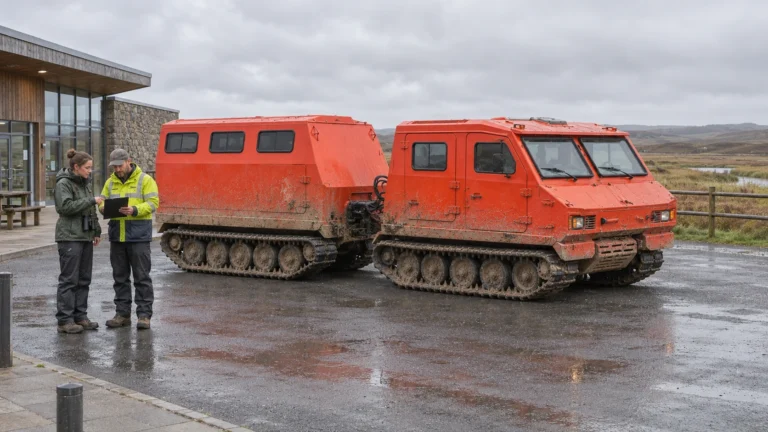
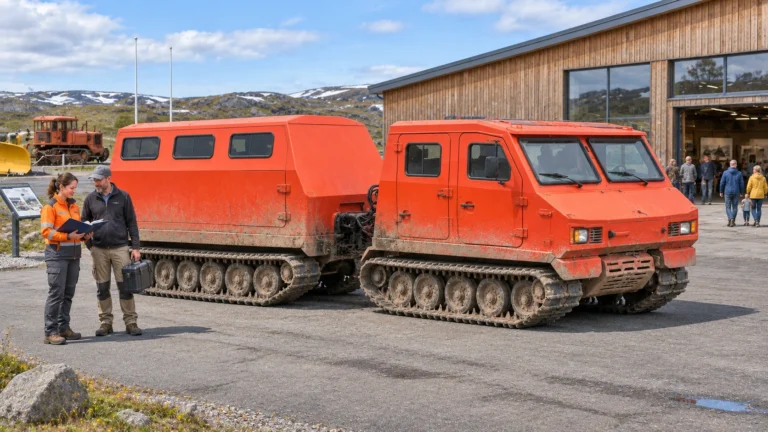
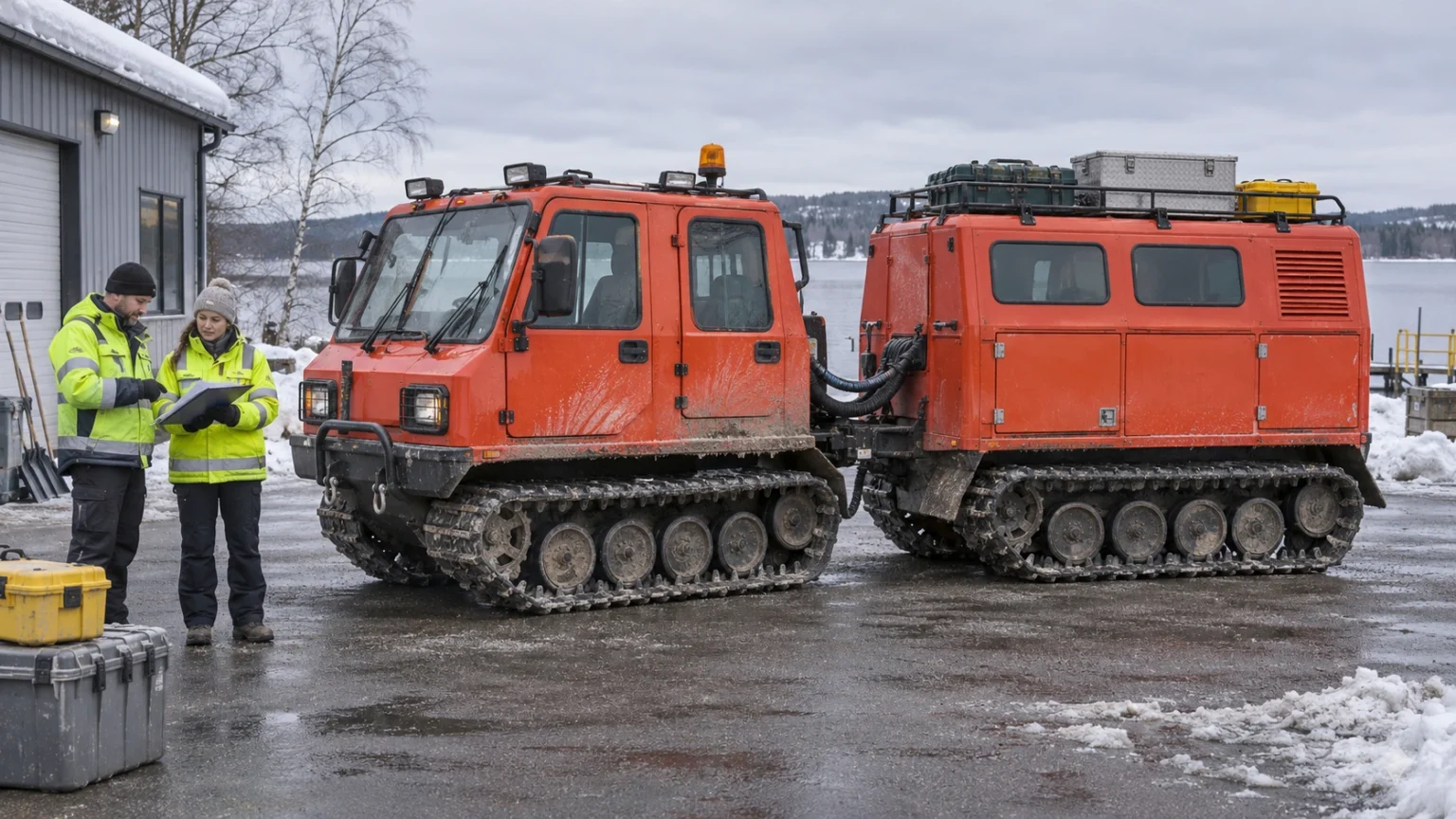
AI concept: a generic civilian articulated carrier parked in an established paved winter service yard beside a distant lake. Not JJ117 test evidence or permission.
What does water-to-shore terminology tell us?
Water-to-shore mobility is a term used in vehicle literature to describe a topic involving water and land. However, the term alone cannot establish a verified capability for an individual vehicle or a particular location.
An articulated tracked vehicle is a vehicle category. The JINJIA product page [S3] provides manufacturer information; it is not a statement issued by an authority responsible for waterways or public safety.
For example, an illustration of a parked carrier near a lake merely provides visual context. It does not prove that a crossing occurred or that anyone has approved an activity.
Read the stated scope of each document
A product brochure, an administrative decision and a public safety notice serve different purposes. Each record has its own issuer, publication date and stated scope.
In particular, a document title does not reveal every limitation in the document. Readers should retain the original wording and distinguish statements from the conclusions they draw.
The accompanying diagram identifies four separate types of information: catalogue wording, public safety information, official decisions and illustrative images. The diagram is not a method for determining vehicle capability.
Water and ice: public safety and official decisions
The US National Weather Service explains that cold-water immersion can threaten survival [S1]. Its winter safety material also cautions that ice is never entirely safe [S2]. These sources are public safety education, not authorisation for a vehicle.
Therefore, a published vehicle description cannot replace restrictions or notices issued by responsible bodies. An apparently calm lake or a snowy photograph is not evidence of permission or safety.
The accompanying concept image shows civilian staff beside a parked carrier on a paved service yard. It does not show entry into water, travel across ice, or an actual field trial.
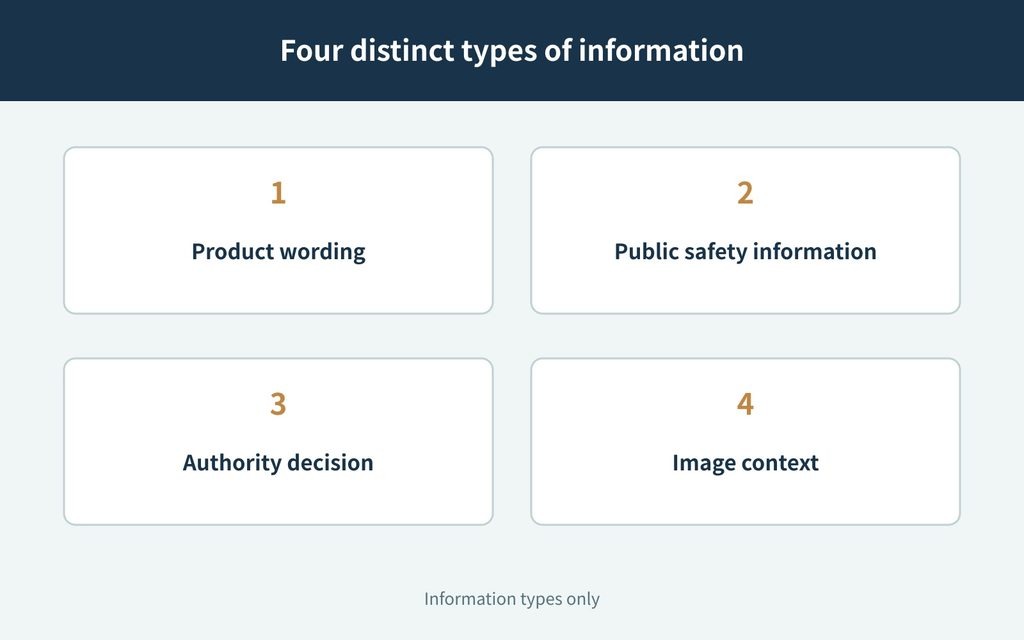
Information types only; not a crossing assessment.
Avoid conclusions beyond the evidence
Even when a document describes a verified event, it cannot establish that an unrelated event is equivalent. In addition, photographs and advertising captions cannot replace original records.
The blank worksheet accompanying this article records document titles, issuers, dates and scope. It contains no route, vehicle performance, water or ice measurements, or assessment of crossing feasibility.
For environmental context, the companion article [S4] distinguishes product terminology from wetland protection. Both articles treat marketing descriptions and public decisions as separate matters.
Where to find public information
Public safety information belongs with the relevant public agencies and site managers. In contrast, manufacturer literature is a source for general product context, not an approval to enter restricted areas.
If a statement is unclear, retain the source and its stated context. Ask the document issuer to explain the wording rather than inferring a finding from an unrelated image.
In summary, keep safety notices, official decisions and product descriptions separate. Readers can find general published brand information via [S3] and [S5].
View the published contact information for general documentation questions.
Frequently asked questions (FAQ)
A: No. A product term is not an official decision.
Q: Does a winter photograph prove that ice travel is safe?
A: No. The National Weather Service warns that ice is never entirely safe [S2].
Q: Why does cold water matter?
A: Cold-water immersion poses serious hazards to people [S1].
Q: Can an image verify a particular JJ117 configuration?
A: No. The accompanying image is an illustrative civilian concept, not product verification.
Q: Is manufacturer literature an authorisation from a waterway authority?
A: No. Manufacturer information and official decisions serve separate purposes.
Q: What does the companion workbook record?
A: Document identity, issuer, date, scope and clarification status, not crossing capability.
References and source boundaries
S1: US National Weather Service — Cold Water Hazards and Safety — Public education on cold-water hazards; not a vehicle approval.
S2: US National Weather Service — Cold and Winter Hazards — Public winter safety education; not a vehicle rating or permission.
S3: JINJIA / Response Mobility — Tracked Utility Vehicle — Manufacturer public product description only.
S4: JINJIA — Low Ground Pressure Tracked Vehicles for Peatlands — Companion article on environmental terminology and protection; not approval.
S5: JINJIA — Contact — Public brand contact information; not an authority.