

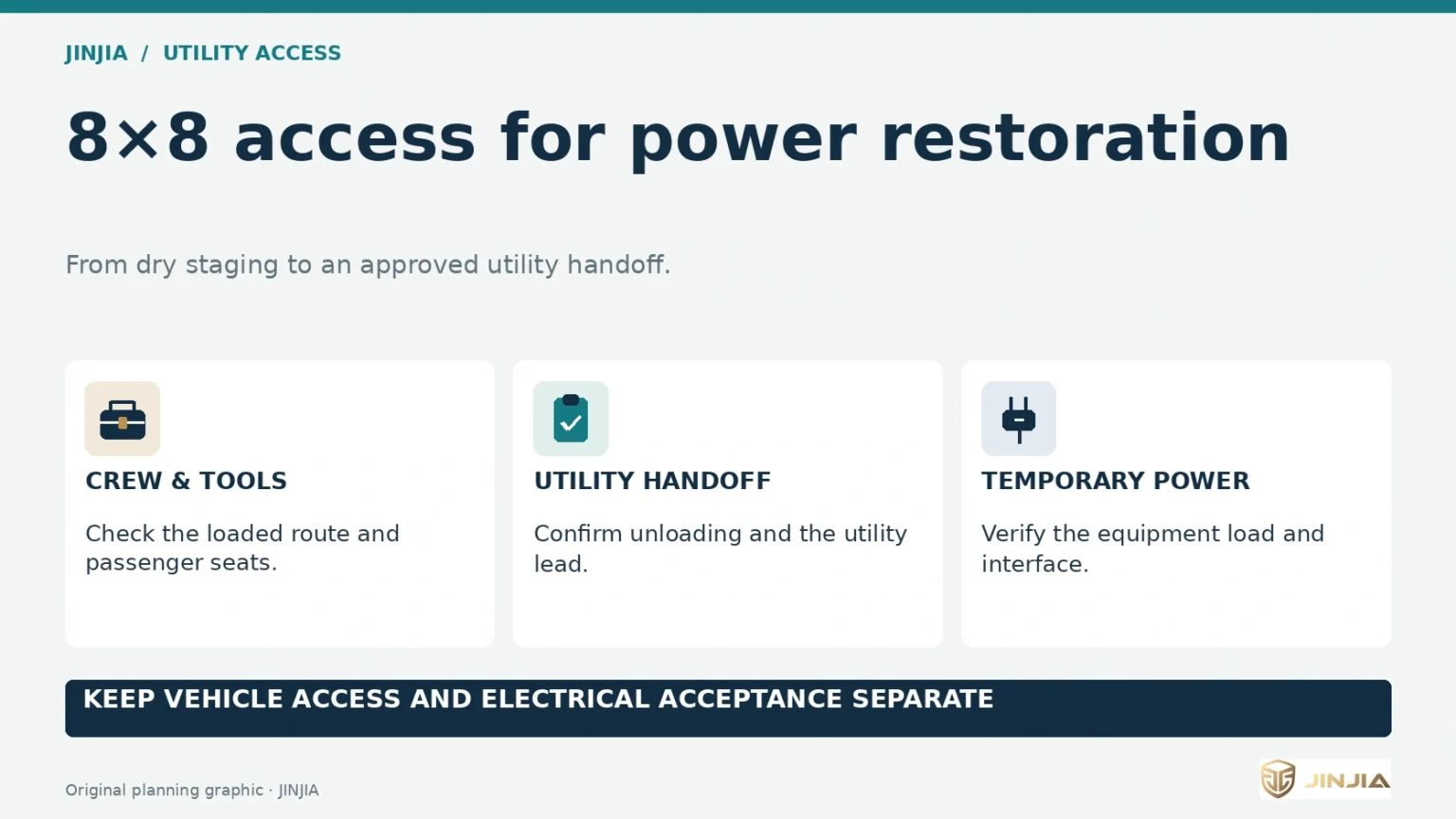
Plan the vehicle leg and utility handoff before assessing any temporary power needs.
Give the 8×8 a defined access leg
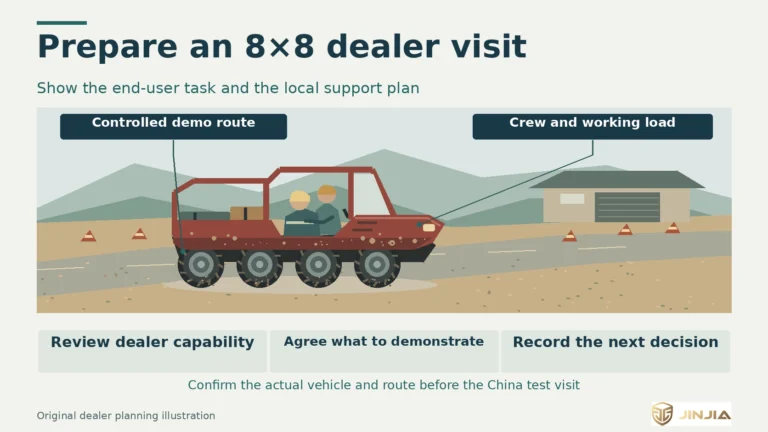
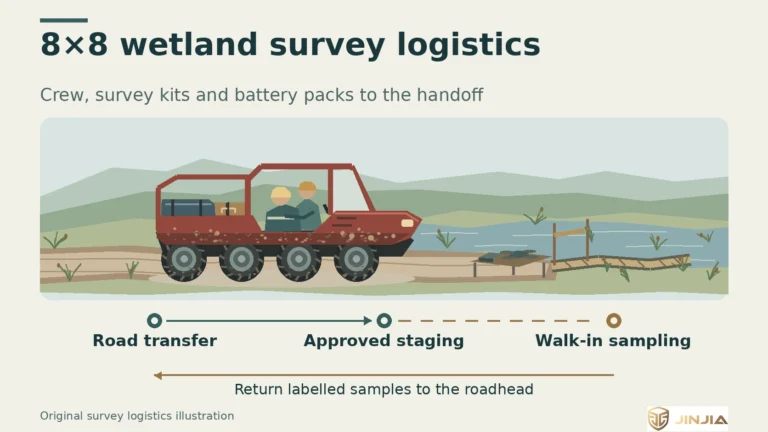
After flooding, an amphibious 8×8 can carry a utility crew and its tools from a dry staging point to a handoff approved by the utility. A standard truck can bring people and equipment to the staging point via roads that remain open. Define the part of the route where the smaller carrier adds access, what it must deliver and who receives it.
Specify the proposed vehicle. JINJIA’s 88E is a range-extended electric 8×8 and the 88D is diesel. Give the supplier the crew, tools, fitted equipment, route and planned return load. Ask for records that support the exact build and assigned leg. The utility retains control of access to the electrical work area.
What the Radzików record supports
Intervent’s field account, published on 13 August 2011, describes an operation on 8 August near Błonie, west of Warsaw. The supplier reports that flooding obstructed access for PGE’s service crew at Radzików. An ARGO 8×8 carried three members of the crew with their equipment. The account describes assistance at three different poles. Those details identify the reported logistics task and the participating equipment. [S02]
This is a participant’s report for one operation. Keep its vehicle, team, location and dates together. The account does not supply measured electrical output or a loaded access trial for a JINJIA vehicle. Use it to frame the transport problem. Ask separately for records that validate your proposed load, route and equipment interface.
Plan the crew and tool transfer
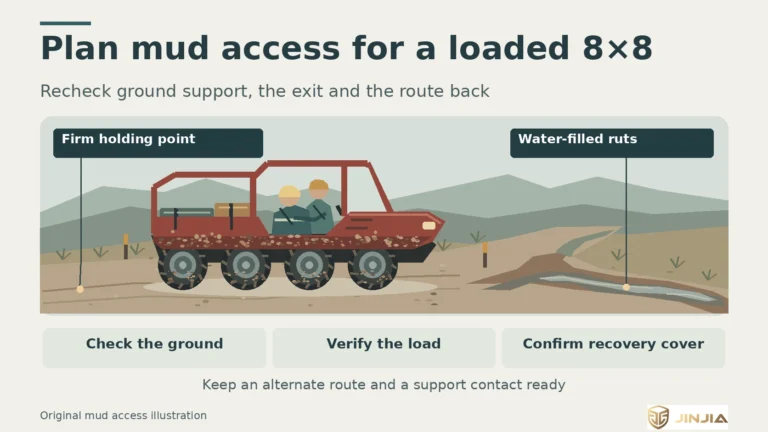
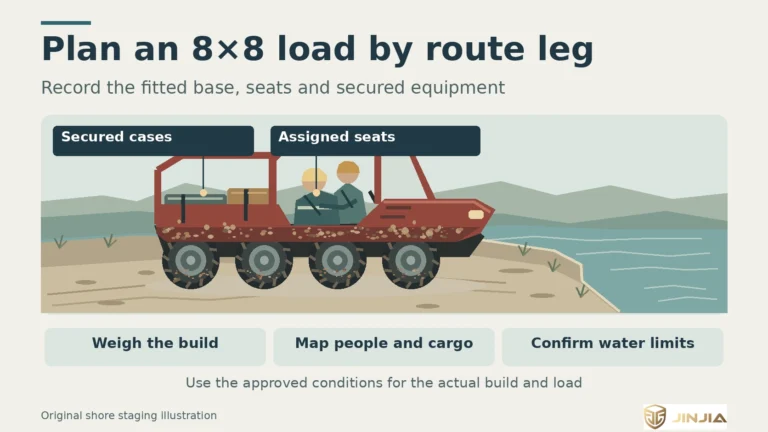
Start with the handoff. Mark the dry staging point, the agreed unloading location and a fallback where the crew can be received. Record route ownership, the approved approach and return option, and obstructions or soft surfaces that could change access. Confirm where the driver can turn and where the receiving team can handle the tools.
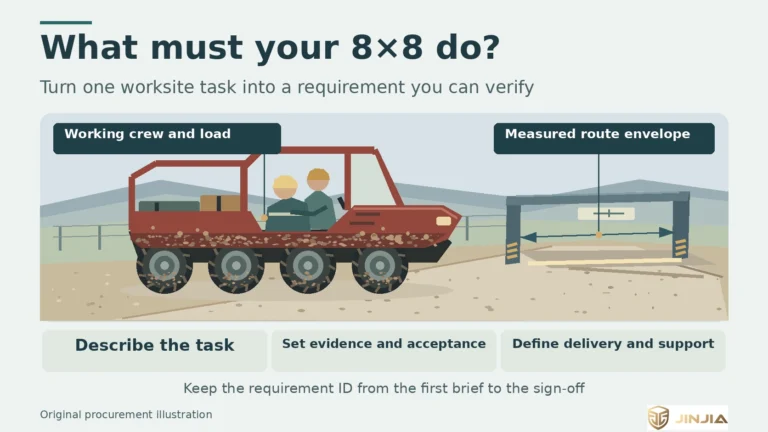
Use a trip manifest. Count the driver and crew by approved positions, list the fitted modules and add the mass, dimensions and securement of packed tools and spares. Match this load to the exact configuration and route. Long or awkward loads may need a separate carrier. Keep loose cargo clear of the people and their access points. Check the return trip if it will carry removed equipment.
Trial the handoff with representative tools at an approved location. Record what can be unloaded there, which equipment stays at staging and whether a separate trip is needed. A route assessment and a load check are useful only if the receiving crew can take delivery at the intended point.
Keep electrical repair under the qualified utility team
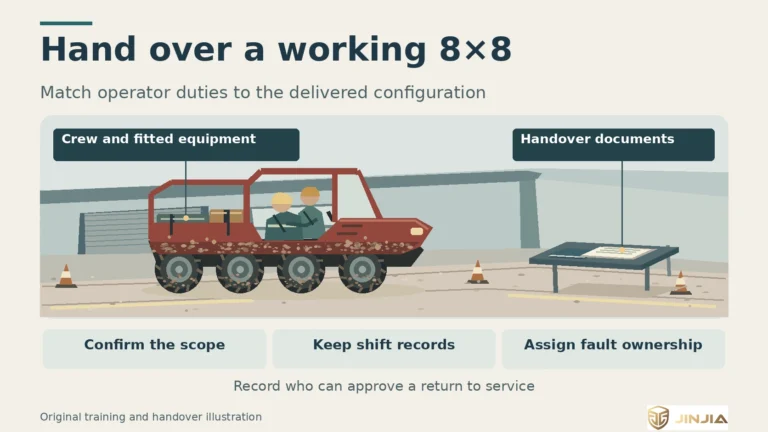
Identify the utility’s person in charge and the transport lead. The transport lead coordinates arrival and unloading at the assigned point. The utility team controls entry to the electrical work area, the work briefing and the conditions under which repair and restoration proceed. OSHA’s U.S. guidance gives an example of how a designated person in charge oversees electrical work and receives information about existing conditions. Apply the utility’s requirements for the site. [B14-E1]
Floodwater can hide damaged electrical infrastructure. Keep the driving assignment within the approved approach and handoff. If the route, work boundary or clearance changes, refer the vehicle assignment back to the utility lead. Public CDC guidance warns against driving through water where downed lines are present. [B14-E2]
Check temporary power interfaces separately
Decide whether the assignment actually needs portable electricity. For a lighting or communications load, collect the equipment nameplate or specification, voltage, frequency, phase, connector, running demand, starting demand and planned hours. Confirm the source and the operating mode planned for the supplied vehicle. A power figure alone omits the outlet, duty and equipment compatibility.
Ask the supplier and the responsible electrical team to agree how to verify the specific equipment interface in a controlled test. Include the proposed simultaneous loads, the applicable limits and the response if power is interrupted. Keep any grid, building or fixed-system connection under a separate design and approval by qualified personnel. CDC guidance identifies backfeed as a hazard to utility workers. The 8×8 field power guide covers the load assessment in more detail. [B14-E2]
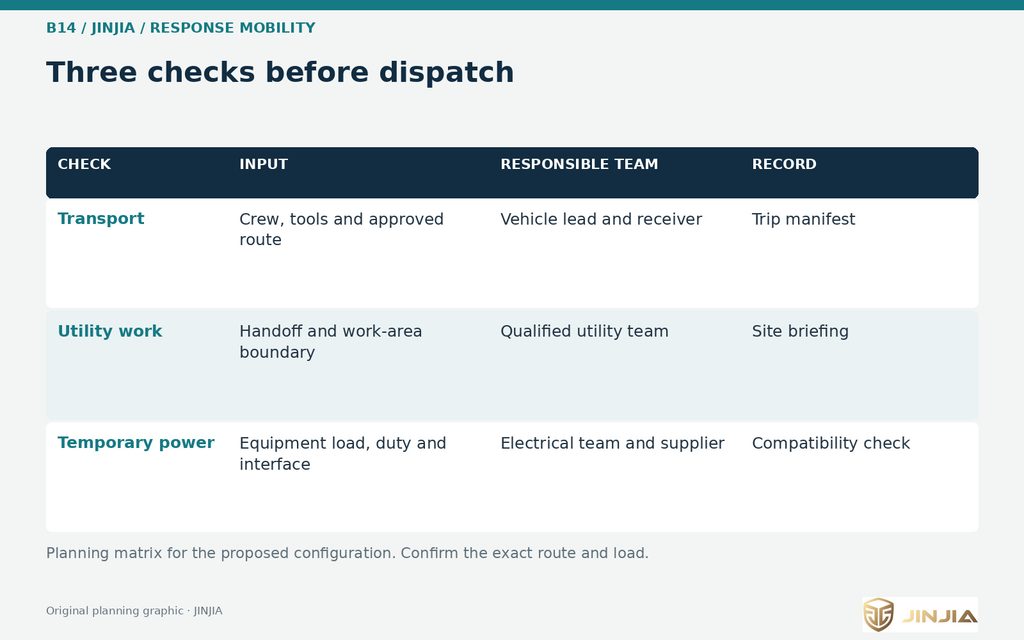
Give the transport, utility work and equipment power checks separate owners and records.
Choose another carrier or source where the job requires one
Retain a road truck on a cleared route if it meets the load and access needs. A heavier carrier may suit long materials or lifting equipment. If an approach needs a specialist water team, ask the incident lead to select that asset and a staffed land handoff. Where the 8×8 must leave while equipment stays powered, plan an approved independent source at the site.
Confirm vehicle limits with a representative load and the exact configuration. Water capability, loaded stability, cargo securement and access to the unloading point each require evidence appropriate to the assigned route. Treat route acceptance and electrical-load acceptance as separate records.
Give the buyer a one-page restoration access brief
• Route. Record the dry staging point, approved vehicle leg, unloading and return points, and a fallback.
• Crew and tools. Specify approved seats, the crew roster, packed masses and sizes, fitted modules and securement.
• Utility handoff. Name the transport lead and utility person in charge. Record who can accept, suspend or reroute the trip.
• Temporary electrical load. If required, list equipment, interface, demand by mode and verification owned by the electrical team.
• Acceptance. Give the exact 88E or 88D configuration, representative load, planned conditions and evidence for the transport and power tasks.
Send JINJIA the route, mission load and working conditions to discuss the appropriate build and its acceptance checks.
Frequently asked questions (FAQ)
A: Check the approved approach, return option and staffed unloading point. Match the crew’s seats, packed equipment, restraints and fitted modules to the actual build and route.
Q: How should responsibility for electrical repairs be documented?
A: Name the transport lead and the utility’s person in charge. Record the approved handoff, the work-area boundary and who may suspend or reassign the vehicle trip. Repair and restoration are assigned to the qualified utility team.
Q: What evidence is needed for temporary power interfaces?
A: Give the equipment nameplate or specifications, expected load and duty, starting demand and intended source mode. Ask the electrical team and supplier for a controlled compatibility check on the supplied configuration.
Sources and further information
[S02] Intervent · ARGO 8×8 power-restoration access in Radzików
[B14-E1] U.S. OSHA · Electric power generation, transmission and distribution Q&A