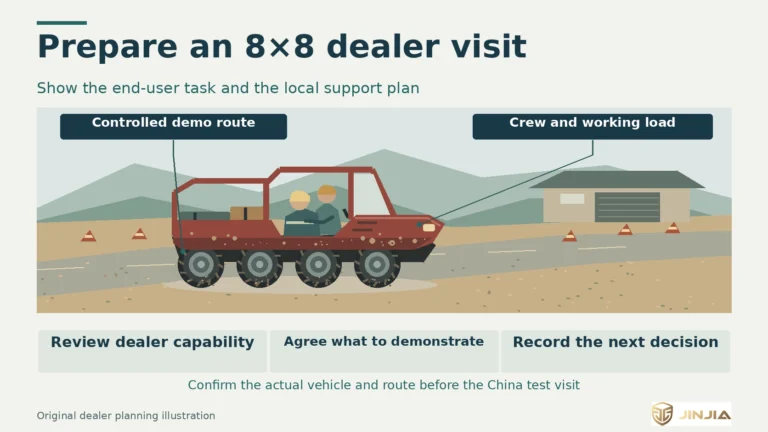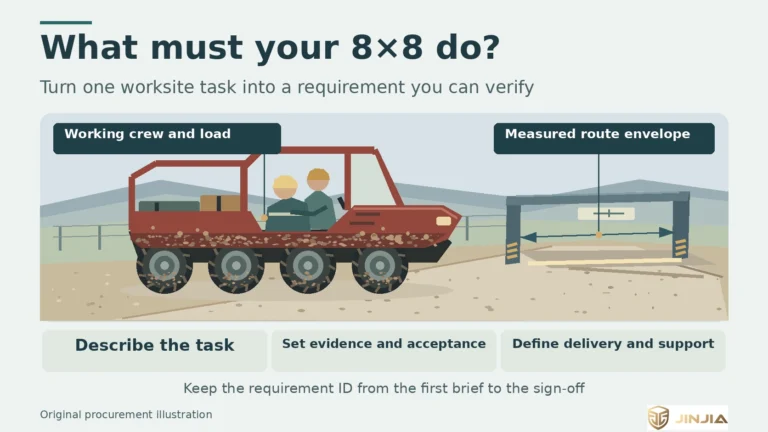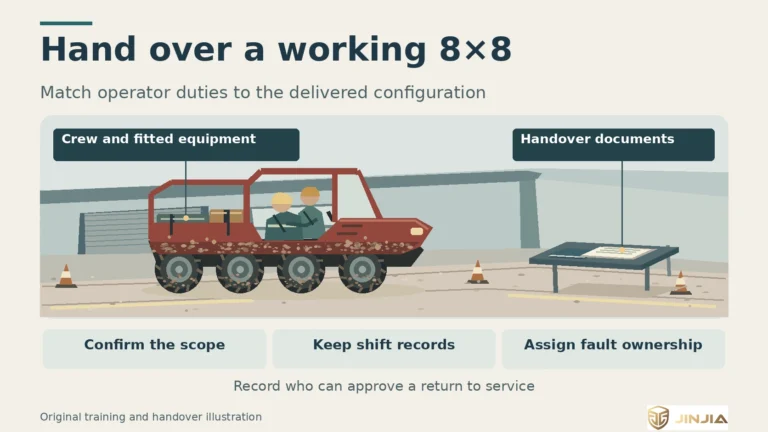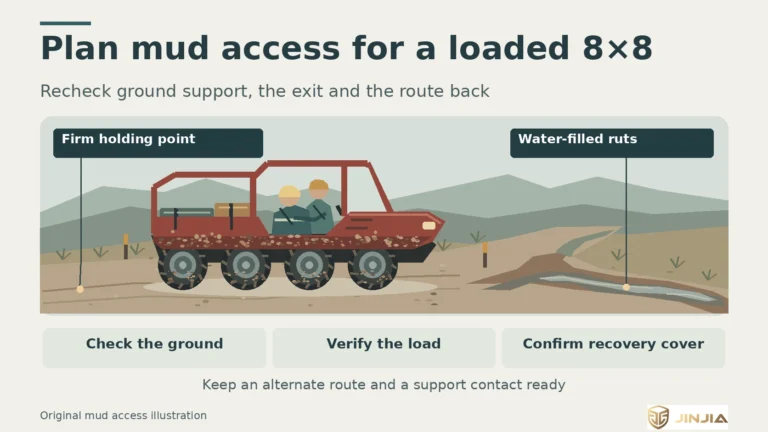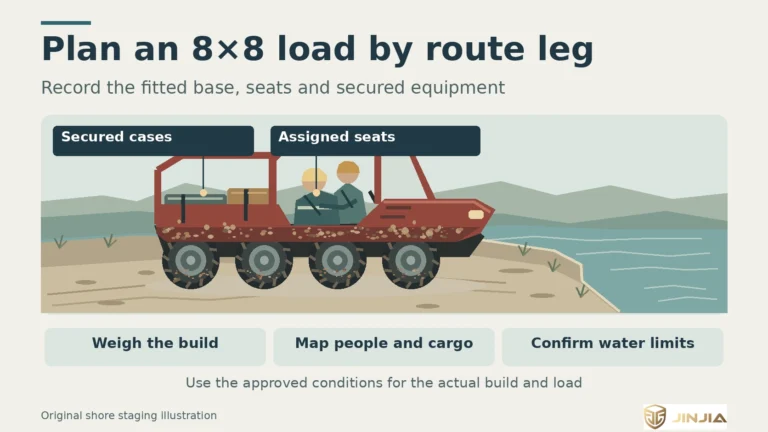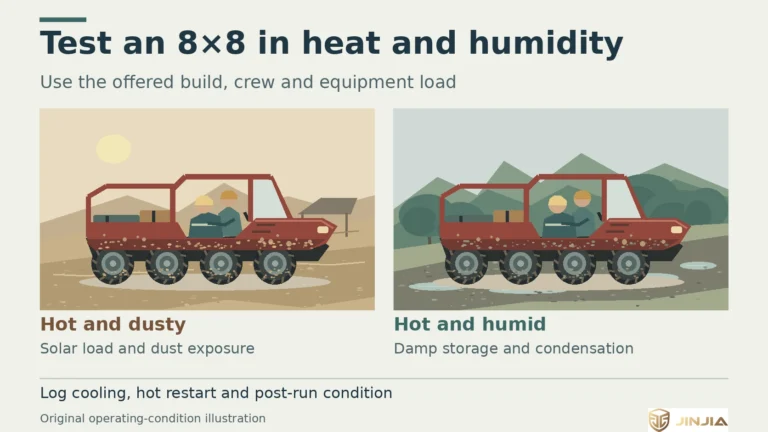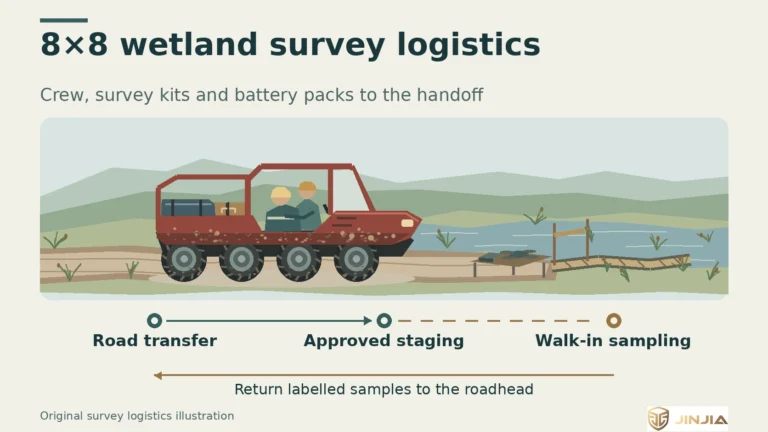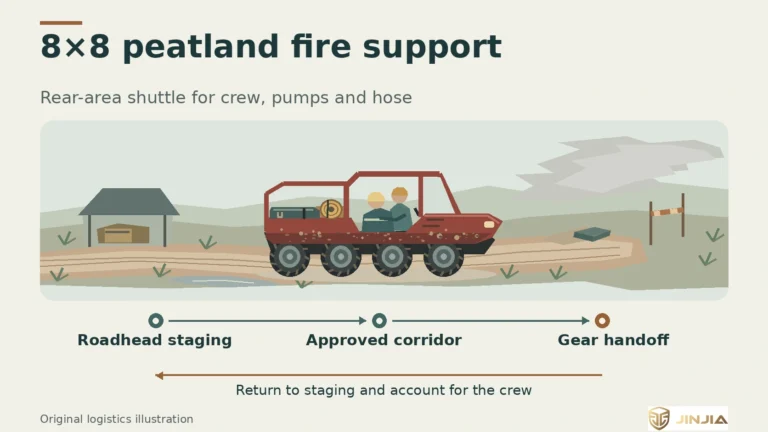


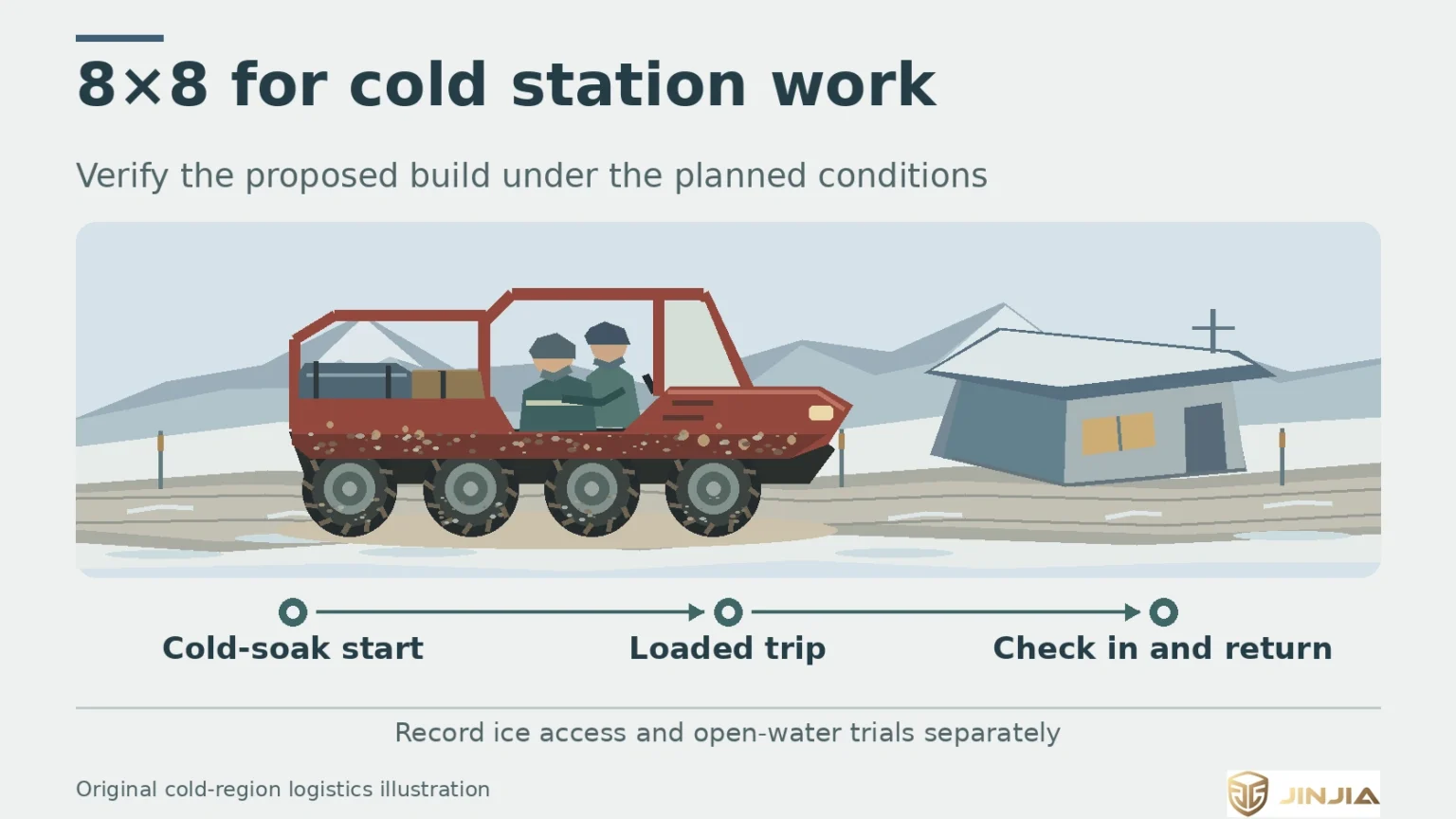
Plan a cold start, a loaded trip to the station and a supported return. Record the offered build and each operating condition.
Define the cold-region 8×8 job
Start with a repeatable station trip when specifying a cold climate amphibious 8×8. Set the overnight storage conditions, first departure, passengers, supply load and return plan. Describe the surface and any separately authorised water leg. A vehicle that has run warm on a snowy track has demonstrated only that condition.
JINJIA 88E uses range-extended electric drive. The 88D is diesel. Write a separate verification sheet for each proposed build. Record the tire or optional track configuration, enclosure or heating arrangements, power connections and carried equipment.
Read the research station and fire service records
Zackenberg Research Station in northeast Greenland lists an Argo 8×8 among its support equipment. The station describes possible use around the station with help from its crew. This is a named example of logistics equipment and the role of local staff. Availability, route, load and weather limits for a proposed trip need confirmation with the site team. (S49)
The Round Lake Fire Department fleet page describes its eight-wheel amphibious Argo, winter track fitment and ice-rescue role. Its training post records a crew training session. The sources establish the fleet use and training activity. Obtain separate operational evidence for the vehicle and configuration in the bid. (S10 · S13)
Verify cold starts and materials
Ask which temperatures the storage, starting and sustained-operation statements cover. JINJIA’s civil and industrial 88D specification lists −10 °C as the lower ambient operating temperature. That is a manufacturer specification for that configuration. Obtain the 88D cold-soak start evidence and the 88E configuration limits separately. A colder assignment requires a configuration and evidence accepted for the stated conditions. (B21-E3 · B21-E4)
For each trial record the actual temperature, soak duration, battery condition and any preheating used. On 88E record the range extender start and the time until the electrical drive is ready. On 88D record cranking, start and time to usable propulsion. Include a restart after a field stop and the auxiliaries needed on the mission, such as demisting, communications and equipment supply. Use the supplier’s approved test configuration and document failed attempts and restrictions alongside successes.
Ask for the low-temperature limits of seals, hoses, cable jackets, connectors and fluids in the installed configuration. Inspect relevant parts and connectors after the agreed cold exposure and check them again after the planned wet-to-cold return. IEC 60068-2-1 offers a reference for applicable component cold tests. Vehicle readiness is assessed on the offered build. (B21-E1)
Confirm loads and recovery arrangements
Make a manifest for the outward and return trips. Include people, cases, fuel, spare equipment and fitted options in the loaded vehicle mass. Confirm seating, restraints and load distribution. Field supply runs can return with crew, used equipment or collected samples. Test the load and handoff with the actual loading arrangements.
Give each trip a check-in window and an assisted return plan. Identify who can suspend a departure, where people can shelter, who can retrieve them and which approved recovery equipment and attachment points are available. Record actions if the primary vehicle cannot return. At a research station, agree on the escort, spare stock and recovery roles with logistics staff before assigning the route.
Verify ice and open-water use separately
Ice use needs authorisation for the route and loaded vehicle. Ask the responsible authority for a current ice assessment, approved route and load, monitoring window, closure triggers and rescue plan. Government of Canada workplace guidance identifies the total loaded vehicle mass among the factors to assess. Use the site’s applicable procedure and qualified personnel. (B21-E2)
An open-water trial has its own acceptance criteria. Verify the offered build’s flotation load, distribution, freeboard, stability, water propulsion and launch and recovery arrangements under approved trial conditions. Review conditions at both banks and any approved tire or track setup. Schedule cold-water operation, wet return and post-run inspection with the operator. Retain distinct ice and open-water acceptance records.
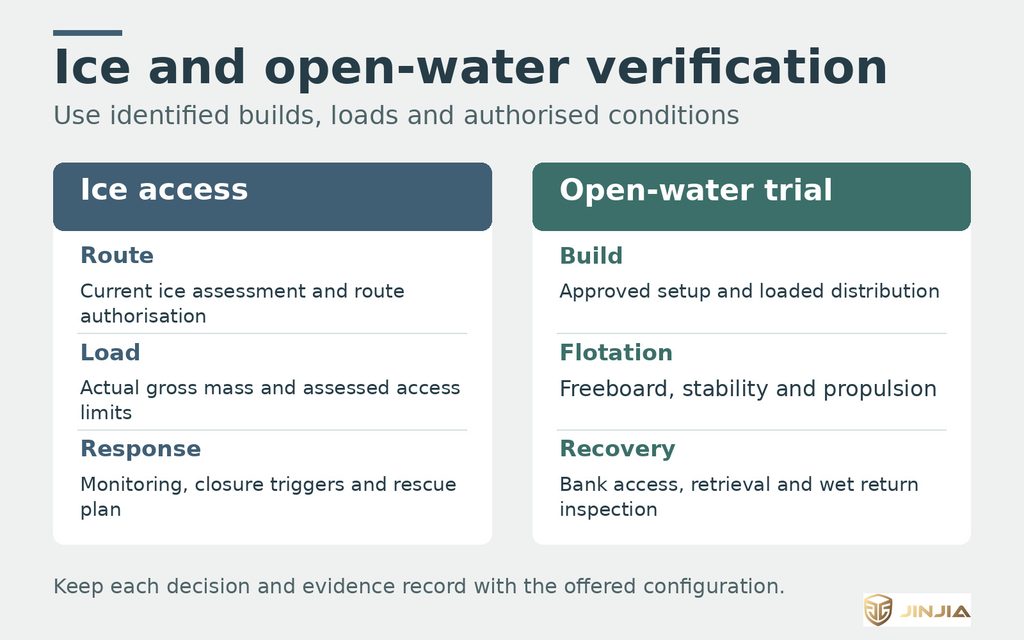
Obtain independent site authorisation for ice access and an open-water trial record for the offered configuration and load.
Review the limits and the alternatives
Compare vehicles within the route’s approved access and load limits. A heated road vehicle may be suitable on an approved firm road. A dedicated snow vehicle may be more appropriate on an established snow route. For an authorised water leg compare a suitable boat and crew. Compare payload, restart and recovery performance, station staffing, route approval and time away from shelter.
For 88E and 88D, request the serialised or otherwise identifiable build sheet and the cold-start, load and route evidence for that offer. If a requirement is still open, make it part of the acceptance plan with a named owner and a decision before service.
Give procurement a one-page verification brief
• Conditions. List operating and storage conditions, planned soak, power availability, route surfaces and the proposed build.
• Cold start and materials. Request the start and restart record, readiness time, preheating conditions, component limits and inspections.
• Loads. List seats and restraints, outbound and return mass, cargo securing arrangements, and launch and recovery loads where relevant.
• Recovery. Name the route lead, communications and check-in, shelter locations, approved recovery arrangements and backup transport.
• Separate approvals. Attach site-authorised ice evidence and a distinct approved open-water trial plan for the legs that require them.
Send your route, mission load and working conditions to JINJIA for an 8×8 configuration review. Use the operating-time guide to define duty cycles and the amphibious guide for water-use considerations. Contact · Operating-time assessment · Amphibious operating principles
Frequently asked questions (FAQ)
A: Request actual temperature, cold-soak duration, battery condition, preheating, time to drive readiness and restart results. Verify installed materials and fluids against the planned exposure.
Q: How should loads and recovery planning be documented?
A: Record outward and return loads, loaded mass, restraint and distribution. Set check-in, personnel shelter, authorised recovery gear and backup transport with the site team.
Q: What evidence is needed for ice access and open-water trials?
A: Request the route authority’s current ice assessment, allowable vehicle and load, closure rules and rescue plan. Obtain separate trial evidence for the exact build and load on open water.
Q: What does the 88D temperature figure represent?
A: −10 °C is the specified lower ambient operating limit of the civil and industrial configuration. A verified cold-soak start and restart result for the offered build needs its own record.
Q: What does Zackenberg’s equipment list establish?
A: It lists an Argo 8×8 that can be used around the station with crew assistance. Confirm availability, support and conditions for the proposed trip.
Q: What cold evidence is needed for 88E?
A: Ask for configuration-specific storage, range-extender starting and drive-readiness limits, including preheating and electrical accessory demands. Confirm the offered build with a controlled trial.
Sources and further information
[S10] Round Lake Fire Department | ARGO fleet listing
[S13] Round Lake Fire Department | ARGO training report, 9 May 2018
[S49] Zackenberg Research Station | Support and Infrastructure
[B21-E1] IEC 60068-2-1:2025 | Environmental testing, cold
[B21-E2] Government of Canada | Working and driving on ice-covered water
[B21-E3] JINJIA | Amphibious Utility Vehicle product page
[B21-E4] JINJIA | 88D Civil / Industrial Technical Specification, v1.0, 8 September 2026, p. 6 · company source