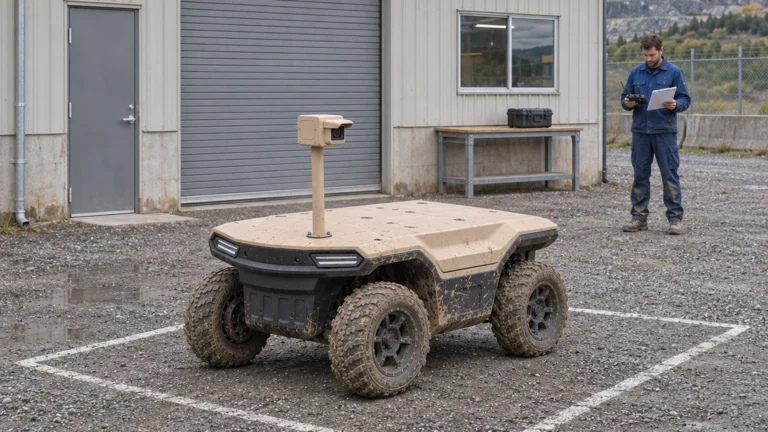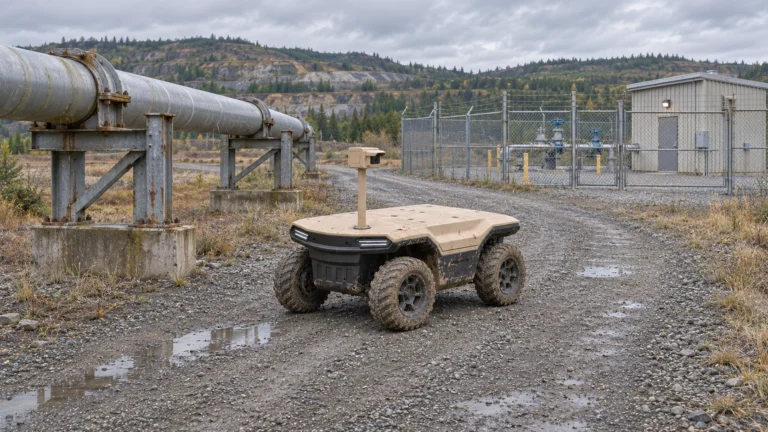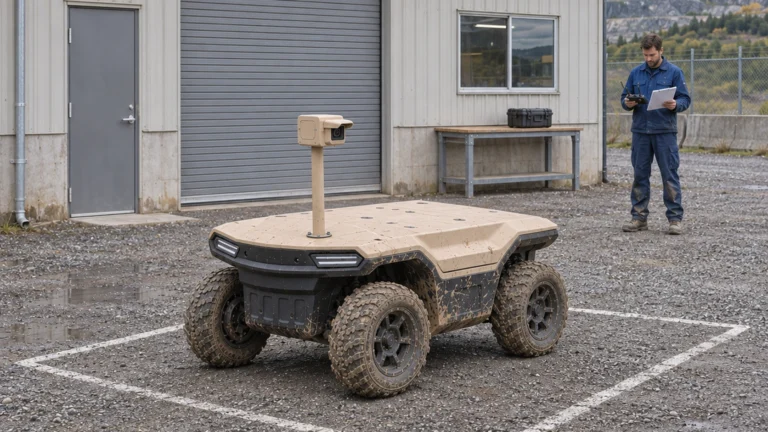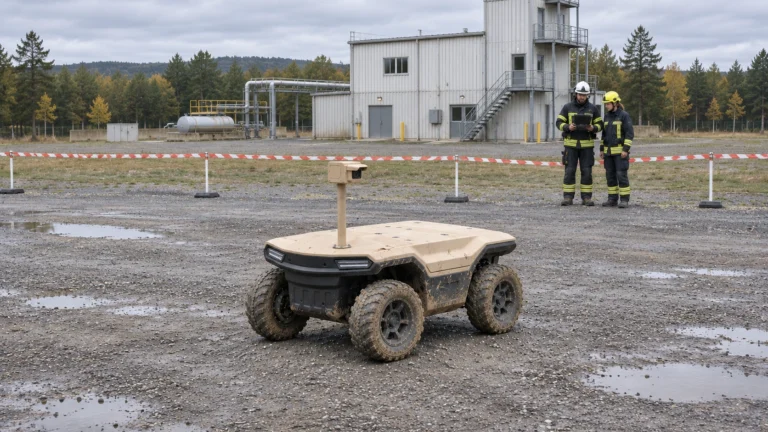


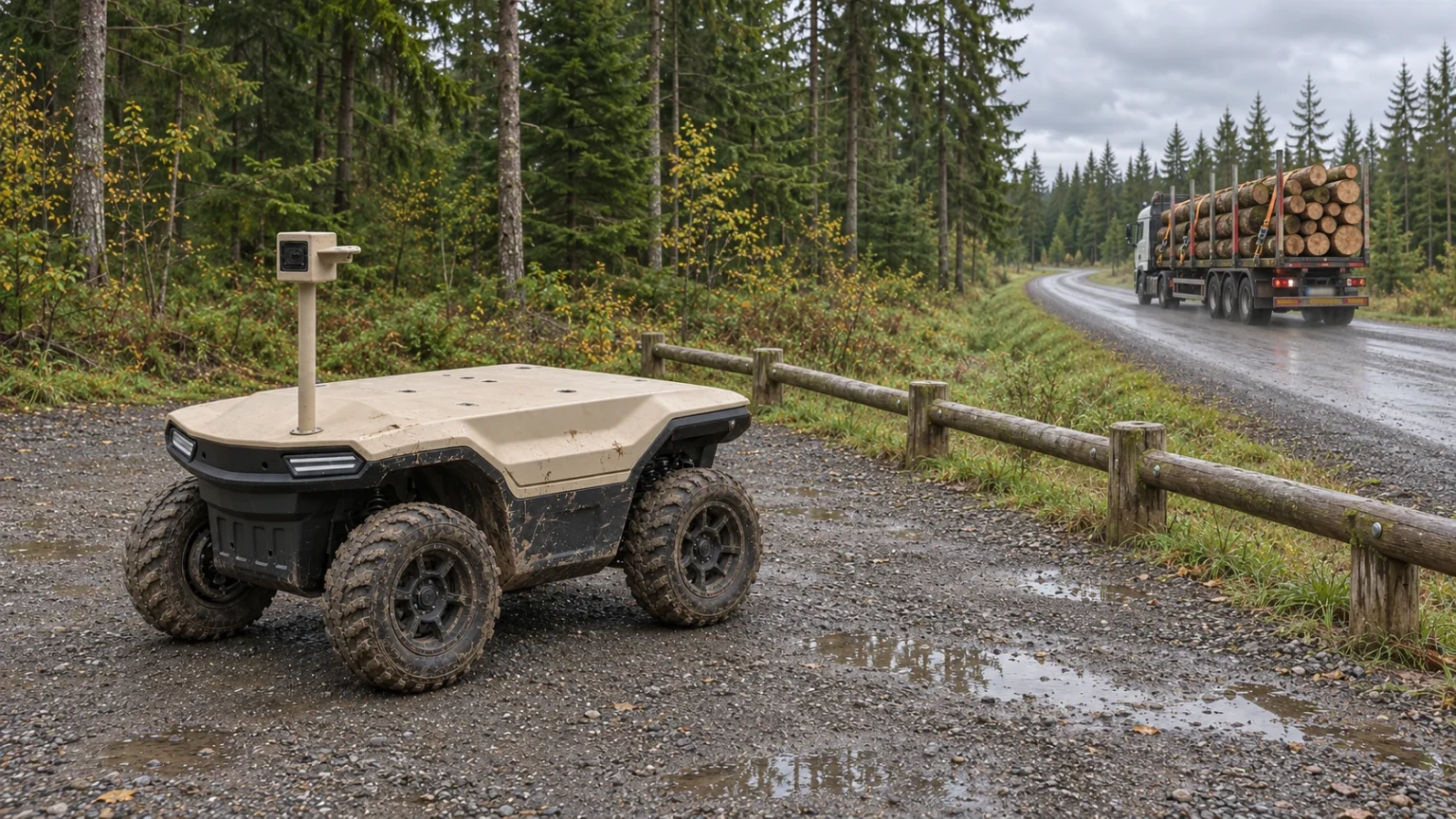
Timber transport monitoring begins with an authorised observation and a reviewable record. A mobile camera may help fill a gap between a gate camera and a forestry road checkpoint, but an image alone cannot determine whether a load is authorised. Define the vehicle record, the source of transport permissions and the person who resolves a mismatch.
Delta 150 is considered as a proposed camera-equipped outdoor patrol UGV. In this series AGV means Autonomous Ground Vehicle; industrial usage can also mean Automated Guided Vehicle. Neither term establishes automatic plate recognition or autonomous enforcement. This guide describes an assessment task, not a proven timber theft monitoring robot deployment.
At a glance
– Use authorised stationary observation points.
– Separate vehicle observation, plate reads and authorisation review.
– Count unreadable, false-match and missed-event results.
Contents
1. Map gaps between gates and forestry road cameras
2. Authorise vehicle and plate collection
3. Choose stationary viewpoints and image quality
4. Match rules and retain human review
5. Preserve timestamps, retention and event handover
6. Test recognition performance and missed events
7. Frequently asked questions (FAQ)
8. Sources and further reading
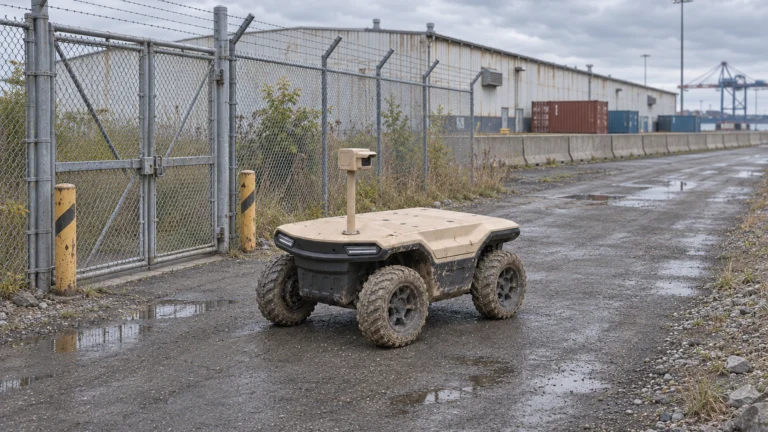
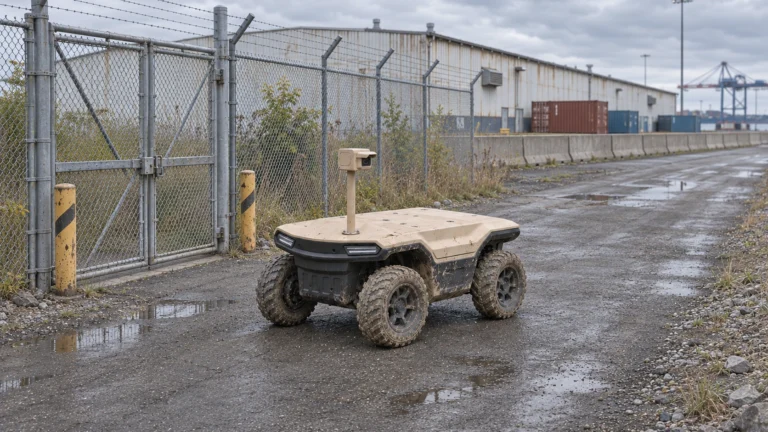
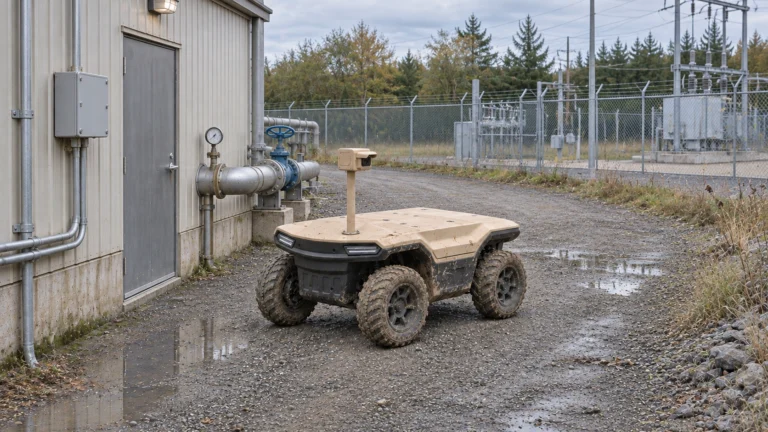
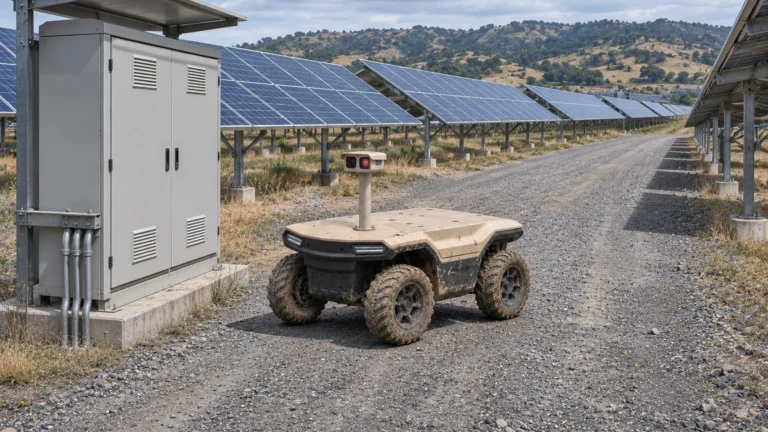
AI concept: proposed task-equipped Delta 150; configuration subject to confirmation.
Map gaps between gates and forestry road cameras
Map the legal transport route, gate views, junctions and observation windows. Record which journeys lack a usable record and why: occlusion, distance, the wrong camera angle or an unavailable camera. A changing viewpoint may help at one approved position; it does not establish continuous tracking across an entire forest.
Separate detection of a vehicle from identification of its plate and reconstruction of its journey. Joining two observations requires reliable identifiers, time alignment and an explicit matching rule. Keep an unmatched observation as unmatched. A useful requirement might be a rear vehicle view at a named checkpoint during a defined transport window, delivered to the authorised reviewer.
Authorise vehicle and plate collection
Before collection, the site owner should confirm observation permissions, permitted road areas, who may access the records and the applicable data-handling requirements. Specify purpose, retention and deletion responsibilities. This planning step does not supply legal clearance for a particular country or site.
Collect the information needed for the task. Avoid unnecessary views into cabins or unrelated neighbouring property. Demonstration illustrations should use unreadable plates; actual operational plate capture needs a separately approved process. The robot does not stop, pursue or confront vehicles. Any response remains with the site’s authorised procedure and responsible people.
Choose stationary viewpoints and image quality
Use a surveyed pull-off outside truck movements. Confirm arrival, parking, camera direction and exit without occupying the road or a loader work area. Count the camera, mount, enclosure, communication equipment and power accessories in the actual configuration. A navigation camera is not automatically an identification camera.
Define the required evidence with sample views at the actual distance, angle, light and vehicle movement. Check rain, dust, dirty plates and occlusion as separate conditions. Axis describes LPR as a camera-and-analytics application; this is a general reference, not evidence of Delta integration. No recognition distance or success rate is assumed here.
Match rules and retain human review
A plate string is an observation result, not an authorisation decision. Compare it only with an approved source such as a scheduled journey record and permitted time window. State who maintains that source and how updates reach the reviewer. An expired list can create an apparent exception from a valid journey.
Use explicit outcomes: matched, needs review, unreadable, incomplete or unavailable. Retain the source image and the reason for a suggested mismatch. Do not label a transport event as theft from a camera result alone. Reviewers need a way to correct identifiers, add context and close the record with a reason.
Preserve timestamps, retention and event handover
Give each event an ID linked to checkpoint, camera configuration, source file and timestamp. Document clock alignment and any known offset before joining gate and mobile observations. Distinguish the time of capture, arrival of the file and completion of review; a delayed upload is not a late vehicle.
| Event field | Why it matters |
| Checkpoint and source file | Locate the original observation |
| Capture and receipt times | Separate event time from network delay |
| Matching source and version | Reconstruct the comparison |
| Reviewer and disposition | Show who resolved the event |
Set access, retention and deletion through the approved site process. A screenshot sent informally is not a substitute for a traceable event handover.
Test recognition performance and missed events
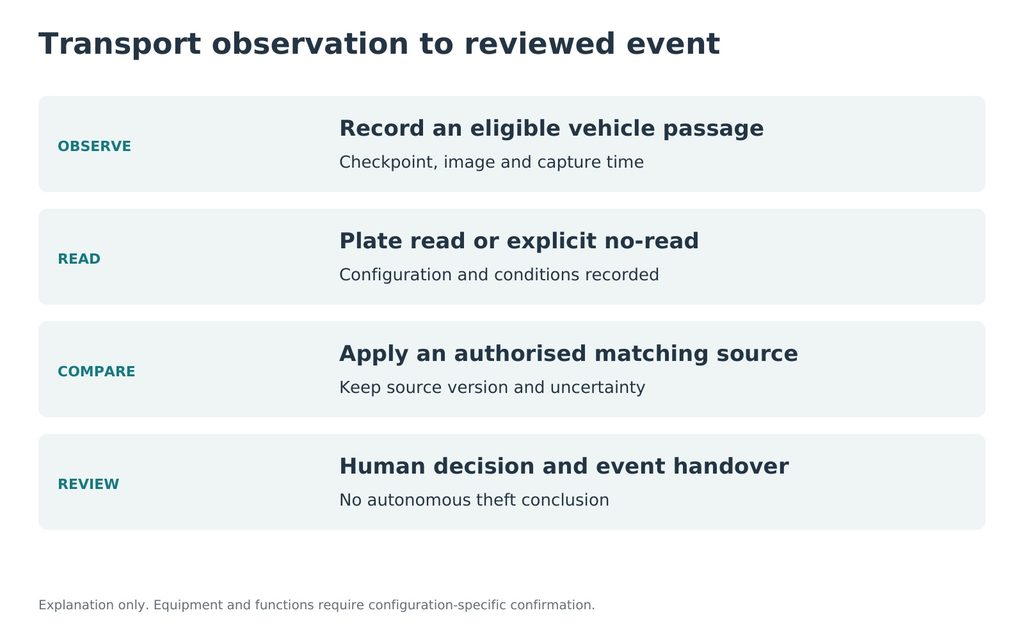
JINJIA planning framework; site-specific evidence is required.
Build a trial set with independently logged vehicle passages, including no-read conditions and journeys requiring review. Count all eligible passages in the agreed observation window. Report detection, correct plate reads, false matches and missed events separately; one overall percentage can hide the failure that matters.
Record daylight and low-light results, actual observation position, camera settings, network delay and human correction time. Set acceptance thresholds with the buyer before the test. If identification is not reliable, retain the task as vehicle observation or revise the equipment and viewpoint; do not present it as verified recognition.
Discuss task equipment via the Delta UGV/AGV family page. Delta 500 and Delta 1000 need separate configuration evidence. Send observation locations, traffic patterns, example events and data permissions for a Delta 150 assessment.
Frequently asked questions (FAQ)
A: No. It records an observation. Authorisation, context and review are needed before an exception can be resolved.
Q: Is plate recognition standard on Delta 150?
A: This article does not establish it as standard. Confirm the task camera, analytics, interfaces and acceptance evidence for the supplied configuration.
Q: Should the robot follow a truck?
A: No. The proposed task uses approved stationary observation positions outside vehicle movements.
Q: How should unreadable plates be counted?
A: Retain them as no-read results within the eligible passage count. Do not remove them to improve a recognition percentage.
Q: Can gate and robot timestamps be joined directly?
A: Only after clock alignment and known offsets are checked. Keep capture, receipt and review times separate.
Q: What information starts an assessment?
A: Observation points, traffic patterns, representative event records, the authorised matching source and data permissions.
Sources and further reading
1. Axis Communications — License plate recognition
General camera and recognition context; not a claim of standard Delta recognition capability or verified integration.
2. JINJIA — Delta UGV/AGV product family
Product-family context. The proposed task equipment and operating functions require confirmation for the supplied configuration.