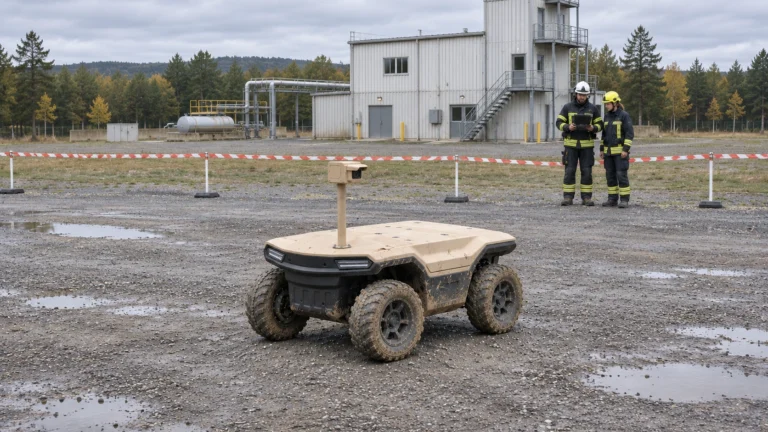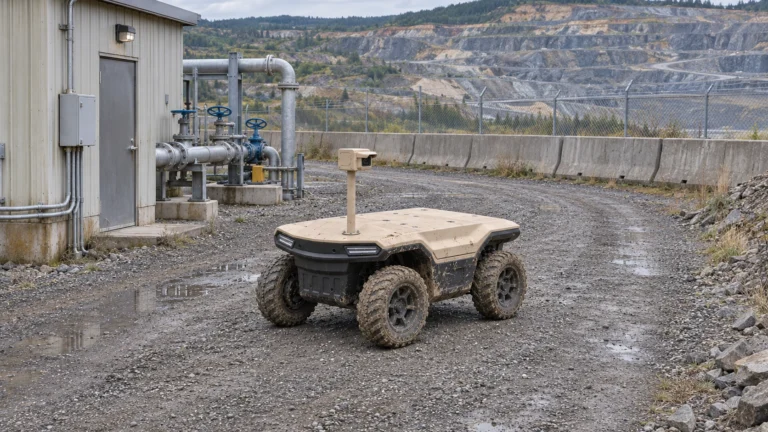


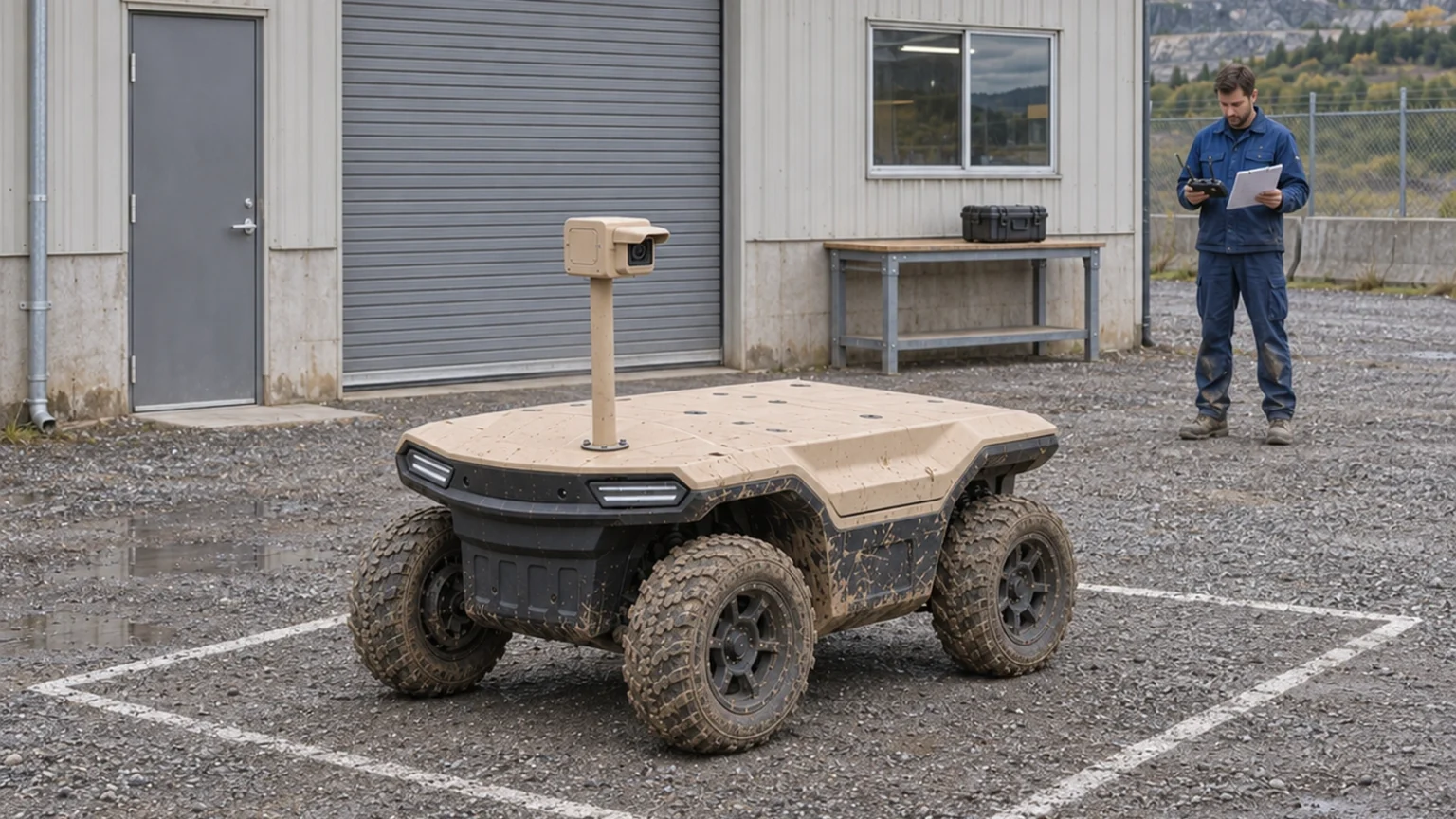
Delta 150 UGV service support needs a practical answer to a simple question: who restores a useful inspection task when something goes wrong? Define the local actions, remote assistance, parts and permissions before operation. A support contact alone cannot clean a camera, recover a stopped vehicle or authorise return to service at a distant site.
Delta 150 is JINJIA’s four-wheel UGV in the 150 kg payload class. AGV here means Autonomous Ground Vehicle with an agreed task and control scope; Automated Guided Vehicle is another industrial meaning. This guide sets out a support-planning method. It does not promise a warranty period, local parts stock, response time or an already deployed service network. The workshop scene is a concept.
At a glance
• Name local first-line and remote-support responsibilities.
• Demonstrate operator skills and retain configuration records.
• Expand only when recovery, people and parts can support the task.
Contents
Divide local first-line work and remote responsibilities
Plan spares and repair turnaround by failure consequence
Train operation, takeover and maintenance as demonstrated tasks
Control versions, maps and permissions across sites
Define SLA, on-site recovery and cross-border repair terms
Set conditions for scaling from one site to several
Frequently asked questions (FAQ)
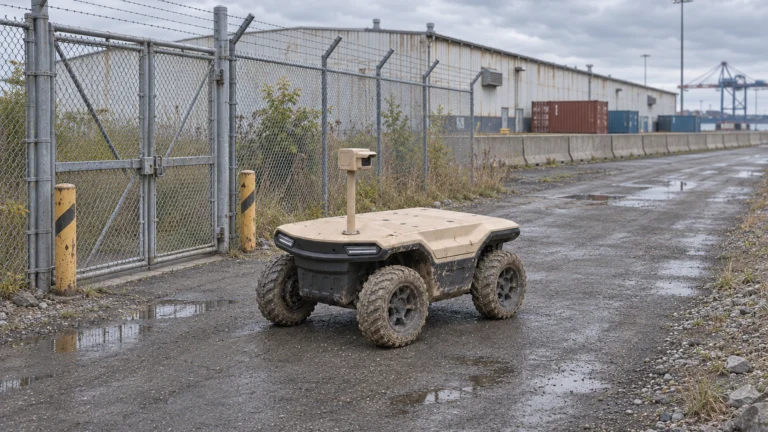
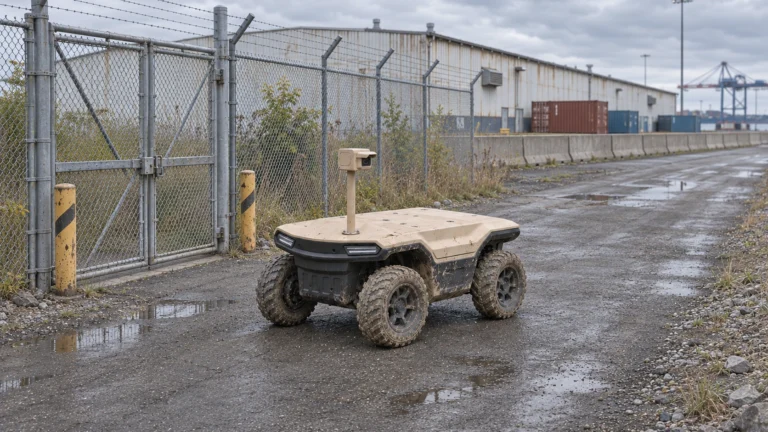
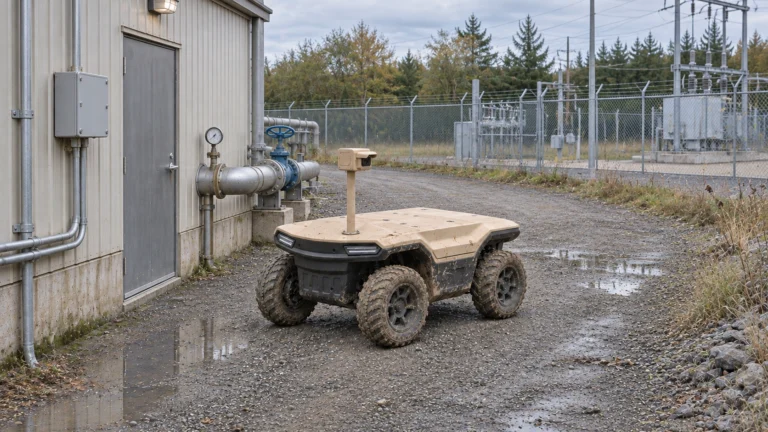
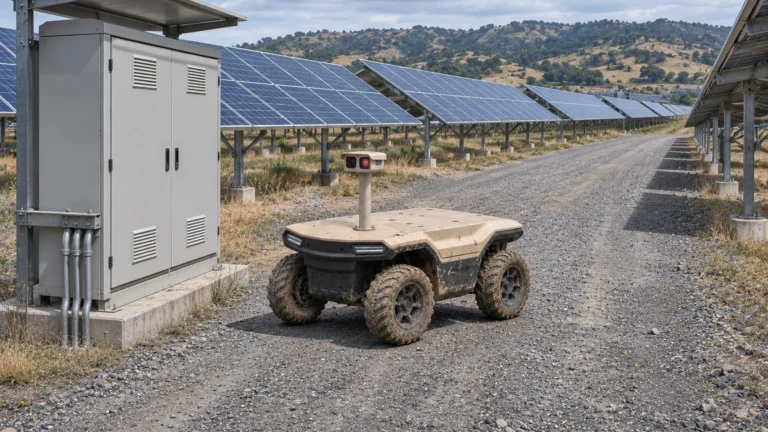
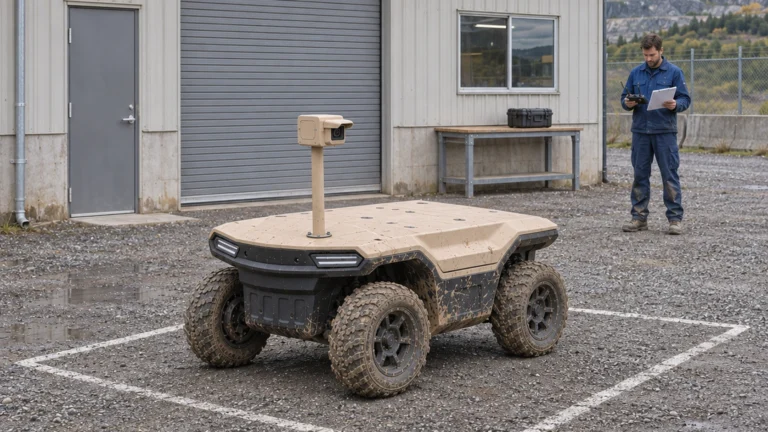
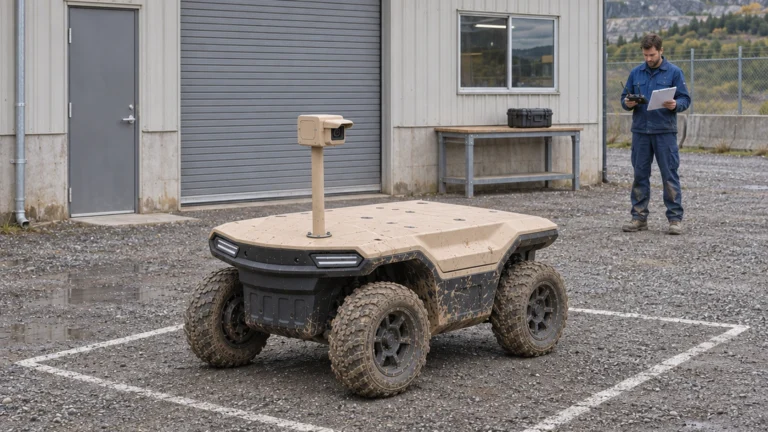
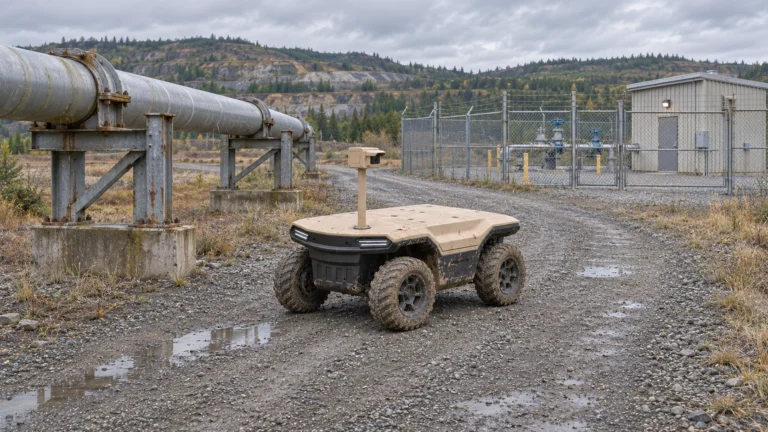
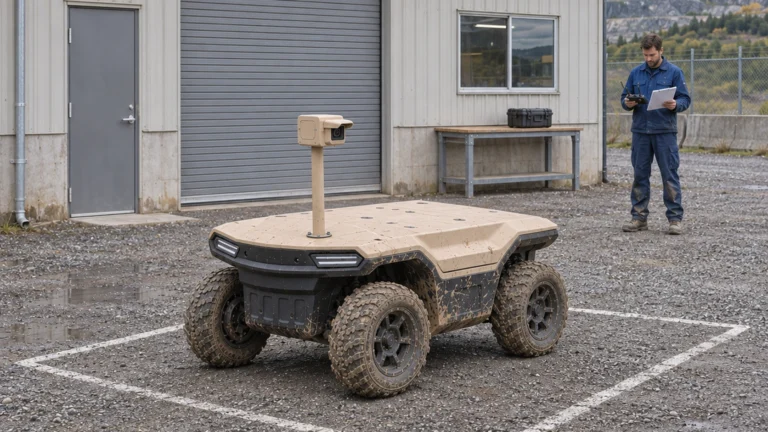
AI concept: proposed task-equipped Delta 150; configuration subject to confirmation.
Divide local first-line work and remote responsibilities
Assign local responsibility for approved pre-use checks, visible condition, lens cleanliness, charging readiness and task release. Identify who can stop the operation, request help and secure access for recovery. Use the current equipment instructions and the site’s approved process. Do not ask an untrained operator to dismantle equipment or improvise a recovery method simply because remote assistance is available.
Define what JINJIA, an agreed service partner, the integrator and the customer each provide. Remote support may need logs, configuration IDs and authorised access; physical work needs suitable people and equipment on site. Specify who owns the ticket and coordinates between chassis, payload, network and target-system suppliers. Keep private credentials out of routine email and agree how diagnostic access is granted and revoked.
Plan spares and repair turnaround by failure consequence
Build a project-specific spare-parts list from the offered configuration, maintenance instructions and operating conditions. Distinguish consumables, authorised field-replaceable items and parts requiring service work. Confirm part numbers, revision compatibility, storage requirements, shelf life where relevant and responsible stock holder. Do not substitute a visually similar component without checking compatibility and the effect on the accepted configuration.
Prioritise a part by the task it prevents, access time and practical replacement route. Record local stock, replenishment source, shipping and customs dependencies, tools and people required. A spare in another country is not equivalent to a usable spare at the site. Estimate downtime from detection through diagnosis, approval, shipment, installation and recheck; do not label shipping time alone as repair turnaround.
Train operation, takeover and maintenance as demonstrated tasks
Separate daily operator skills, supervisory release authority, permitted maintenance and specialist repair. Train on the actual control version and fitted payload. Include task setup, useful-record checks, stop and restart, loss of communications, uncertain position, blocked routes, replenishment and escalation. NIST includes operator proficiency among robot capability-assessment areas; its approach supports repeatable demonstrations rather than a Delta qualification claim.
Keep a training record with the person, version, task demonstrated, conditions, instructor or assessor and remaining limits. Attendance at a presentation is not a demonstration of takeover or recovery skill. Recheck affected competence when software, payload or procedure changes. Plan cover for absence and staff turnover so the task does not depend on one person who alone knows the route or account.
Control versions, maps and permissions across sites
Maintain an asset record linking vehicle ID, payload, software and firmware versions, map revision, route, approved modes and receiving system. Keep each site’s permitted areas and observation positions separate. Moving a robot to another location requires a new site review; the ability to load a map does not establish that its route, communications and recovery process are accepted there.
Assign change approval, backup, rollback and recheck responsibilities. Manage named accounts, least-necessary permissions, expiry and departure procedures with the customer’s IT owner. Avoid shared uncontrolled accounts and undocumented remote changes. Preserve the previous accepted baseline and event history. A fleet dashboard can help organise records, but its availability and integration must be confirmed for the project rather than assumed as a standard feature.
Define SLA, on-site recovery and cross-border repair terms
In the service-level agreement, or SLA, distinguish acknowledgement, initial diagnosis, on-site attendance and restoration of the accepted task. Agree severity levels, support hours, time zone, communication channel, customer prerequisites and escalation. State when a timing clock starts, pauses and ends. These are terms to negotiate for the project; this article provides no universal response or restoration promise.
Agree recovery access and authorised handling before a fault occurs. For return-to-service work, define diagnostic evidence, repair approval, freight, customs, battery-transport requirements if applicable, data handling and cost responsibility. Record warranty coverage and exclusions in the actual contract. After a repair, configuration change or relocation, repeat the affected functional and task checks before the named owner releases operation.
Set conditions for scaling from one site to several
Review a bounded first site using accepted tasks, interventions, restoration time, staff availability, spare use and full operating effort. Define hard limits such as permitted access, realistic capacity such as trained staffing and parts access, and an economic limit such as cost per useful task. Add sites only when the support system can sustain the agreed service, not merely when additional vehicles are available.
Set a staged plan with decision owners, resources and review dates. Expand after agreed task and recovery evidence; adjust if recurring faults, intervention load or replenishment delay erodes the case; stop expansion when the remaining burden cannot be resolved within its limit. Send JINJIA the sites, task, payload, shifts and support expectations. Delta 500 and Delta 1000 require separate spares, handling, training and configuration validation.
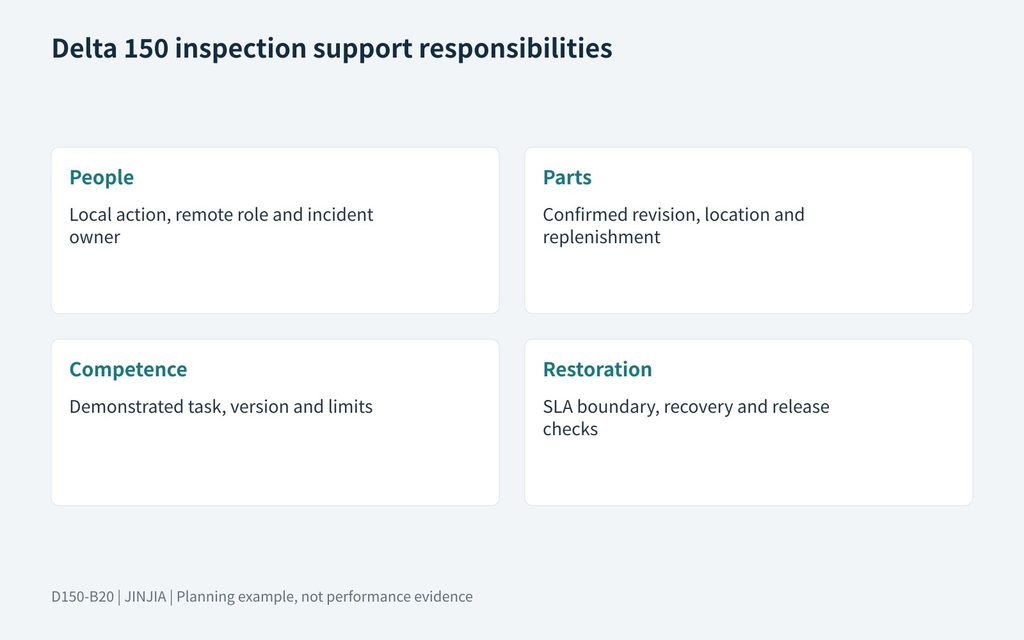
JINJIA planning framework; example inputs are not test results.
| Support element | Evidence to retain |
| People | Local action, remote role and incident owner |
| Parts | Confirmed revision, location and replenishment |
| Competence | Demonstrated task, version and limits |
| Restoration | SLA boundary, recovery and release checks |
Send the task, sites, payload, shifts and support expectations to plan Delta 150 service readiness.
Frequently asked questions (FAQ)
A: Name one coordinator and clear local, supplier, integrator and customer responsibilities.
Q: Does remote support replace local recovery?
A: No. Authorised physical recovery needs suitable access, people and equipment.
Q: How should spares be selected?
A: Use the confirmed build, failure consequence, compatibility, replacement authority and replenishment route.
Q: What demonstrates completed training?
A: A record of the named person performing the required task on the relevant version, with limits recorded.
Q: Does SLA response time mean task restoration?
A: No. Agree acknowledgement, diagnosis, attendance and restoration separately.
Q: When can the operation expand?
A: When accepted-task evidence, trained cover, parts, recovery and cost remain within agreed limits.
Sources and further reading
Platform context; integration scope requires project confirmation.
NIST — Performance of emergency response robots
Repeatable capability measurements and user-defined mission thresholds; no Delta test, certification or endorsement is claimed.