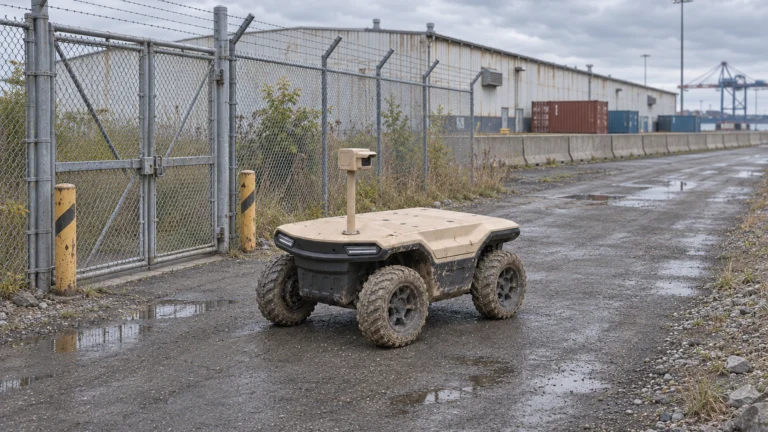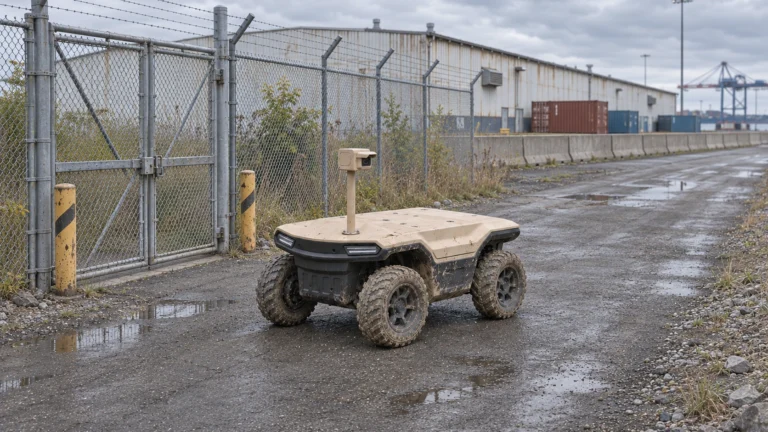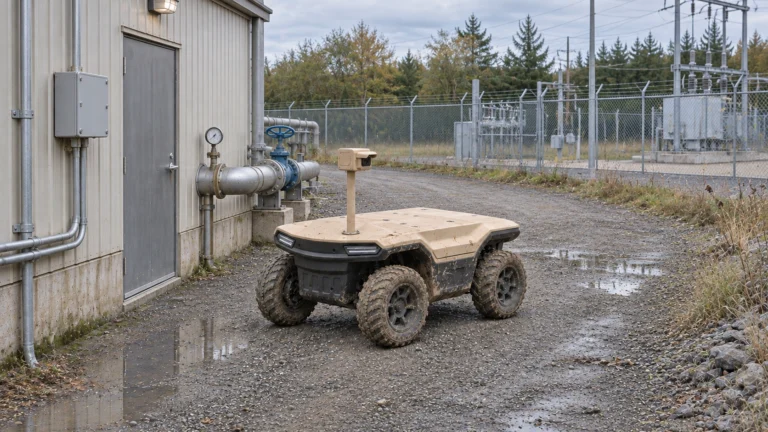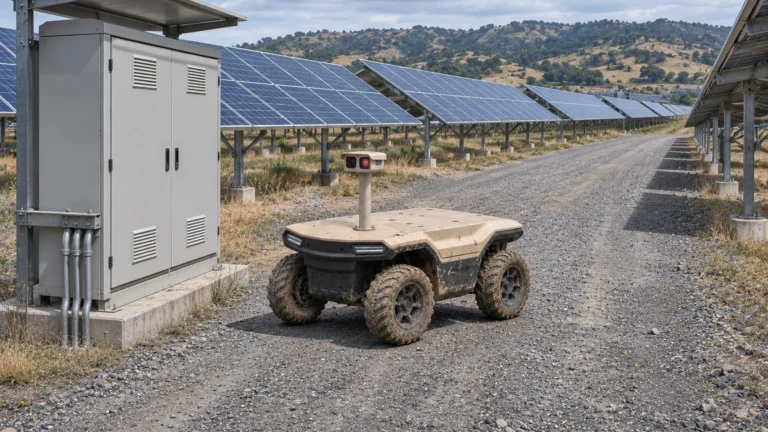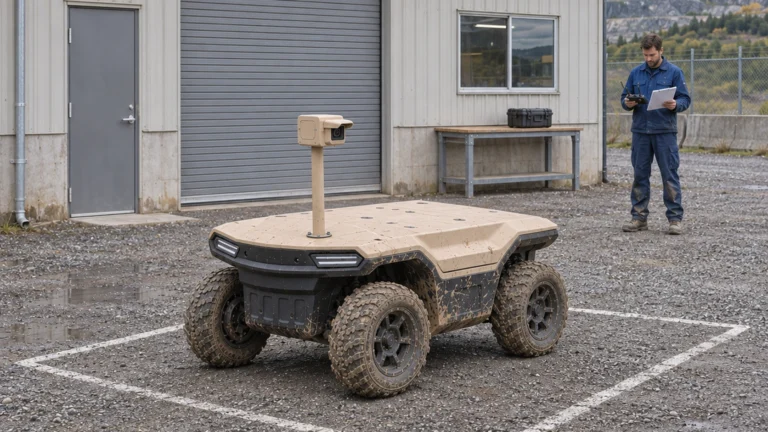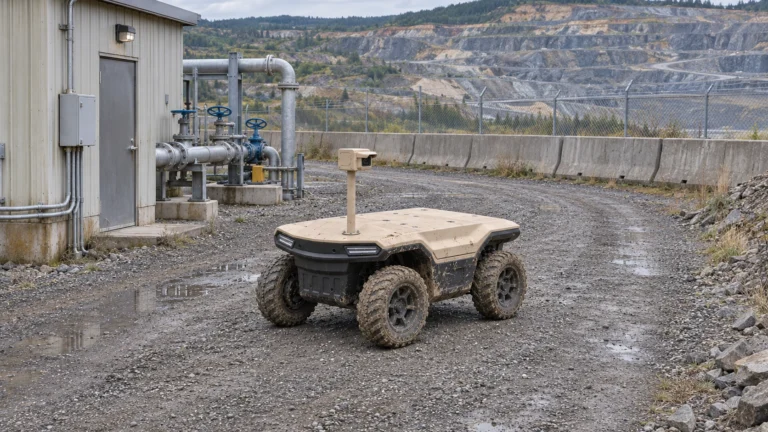


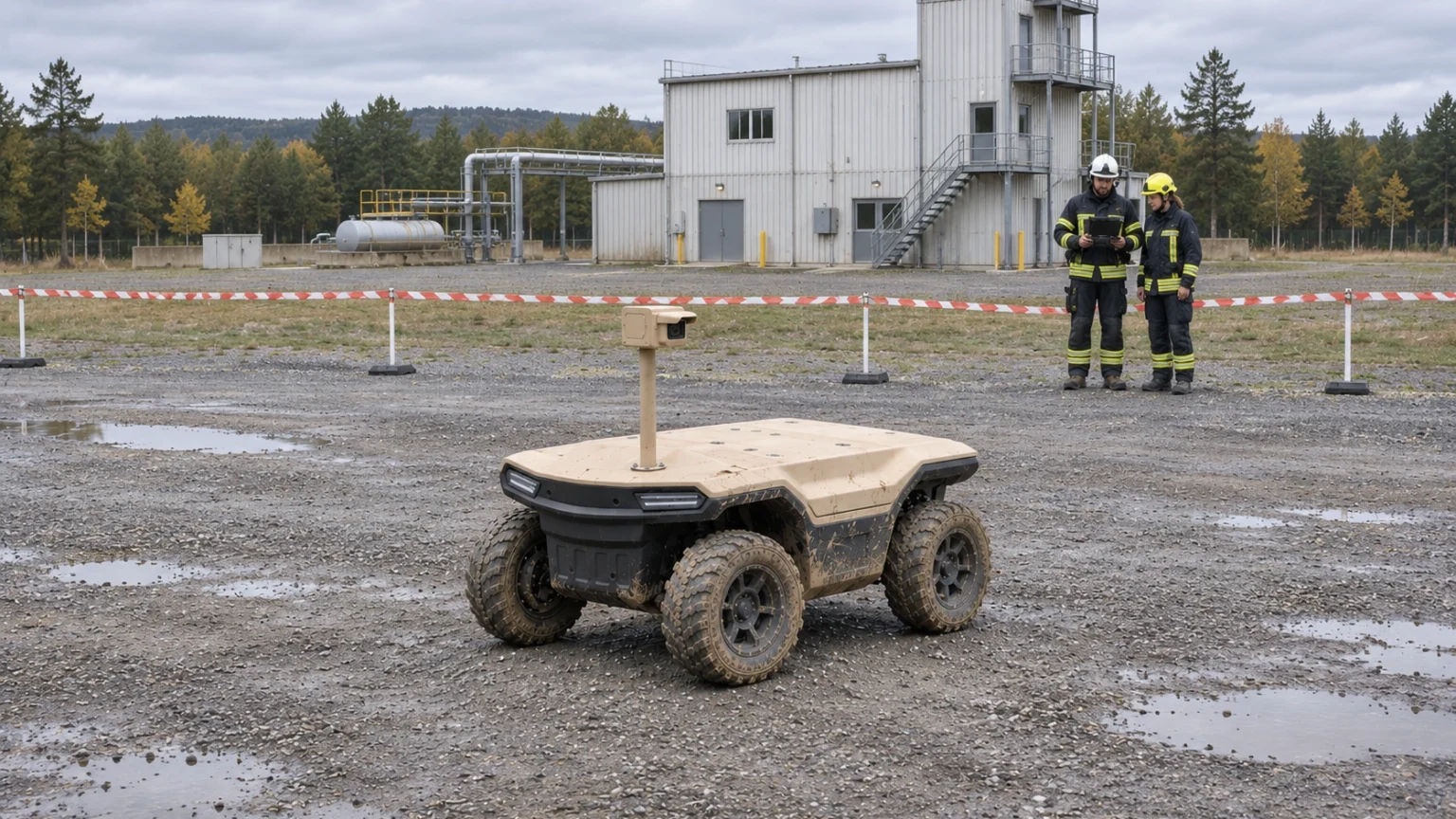
An emergency scene observation UGV should answer a specific question from a position the incident team has approved. Start with the required view, the person who will use it and a route that remains recoverable. A mobile camera adds value only when its information reaches the responsible team in time to support a decision.
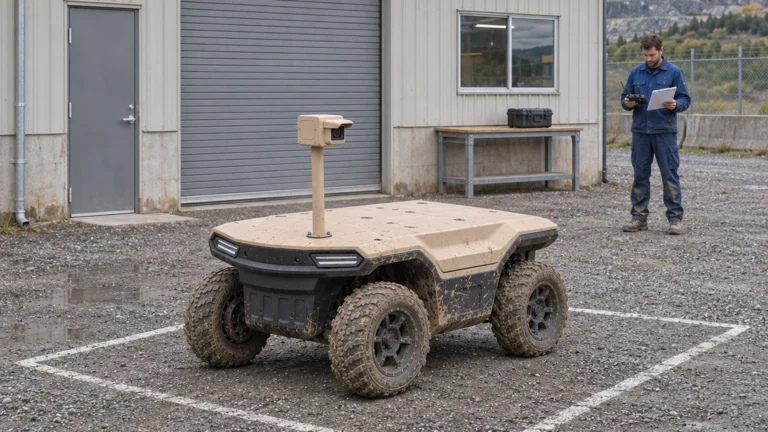
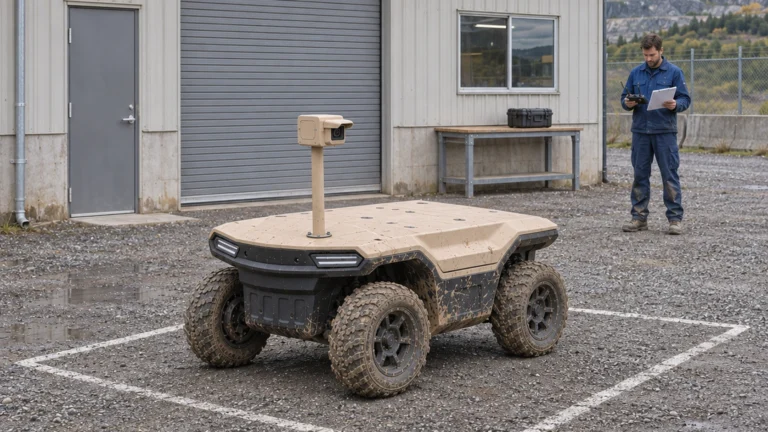
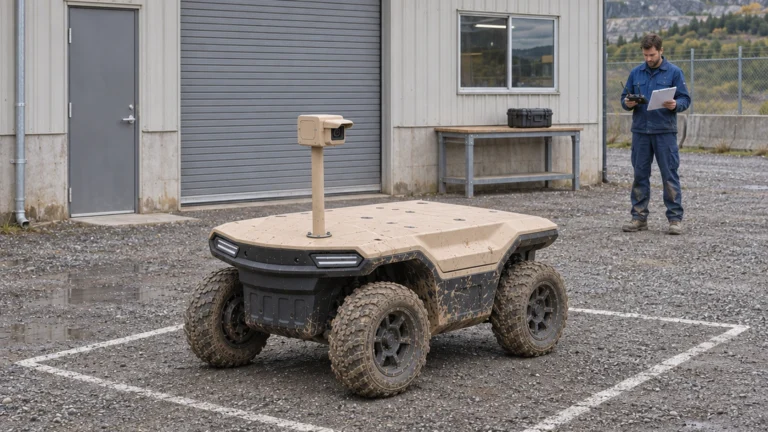
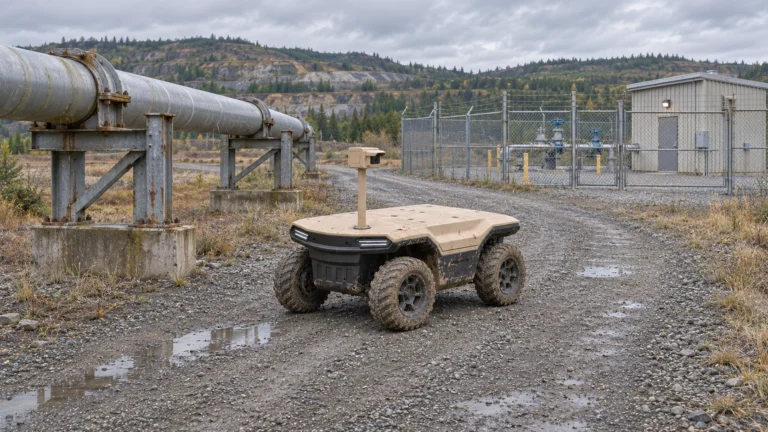
Delta 150 is JINJIA’s four-wheel UGV in the 150 kg payload class. An observation AGV here means an Autonomous Ground Vehicle with a defined payload and control scope; AGV also means Automated Guided Vehicle in other industries. The illustrated emergency exercise configuration is a concept, not evidence of live incident deployment or hazardous-area suitability.
At a glance
• Define the question and approved observation position first.
• Validate the complete route, image and command handover together.
• Keep environmental limits and recovery conditions explicit.
Contents
Define the observation target and approved position
Check a passable and recoverable route
Separate visible and thermal observation tasks
Assign command, takeover and recovery roles
Confirm environmental suitability before release
Prepare a configuration discussion with evidence
Frequently asked questions (FAQ)
AI concept: proposed task-equipped Delta 150; configuration subject to confirmation.
Define the observation target and approved position
Ask what the team needs to see: an accessible entrance, a clear approach lane or an externally visible equipment area. Specify the detail, viewing direction and latest useful delivery time. Identify who may authorise movement and who interprets the observation. The vehicle operator should receive a bounded task rather than a broad instruction to investigate the scene.
Mark permitted positions, exclusion boundaries and changing conditions on the working map. A position approved during an exercise is not automatically suitable during a live event. If the task changes, obtain a fresh decision from the responsible site or incident authority before moving. The proposed robot observation supports the team’s assessment; it does not itself establish structural safety or clearance to enter.
Check a passable and recoverable route
Walk or otherwise assess the permitted outward and return route using the site’s established process. Include soft ground, standing water, drains, thresholds, narrow turns, slopes and changing traffic. Account for the camera mast and full installed envelope, not only the chassis width. Establish observation stops where the vehicle can remain without blocking emergency access.
Test communications at the actual stops and along recovery access. Define a holding position if the destination becomes unavailable. Do not infer rubble, stairs, deep-water or obstacle capability from a different robot or a promotional image. Record the cause of a blocked attempt and preserve the missed observation. A short controlled route can reveal a useful deployment limit before the team commits to a larger task.
Separate visible and thermal observation tasks
For visible imaging, define whether the reviewer needs context, object detail or a readable label. Test the view with representative light, glare, rain and lens contamination. Retain original time, position, direction and image reference so that later information does not appear current. A wide scene and a close detail may require different observation positions or equipment.
Thermal observation needs its own confirmed instrument, settings and interpretation method. FLIR’s documentation explains that distance, resolution and reflections affect the image. A bright area alone does not determine its cause, gas concentration or structural condition. If the mission needs calibrated temperature, gas measurement or another specialist result, specify that instrument and method separately rather than extending the camera claim.
Assign command, takeover and recovery roles
Name the task authoriser, operator, image reviewer and recovery lead. Specify whether movement uses remote control, assistance or a bounded autonomous route. Test the configured response to lost link, uncertain position, blocked route and unusable payload data. A control mode label does not prove that the team can take over the actual vehicle in the actual location.
Use a simple handover record: task ID, original observation time, location, image quality, finding, uncertainty and receiving person. Confirm receipt and whether another view is required. Recovery must have an approved method, responsible people and access conditions. Do not send personnel into an unapproved area solely to retrieve the robot; an interruption may require suspending the task.
Confirm environmental suitability before release
Compare the proposed configuration with the permitted operating environment. Confirm temperature exposure, water, dust, smoke visibility, communications and any hazardous-area classification through the site’s process. An ingress rating does not establish heat tolerance or explosion protection. Electric drive does not remove every possible ignition source, so the complete equipment and local conditions govern access.
Use repeatable exercises to check separate capabilities and then the complete task. NIST describes capability-based measurement for response robots; the user sets mission thresholds. That approach does not establish a Delta test result. Keep planned conditions, measured results and excluded environments separate. Release only the task and configuration that the responsible team has accepted.
Prepare a configuration discussion with evidence
Send JINJIA one approved route, observation-point list and a sample of the required image or record. Add payload mass and power, shift pattern, communications constraints, destination and estimated quantity. Identify exclusions, the decision owner and the acceptance method. Leave unknown conditions open for assessment instead of silently treating them as suitable.
Begin with a controlled exercise and compare useful delivered observations, missed points and operator effort against the current method. Review the recovery and handover record before expanding the route. Delta 500 or Delta 1000 may require a different load or mission assessment; a Delta 150 exercise does not validate another build. Use the resulting evidence to proceed, change the task or stop.
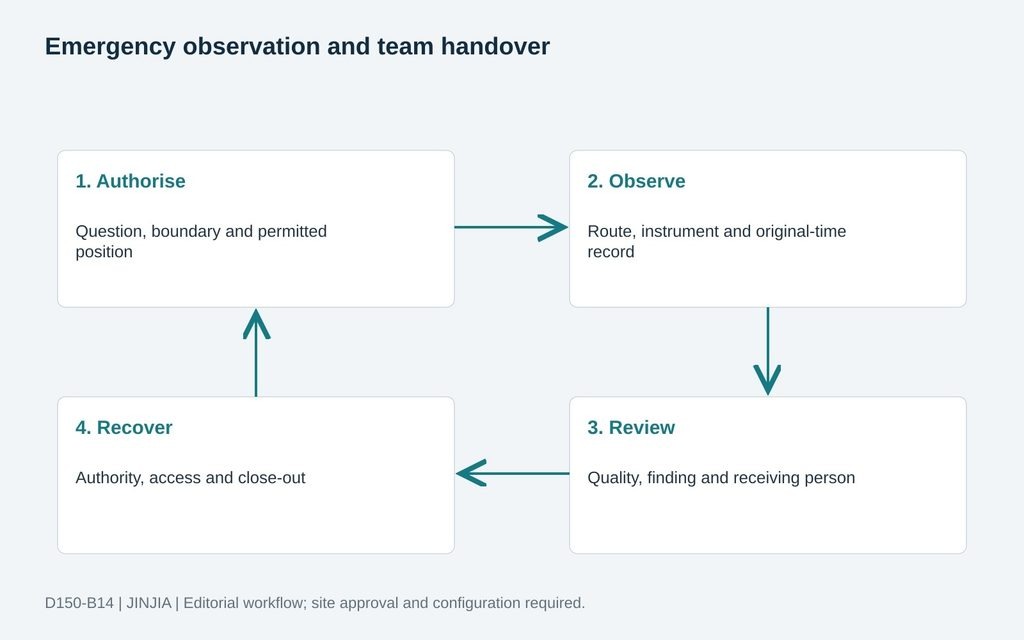
JINJIA planning framework; example inputs are not test results.
| Task stage | Required handover |
| Authorise | Question, boundary and permitted position |
| Observe | Route, instrument and original-time record |
| Review | Quality, finding and receiving person |
| Recover | Authority, access and close-out |
Frequently asked questions (FAQ)
A: A defined question, approved viewing position, usable record and named recipient.
Q: Does the concept image prove incident deployment?
A: No. It illustrates a proposed training configuration.
Q: Can the robot enter a fire or explosive atmosphere?
A: Do not assume that; the exact equipment and authorised environment must support the task.
Q: Does a thermal image diagnose the scene?
A: No. Instrument limits and qualified interpretation remain necessary.
Q: Is automatic return assured after lost link?
A: No. Verify the configured response and recovery method.
Q: What should an enquiry include?
A: An approved route, point list, record sample, payload, shifts, communication conditions, destination and quantity.
Sources and further reading
Platform context; integration scope requires project confirmation.
NIST — Performance of emergency response robots
Repeatable capability measurements and user-defined mission thresholds; no Delta test, certification or endorsement is claimed.
FLIR documentation — Achieving a good thermal image
Resolution, distance, reflections and interpretation context. General imaging principles; not a Delta payload specification or endorsement.
HSE — Electricity in potentially explosive atmospheres
General ignition and equipment-suitability distinction. Site classification and applicable local requirements govern access; UK rules are not universal.