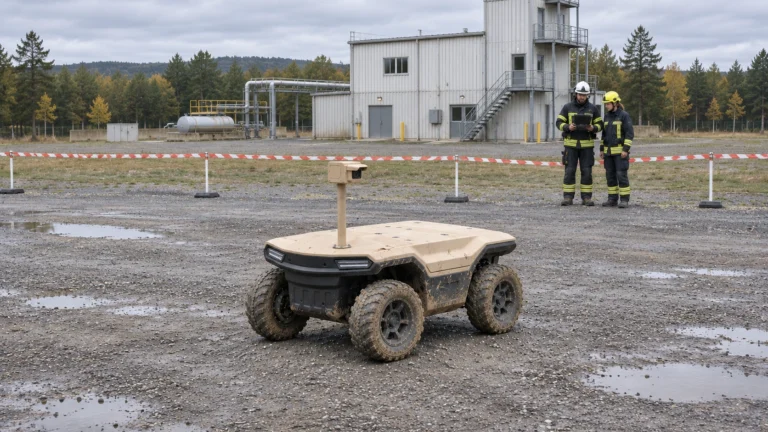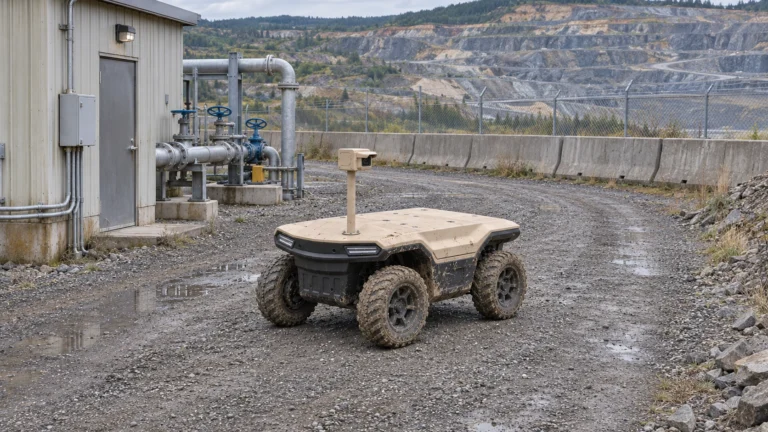


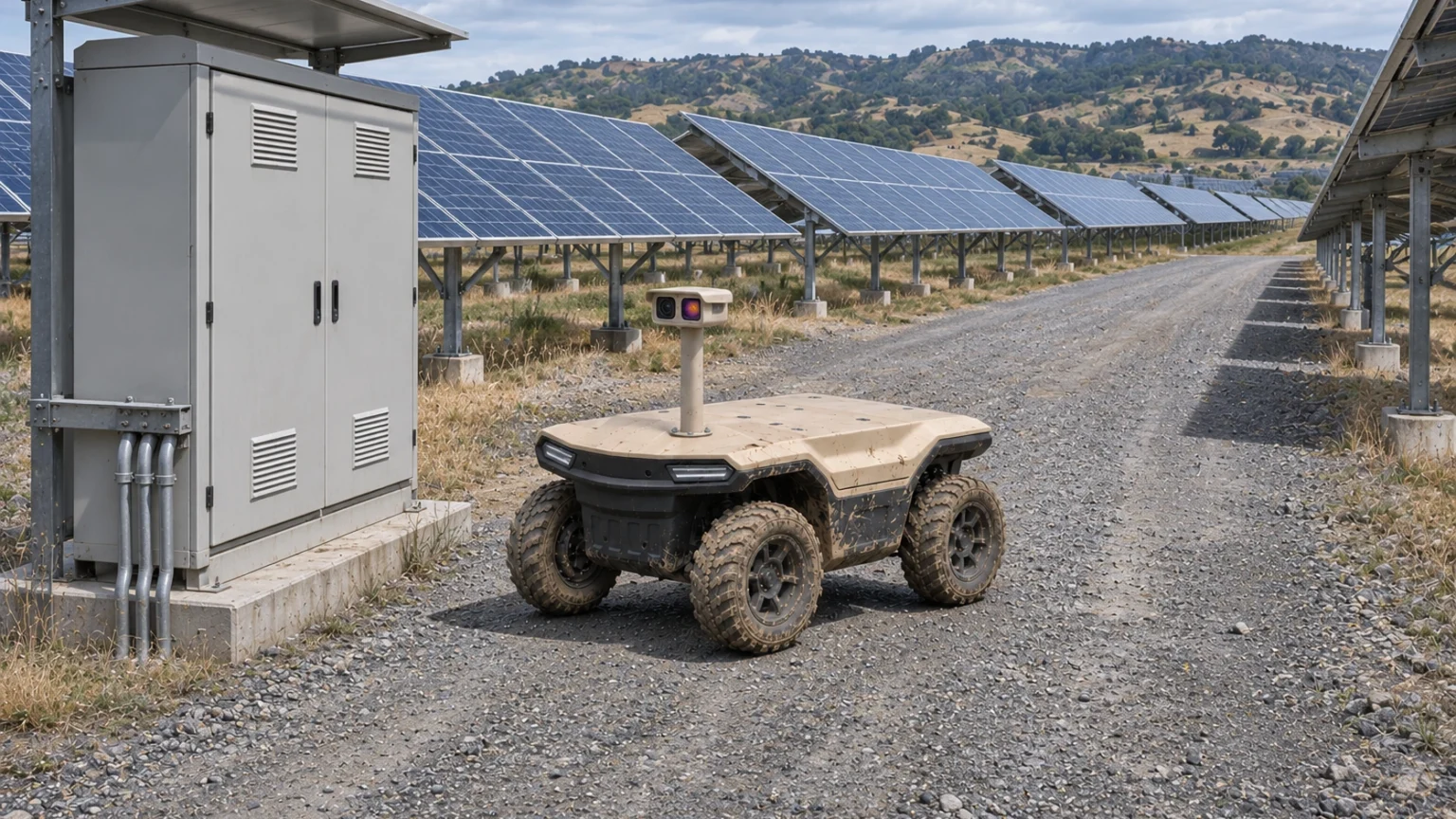
Solar farm ground robot inspection works best when it answers a specific maintenance question from an accessible viewpoint. Start with external equipment, a defined module view or a perimeter checkpoint. Then establish whether the route and received record support that question. Reaching the end of a panel row is not the same as inspecting every module.
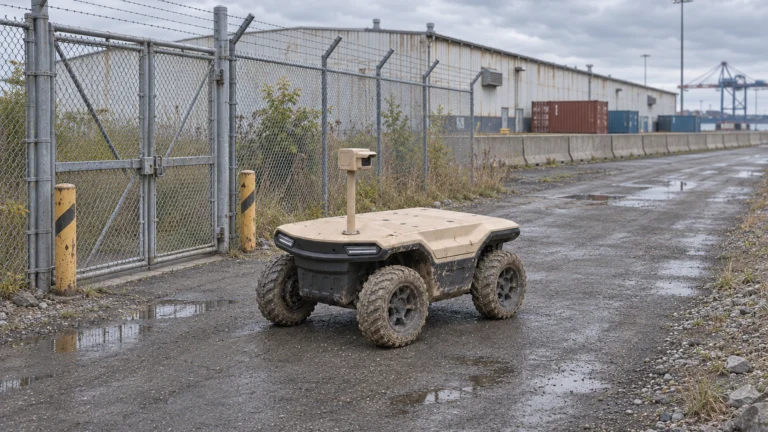
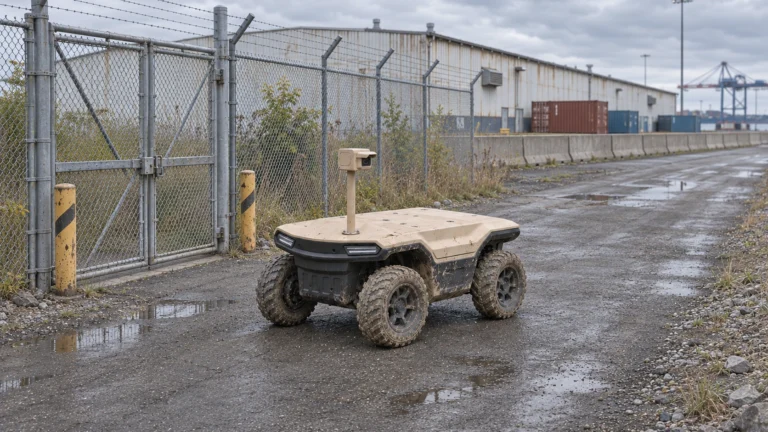
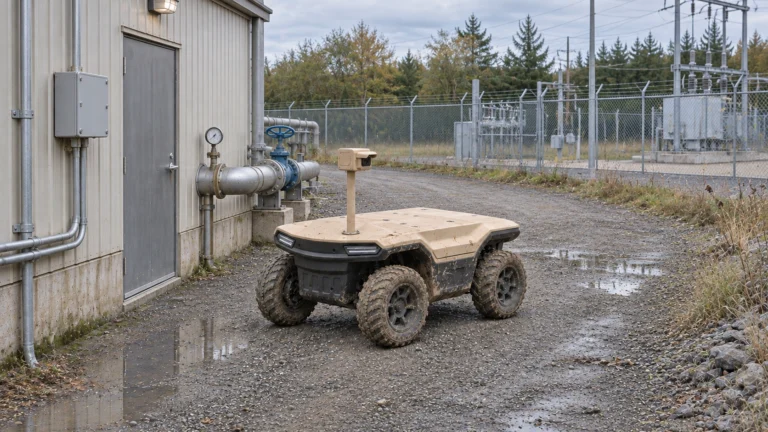
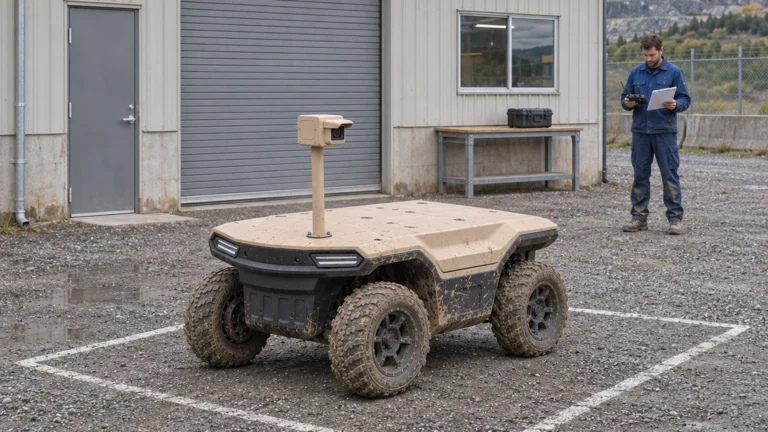
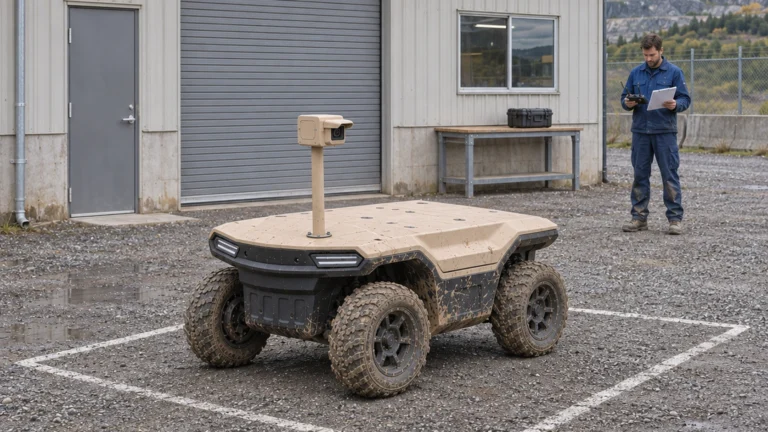
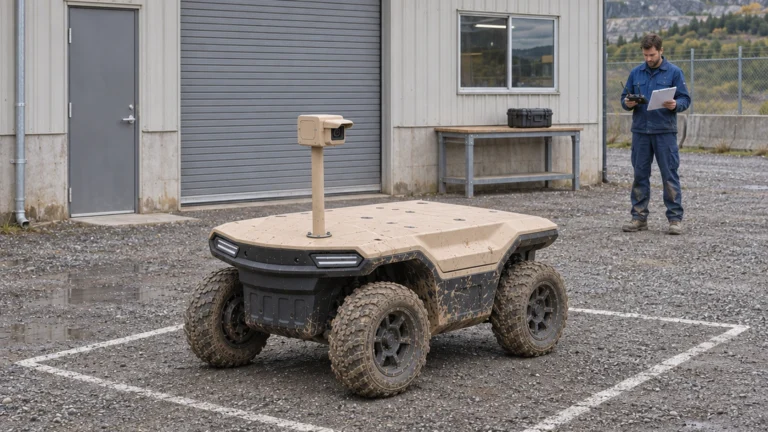
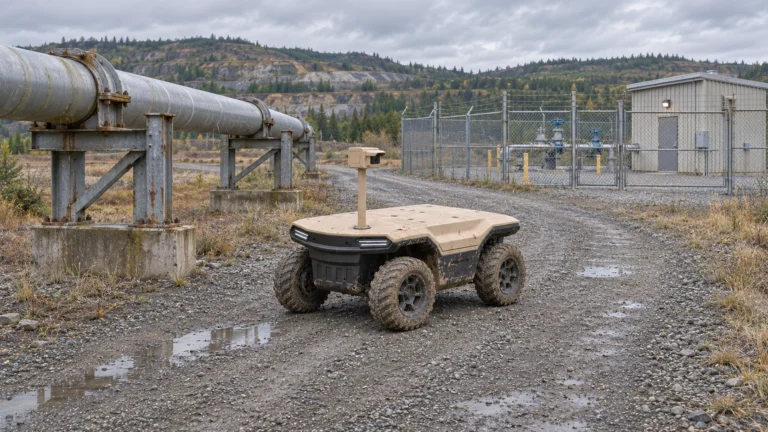
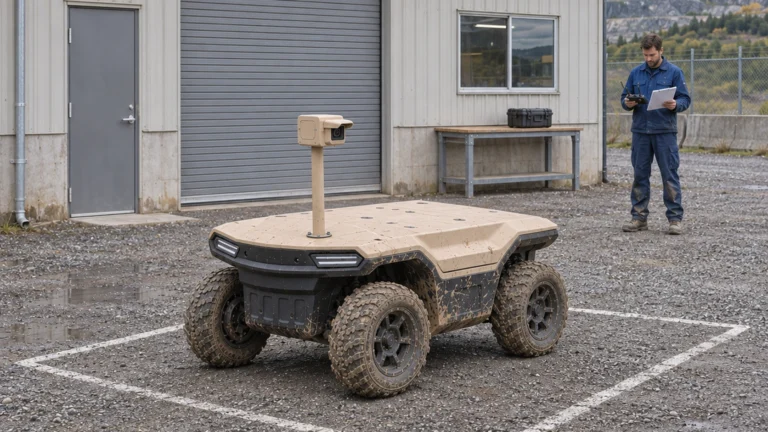
Delta 150 is JINJIA’s compact four-wheel UGV in the 150 kg payload class. A solar farm AGV can be considered with a project-specific observation payload. Here AGV means Autonomous Ground Vehicle; other industrial uses may mean Automated Guided Vehicle. The proposed task needs site and configuration validation, and the concept image is not evidence of an installed solar project.
At a glance
• Choose the observation target before choosing the route and camera.
• Measure the whole installed envelope and changing panel clearances.
• Deliver a traceable finding to O&M; keep cleaning and electrical testing separate.
Contents
Define ground assets and module observation targets
Measure aisle clearance and turning space
Separate visible inspection from temperature measurement
Check shade, vegetation and communications
Hand findings to the maintenance team
Divide work with cleaning robots and drones
Frequently asked questions (FAQ)
AI concept: proposed task-equipped Delta 150; configuration subject to confirmation.
Define ground assets and module observation targets
Ask the O&M team which repeated observations cause travel, delays or gaps in the current records. Candidates may include the outside of an inverter enclosure, access gates, visible cable-route conditions or selected module surfaces. For each one, state what must be visible and what decision the record supports. Do not imply that a cabinet exterior view inspects components behind closed doors.
Assign the existing asset and location IDs. Distinguish an observed condition from a confirmed defect and from its root cause. For example, a hypothetical damaged-panel observation requires the correct module location and a reviewable image; it does not by itself quantify lost generation. Retain the existing plant monitoring and specialist inspection process as the comparison.
Measure aisle clearance and turning space
Survey the complete loaded vehicle, including the camera, mast, antennas, cable loops and any protective frame. Compare that envelope with the narrowest approved aisle, row-end turn, drain and gate. Check the position of moving tracker structures through the proposed operating window. A chassis dimension alone does not prove clearance for the configured machine.
Do not assume that Delta 150 can pass beneath modules. Prefer approved service aisles for the initial task unless a separate assessment validates another route. Survey loose gravel, ruts, slopes and cable crossings with the operator. Include waiting and recovery areas. If vegetation growth or tracker movement changes clearance, recheck access before accepting the next run.
Separate visible inspection from temperature measurement
A visible-light camera can support a defined external-state observation if the selected view shows enough detail. A thermal image addresses a different question. The IEA PVPS O&M guidance explains that thermography needs suitable conditions and that infrared alone may not settle a root-cause diagnosis. Agree the measurement method with a competent PV inspector.
For quantitative work, confirm radiometric capability, calibration, target resolution and the relevant environmental and operating records. A thermal display does not establish that all modules were measured correctly. Check angle, reflection, dwell and actual received data at representative points. Do not infer an automatic defect classifier, a guaranteed fault-detection rate or a production-loss calculation from a thermal camera label.
Check shade, vegetation and communications
Walk the route at the intended operating times and inspect seasonal access assumptions. Module rows, enclosures and terrain can create different positioning and radio conditions from an open entrance area. Record link quality, delay and image usability at each required stop. Assess navigation separately from whether the target is visible through grass, shadow or glare.
Define responses to a blocked aisle, poor observation, lost position and lost command link separately. Record a missed check with its reason, rather than presenting a complete route as complete inspection coverage. Include lens cleaning and vegetation management responsibilities. Also account for payload power, stationary observation and charging time; solar generation at the plant does not imply a robot has an approved power connection.
Hand findings to the maintenance team
Use the plant’s existing defect or work-order format. Attach asset ID, original observation time, route-point ID, source image, viewing conditions and a concise question for review. If a measurement is involved, retain the instrument and configuration details. The US DOE FEMP guidance treats maintenance planning, monitoring information and calibration as connected parts of O&M.
Name the reviewer and action owner. Record whether the view was accepted, whether a specialist visit was needed and how the finding was closed. Keep normal, failed and uncertain observations so the team can judge workload and missed coverage. Measure review, cleaning and recovery minutes alongside accepted records; do not claim improved plant yield from robot mileage or image count.
Divide work with cleaning robots and drones
Compare methods against the same observation requirement. A ground robot may offer a repeatable view along a permitted aisle; a drone may provide a different overview subject to its own access and operating constraints. A cleaning robot performs a different intervention. The proposed Delta 150 inspection configuration is not a panel washer and does not replace electrical testing or repair.
Use the supplied worksheet to compare required target detail, access, conditions, data handover and support effort. Start with a bounded trial and all scheduled attempts in its denominator. Retain complementary methods where they work better, or decide not to add a robot if the existing process meets the need. Send JINJIA clearance measurements, aisle dimensions, checkpoints and a sample defect record to scope the task.
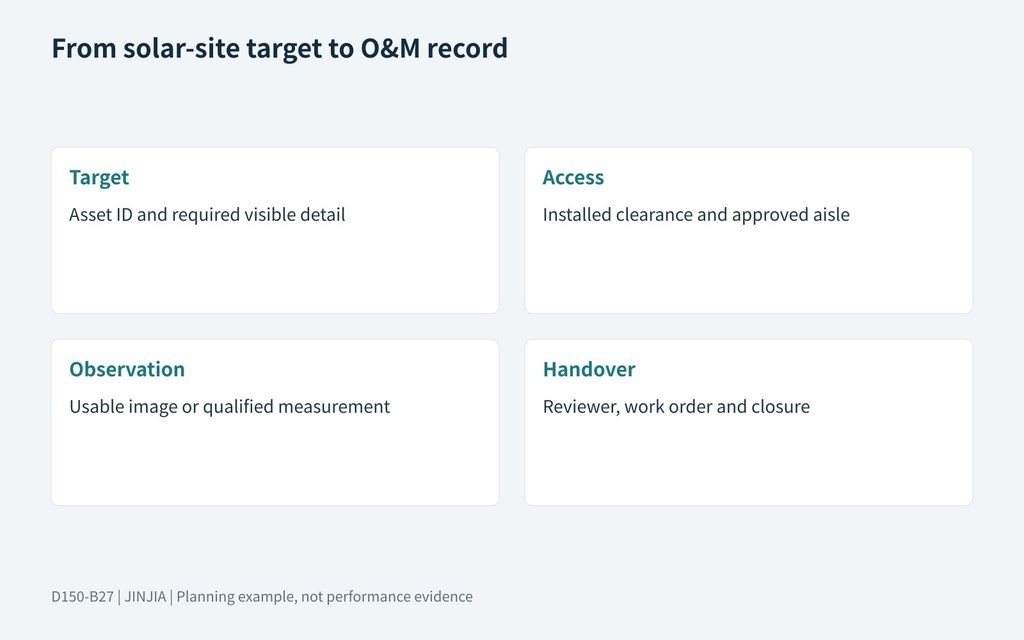
JINJIA planning framework; example inputs are not test results.
| Inspection requirement | Acceptance record |
| Target | Asset ID and required visible detail |
| Access | Installed clearance and approved aisle |
| Observation | Usable image or qualified measurement |
| Handover | Reviewer, work order and closure |
Frequently asked questions (FAQ)
Q: Can Delta 150 travel under solar panels by default?
A: No. Validate the whole installed envelope, panel movement, route and recovery access for the site.
Q: Which solar task is a useful starting point?
A: A repeated external observation with an accessible approved viewpoint and a clear maintenance decision.
Q: Does a thermal camera make every image a temperature measurement?
A: No. Confirm the radiometric instrument, calibration, viewing method and operating conditions.
Q: Is this Delta 150 configuration a cleaning robot?
A: No. The article scopes observation; panel cleaning needs a separately suitable system.
Q: Can a picture prove the cause of generation loss?
A: Not alone. Combine the finding with plant data and appropriate specialist testing.
Q: What should the trial measure?
A: Accepted records against all scheduled attempts, missed coverage, review workload, energy and support effort.
Sources and further reading
Platform context; integration scope requires project confirmation.
US DOE FEMP — Operate and maintain a PV system
Maintenance planning, monitoring records and calibration context; no Delta compatibility or performance endorsement.
IEA PVPS T13-25:2022 — O&M in different climates
Printed page 36 explains thermography conditions and the limits of infrared-only diagnosis. No inspection interval or numeric threshold is adopted as a Delta specification.