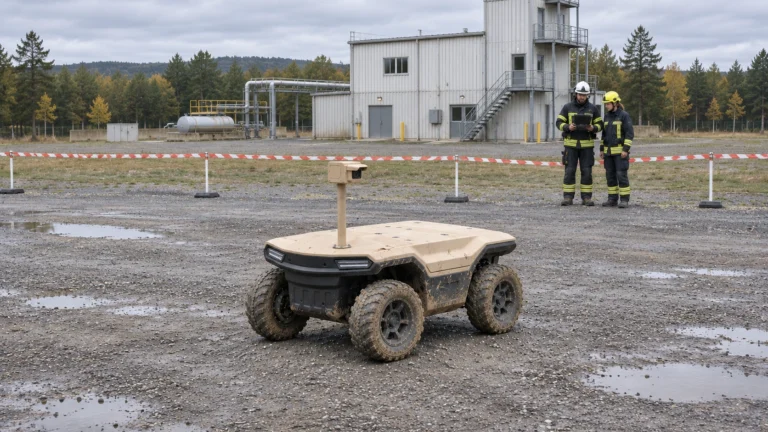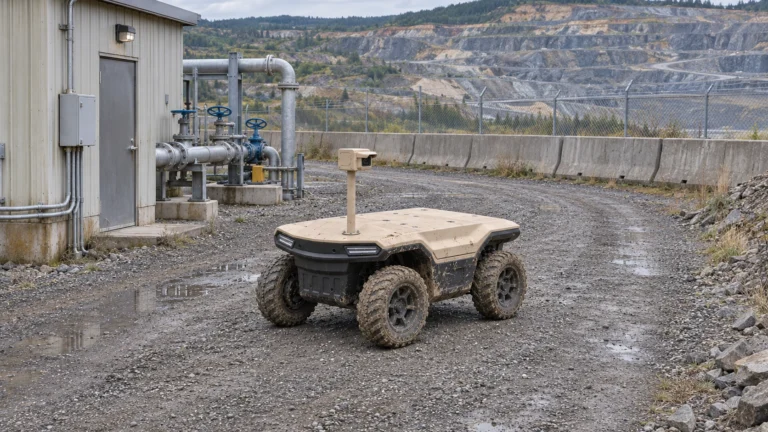


An inspection UGV cost evaluation should compare the cost of delivering the same useful task over the same period. Purchase price alone cannot show what a camera-equipped robot will cost to operate. Count the installed system, the people and the site work, then divide the relevant total by accepted tasks rather than distance travelled.
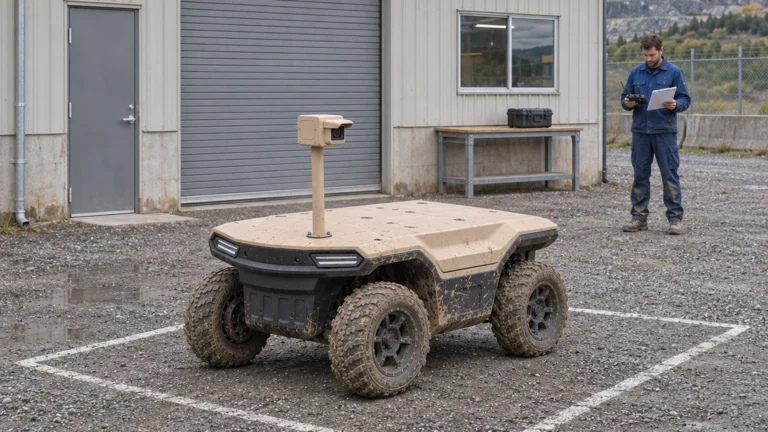
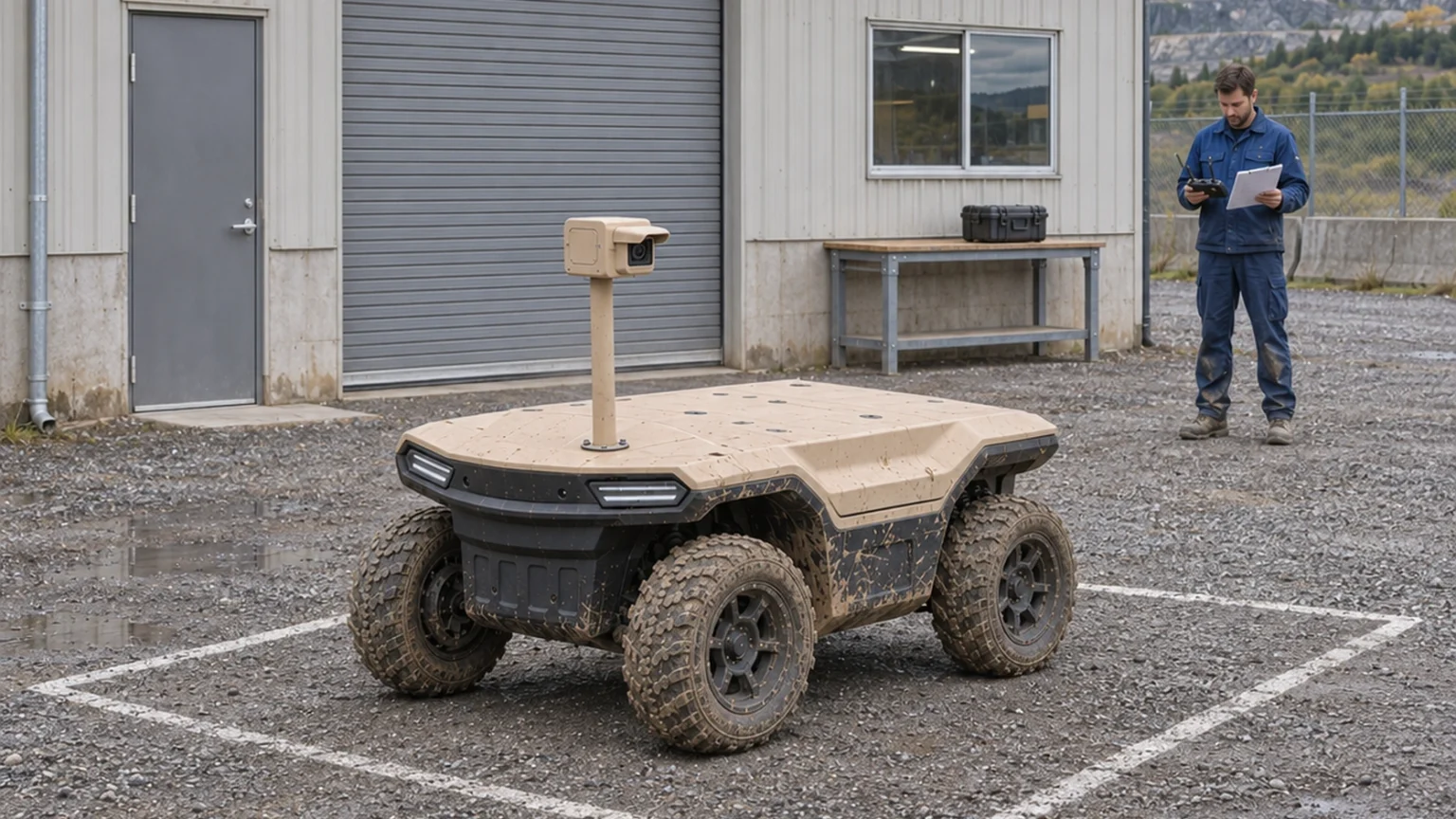
Delta 150 is JINJIA’s four-wheel UGV in the 150 kg payload class. AGV here means Autonomous Ground Vehicle within a defined operating scope; Automated Guided Vehicle is another industrial meaning. Payload, control functions, integration and support need project confirmation. The service-bay illustration is a concept, and this guide provides a calculation method rather than a Delta price or savings claim.
At a glance
• Use the same task definition, currency and time boundary.
• Include human review, charging, recovery and support effort.
• Keep cash spending removed separate from staff hours released.
Contents
Define equipment, integration, site and recurring costs
Use accepted tasks as the denominator
Measure remote operation, charging and maintenance hours
Separate cash savings from released staff time
Test base, conservative and optimistic assumptions
Choose purchase, adjustment or stop conditions
Frequently asked questions (FAQ)
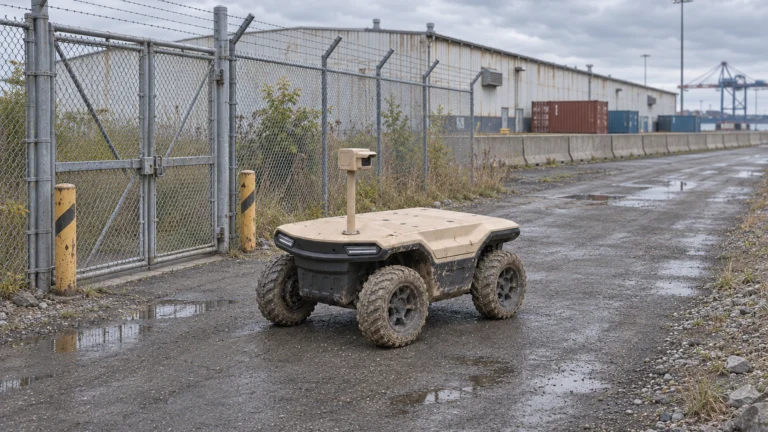
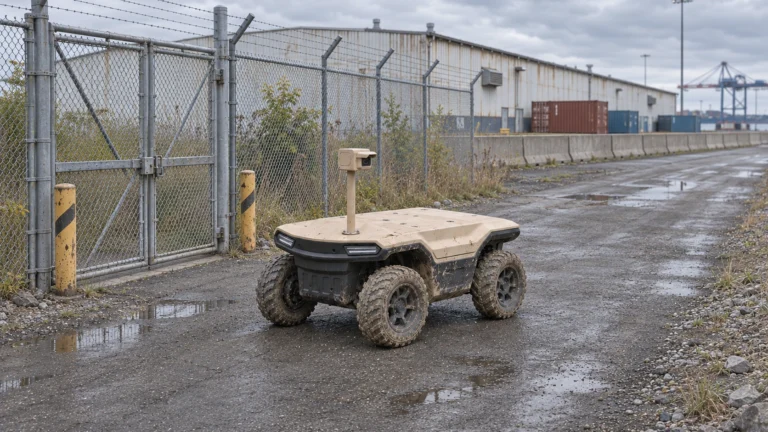
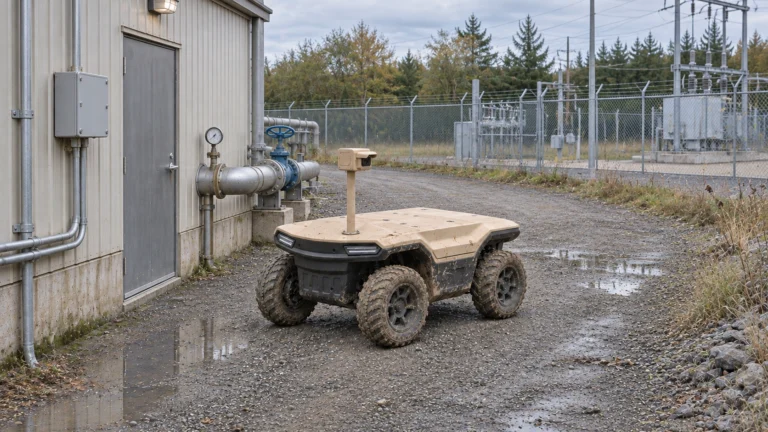
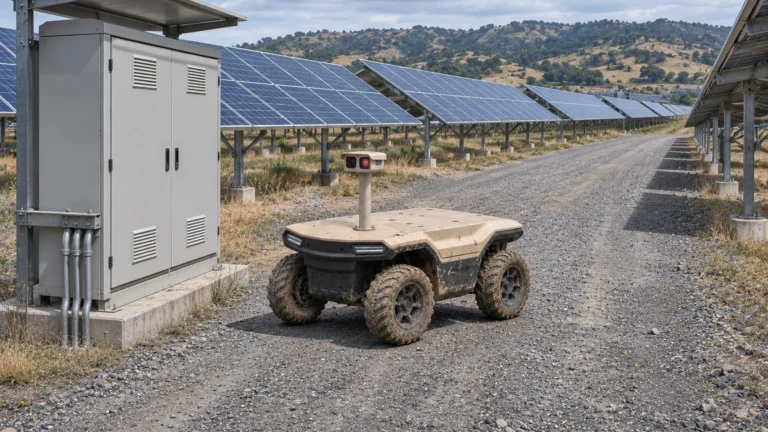
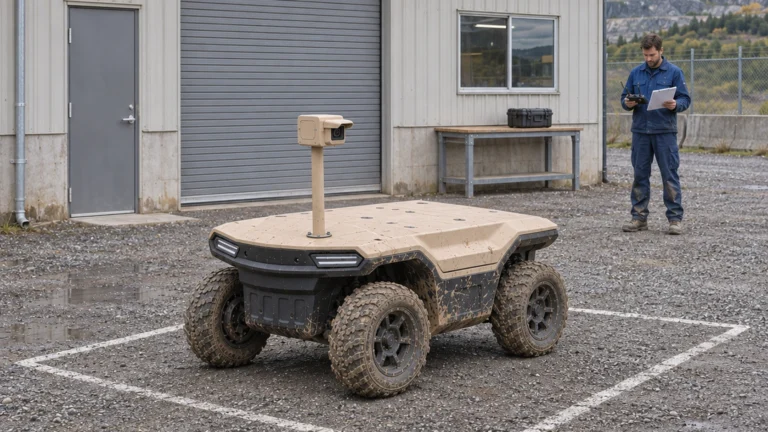
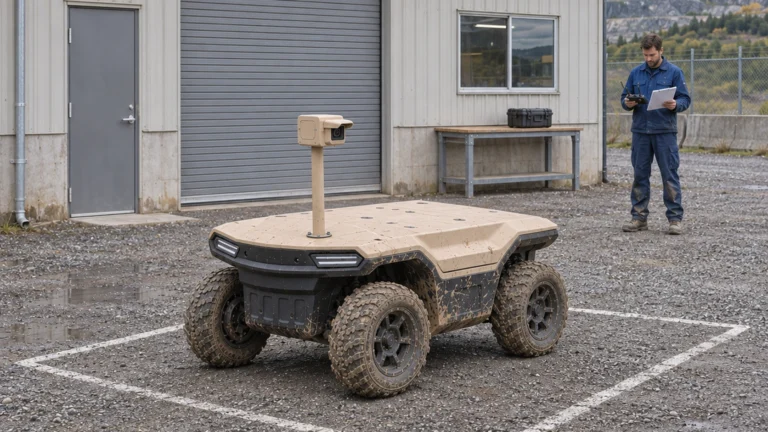
AI concept: proposed task-equipped Delta 150; configuration subject to confirmation.
Define equipment, integration, site and recurring costs
Build a cost register for the complete proposed configuration: chassis, payload, mounting, control equipment, communications and any supplied charging equipment. Add engineering, software or security-platform integration, route preparation, acceptance, training and mobilisation where applicable. Ask whether transport, import charges, taxes and destination work are included in a quotation. Keep unknown amounts visible instead of entering zero.
Separate initial costs from annual support, licences, communications, energy, maintenance and replacements. Assign every line an owner, source, date, currency and inclusion rule so that a support bundle is not counted twice. GAO’s cost guidance supports documenting assumptions and revising estimates with actual data. Its method does not supply prices or validate a Delta installation.
Use accepted tasks as the denominator
Define a task with the receiving team: for example, one scheduled observation at a named point with the required detail, original timestamp and usable record. Keep scheduled, attempted and accepted counts separately. A route completed with blurred images has consumed resources without delivering all its intended observations. Include failed attempts and later manual rework in the cost record.
Cost per accepted task equals the relevant total cost divided by accepted tasks within the same evaluation period. Use an identical acceptance rule for the current method and the robot proposal. If no task is accepted, report that the ratio is unavailable and investigate the failure; do not display a zero unit cost. Different coverage or service quality must remain visible alongside the ratio.
Measure remote operation, charging and maintenance hours
Log preparation, supervision, remote interventions, record review, charging or battery handling, cleaning, maintenance coordination and physical recovery. Use actual people-hours: two people working together for an hour contribute two hours. Avoid adding overlapping activity durations twice. Record waiting time separately when it ties up staff or interrupts the service.
Multiply the agreed annual workload by an appropriate loaded hourly cost, with its basis stated. Do not assume one operator can supervise an unlimited fleet or that automatic docking removes all replenishment work. Measure the fitted payload and operating pattern during a bounded trial. Keep vehicle availability, task acceptance and staff availability separate so that one strong figure does not hide a weak operating process.
Separate cash savings from released staff time
Identify which existing payments would actually cease or reduce: a specific contracted round, overtime or another documented expense. Name who can authorise the change and when it can happen. Reassigned staff hours can create capacity without reducing payroll. Report those hours as released capacity unless the organisation has evidence of a corresponding cash reduction.
Do not add a monetised time estimate to the same payroll saving twice. Keep service improvements, reduced exposure and broader coverage as separate decision factors with their own evidence. They may matter even when the narrow cash case is weak, but they should not become invented revenue. Compare the proposal with the feasible baseline, including any manual tasks that must remain.
Test base, conservative and optimistic assumptions
Prepare three internally consistent cases using the same task and currency. Vary justified drivers such as accepted-task fraction, intervention hours, maintenance burden and recurring charges. Give each value a source and confidence level. Change one uncertain input at a time as an additional sensitivity check; a favourable combination of unrelated best cases is not a reliable operating forecast.
The accompanying workbook provides blank scenario inputs and guarded arithmetic. It totals full upfront cost plus annual costs over the chosen years, without discounting or residual-value credit. It reports accepted tasks, unit cost, cash removed and released hours separately. It is not a complete financial forecast: resolve tax, financing, inflation, disposal and residual value in the organisation’s wider model where relevant. Zero accepted tasks and incomplete inputs cannot produce a valid unit cost.
Choose purchase, adjustment or stop conditions
Agree decision thresholds before reviewing results: required task quality, maximum operating burden, affordable full-scope cost and evidence still needed. Proceed only within the tested configuration and conditions. If the case depends on an unconfirmed interface, unattended operation or a sharp improvement in acceptance, treat that dependency as an action to resolve rather than a benefit already earned.
A limited additional trial should close a named uncertainty with an owner, resource limit and end date. Adjust the route or payload when that can deliver the required task within an acceptable burden; stop when permissions, usefulness or economics remain unsuitable. Send JINJIA the task, route, payload, shifts and interfaces for a scoped estimate. Delta 500 and Delta 1000 require their own cost and task validation.
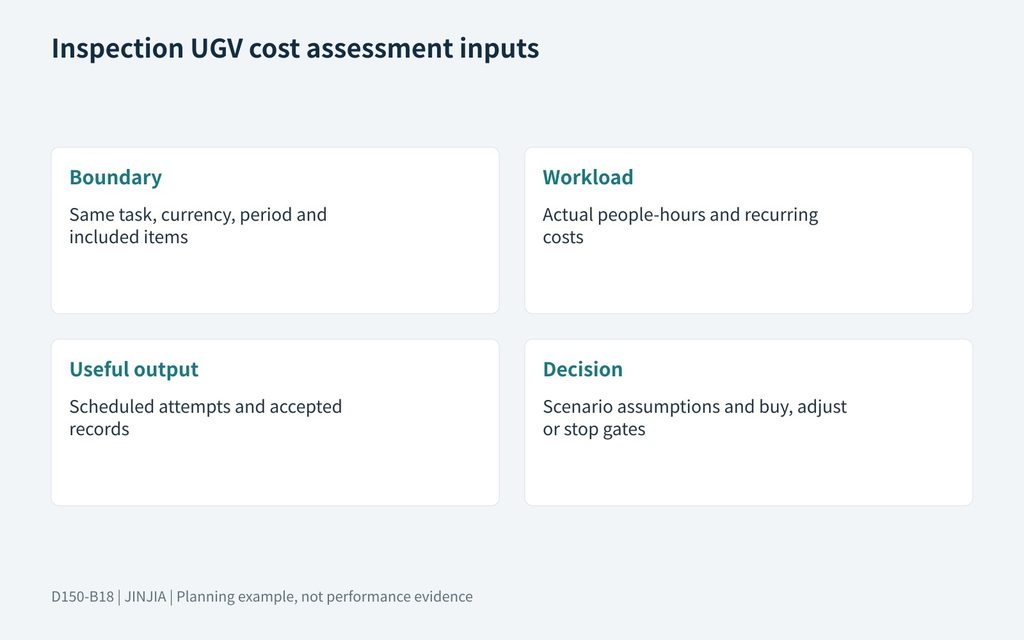
JINJIA planning framework; example inputs are not test results.
| Cost decision | Evidence to retain |
| Boundary | Same task, currency, period and included items |
| Workload | Actual people-hours and recurring costs |
| Useful output | Scheduled attempts and accepted records |
| Decision | Scenario assumptions and buy, adjust or stop gates |
Frequently asked questions (FAQ)
A: The scoped installed system, integration, site work, people, energy, maintenance and support over one stated period.
Q: Should cost be divided by kilometres?
A: Use accepted tasks for task economics; distance can remain a separate operating measure.
Q: What if no tasks are accepted?
A: Report unit cost as unavailable and examine the reasons; zero is not a valid result.
Q: Are released hours cash savings?
A: Only a demonstrated reduction in actual payments is cash savings; capacity released is reported separately.
Q: Does the workbook forecast financial return?
A: No. It provides undiscounted scoped arithmetic with full upfront cost and no residual-value credit.
Q: Can Delta 150 costs be copied to larger models?
A: No. Validate each configuration, workload, support arrangement and accepted task separately.
Sources and further reading
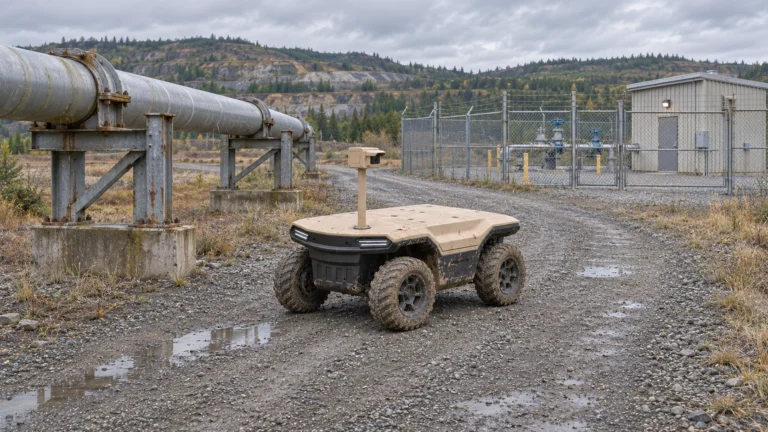
Platform context; integration scope requires project confirmation.
GAO — Cost Estimating and Assessment Guide
General estimation discipline: document scope and assumptions, examine uncertainty and update estimates with actuals; no Delta price or cost result.