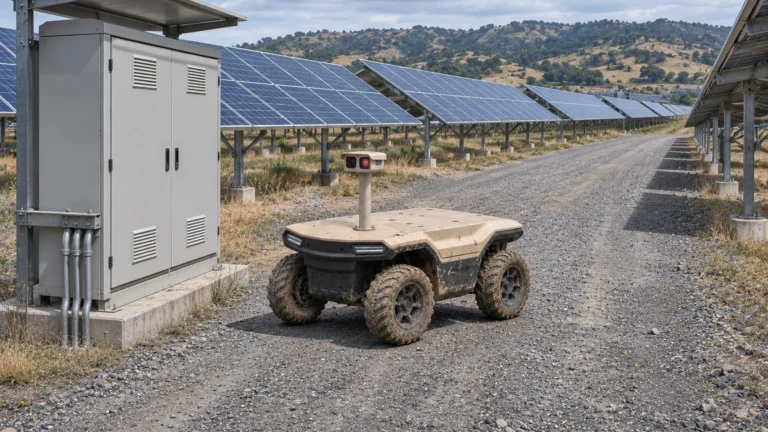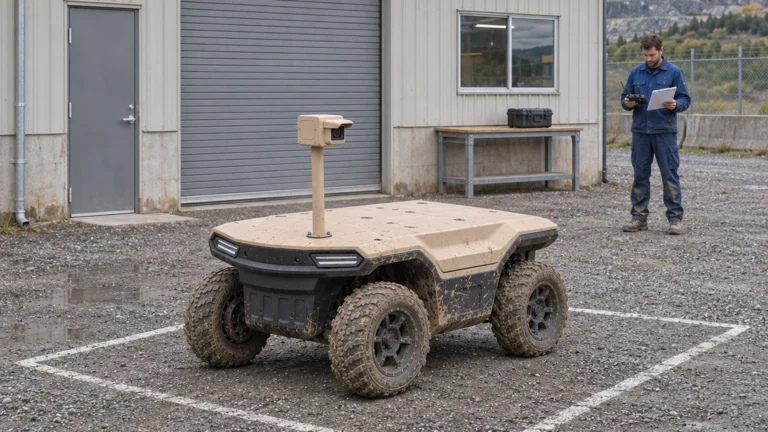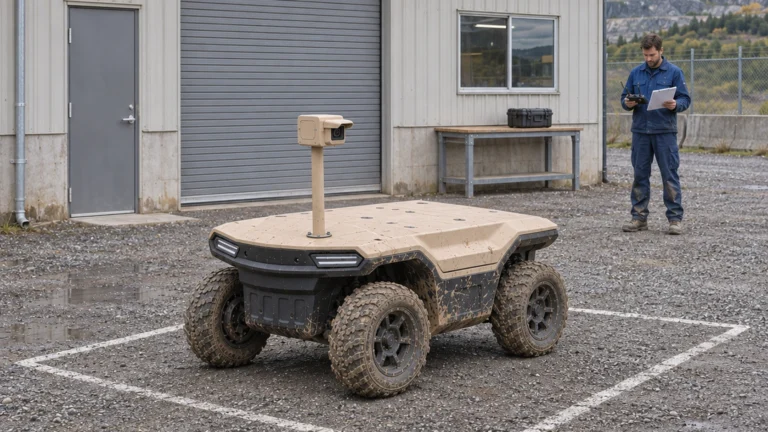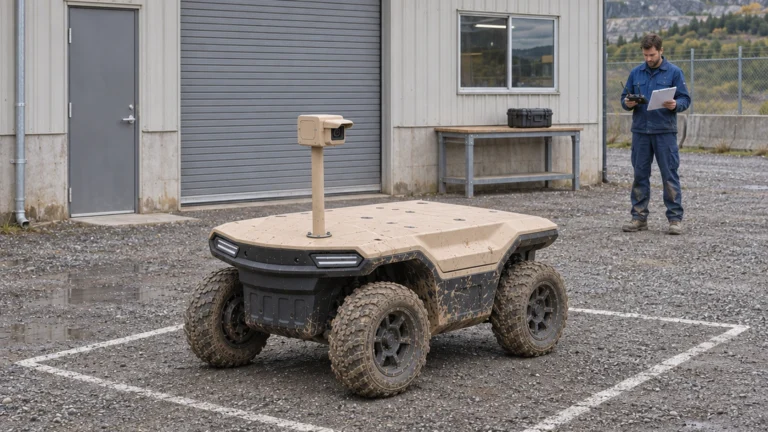











The civilian history of articulated tracked vehicles reaches beyond any single model. Swedish forestry research records a two-body concept displayed in 1958, while the Bv202 and BV206 became well-known milestones in the Swedish vehicle lineage. Later documented civilian applications include Antarctic scientific logistics, community assistance after disasters and snowstorm relief. These examples explain how the category evolved; they do not establish a modern JINJIA vehicle’s specification or field record.
Contents
The early forestry transport problem
1958: a documented articulated concept
Bv202 and BV206: separating the historical milestones
From polar science to civilian emergency assistance
What history can — and cannot — tell a modern buyer
Frequently asked questions (FAQ)
References, photo credits and licence boundaries
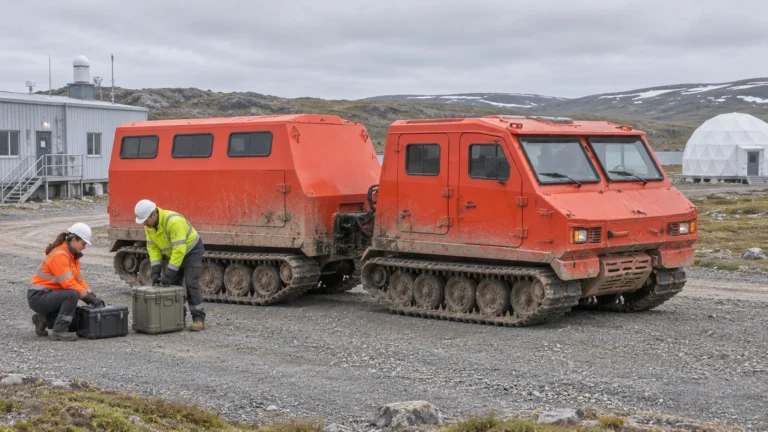
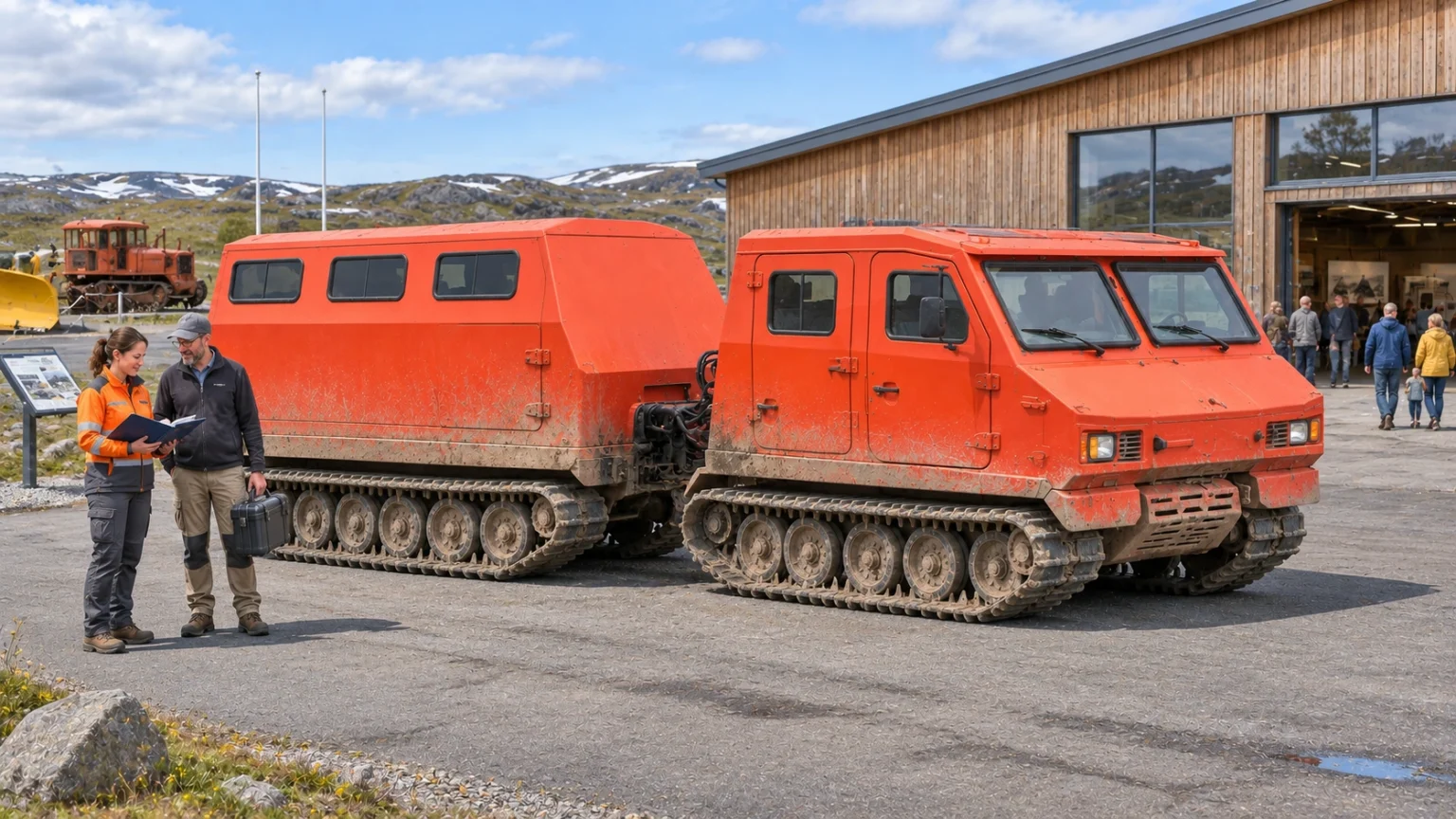
Contemporary AI concept of a civilian two-section tracked transport vehicle at an outdoor heritage-centre event. Not an archival image, not a delivered JJ117 or a verified configuration.
The early forestry transport problem
The history begins with a practical question: how could people, seedlings and forestry supplies reach workplaces when winter conditions made ordinary access difficult? Bo Ager’s historical study of Swedish mechanisation describes tracked machines being used for forestry support, including snow preparation and the transport of workers and planting materials [S1]. The record matters because it places the transport problem in a working civilian landscape.
However, an account of a snow machine does not automatically describe a two-section articulated carrier. Historical terminology varies, and different machines answered related needs in different ways. For that reason, it is useful to separate early tracked transport from a specifically documented connected-body concept.
This article follows the civilian significance of the category, rather than assigning a single worldwide invention date. A documented early exhibition is stronger evidence than a claim of priority that no cited archive establishes.
1958: a documented articulated concept
The Swedish forestry history identifies a 1958 presentation at the Stockholm Technical Fair. Sandbergs Mekaniska Verkstad displayed a concept involving two connected tracked bodies, with variants intended for carrying people and timber [S1]. This is a documented milestone in the history of the category.
Nevertheless, the distinction between a concept and an operating fleet is important. The exhibition establishes that the idea was presented. It does not demonstrate continuous forestry service, a verified delivery programme or the capabilities of a later vehicle. Consequently, the timeline identifies this entry as an exhibition, not as a commercial deployment.
The two intended roles also show an early separation of transport tasks. Passenger movement and material transport are different requirements, even if both are associated with the same broad vehicle family. Modern purchasing documents should still distinguish them.
Bv202 and BV206: separating the historical milestones
The Kalixlinjens Museum traces Bv202 development to the 1950s and describes it as a vehicle designed for difficult northern conditions [S2]. It is an earlier member of the Swedish lineage. The museum account establishes historical context, not a verified civilian customer history for every vehicle.
For the successor BV206, sources describe different moments. Bay Search and Rescue’s historical summary identifies 1974 as the beginning of the successor procurement process and 1981 as the beginning of production [S4]. The Gösta Hägglund Foundation identifies a 1979 order milestone in its institutional history [S3]. Thus, the dates refer to separate stages rather than competing claims about a single birthday.
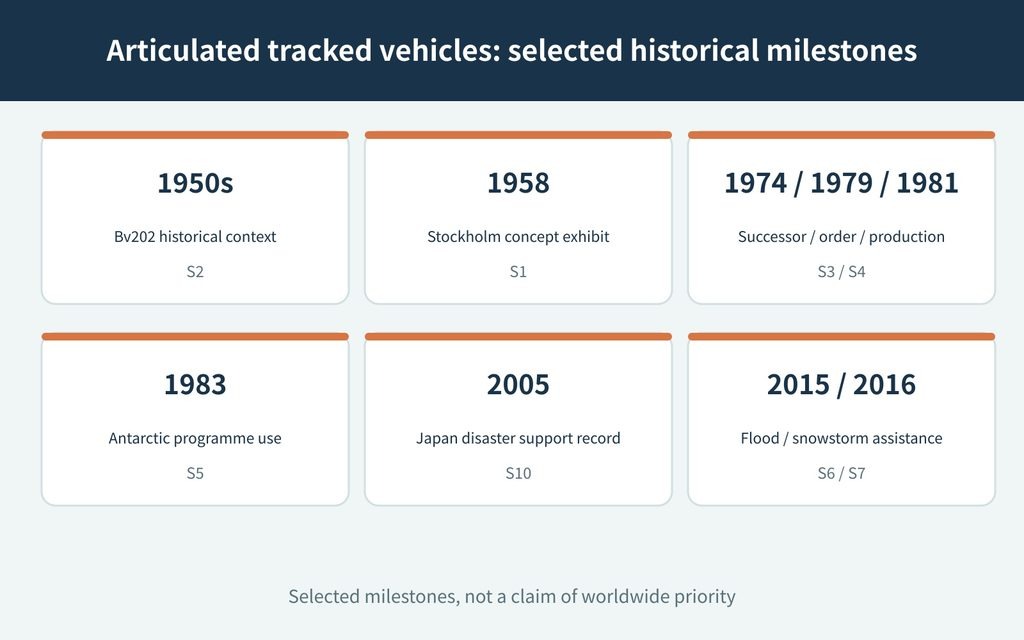
Selected milestones; development, production, exhibition and civilian use are distinct events. Not a claim of worldwide priority.
This chronology is intentionally limited to model-history milestones. It does not transfer specifications, performance figures or operational capabilities from one model to another. When reading older literature, distinguish model development, orders, production and the date when a particular civilian organisation began using its fleet.
From polar science to civilian emergency assistance
Antarctic scientific logistics provides a documented civilian example. The Australian Antarctic Program says Hägglunds vehicles have supported its work since 1983, carrying people, scientific equipment and supplies [S5]. The dated New Zealand photograph at Castle Rock on Ross Island shows a BV206 in a polar setting [S8]. It is a separate organisation’s photograph, not an image of the Australian fleet.
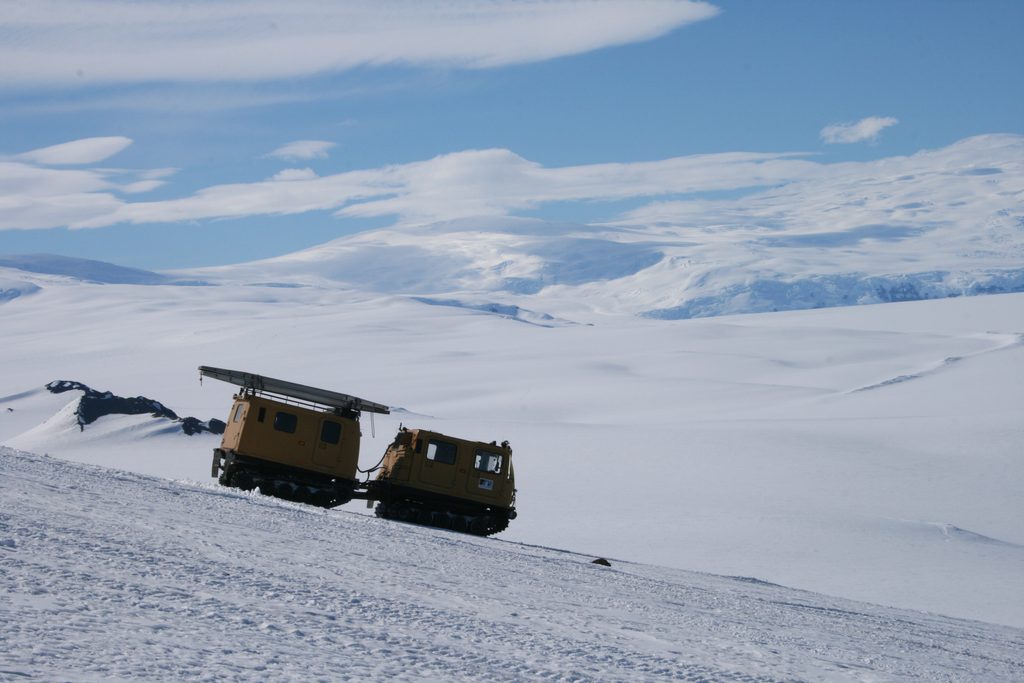
New Zealand Antarctic scene, 25 Dec 2008. Tas50 • CC BY 3.0 [S8; S12]. Scaled with margins.
A second archival image records the McMurdo Sea Ice School in 2010 [S9]. People in cold-weather clothing stand beside a tracked vehicle. The photograph illustrates an educational field context; it does not establish the details or safety limits of a particular trip. Both polar photo records are distinct from manufacturer claims.
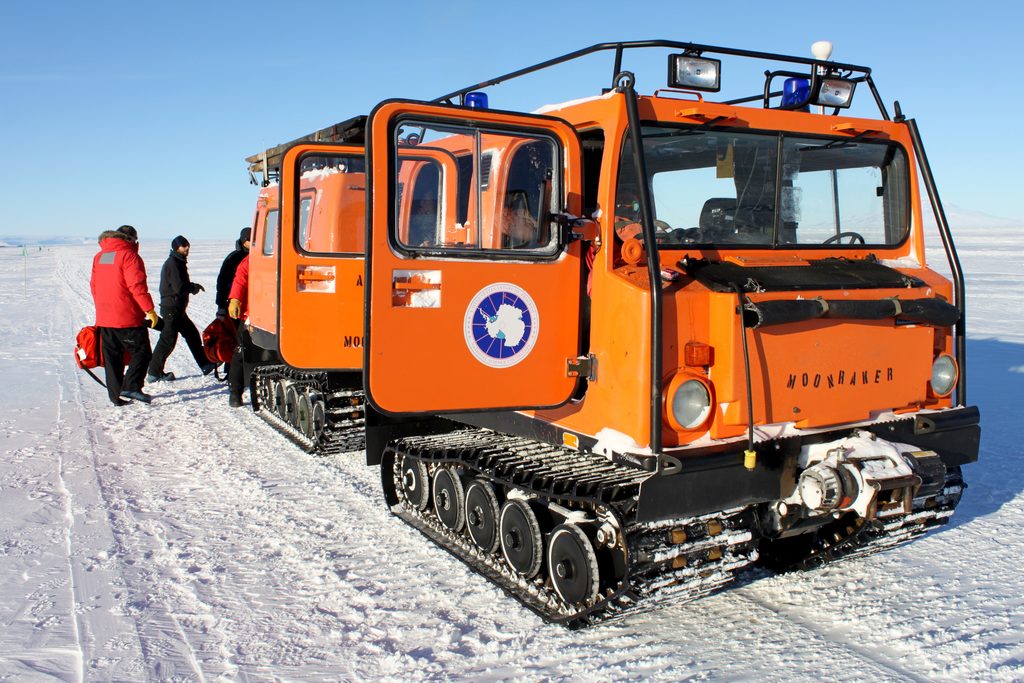
McMurdo Sea Ice School, 29 Sep 2010. Eli Duke • CC BY-SA 2.0 [S9; S13]. Scaled with margins.
Japan offers another example. A photograph credited to the Ministry of Land, Infrastructure, Transport and Tourism’s Hokuriku Regional Development Bureau is dated 1 December 2005. Its description records the dispatch of a BV206 to former Yamakoshi village to support tasks such as removing snow from roofs after the 2004 Mid-Niigata earthquake [S10]. The date is that of the record, not the earthquake itself. The surviving image is small, so it is presented as a historical record rather than detailed vehicle photography.
Civilian post-earthquake assistance record, 1 Dec 2005. Original low resolution. MLIT Hokuriku Regional Development Bureau • CC BY 4.0 / Public Data License 1.0 [S10; S14].
Civilian rescue accounts also document a role during adverse weather. A Bay Search and Rescue volunteer describes a BV206 assisting with transfer of a patient during the December 2015 floods [S6]. A Rapid City Fire Department report describes a Hägglunds vehicle helping people stranded during the 2016 Christmas snowstorm [S7]. Those cases are evidence of named organisations’ work, not general proof of suitability for all flood or snow conditions.
What history can — and cannot — tell a modern buyer
The recurring civilian theme is transport: people, ordinary equipment and supplies must reach an authorised point. However, the fact that a historical vehicle was used for such a task does not prove that a different modern vehicle is qualified for it. This is especially important when a photograph shows a body arrangement rather than its approved specification.
Use the accompanying historical evidence workbook to distinguish the date of a development milestone, the date of an institutional report, the date of a photograph and a documented civilian activity. It also leaves space to request the current manufacturer information and to record unknowns. Historical examples should inform questions, not substitute for technical documentation.
JINJIA / Response Mobility describes the JJ117 as a tracked utility vehicle platform on its current product page [S11]. The contemporary cover concept is illustrative and is not a historic BV206 or evidence of an actual delivered JJ117. Consult the manufacturer for the relevant civil configuration information. In this series, the next topic separates vehicle categories and their practical civilian applications.
Frequently asked questions (FAQ)
A: The cited Swedish study documents a concept displayed in Stockholm in 1958. It is not proof of the earliest vehicle in the world.
Q: Are Bv202 and BV206 the same model?
A: No. Bv202 is an earlier model; BV206 is a subsequent model in the Swedish lineage.
Q: Why do sources give different BV206 dates?
A: They refer to different stages, such as the successor process, an order milestone and production. A timeline should label each event separately.
Q: When did the Australian Antarctic Program begin using Hägglunds vehicles?
A: Its public programme page identifies 1983 as the start of their use in Antarctic activities.
Q: Do the Japan and rescue accounts prove every vehicle can carry out the same work?
A: No. They identify particular historical third-party cases; suitability for a new task requires relevant documentation and approval.
Q: Is JJ117 a BV206 variant or a modern vehicle with identical specifications?
A: No such relationship or equivalence is established by the sources. JJ117 is presented separately in JINJIA’s product information.
References, photo credits and licence boundaries
S1: Bo Ager — Swedish forestry mechanisation history (SLU, p. 15) — Academic historical study; forestry context and 1958 exhibition, not a world-first claim.
S2: Kalixlinjens Museum — BV 202A/T — Museum account of the earlier model; historical context.
S3: Gösta Hägglund Foundation — Hägglunds Historia — Institutional history; 1979 order milestone only.
S4: Bay Search and Rescue — Team / vehicles — Rescue organisation’s model history; 1974 and 1981 milestones.
S5: Australian Antarctic Program — Hägglunds tracked vehicles — Government programme’s record of scientific support since 1983.
S6: Rescue in the Bay — Emergency Flood Aid 1 — First-person account of the December 2015 civil flood assistance; not performance certification.
S7: Rapid City Fire Info — Hagglunds — Fire service report of civilian snowstorm assistance in 2016.
S8: Tas50 — Hagglund BV-206 in Antarctica (Commons) — P04 — Tas50, 25 December 2008; CC BY 3.0. Resized with margins, no alteration of content.
S9: Eli Duke — Antarctica: McMurdo Sea Ice School (Commons) — P09 — Eli Duke, 29 September 2010; CC BY-SA 2.0. Resized with margins, derivative photo retains the same licence.
S10: MLIT Hokuriku Regional Development Bureau — Yamakoshi photo (Commons) — P06 — MLIT Hokuriku Regional Development Bureau, 1 December 2005, CC BY 4.0 / Public Data License 1.0; original small image shown without enhancement.
S11: JINJIA / Response Mobility — Tracked Utility Vehicle — Manufacturer description of JJ117; no linkage or equivalence with historical models.
S12: CC BY 3.0 licence (P04) — Licence applicable to the P04 photo.
S13: CC BY-SA 2.0 licence (P09) — Licence applicable to the P09 photo and file-format/layout derivative.
S14: CC BY 4.0 licence (P06) — Licence applicable to P06.