

Solar can contribute to remote patrol coverage, but panels alone do not establish continuous service. Remote patrol robot charging needs an energy budget, sufficient storage and power, a workable charging schedule and a recovery plan. Check the complete system against the required coverage window.
Delta 150 is a compact 4×4 UGV in JINJIA’s 150 kg payload class. A solar powered AGV system is a proposed site architecture, not a standard Delta configuration. Here AGV means Autonomous Ground Vehicle; industrial usage can also mean Automated Guided Vehicle. Confirm every charging and docking interface for the selected project.
At a glance
• Measure vehicle charging demand and station standby loads separately.
• Use local seasonal solar data and test consecutive low-generation periods.
• Validate docking, charge confirmation and recovery as well as energy arithmetic.
Contents
Start with mission energy and standby loads
Map the chain from solar to storage to charging
Assess seasons and consecutive cloudy days
Validate docking and recovery from charging failures
Plan rotation, manual replenishment and backup
Reconcile energy balances with site acceptance
Frequently asked questions (FAQ)
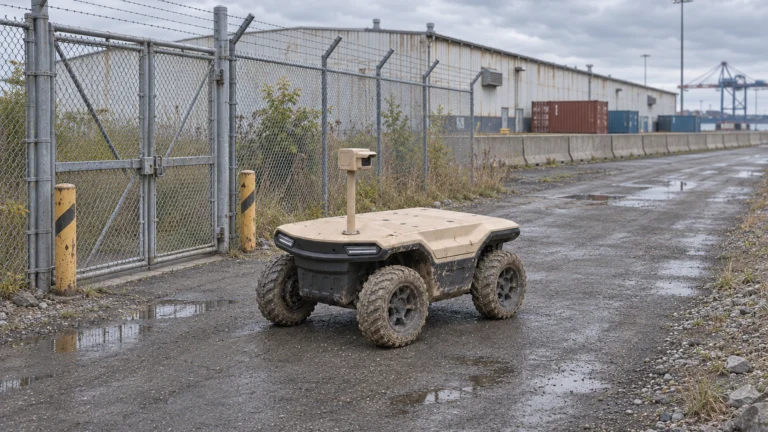
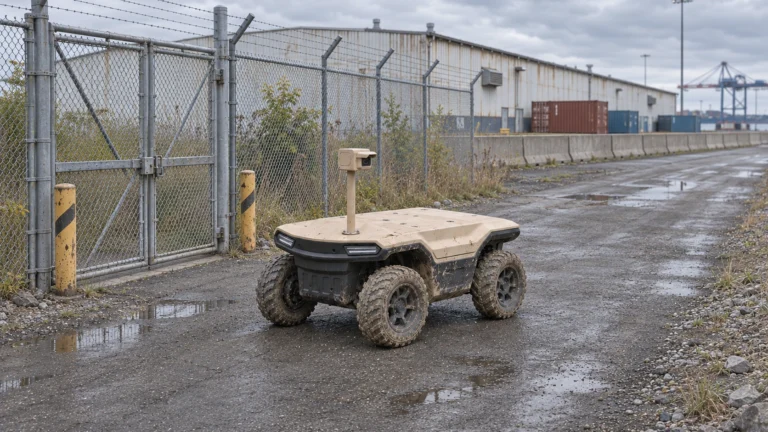
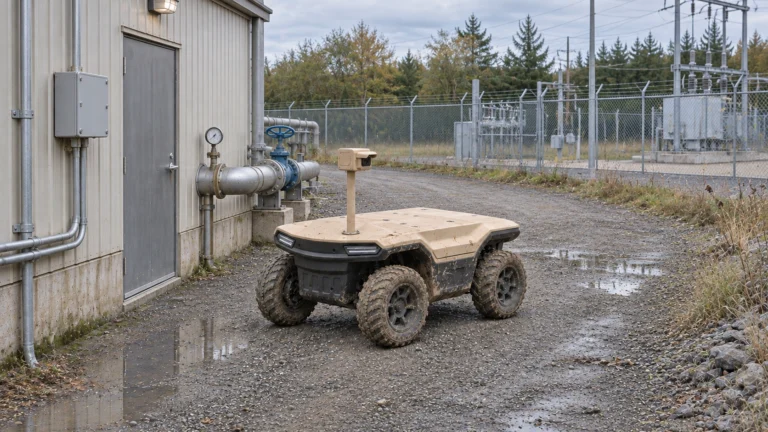
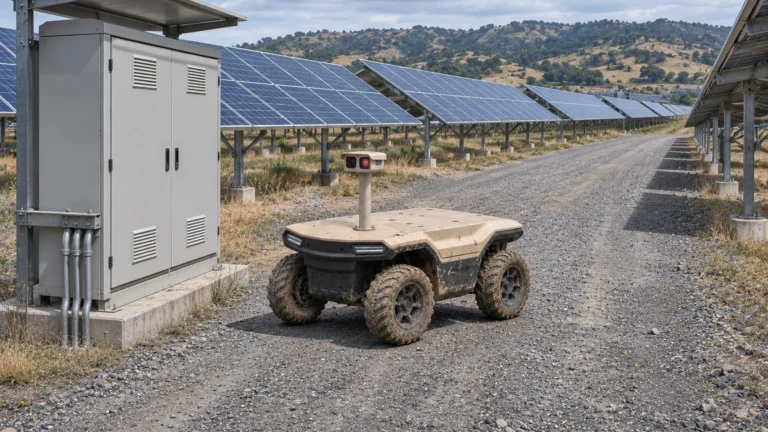
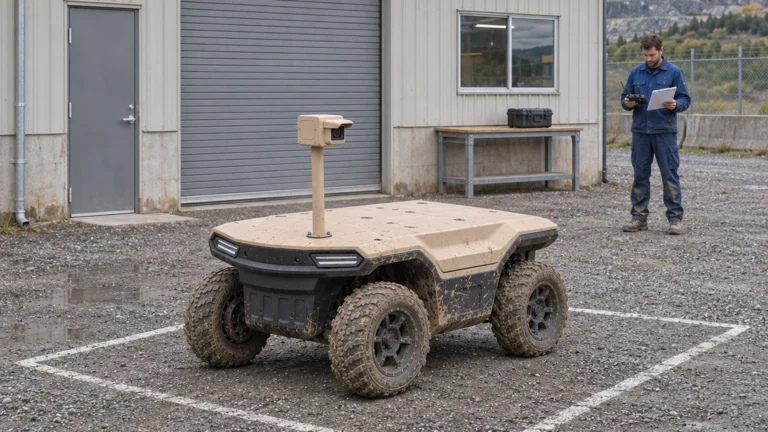
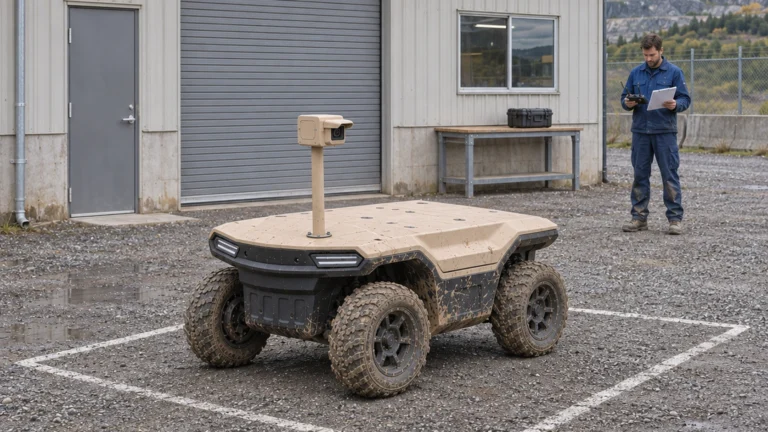
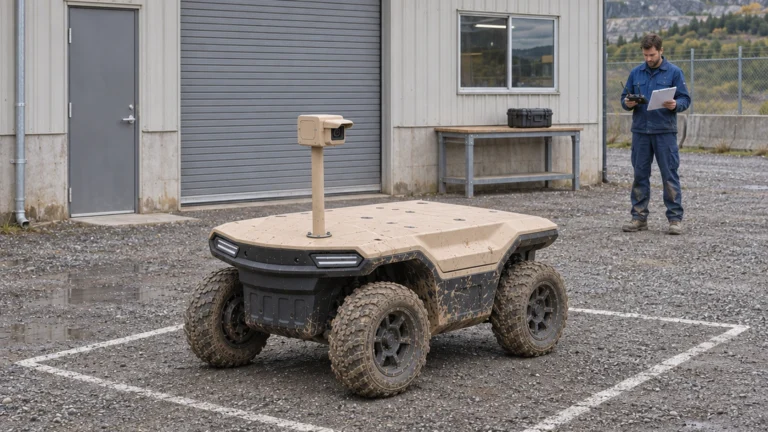
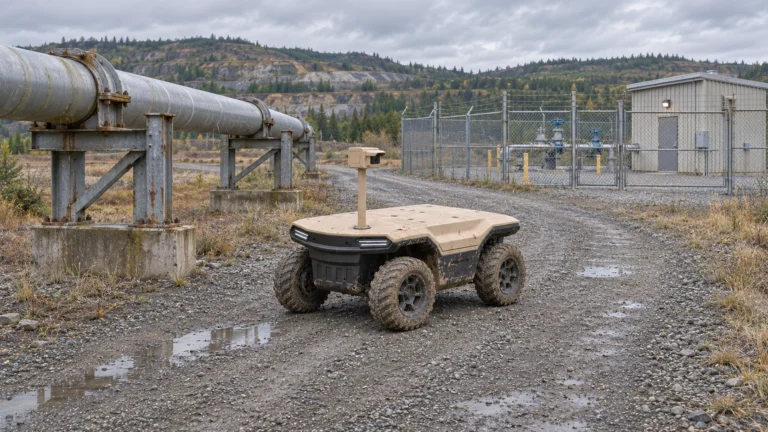
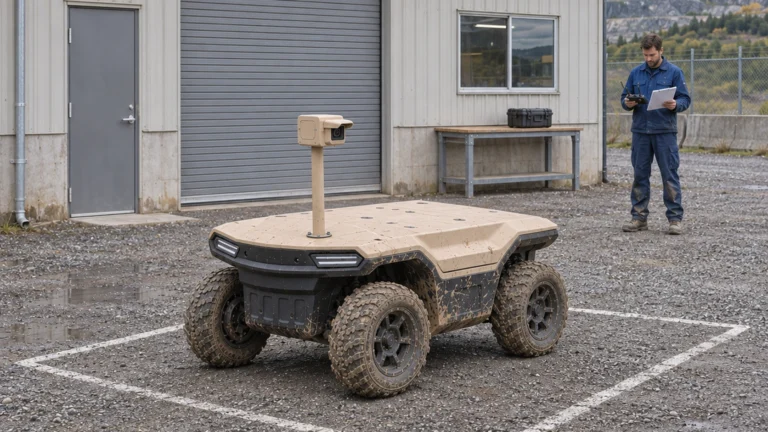
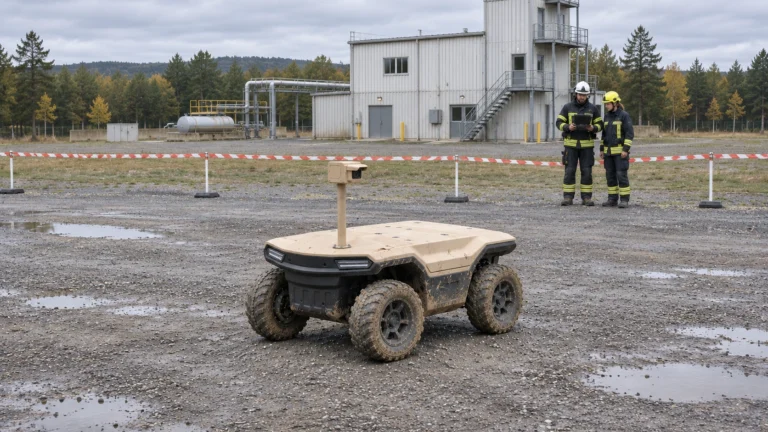
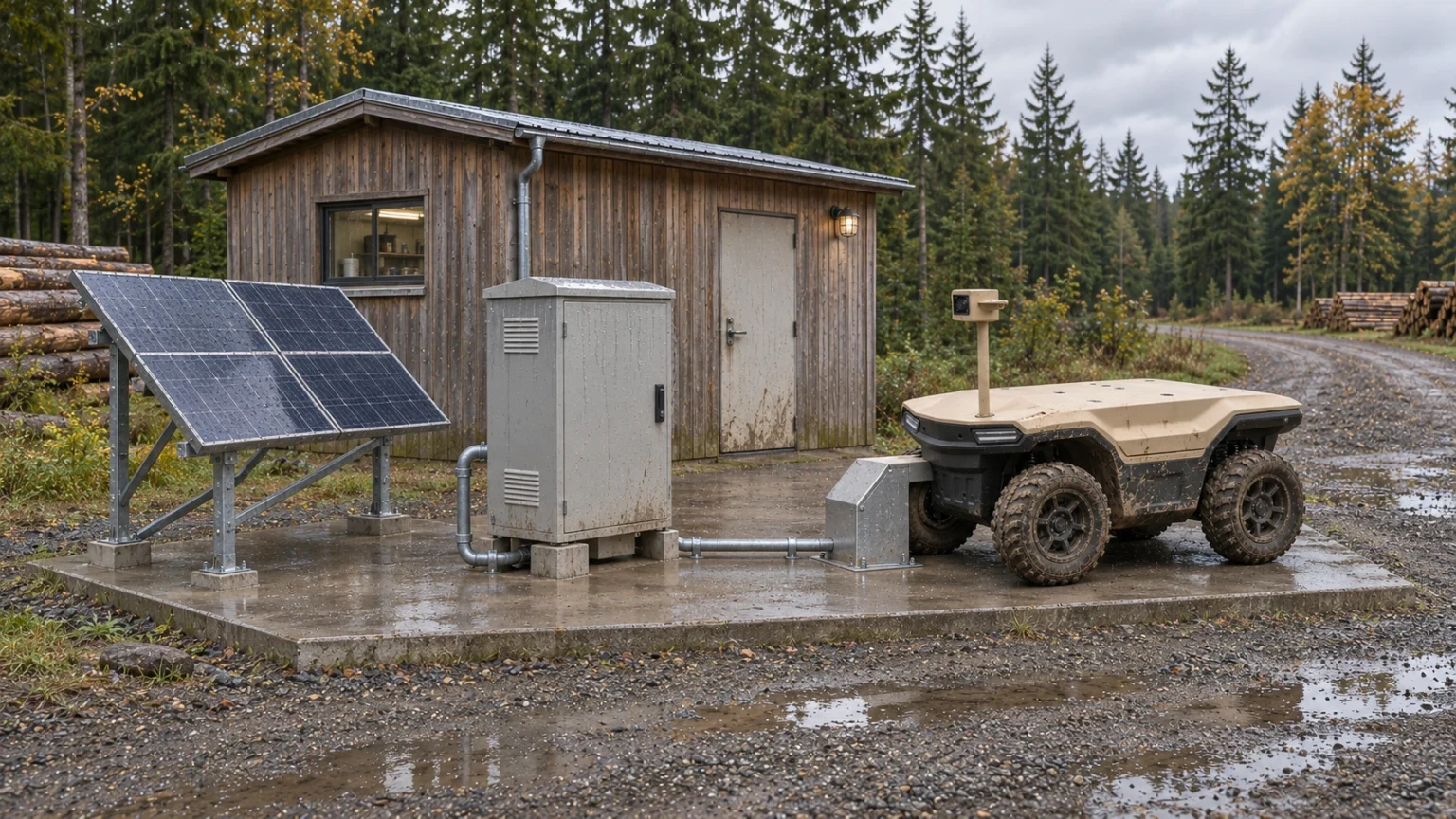
AI concept: proposed task-equipped Delta 150; configuration subject to confirmation.
Start with mission energy and standby loads
Begin with the measured duty cycle: driving, observation, waiting and return. Determine the energy that must actually reach the vehicle battery between tasks. Then identify the station’s own consumption, including communications, controller standby and any proposed enclosure conditioning. A camera-heavy patrol can consume energy even during long stops.
Choose a common calculation boundary. For example, record robot charging input at the station bus and list station loads separately. Include the losses between that bus and the vehicle battery once; do not use battery-side task energy as if it were charger input. Keep peak charger demand separate from daily kilowatt-hours, since enough stored energy does not prove sufficient instantaneous power.
Map the chain from solar to storage to charging
Draw the proposed chain: solar array, regulation and protection, stationary storage, conversion or charger, vehicle interface and battery. Confirm voltage, current, environmental suitability and control responsibilities for each connection. DOE’s storage guidance distinguishes energy capacity from power capacity and notes that storing and retrieving energy involves losses.
Place the solar rack where the site survey supports it; do not infer output from a picture of panels beside a robot. Storage can shift daytime production to a later charging window, but it cannot create missing energy. The concept images show component roles only. Panel area, storage size, charger hardware and autonomous docking remain subject to engineering confirmation.
Assess seasons and consecutive cloudy days
Use the actual location, orientation, shade and seasonal task profile. PVWatts supplies preliminary grid-connected PV production estimates; it does not, by itself, model an off-grid patrol service or prove a battery dispatch strategy. Record the weather dataset and assumptions rather than quoting annual sunshine as a charging guarantee.
Test sequences of low-generation days against the time-dependent load. NASA POWER provides resource parameters for consecutive low-sun periods and monthly deficits. A favourable annual energy balance can still hide a winter or multi-day shortfall. Define the design period and an agreed tolerance for interrupted coverage before choosing storage or backup. No universal number of reserve days fits every patrol site.
Validate docking and recovery from charging failures
Treat arriving at the station, aligning, establishing the electrical connection and confirming energy transfer as separate events. A navigation waypoint at the charger is not evidence of successful docking. Measure attempts, time to confirmed charging, interruptions, misalignment and the battery condition at release. Identify what evidence the supervisor sees.
Agree the response to a blocked approach, dirty contact, unavailable power or failed charge confirmation. Limit retry attempts under the approved procedure and preserve enough energy for the agreed recovery action. Do not assume that route-following software includes autonomous charging. The installed station and robot must pass their joint interface and site tests.
Plan rotation, manual replenishment and backup
Build a service timeline with vehicle work, charging, inspection and unavailable periods. A second robot helps only if it is ready and the station can support the planned overlap. Likewise, a spare charger is useful only if its electrical interface and the site supply are compatible. Document the operator’s responsibilities during each transition.
Compare supported manual charging, vehicle rotation and a separately designed backup source. Establish the trigger for reduced patrol frequency or manual intervention when stored energy falls. Do not label the arrangement continuous or unattended until both the coverage and fault response have been demonstrated. Battery swapping, generator connection and remote reset are project options to confirm, not assumed capabilities.
Reconcile energy balances with site acceptance
For illustration only, suppose a site needs 8 kWh per day at the chosen boundary and produces 6 kWh net on each of three days. The cumulative deficit is 6 kWh before additional reserve. These are hypothetical numbers, not a Delta system size. A daily total still misses charging peaks, overnight timing and storage limits.
The supplied workbook tracks a seven-day balance using entered net solar, backup, robot charging, fixed loads and remaining losses. It reports energy shortfall and excess beyond the entered usable storage window. It does not simulate power limits or guarantee coverage. Acceptance should reconcile measured energy, charge state, docking success and backup recovery through representative cycles. Send JINJIA the daily duty cycle, site resource, equipment loads and permitted charging windows.
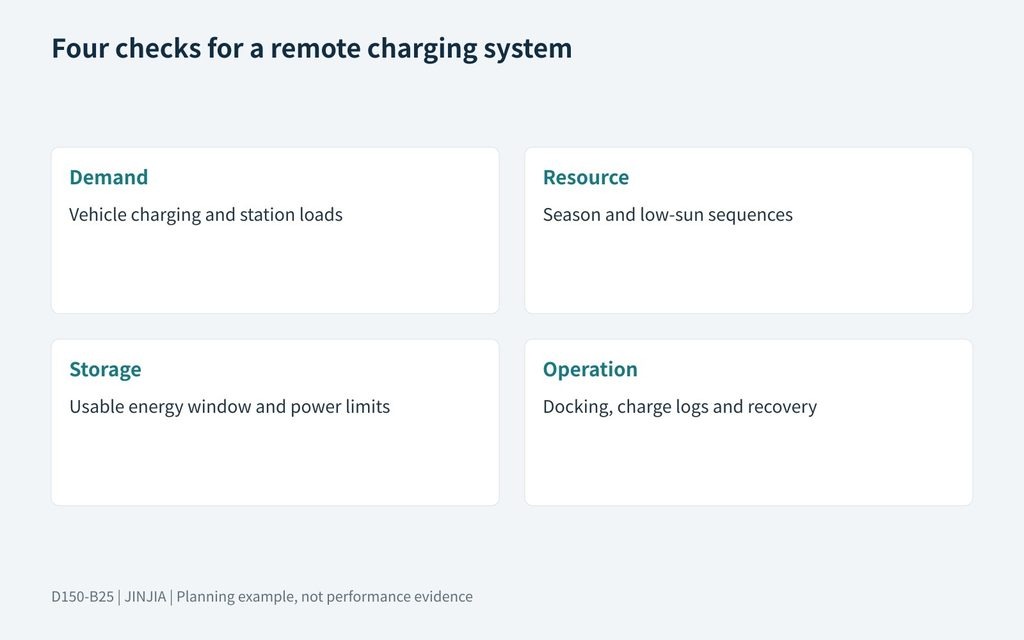
JINJIA planning framework; example inputs are not test results.
| System layer | Evidence to obtain |
| Demand | Vehicle charging and station loads |
| Resource | Season and low-sun sequences |
| Storage | Usable energy window and power limits |
| Operation | Docking, charge logs and recovery |
Frequently asked questions (FAQ)
A: No. Validate generation, storage, charger power, duty scheduling and recovery as a complete system.
Q: Does a solar powered AGV system describe a standard Delta 150 package?
A: No. It is a proposed architecture requiring project-specific equipment and interface confirmation.
Q: Is PVWatts an off-grid patrol availability simulator?
A: No. Its stated scope is preliminary grid-connected PV production estimation.
Q: Does reaching a charging waypoint prove successful charging?
A: No. Confirm alignment, electrical connection and actual energy transfer with the installed system.
Q: How many cloudy days must storage cover?
A: Choose a site-specific design period and service requirement using local data and a backup plan; there is no universal patrol value.
Q: Are the pictured panels and cabinet a sized station?
A: No. The images show an integration concept; capacity, hardware and autonomous docking are unverified.
Sources and further reading
Vehicle task and interface context; solar, storage and autonomous docking require a separate project definition.
US DOE — solar energy and storage basics
General distinction between generation, stored energy and output power, including losses; not a Delta station specification.
PVWatts — model scope and assumptions
Preliminary grid-connected PV production estimates; not an off-grid robot availability calculation.
NASA POWER — solar storage design parameters
Reference on consecutive low-sun periods and monthly resource deficits; no vaccine-refrigerator autonomy requirement is applied to robots.