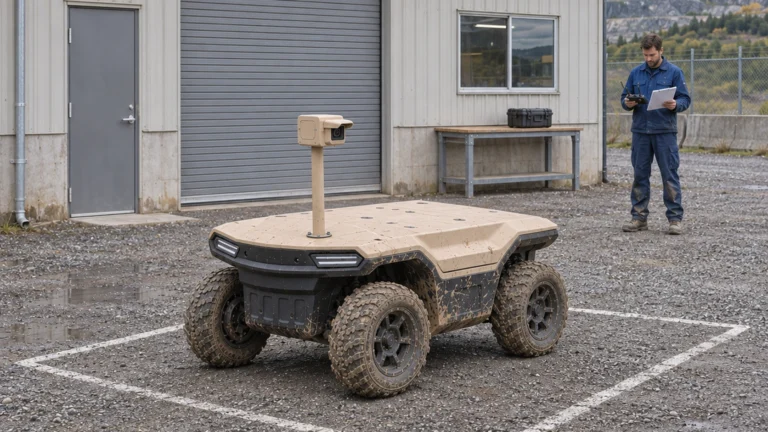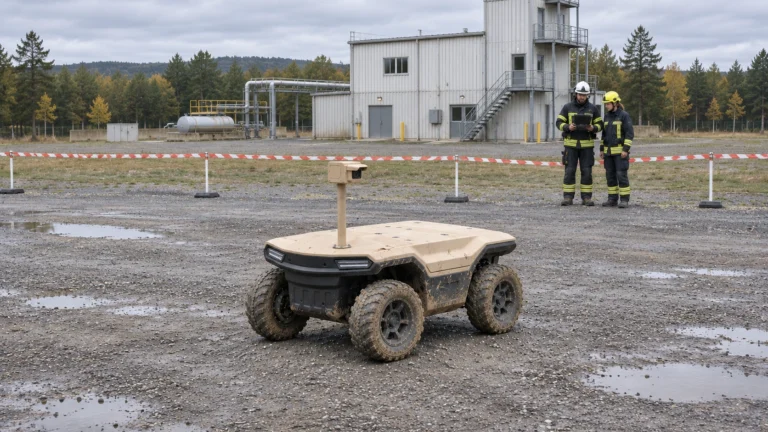


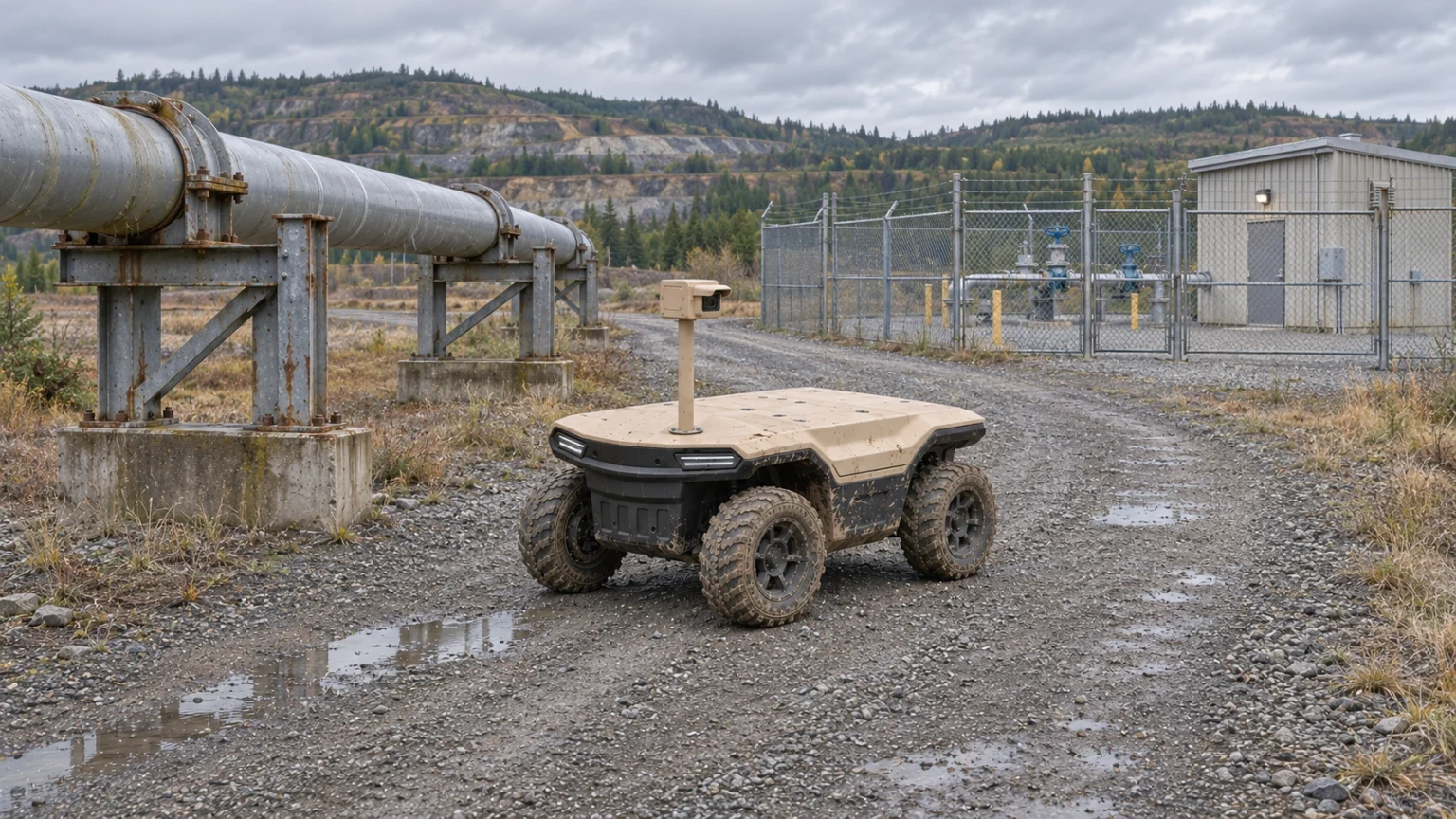
A pipeline patrol UGV is useful when it returns an identifiable observation that the maintenance team can compare and act on. Define the asset, permitted viewing position and question before selecting the machine. Repeated travel along a corridor does not by itself establish inspection quality or pipeline integrity.
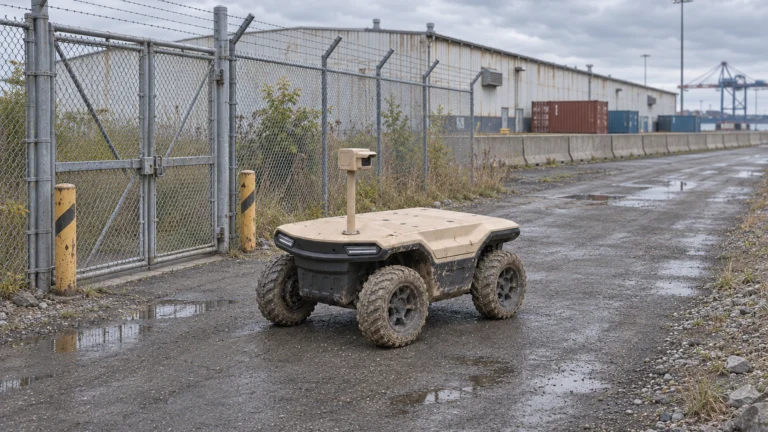
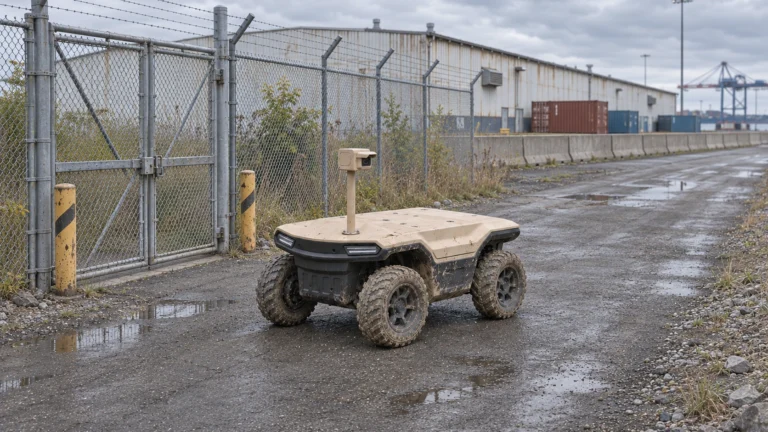
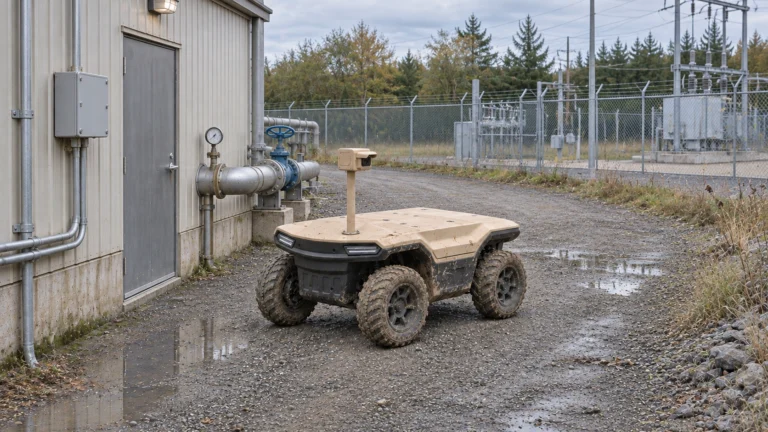
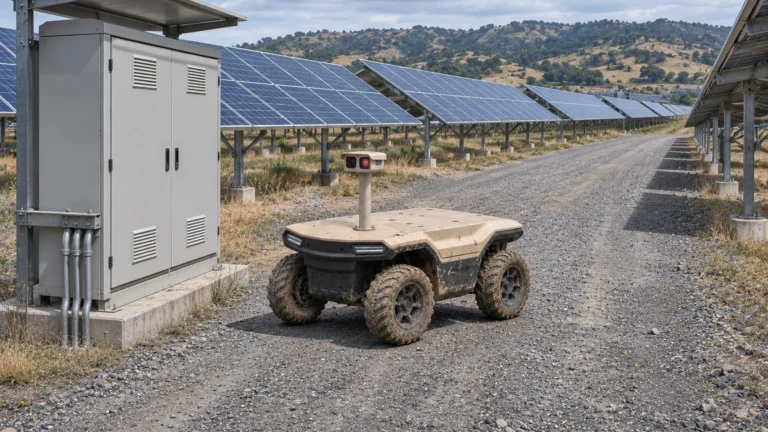
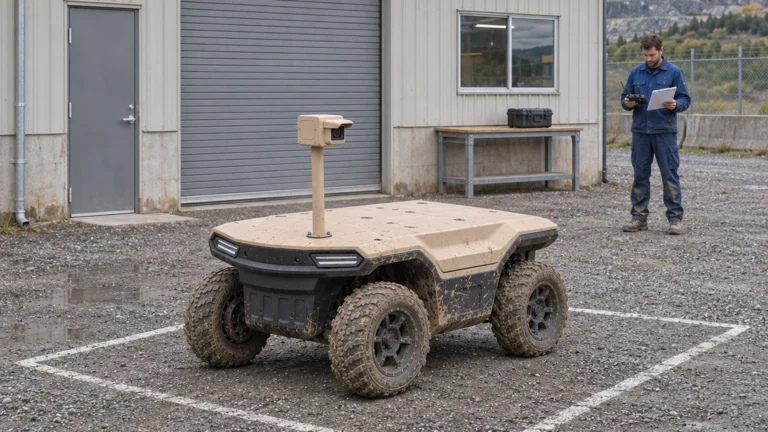
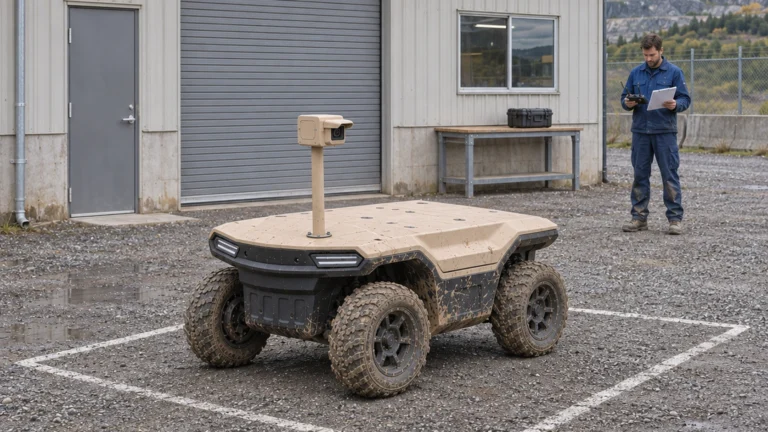
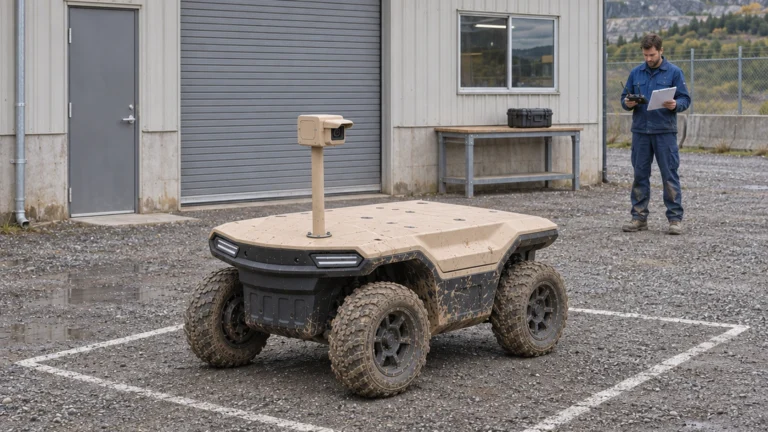
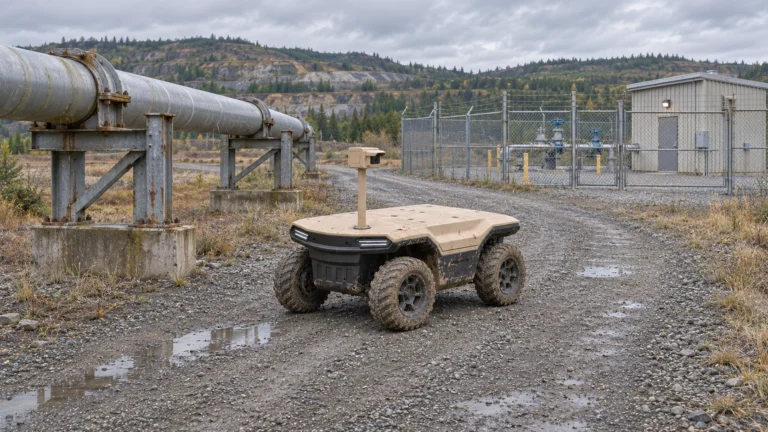
Delta 150 is JINJIA’s four-wheel UGV in the 150 kg payload class. A pipeline observation AGV means an Autonomous Ground Vehicle task with a confirmed instrument and control configuration; Automated Guided Vehicle is another industrial use of AGV. The camera-equipped illustration is a proposed configuration, not a field test, certified integrity method or leak-detection claim.
At a glance
• Tie every observation to an asset and a required decision.
• Repeat the view and retain incomplete records.
• Validate the instrument and data handover separately from mobility.
Contents
Start with observation points and asset IDs
Match the equipment and route to the task
Make records comparable between visits
Set instrument and measurement boundaries
Agree operation and data handover
Prepare an enquiry that can be configured and checked
Frequently asked questions (FAQ)
AI concept: proposed task-equipped Delta 150; configuration subject to confirmation.
Start with observation points and asset IDs
Choose a bounded question such as documenting the visible condition of a pipe support, external enclosure or accessible label. Use the operator’s asset register and stable point identifiers. Record the required detail, permitted position, direction and reason for the observation. A broad corridor video may not show the particular support or label that a reviewer needs.
As a planning example, one service-road route could include three externally visible supports and a valve-station fence. The point list must state which surfaces can be seen and which remain hidden. Keep internal pipe condition, specialist testing and any mandatory inspection outside this visual task unless a separately accepted method supports them.
Match the equipment and route to the task
Assess the observation payload, mount, cables, battery provision and the full installed envelope together. Confirm mass, power demand, heat, vibration and the viewing height required. The 150 kg class does not mean that any 150 kg instrument package is an acceptable working load; distribution, attachment and operating conditions also matter.
Survey the outward and return path, stops, crossings and recovery access. Check surface changes, drains, vegetation and screened communications at the actual observation positions. Start outside classified hazardous areas on a route approved by the site. HSE’s equipment guidance explains why electric power does not remove ignition concerns; local requirements and the exact build still determine access.
Make records comparable between visits
Keep original observation time, asset and point ID, pose, camera settings, file reference and operator note together. Use an agreed distance, direction and dwell where comparison matters. Retain the original media rather than only a compressed screenshot. If the view or access changes, record that change so a reviewer does not mistake a new angle for a change in asset condition.
Mark blocked, blurred or missed observations as incomplete and retain their cause. Compare scheduled points with accepted records rather than counting only successful files. Test the required detail in representative lighting and weather. A repeatable location is useful only if the resulting record remains interpretable for the maintenance question.
Set instrument and measurement boundaries
Visible imaging supports review of accessible external conditions. A thermal task requires its own instrument, settings and interpretation method. FLIR’s thermal documentation discusses resolution, distance, reflections and the need for application knowledge. A bright patch alone cannot establish the cause of a defect. Ask whether the deliverable is a qualitative indication or a calibrated measurement.
Optical gas imaging is a separate specialised method. FLIR explains that the spectral response and scene contrast must suit the gas. An ordinary thermal camera therefore does not establish gas visualisation, concentration, leak rate or a compliant survey. Define the substance and objective first; request suitable equipment, calibration, procedure and acceptance evidence before including a gas task.
Agree operation and data handover
Name the operator, remote reviewer, maintenance recipient and person who can authorise a restart. Specify remote control, assisted functions or a bounded autonomous route as distinct scopes. Verify the configured response to lost control link, uncertain position, blocked path and unusable sensor data. Include a practical recovery method; do not assume that every interruption produces an automatic return.
Deliver the record in the format the receiving team can use. Connect asset, original time, observation question, quality, finding and follow-up owner. If data arrive later after link recovery, preserve their age. Begin with a controlled manual export if needed; direct maintenance-system integration requires separate field, identity, permission, error and support checks.
Prepare an enquiry that can be configured and checked
Send one route map with outward, return and recovery access, plus the point list and one desired record example. Add terrain, permitted environmental conditions, task payload mass and power, operating schedule, communication constraints, destination and estimated quantity. Identify the reviewer and the maintenance decision the trial must support. Flag unknown inputs instead of silently replacing them with assumptions.
Agree a small representative set of observation points and a completion rule before a larger route. Compare useful records, missing checks and full operator effort against the current method. Discuss Delta 500 or Delta 1000 separately if the load or mission changes; a Delta 150 result does not validate another build. Contact JINJIA with the route, point list and record sample to scope the next verification step.
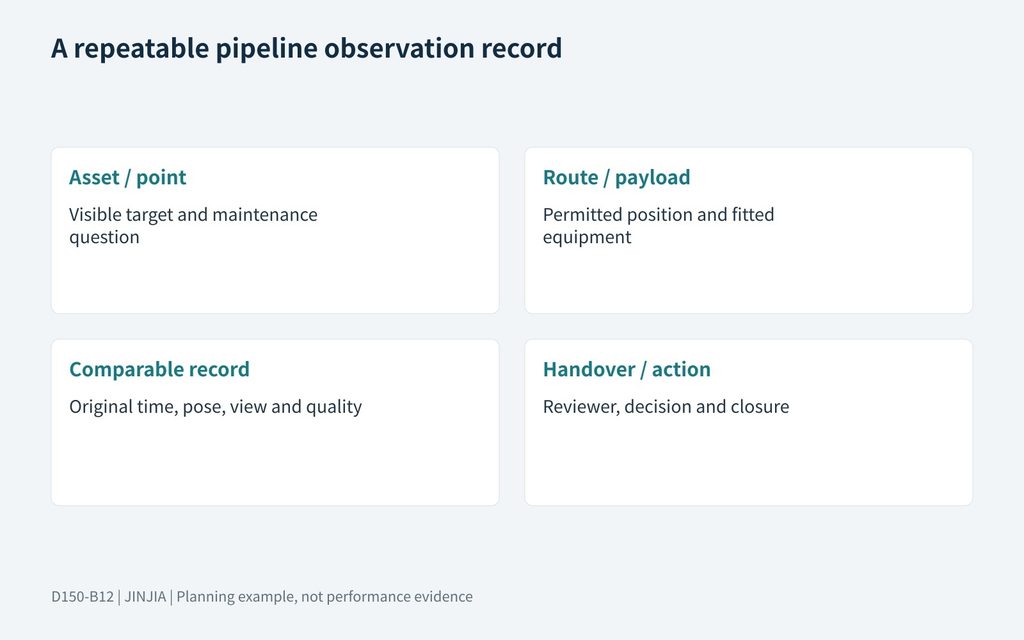
JINJIA planning framework; example inputs are not test results.
| Inspection link | Required definition |
| Asset / point | Visible target and maintenance question |
| Route / payload | Permitted position and fitted equipment |
| Comparable record | Original time, pose, view and quality |
| Handover / action | Reviewer, decision and closure |
Send one route, an observation-point list and a record sample to discuss a Delta 150 configuration.
Frequently asked questions (FAQ)
A: A usable record linked to an asset, point, original time and a defined maintenance question.
Q: Does following the corridor prove inspection completion?
A: No. Each required observation needs an accepted view; missed points remain recorded.
Q: Can ordinary thermal imaging measure a gas leak?
A: Do not assume that. OGI, gas concentration and leak-rate tasks each require suitable instruments and methods.
Q: Can electric drive establish hazardous-area suitability?
A: No. The exact equipment and site authorisation must support the permitted area.
Q: Is a maintenance-system connection included?
A: No. Verify it separately or agree a controlled manual handover.
Q: What should an enquiry contain?
A: A route, point list, record sample, payload, shift, communication conditions, destination and quantity.
Sources and further reading
Platform context; integration scope requires project confirmation.
FLIR documentation — Achieving a good thermal image
Resolution, distance, reflections and interpretation context. General imaging principles; not a Delta payload specification or endorsement.
FLIR — The science behind optical gas imaging
Specialised spectral response and scene contrast distinguish OGI from ordinary thermal observation. No Delta OGI integration is claimed.
HSE — Electricity in potentially explosive atmospheres
General ignition and equipment-suitability distinction. Site classification and applicable local requirements govern access; UK rules are not universal.