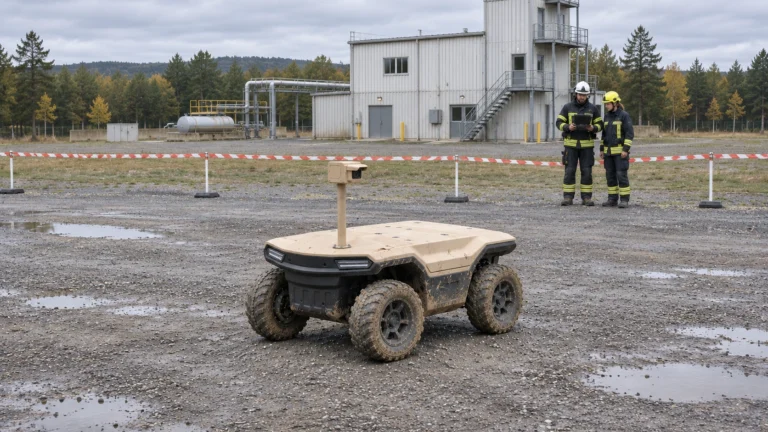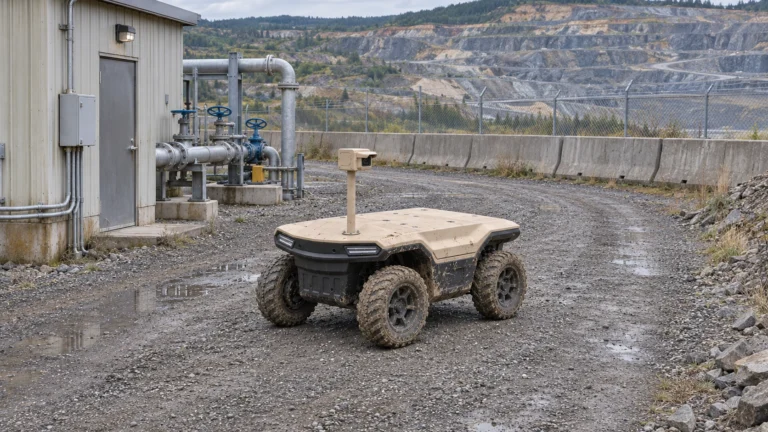


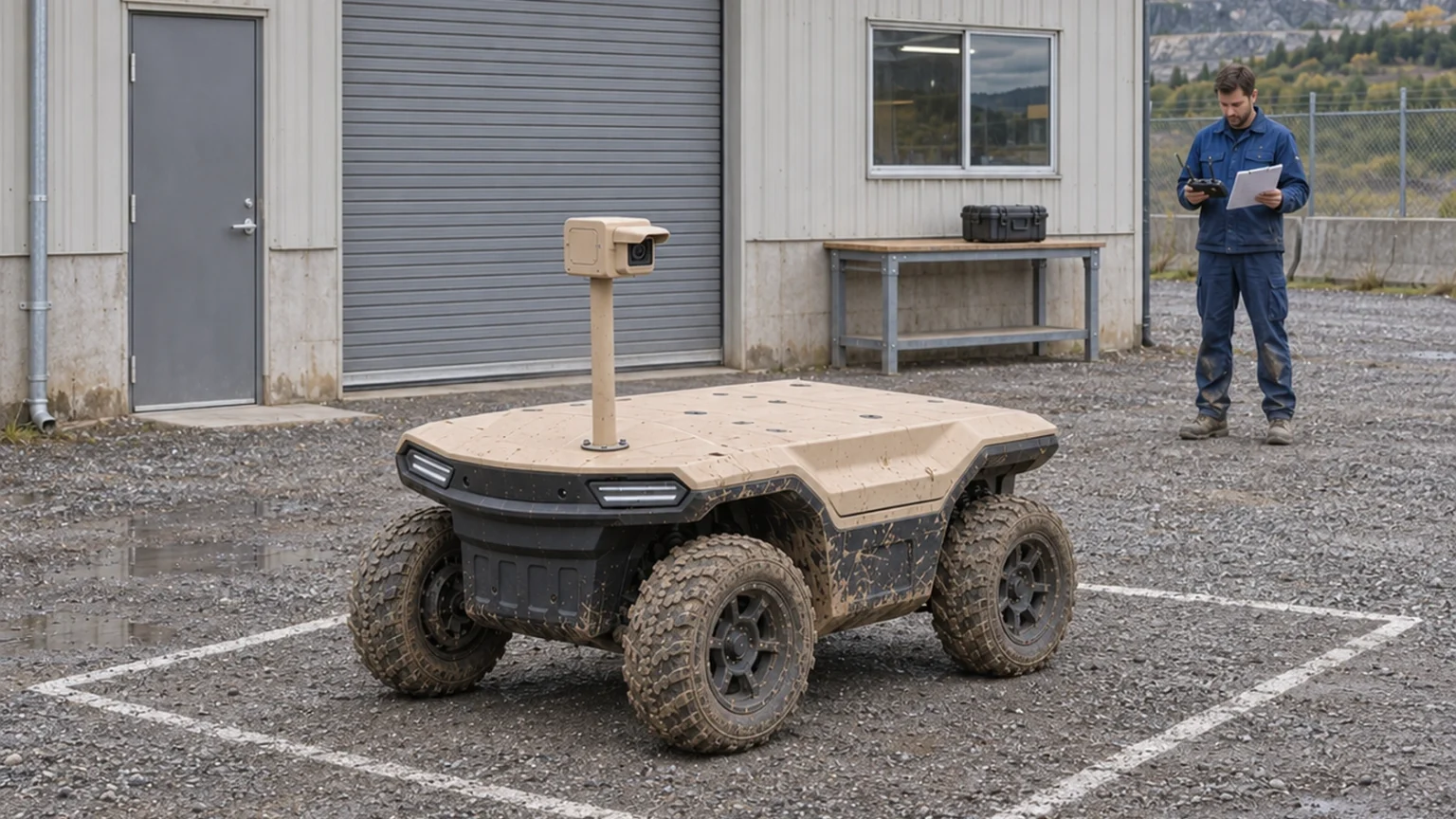
An inspection robot deployment checklist is useful when it identifies who may release a specific vehicle, route and task into operation. A delivery demonstration is not the same as a completed shift handover. Link each readiness item to an owner, evidence and a decision so that an unresolved issue cannot disappear behind a general ready status.
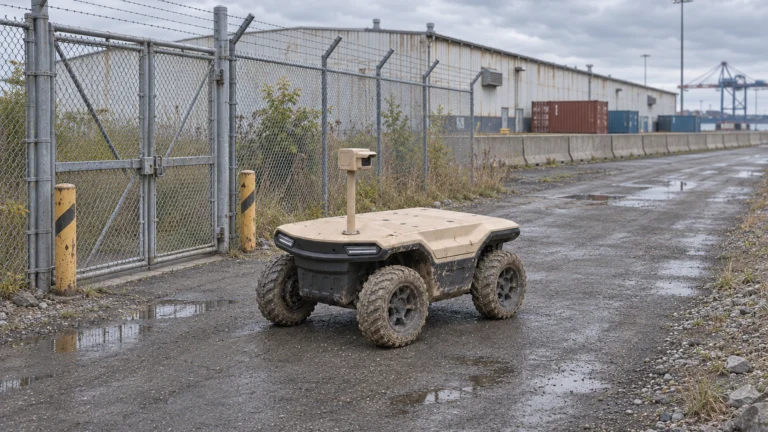
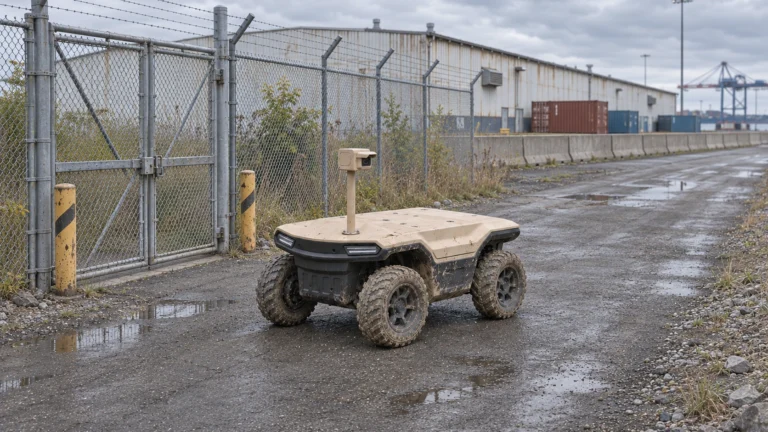
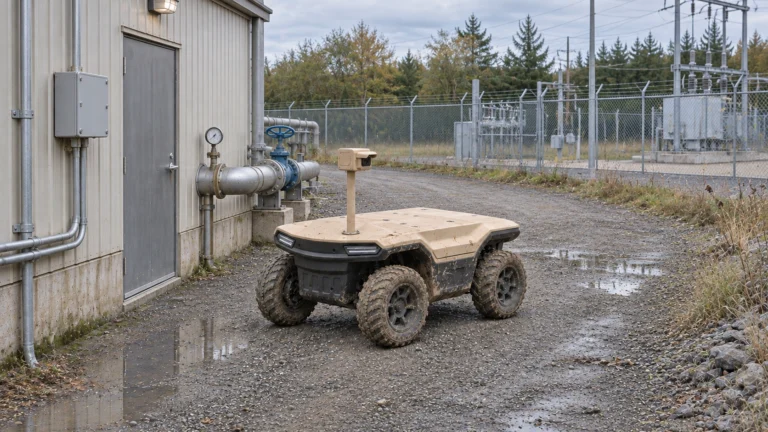
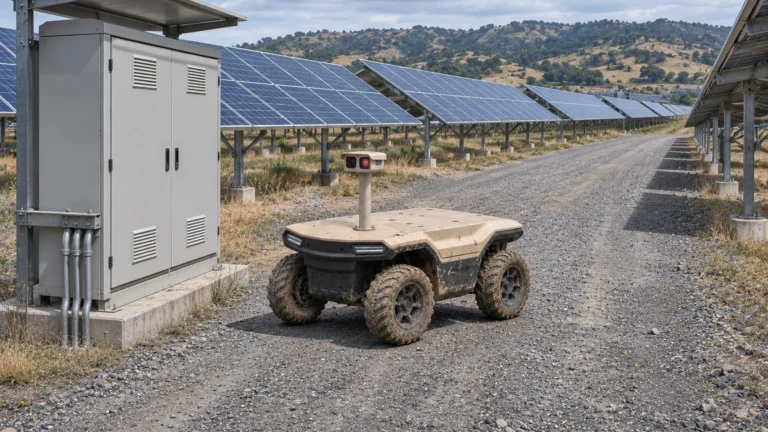
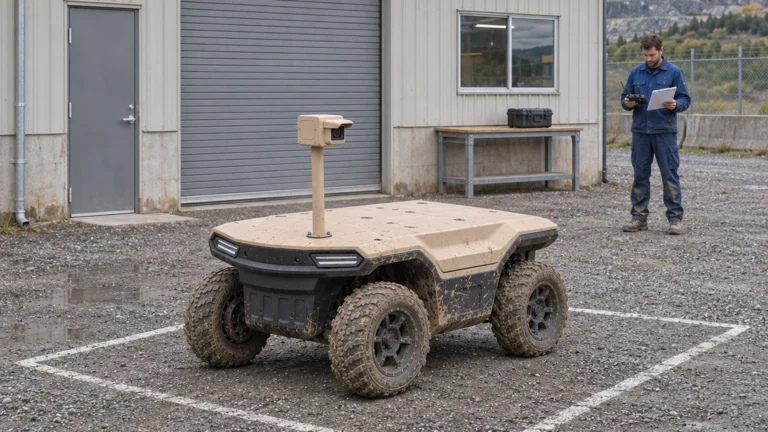
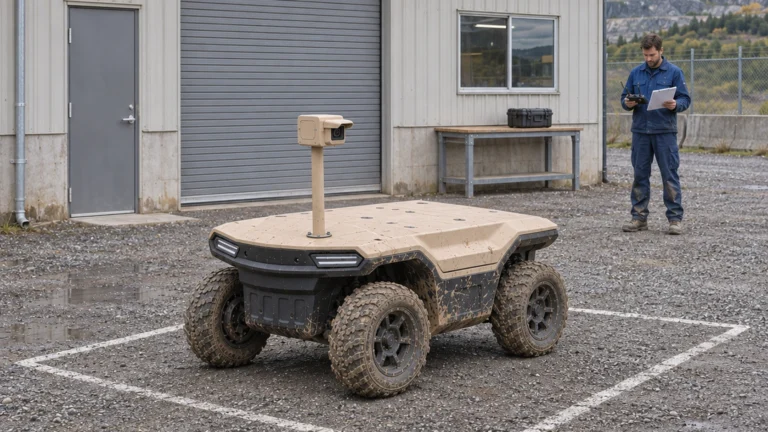
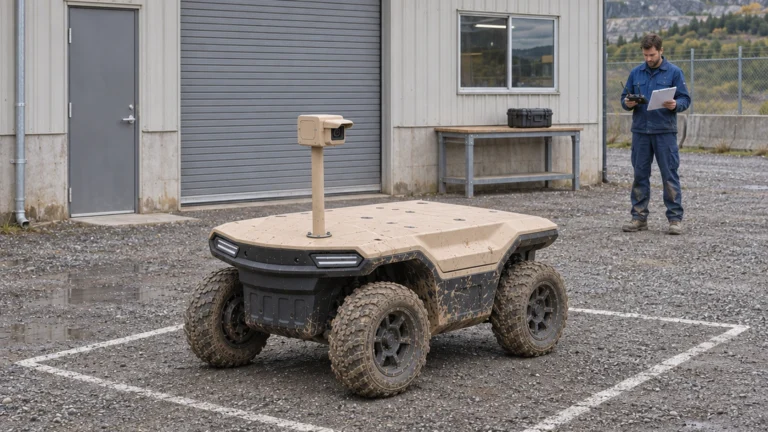
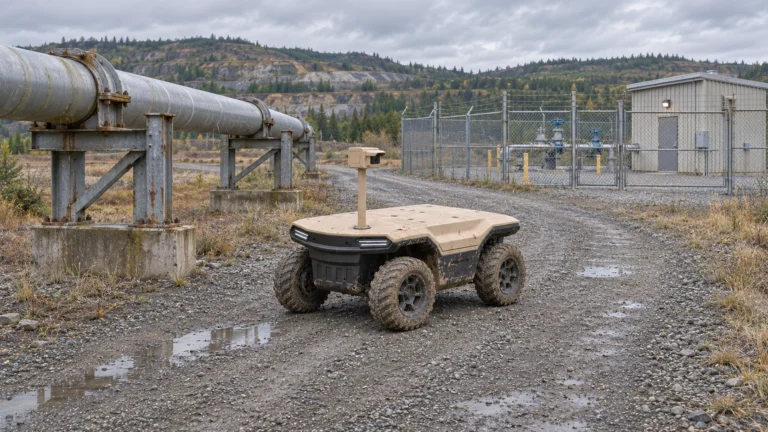
Delta 150 is JINJIA’s four-wheel UGV in the 150 kg payload class. An inspection AGV here means an Autonomous Ground Vehicle with a defined payload and operating scope; Automated Guided Vehicle is another industrial use. Remote control, assistance, autonomous routes and automatic charging must each match the confirmed build and accepted site process. The service-bay image is a concept.
At a glance
• Release an identified build, route version and task scope.
• Demonstrate takeover and recovery with the assigned people.
• Recheck changed routes, software and relocated equipment.
Contents
Match the entry route and software versions
Check daily readiness and operator takeover
Verify abnormal stops and on-site recovery
Plan failed docking and a manual charging backup
Recheck relocation, loading and mapping
Release the operation with a signed handover
Frequently asked questions (FAQ)
AI concept: proposed task-equipped Delta 150; configuration subject to confirmation.
Match the entry route and software versions
Record the vehicle ID, fitted payload, software and firmware versions, map revision, route ID and relevant configuration. Mark permitted travel, observation stops, crossings and recovery access on the current site plan. Check that the installed mast and cables fit the route envelope. A map accepted before a new fence or storage area appeared may no longer describe the operating site.
Keep the proposed operating mode explicit. Distinguish remote driving, assisted functions and a bounded autonomous mission instead of using autonomy as a single acceptance item. Name the person who approves a route or version change. Preserve a known accepted configuration and a controlled change record. NIST’s capability-based approach informs repeatable task checks; it does not establish a Delta certification or universal site threshold.
Check daily readiness and operator takeover
Use the manufacturer’s current instructions for pre-use checks and maintenance. The site record should identify visible condition, payload mounting, lens condition, power readiness, communication status and any open faults relevant to the mission. Verify that the operator has the right account, current task briefing and access to the accepted operating procedure. Assign a person who decides whether a fault prevents release.
Demonstrate control handover in a controlled area with the intended people. Confirm who holds movement authority, how a takeover request is acknowledged and how conflicting commands are prevented. Test the required stop and restart process for the configured system. A person who watched a demonstration has not necessarily shown the ability to handle an interruption during a working shift. Record the demonstrated task and any remaining training.
Verify abnormal stops and on-site recovery
Define the configured response to lost communications, uncertain position, a blocked path and unusable payload data. Check the resulting state and indication rather than assuming every fault produces automatic return. State where the robot may wait and which observations become incomplete. Keep original event times, operator actions and the reason for the interruption in the log.
Agree an authorised recovery method, access route and responsible people before the trial. Use the current equipment instructions for movement, isolation and handling; this checklist does not replace them. Separate a controlled restart from physical recovery. Do not release the task when recovery depends on access the site will not permit. After a significant interruption, reassess the cause and route before resuming.
Plan failed docking and a manual charging backup
If automatic docking is in the agreed scope, test the complete fitted dock, robot, power source and site approach. Include an unavailable dock, interrupted supply and a failed docking attempt in the acceptance plan. Define the holding state, notification and person who decides the next step. A statement that a platform supports docking does not demonstrate unattended operation at this site.
Agree the approved manual backup with trained staff and current equipment instructions. Record access, suitable charging equipment, time required and the tasks that will be suspended. Include waiting, charging and return-to-service checks in the shift plan. If docking is not supplied or not accepted, write that clearly and plan staffed charging; do not leave the operating model dependent on an unconfirmed feature.
Recheck relocation, loading and mapping
Treat a move between sites as a controlled change. Confirm the approved transport, lifting or loading method for the exact fitted vehicle, including payload and securing points. Assign trained people and suitable equipment through the site’s process. Do not infer that chassis dimensions alone establish a handling method or that a route result transfers to another location.
At the destination, verify permissions, maps, communications, observation positions, charging and recovery access again. Check that accounts and data destinations belong to the new authorised site. Retain the old map and configuration under version control while preventing accidental use on the new route. Re-run the affected task checks after movement, software change or a material site alteration.
Release the operation with a signed handover
The release record should state the accepted vehicle and payload, route and software versions, permitted modes, operating conditions and named operators. Attach evidence for image quality, link behaviour, takeover, recovery and charging arrangements. List open items with a decision: close, restrict the task or withhold release. A signature without the scope and evidence gives the next shift too little information.
Send JINJIA the task, route, payload, shifts and interface requirements to discuss the configuration and checks. Start with a bounded route, review the actual intervention workload and expand only after agreed conditions are met. Delta 500 and Delta 1000 require their own handling and task validation. Keep the current shift handover available to the operator and the person authorised to stop the operation.
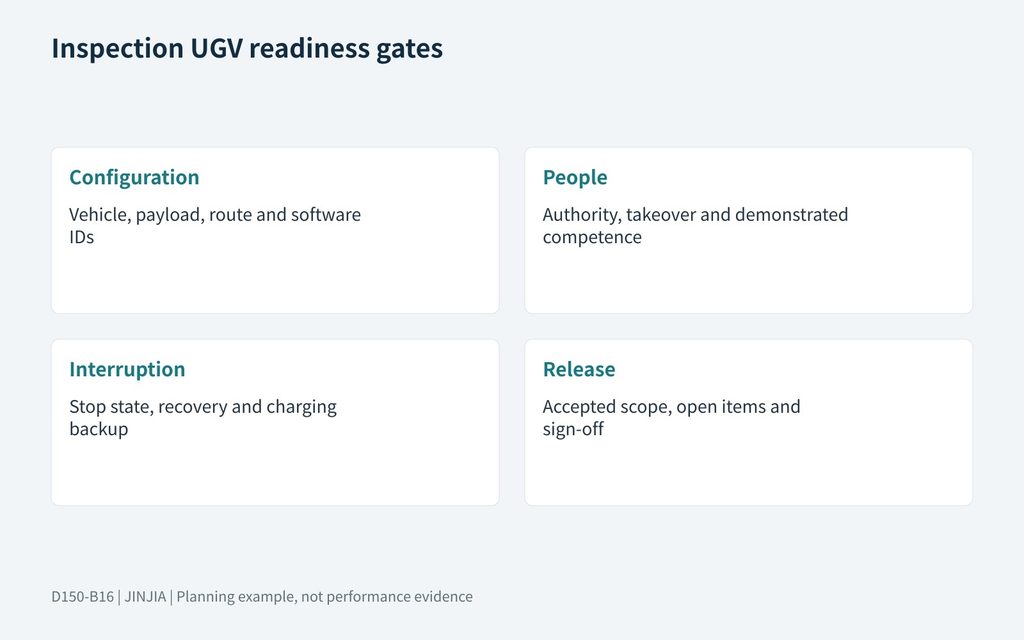
JINJIA planning framework; example inputs are not test results.
| Readiness gate | Evidence to retain |
| Configuration | Vehicle, payload, route and software IDs |
| People | Authority, takeover and demonstrated competence |
| Interruption | Stop state, recovery and charging backup |
| Release | Accepted scope, open items and sign-off |
Frequently asked questions (FAQ)
A: The identified vehicle, payload, software, route and accepted task scope.
Q: Does a supplier demonstration complete operator training?
A: No. Record the assigned operator’s demonstrated tasks and remaining training.
Q: Does lost link guarantee automatic return?
A: No. Verify the configured state, notification and recovery process.
Q: Is automatic charging assumed?
A: No. Confirm supply and site acceptance, or plan an approved staffed backup.
Q: Can the same map be used after relocation?
A: Reassess and accept the destination route and configuration before use.
Q: Who releases the operation?
A: The named authorised site owner using the agreed evidence and restrictions.
Sources and further reading
Platform context; integration scope requires project confirmation.
NIST — Performance of emergency response robots
Repeatable capability measurements and user-defined mission thresholds; no Delta test, certification or endorsement is claimed.
HSE — Separating pedestrians and vehicles
Route separation, crossings and changing site conditions inform the task-planning questions; no universal lane dimensions adopted.