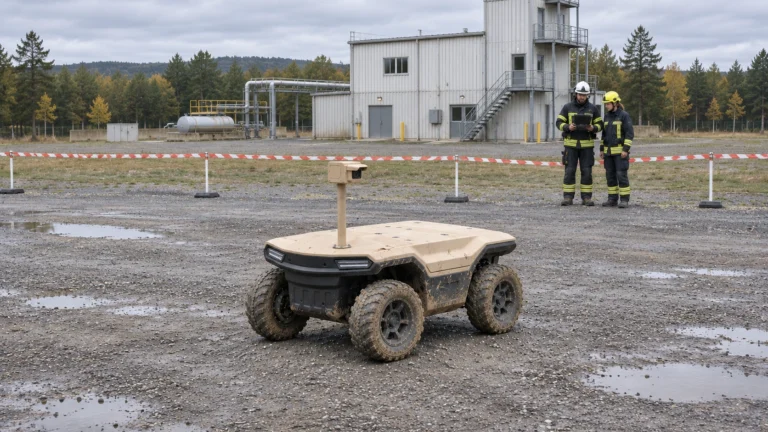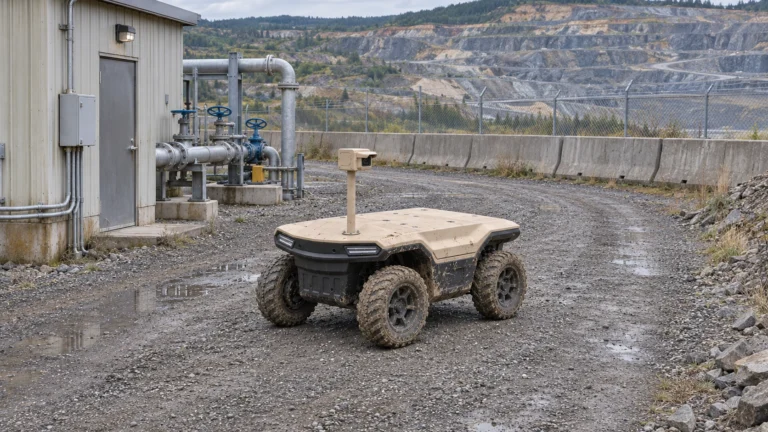


Delta 150 UGV procurement requirements should describe the useful result, the site and the evidence needed for acceptance. A request for quotation, or RFQ, becomes easier to compare when every requirement has a priority, an owner and a verification method. Start with the task before selecting options or copying a catalogue feature list.
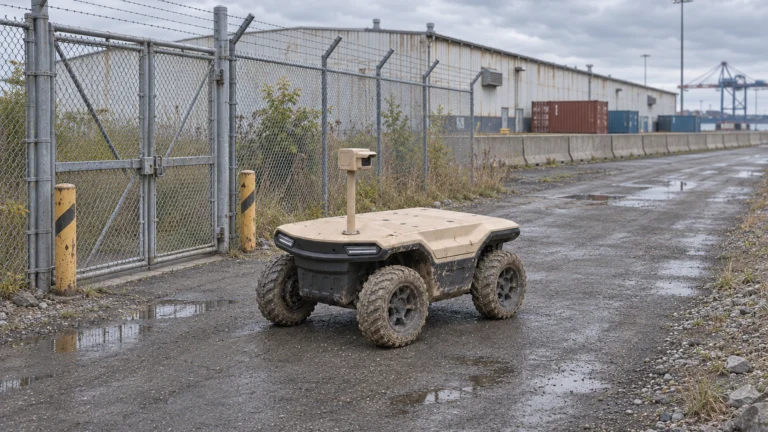
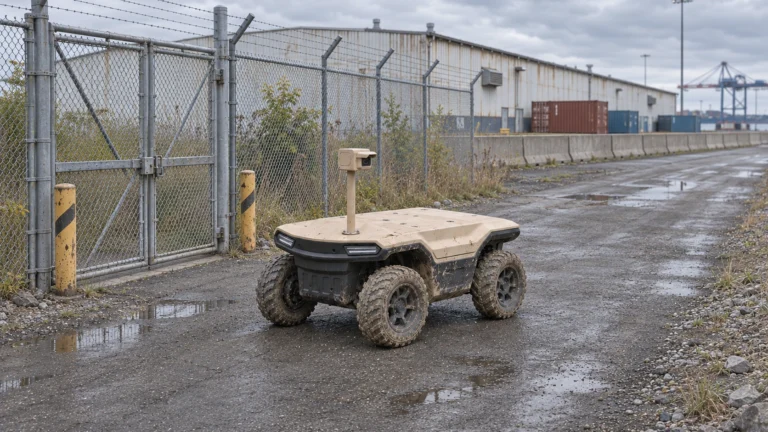
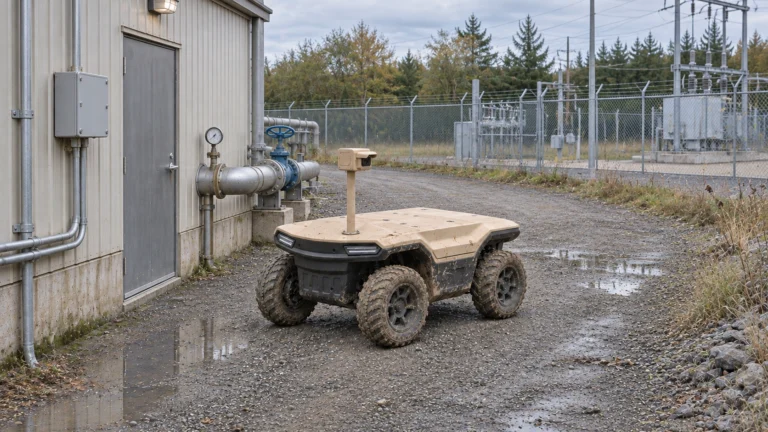
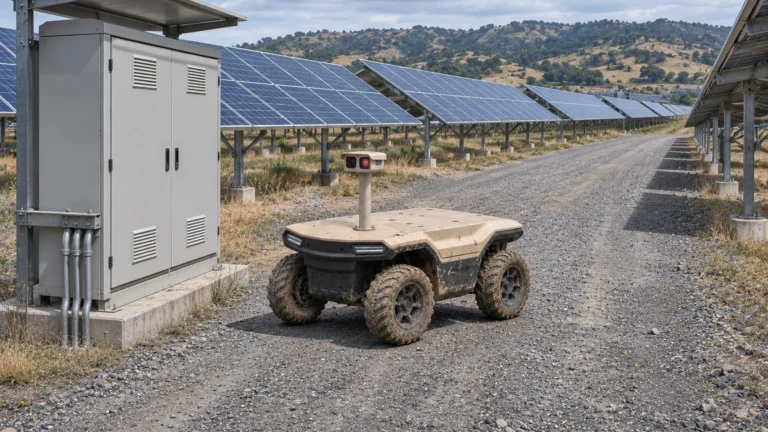
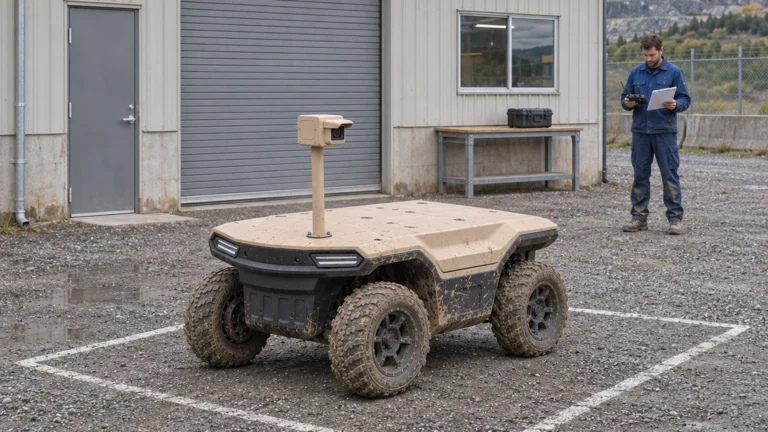
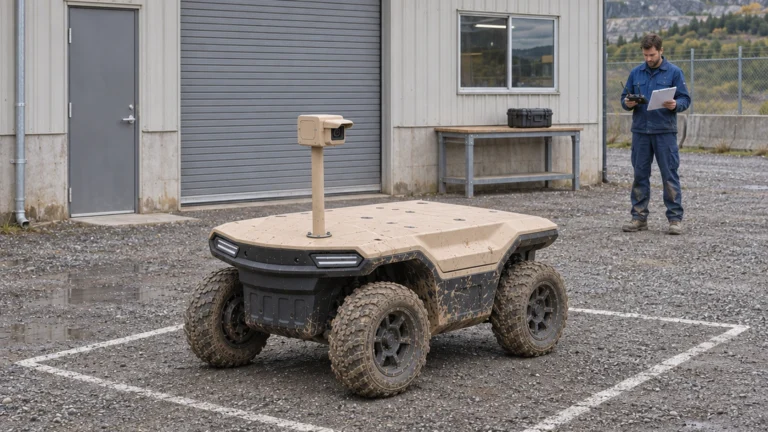
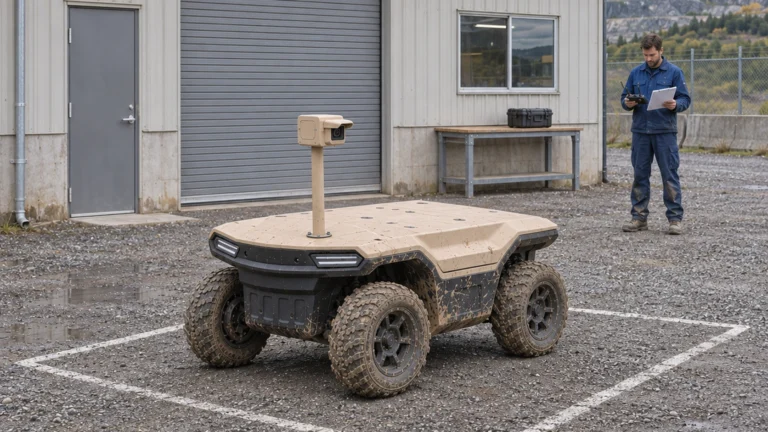
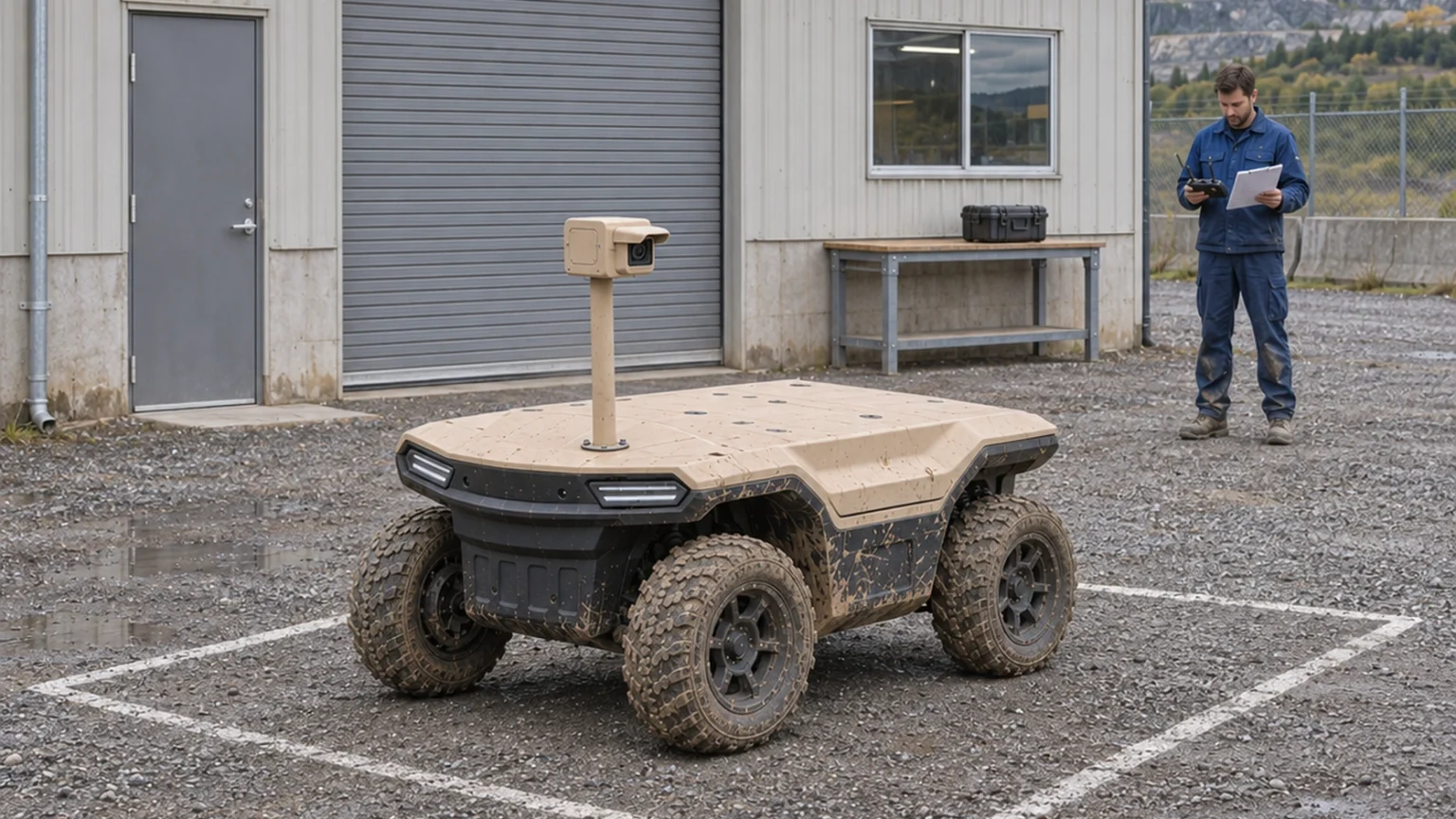
Delta 150 is JINJIA’s four-wheel UGV in the 150 kg payload class. AGV in this series means Autonomous Ground Vehicle within a defined operating scope; Automated Guided Vehicle is another industrial use. Exact payload, control functions, interfaces and support form a project-specific supply scope. The camera-equipped service-bay image is a concept for configuration review.
At a glance
• Specify the task and receiving team before the equipment list.
• Require evidence for the proposed installed configuration.
• Keep included supply, options, exclusions and unknowns distinct.
Contents
Define the task and actual site
Specify installed mass and power demand
Define operation and communication responsibilities
Define the data deliverable and interface boundary
Link acceptance to documents and test evidence
Issue an RFQ with a controlled requirements table
Frequently asked questions (FAQ)
AI concept: proposed task-equipped Delta 150; configuration subject to confirmation.
Define the task and actual site
Name the asset or observation point, required detail, task frequency, shift and team that will use the record. Describe the existing method and the problem to solve. State whether the proposed output is an external image, a thermal observation or another defined measurement. A general request for autonomous patrol does not establish what must be delivered or how its usefulness will be judged.
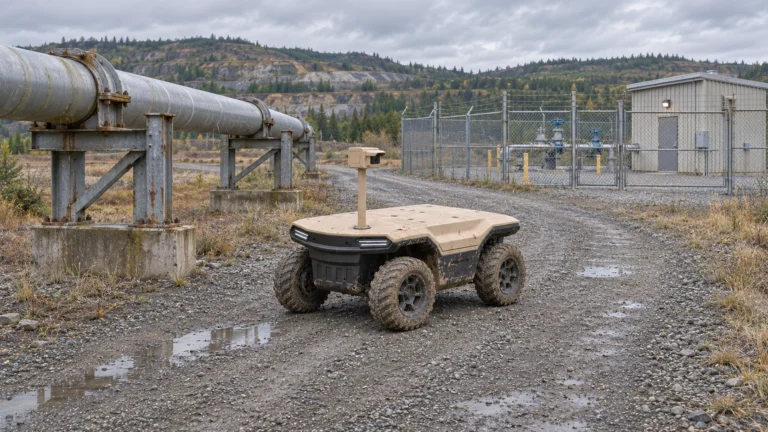
Provide a route sketch with surfaces, gradients, narrow sections, crossings, obstructions, observation positions, charging access and recovery access. Include relevant weather, lighting, site permissions and area classification. Label measurements, estimates and unanswered questions separately. Confirm conditions for the actual site; do not turn an illustration or another customer’s route into proof that this route is suitable.
Specify installed mass and power demand
List the proposed camera or other instrument, mast, brackets, enclosure, computer, communications equipment, cables and added cargo. Record their mass, dimensions, mounting position and required observation height. Include the full installed envelope and centre-of-mass implications in the engineering review. The 150 kg class does not approve every combination of high-mounted equipment and moving conditions.
Request electrical requirements at the agreed interface: voltage, average and peak demand, startup behaviour, connectors and protection. Ask the supplier to confirm available power and its effect on the operating cycle. Name who designs and verifies brackets, wiring and any third-party equipment. Keep unsupported performance claims out of the RFQ, including gas measurement by an ordinary thermal camera or explosion protection inferred from an ingress rating.
Define operation and communication responsibilities
Separate remote control, assisted functions and the proposed autonomous route task. Define operator authority, takeover, stop and restart behaviour, waiting states and recovery. Ask which functions are included in the offered build, which need additional equipment or software and which require site acceptance. Avoid a single checkbox marked fully autonomous when the actual operating process depends on people.
Describe measured or expected coverage, screening, permitted networks and the receiving location. State the customer’s IT and access constraints, account ownership and remote-support permissions. If cellular, satellite or another link is proposed, request the complete installed topology and fault behaviour. Treat a network technology name as an input to design, not proof of continuous service or a licence to remove local recovery staff.
Define the data deliverable and interface boundary
Specify what the recipient needs: asset identifier, observation time, location, file or event, quality result and review status. State whether the task needs live viewing, stored records, alarms or permitted commands. Distinguish initial observation from operator confirmation and final work-order action. Agree retention, access, export and time synchronisation requirements with the customer’s data owner.
For a security platform or maintenance system, identify the target version, required functions, interface owner, licences and acceptance test. Ask for available documentation and test access without assuming every requested API, SDK or ROS interface is included. A controlled file export may support an early evaluation, while direct integration remains a separate deliverable. Preserve that distinction in both technical and commercial documents.
Link acceptance to documents and test evidence
Give each important requirement a test condition, expected evidence and sign-off owner. Separate factory acceptance testing from checks that require the destination site. Include useful record quality, communications, takeover, failed-task reporting, energy handling and recovery in the actual operating process. NIST’s repeatable capability approach informs this structure; it does not set a universal pass threshold or certify Delta.
Request the agreed configuration list, relevant operating and maintenance instructions, training record, interface documentation, test reports and open-item register. Define language and revision requirements. Ask for the applicable conformity evidence for the offered configuration and destination rather than inventing a certificate list. A document title alone does not show that its scope covers the supplied vehicle, payload and operating conditions.
Issue an RFQ with a controlled requirements table
Use one table with requirement ID, task or limit, priority, source, verification method, customer owner and supplier response. Require explicit responses: included, optional, excluded or to be confirmed, with assumptions and evidence. Collect destination, quantity, evaluation stage, desired schedule, supply boundary and local-support responsibilities. Request a scoped quotation and identify transport, taxes, installation, licences, training, spares and support terms separately.
Do not fill missing prices, lead times, warranty or service promises from another model. Review unresolved items before freezing the configuration and acceptance plan. Send JINJIA the task, route, payload, shifts and interfaces using the accompanying requirements workbook. Delta 500 and Delta 1000 belong in separate configuration assessments; a larger payload class does not automatically resolve the same route, power or integration requirement.
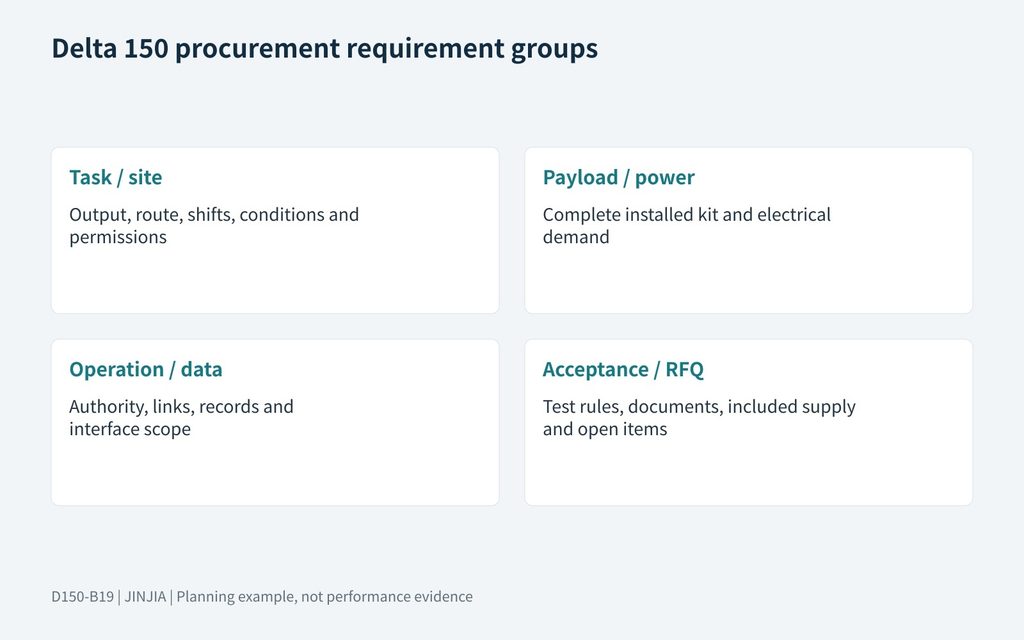
JINJIA planning framework; example inputs are not test results.
| Requirement group | Information to provide |
| Task / site | Output, route, shifts, conditions and permissions |
| Payload / power | Complete installed kit and electrical demand |
| Operation / data | Authority, links, records and interface scope |
| Acceptance / RFQ | Test rules, documents, included supply and open items |
Send the task, route, payload, shifts and interface requirements to prepare a scoped Delta 150 RFQ.
Frequently asked questions (FAQ)
A: A useful task, the actual site and a measurable acceptance record.
Q: Does 150 kg approve a complete payload installation?
A: No. Review the full installed mass, envelope, mounting, centre of mass, power and operating conditions.
Q: How should autonomy be requested?
A: Separate remote, assisted and bounded autonomous tasks with named operator and fault responsibilities.
Q: Is a requested interface automatically included?
A: No. Confirm function, version, licence, ownership and acceptance scope.
Q: What evidence should accompany acceptance?
A: Configuration identity, agreed test conditions, results, relevant instructions, training and open items.
Q: Can unknown commercial terms be assumed?
A: No. Request explicit project-specific prices, schedule, warranty, spares and support scope.
Sources and further reading
Platform context; integration scope requires project confirmation.
NIST — Performance of emergency response robots
Repeatable capability measurements and user-defined mission thresholds; no Delta test, certification or endorsement is claimed.