

No: 60 km and four to six hours cannot be exchanged directly. Driving Range describes distance under defined conditions; Operating Endurance describes time in a defined working state. Inspection robot operating time must include the complete task cycle, not just the time spent moving.
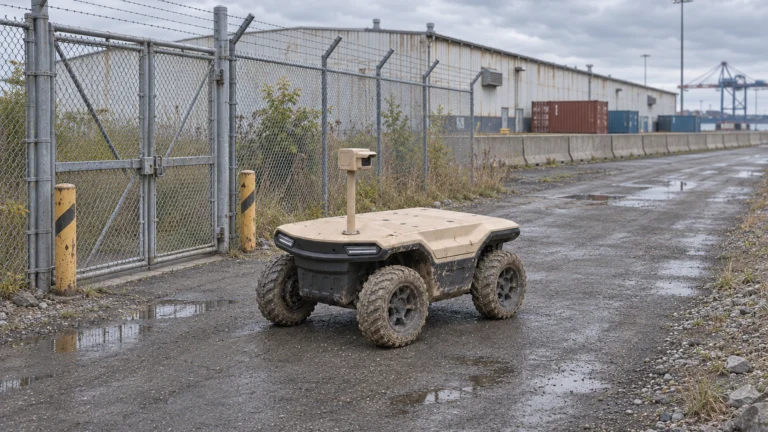
Delta 150 is JINJIA’s compact 4×4, 150 kg payload-class UGV for scoped inspection tasks. This series uses AGV for Autonomous Ground Vehicle; industrial usage can also mean Automated Guided Vehicle. Neither label establishes a shift duration. Confirm the battery, installed kit and route in the technical proposal.
At a glance
• Keep distance, elapsed time and energy as separate quantities.
• Measure driving, observation, waiting and mission-equipment demand.
• Plan charging, return reserve and operator coverage before committing a roster.
Contents
Distinguish Driving Range from Operating Endurance
Account for driving, observation and payload power
Work through a 25 km in 12 hours requirement
Schedule vehicle rotation and charging windows
Test difficult conditions and preserve mission reserve
Keep a repeatable duty-cycle record
Frequently asked questions (FAQ)
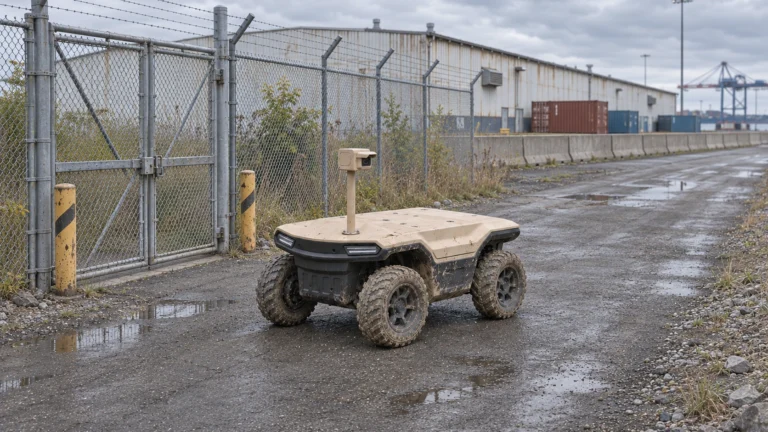
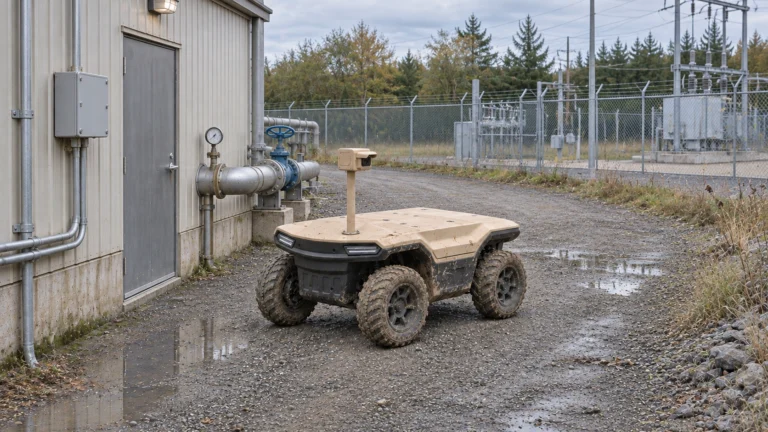
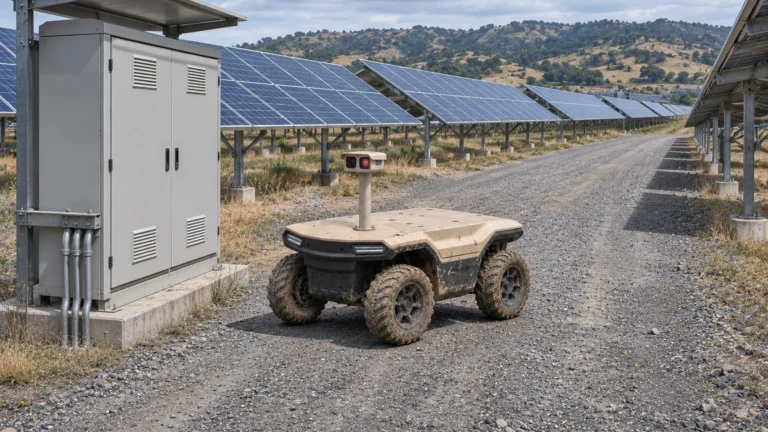
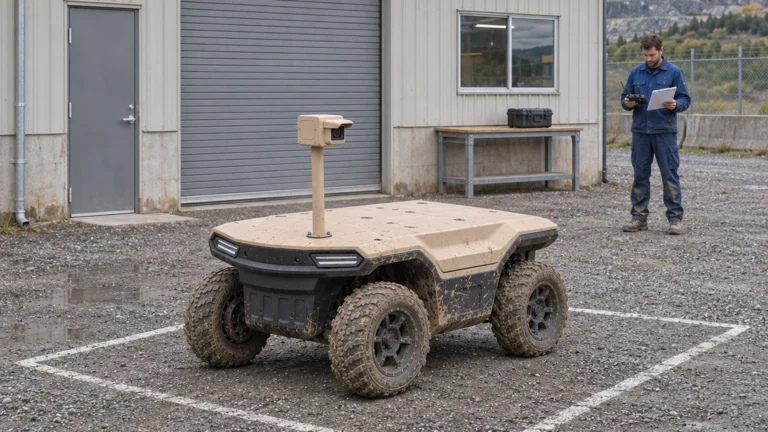
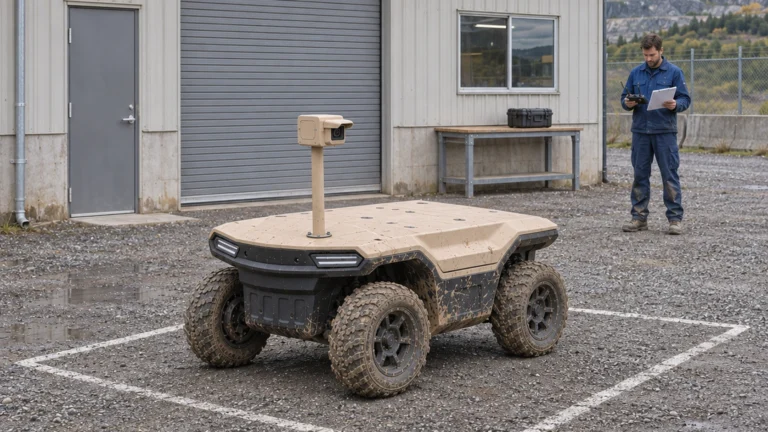
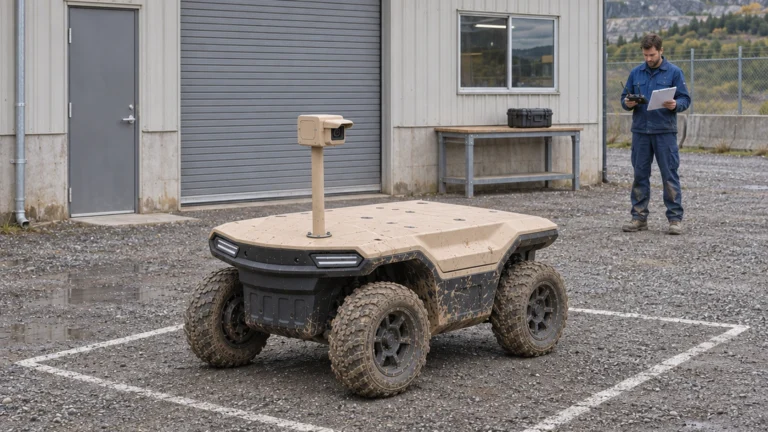
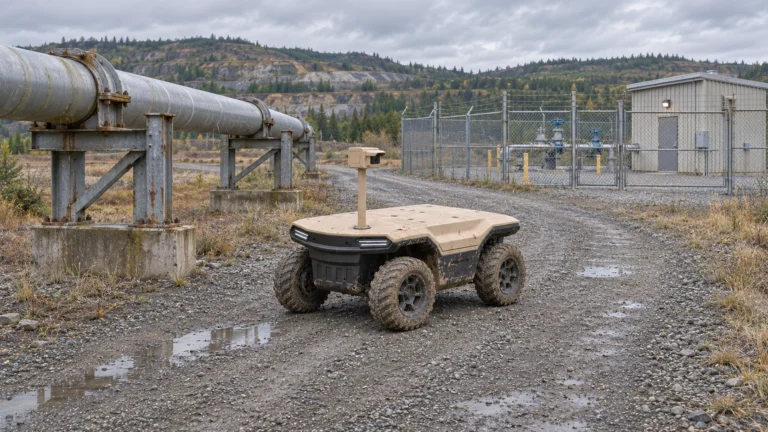
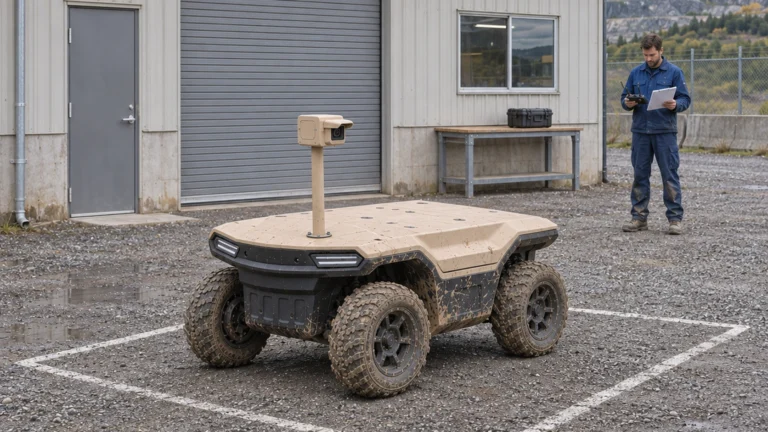
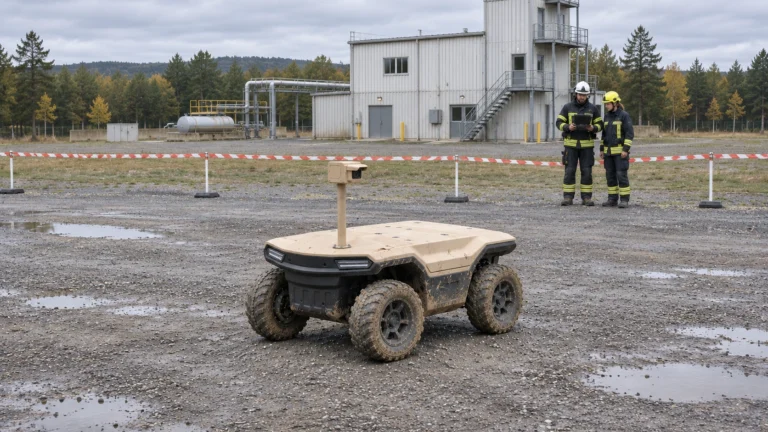
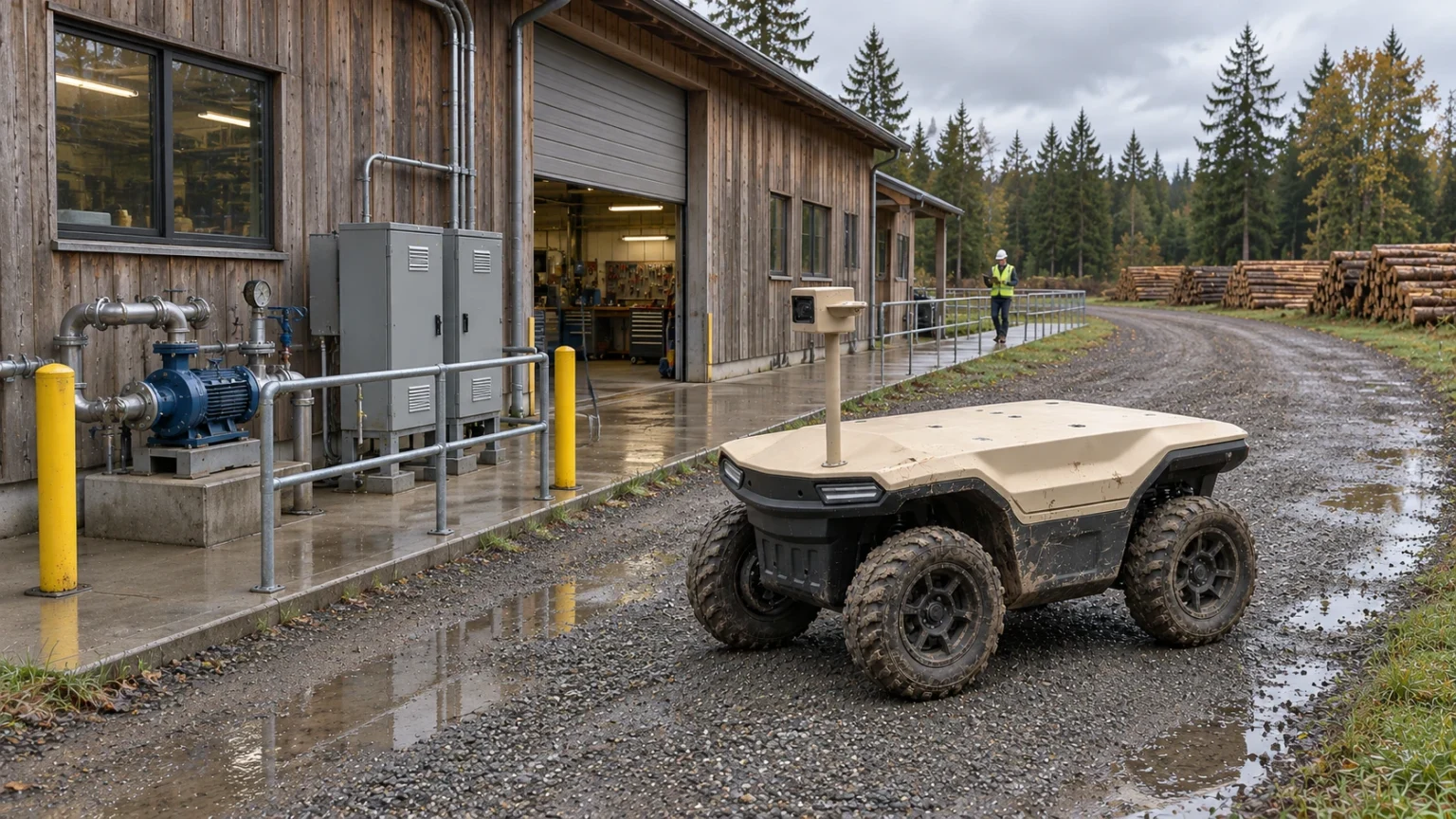
AI concept: proposed task-equipped Delta 150; configuration subject to confirmation.
Distinguish Driving Range from Operating Endurance
Start with units. Kilometres measure a travelled distance, while hours measure a duration. A distance figure needs route, speed, surface, load and battery conditions. An operating-time figure additionally needs the powered equipment and the proportion of driving versus stationary observation. Record those conditions alongside every number.
The current family page presents a nominal range with qualification; earlier planning material used an operating-time interval. Treat them as separate claims until the selected configuration has matching test records. Dividing 60 km by a chosen speed calculates a travel time, not a validated battery endurance. Do not combine separate test conditions into a new performance promise.
Account for driving, observation and payload power
Split a shift into driving, observation stops, powered waiting and return travel. Cameras, communications and computing may keep drawing power while the wheels stop. Therefore, a patrol with a short distance and long observation periods can have a different energy demand from continuous driving over the same distance.
Use average battery-side power for each operating state, then multiply kilowatts by hours to obtain kilowatt-hours. Sum the states once. If the vehicle measurement already includes the camera and router, do not add their power again. If it excludes them, add their demand with conversion losses on a consistent electrical boundary. Peak power belongs in a separate supply check.
Work through a 25 km in 12 hours requirement
Consider an anonymous planning requirement: travel 25 km within a 12-hour shift and no more than 50 km in a day. These are requested duty targets, not Delta test results or evidence of a deployed project. At an assumed moving speed of 5 km/h, 25 km requires five moving hours, leaving seven hours for observation, waiting, return allowances or service within that shift.
For arithmetic only, assume the complete vehicle uses 0.6 kW while moving and 0.15 kW during seven stationary powered hours. The sum is 5 × 0.6 + 7 × 0.15 = 4.05 kWh, before a separately defined return reserve. These invented example powers do not describe Delta’s battery or consumption. Two identical cycles imply 50 km and 8.10 kWh of modelled demand, not proof that one charge covers a day.
Schedule vehicle rotation and charging windows
Build a timeline that shows work, travel to the charger, connection, charging, checks and release to service. Charging time must come from the proposed battery-and-charger combination under the site conditions. A simple energy divided by power calculation is only a preliminary estimate because losses, charging limits and the final charging phase can change elapsed time.
Compare each vehicle’s measured available working period with its total unavailable period. A second vehicle can cover a gap only if its route readiness, payload and operator support also overlap the required service window. Do not assume hot-swappable batteries, automated docking or charging while working. Each needs a confirmed configuration. Record what happens when a charger or a vehicle is unavailable.
Test difficult conditions and preserve mission reserve
Repeat the proposed duty cycle with the installed load, relevant slopes and surfaces, and representative temperatures. Keep battery age and state of charge in the record. NHTSA explains the general relationship between temperature, battery performance and auxiliary demand; its passenger-vehicle examples are not Delta derating factors. Obtain measured site values rather than borrowing a percentage.
Define a reserve for the approved return and recovery plan, and keep it outside the planned task energy. Identify when a supervisor must shorten the route or return the robot. A positive spreadsheet balance does not prove acceptable temperature, voltage, traction or link availability. Review these limits together before extending the working window.
Keep a repeatable duty-cycle record
For each state, record duration, distance, average battery-side power, equipment state and measurement source. The included workbook calculates distance from moving time and speed, and energy from time and average power. It leaves unknown inputs blank. Its result is an arithmetic planning balance against an entered usable-energy value, not a certified operating duration.
Attach start and end charge, weather, interruptions and the actual charge-return interval to the trial log. Reconcile the model with repeated full cycles before approving a roster. The separate B25 planning topic covers solar, storage and docking architecture; system replenishment still needs its own design. Send JINJIA the route, shift and installed kit to discuss the Delta 150 UGV/AGV duty cycle.
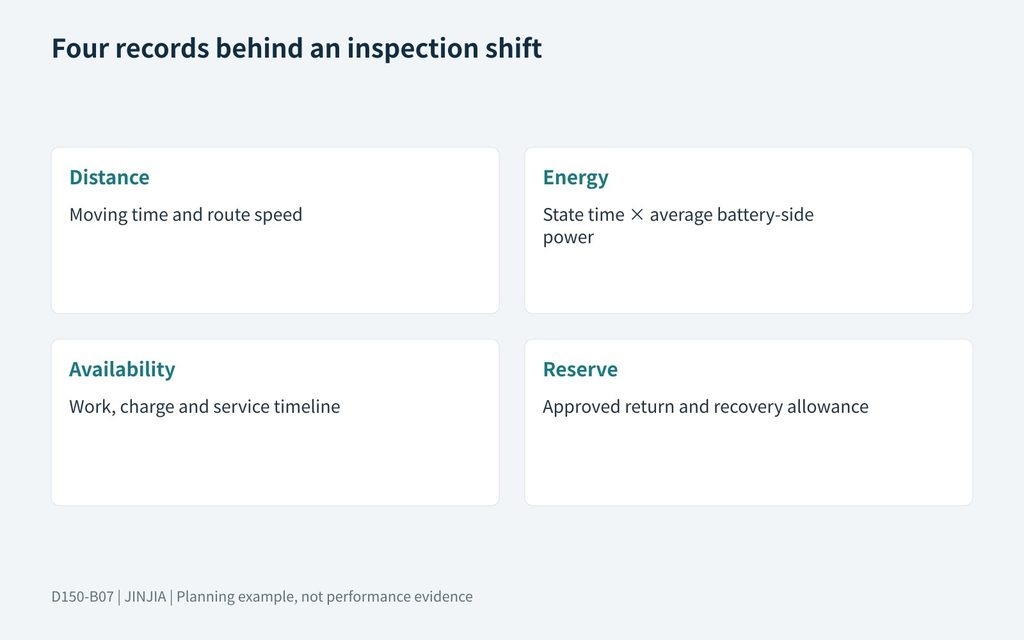
JINJIA planning framework; example inputs are not test results.
| Planning quantity | Record before approval |
| Distance | Moving time and route speed |
| Energy | State time × average battery-side power |
| Availability | Work, charge and service timeline |
| Reserve | Approved return and recovery allowance |
Send the route, payload and shift requirements to discuss a Delta 150 UGV/AGV duty-cycle trial.
Frequently asked questions (FAQ)
A: No. A distance rating does not establish the energy used during a complete powered shift.
Q: Does stopped observation consume no energy?
A: No. Cameras, links and computing can remain powered; measure the actual operating state.
Q: Is 25 km in 12 hours a tested Delta result?
A: No. It is a labelled planning requirement used to show how a duty cycle is built.
Q: Is the 4.05 kWh example a Delta battery specification?
A: No. It uses invented powers for arithmetic only; obtain actual capacity and consumption for the selected vehicle.
Q: Can two vehicles guarantee continuous service?
A: No. Validate charging, failures, route readiness and operator coverage against the required timeline.
Q: What should a range trial record?
A: Configuration, route, load, weather, powered states, energy, charge levels, reserve and recharge turnaround.
Sources and further reading
Delta 150 task and configuration context; published nominal range needs its stated conditions and a project-specific proposal.
NHTSA — electric vehicles, batteries and charging
General reference on temperature, auxiliary energy use and differing charging rates; road-car figures are not Delta specifications.