

Choose a type of unmanned ground vehicle by making three separate decisions: how the chassis moves, how its driving functions are controlled, and what task equipment it must carry. A wheeled vehicle can be remotely operated or configured for autonomous route work. A tracked vehicle needs the same separate assessment of control and task. Neither label proves that a machine will complete your route.
For a Delta 150 enquiry, begin with a representative route and a useful output, such as an image of an accessible external asset. Then compare the vehicle, fitted equipment, supervision and support needed to produce that output. The selection method below keeps mobility, control and mission requirements visible throughout the comparison.
At a glance
– Classify chassis, operating mode and mission equipment separately.
– Compare each candidate on the same route with the intended installed load and useful output.
– Delta 150 is a wheeled 4×4 candidate; track categories and larger payload classes need separate assessment.
Contents
1. Classify the chassis by how it moves
2. Classify the operating mode separately
3. Compare wheels and tracks on the actual route
4. Separate sensing payloads from transport payloads
5. Use Delta 150 as the compact-platform entry point
6. Build a selection matrix before requesting a proposal
7. Frequently asked questions (FAQ)
8. Sources and further reading
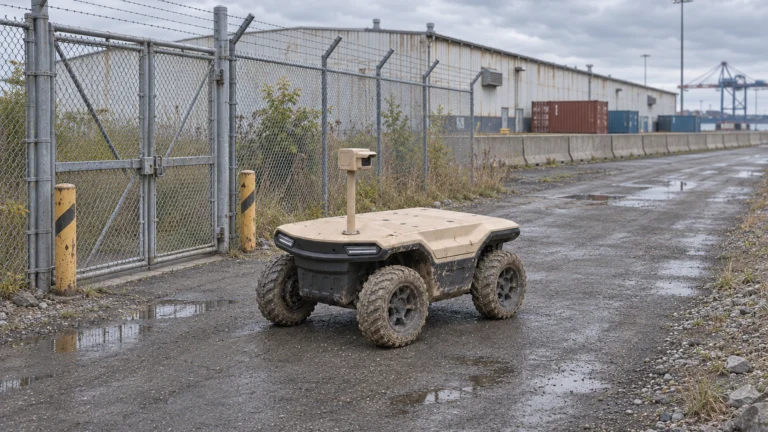
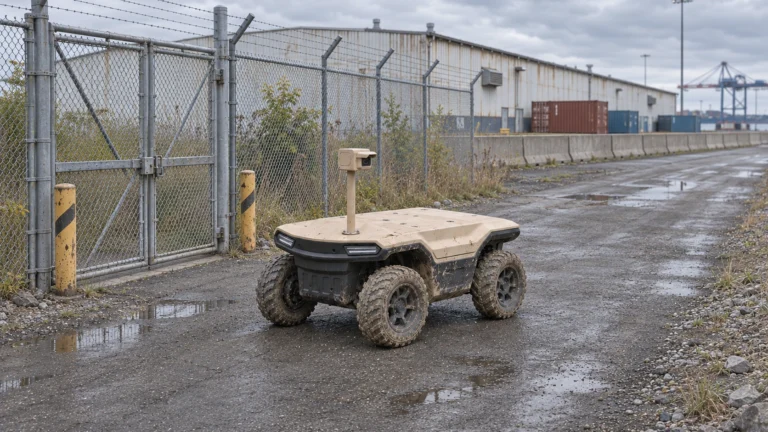
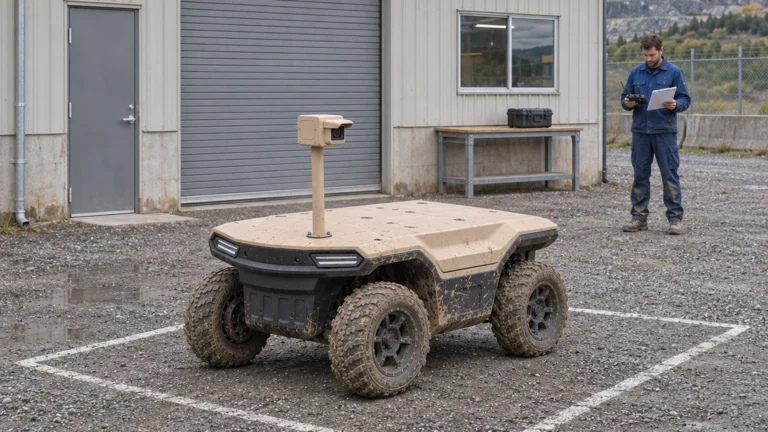
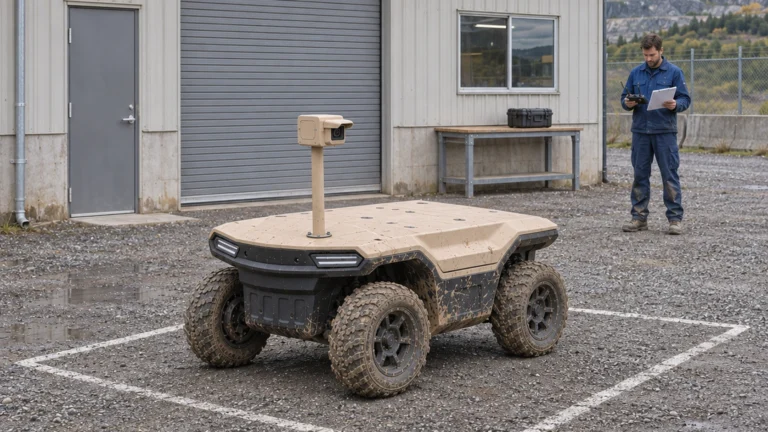
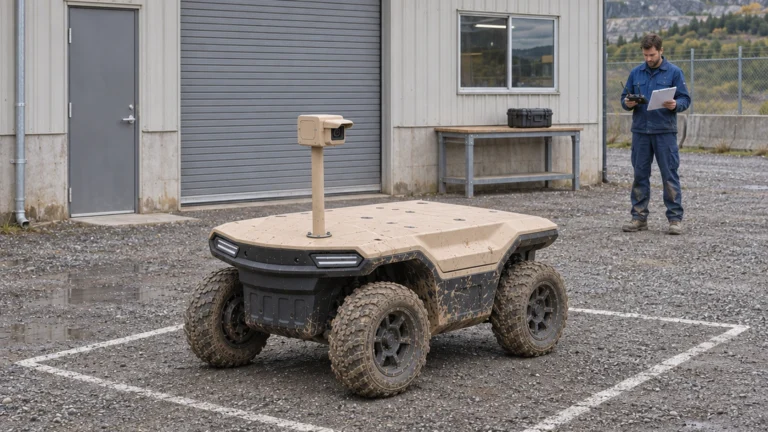
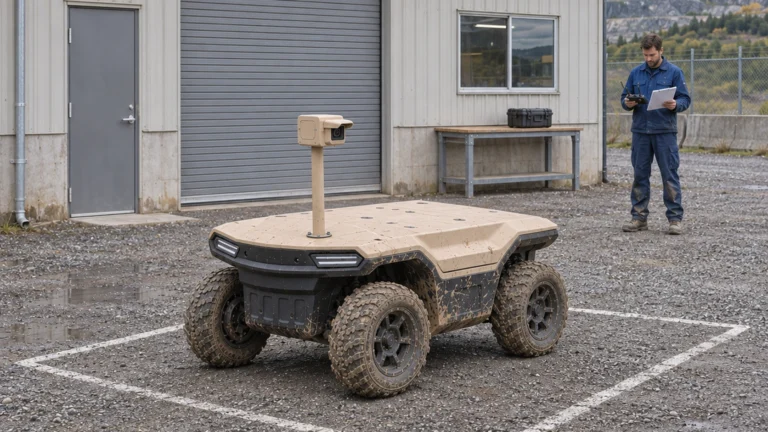
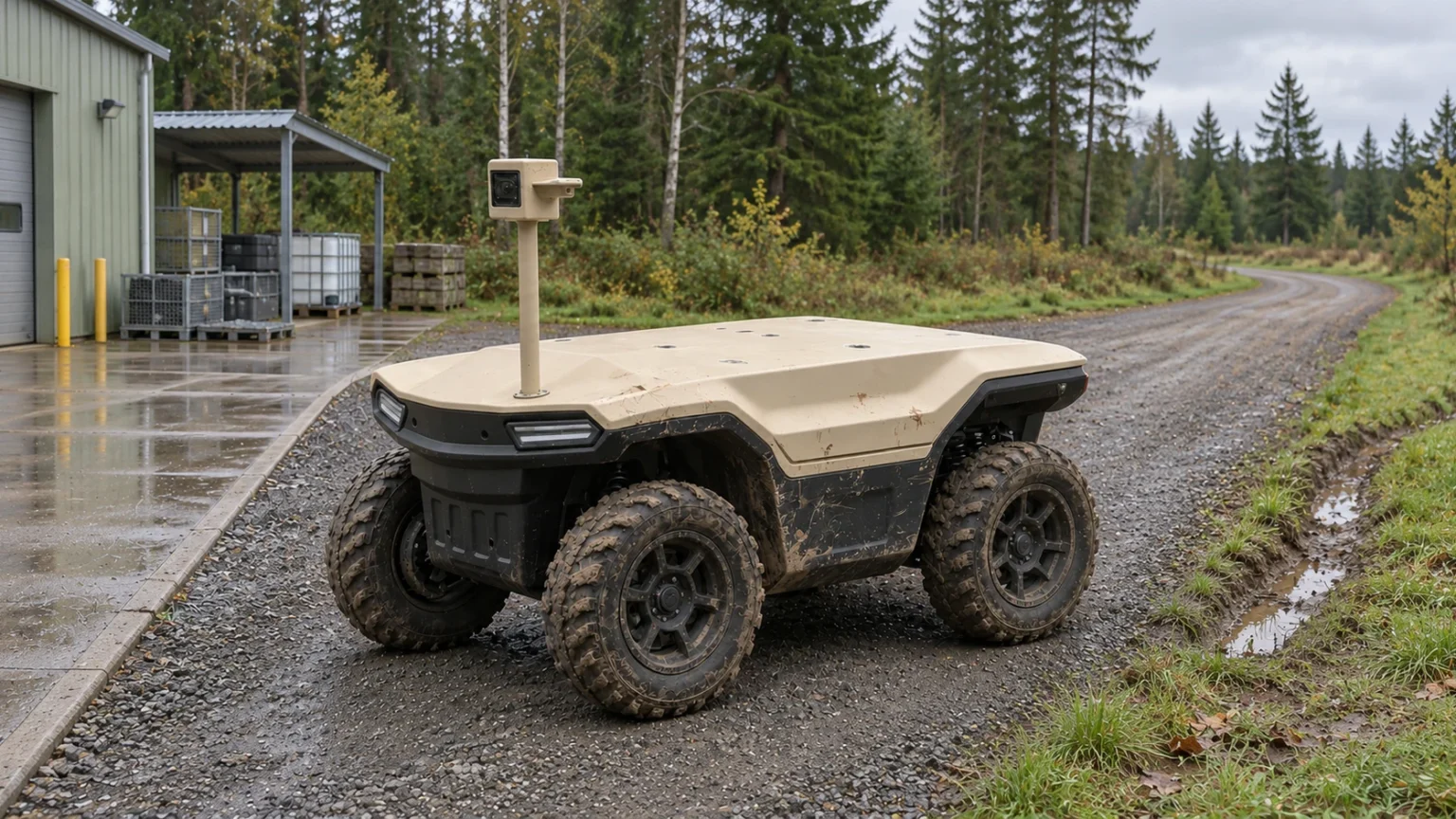
AI concept image; camera-equipped wheeled platform at a paved-to-gravel transition. Configuration subject to confirmation.
Classify the chassis by how it moves
Wheeled UGVs run on tyres or other wheel arrangements. Their suitability depends on the complete configuration: wheel layout, tyre construction, steering method, clearance, suspension and installed load. Four-wheel drive describes a drivetrain arrangement; it does not specify the navigation software, usable inspection view or site access permission.
Tracked UGVs use continuous tracks. Evaluate the actual track system, contact geometry, steering and service requirements against the route. A track label alone does not establish a permitted slope, obstacle size or ability to cross soft ground. Those capabilities need stated conditions and evidence for the delivered machine.
Specialist ground platforms may use other mobility arrangements or combine mechanisms. Consider them when the task identifies a specific access problem, rather than treating a longer category list as a better shortlist. Keep chassis form separate from energy source: an electric or range-extended powertrain describes how energy is supplied, not whether the platform has wheels or tracks.
Manufacturer documentation illustrates why these categories should remain separate. Clearpath’s drivetrain configuration reference distinguishes drivetrain controllers and wheel or track types. It describes that manufacturer’s configurations, not interchangeable options for Delta 150.
Classify the operating mode separately
A remotely operated UGV receives driving commands from a person through a control link. Assess the operator’s view, usable command and video connection, stopping behaviour and recovery arrangements. A vehicle without an onboard driver may still depend on continuous operator involvement.
Assisted operation automates selected functions while leaving other decisions to a person. Ask which function is assisted and when the operator must take over. Assistance during steering, obstacle response or route execution should be described individually; the word semi-autonomous is not a complete supply specification.
In this series, AGV means Autonomous Ground Vehicle. For autonomous route work, specify the driving functions, permitted conditions and human intervention required. Industrial suppliers also use AGV to mean Automated Guided Vehicle. Use the full term and intended task when comparing offers; see what a UGV is for the wider platform definition.
These are separate dimensions of one proposal. A wheeled and a tracked candidate can each be assessed for remote, assisted or defined autonomous operation. This comparison does not mean that every configuration supplies every mode. Record the supplied functions and acceptance evidence for each candidate.
Compare wheels and tracks on the actual route
Start with the surface and route geometry. Record firm and loose sections, changes after rain, ruts, edges, cross-slopes, narrow passages and turning locations. Distinguish a maintained gravel lane from the soft verge beside it. A photograph described simply as off-road does not establish that both are traversable.
Ask each supplier to address the same route conditions with the intended installed equipment. Examine whether the vehicle can reach the observation point, turn within the available space, stop for the task and return. Where the route includes a difficult section, obtain a configuration-specific assessment or change the route before assuming access.
| Route question | Evidence to request for either chassis type |
| Does the surface change? | Representative dry and wet sections, with the relevant load and operating mode identified. |
| Is a turn possible? | The actual turning manoeuvre, required space and effect on the surface under the proposed conditions. |
| Are there slopes or obstacles? | Separate longitudinal and cross-slope conditions, obstacle shape and dimensions, and agreed test or operating limits. |
| Can the task be completed there? | The stopped camera view or required delivery position, not just a successful drive past the point. |
| How will the system be supported? | Inspection, cleaning, consumables, local recovery equipment and a named response process. |
NIST’s historical robot test-method descriptions illustrate the value of assessing mobility, endurance and radio communications as distinct capabilities. The page is archival; this article does not reproduce a current test standard or certify Delta performance. The practical selection principle is to request evidence for each part of the task.
Consider an illustrative service route from a paved maintenance yard onto a maintained gravel lane. The job is to stop at two accessible observation positions and return images. A soft drainage edge is outside the initial route. First assess the firm route with the intended camera, then decide whether another section needs a route change, different chassis or additional validation. This is a planning example, not a completed customer trial.
Separate sensing payloads from transport payloads
A sensing task needs a view or measurement of a specified target. Define the target, stopping position, lighting, required image detail and record format. Include the sensor, mast, mounts, enclosure, communications and any added power equipment in the installed-load calculation. Navigation sensors do not automatically provide the inspection result a maintenance team needs.
A transport task needs an agreed load moved between defined locations. Record cargo dimensions, restraint, loading and unloading arrangements, weight distribution and destination access. A stated payload class does not describe the complete handling process. A camera-equipped patrol concept is not evidence of a validated cargo configuration.
For either task, include equipment power, duty cycle, charging opportunities and the people who handle exceptions. A platform may reach the destination yet fail to produce a useful record or deliver the load in the required way. Compare completed work and support needs alongside mobility.
Use Delta 150 as the compact-platform entry point
The Delta UGV/AGV family page presents Delta 150 as a compact 4×4 platform in the 150 kg payload class for patrol, inspection and remote observation. Use it as a candidate when that role matches the task, then confirm the fitted sensors, mounts, interfaces, power demand and operating mode.
Delta 500 and Delta 1000 are other payload-class entries in the family for equipment and logistics discussions. Evaluate their own configurations when the intended load requires it. A larger payload class does not establish better route access or the same autonomous functions; do not transfer operating limits between models.
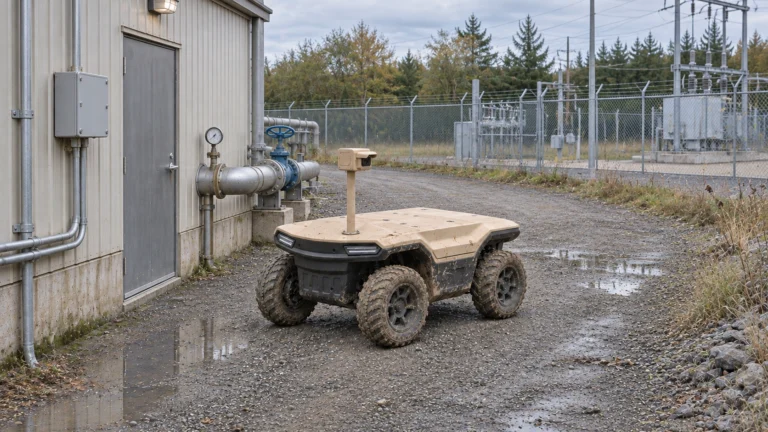
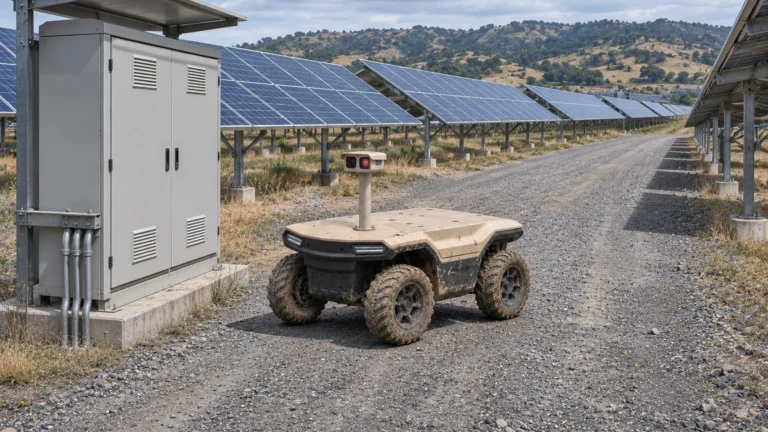
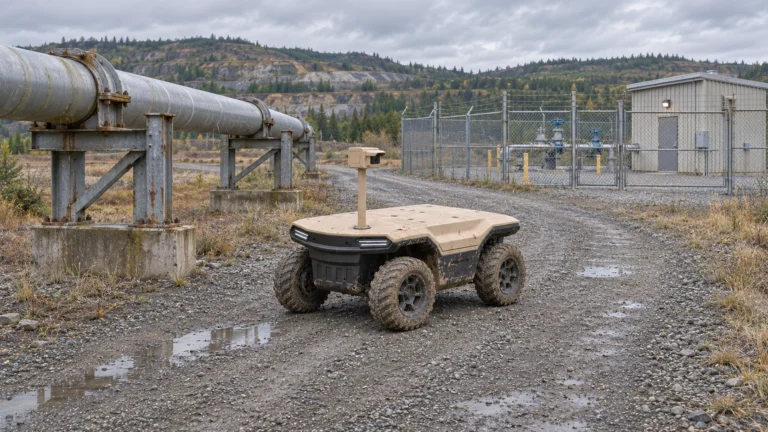
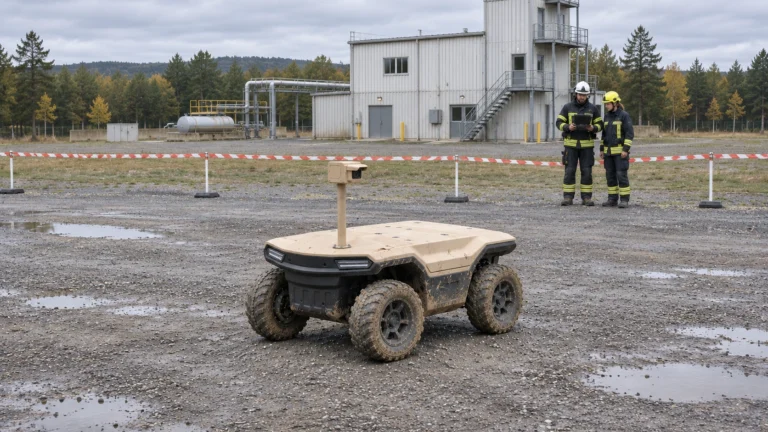
The Delta 150 shown here is wheeled and carries an illustrative observation camera. The track row in the selection matrix is a general comparison category, not a claim that Delta 150 has an approved tracked variant. Keep concept images, the technical proposal and acceptance records distinct.
Build a selection matrix before requesting a proposal
Use one axis for mobility and another for control. In every candidate cell, record what must be confirmed; do not fill it with an automatic pass. The diagram is a buyer’s comparison framework, not a list of modes supplied as standard.
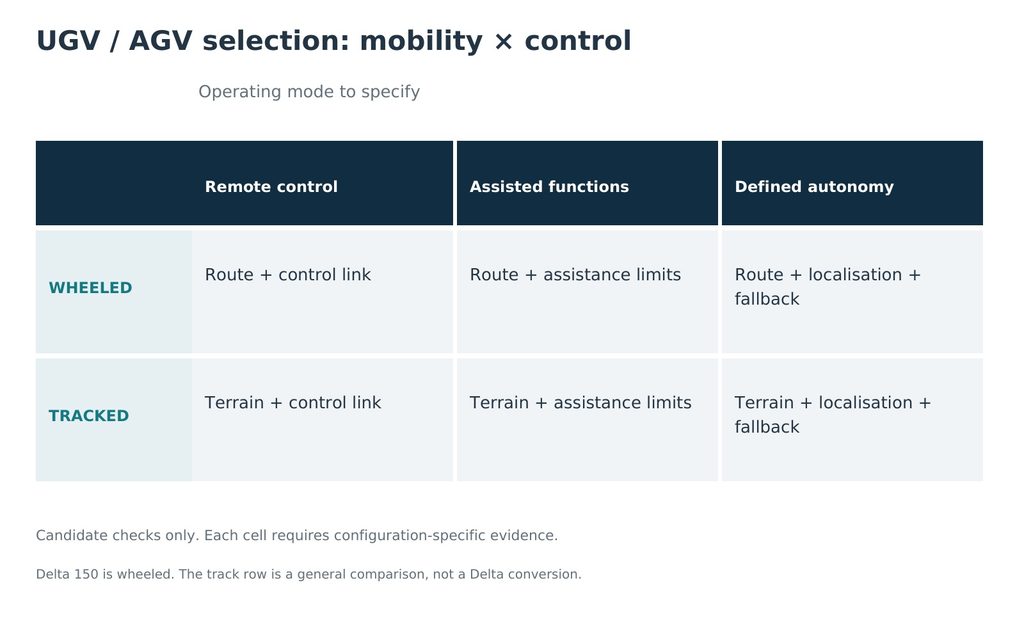
JINJIA explanatory matrix. The track row is a generic category, not a Delta 150 conversion offer.
| Selection input | What to place in the enquiry |
| Task and output | Observation targets and a useful image or measurement, or a defined cargo movement. |
| Route and season | Map or short video, surfaces, width, turns, slopes and relevant weather changes. |
| Installed equipment | Mass, dimensions, mounting, power demand and required interfaces. |
| Control and people | Requested remote, assisted or autonomous functions, supervision and intervention responsibilities. |
| Acceptance and support | Evidence for the complete task, charging plan, cleaning and local recovery arrangements. |
Shortlist a candidate only after these inputs are sufficiently clear. If the route is outside the assessed conditions, retain an open item, revise the route or examine another configuration. Avoid turning a matrix into a numerical ranking when the necessary measurements have not been obtained.
Discuss a Delta 150 configuration with JINJIA. Send a route map or video, task output, installed-load requirements, working schedule and interfaces through our contact page. These inputs support a configuration discussion and a focused validation plan.
Frequently asked questions (FAQ)
Q: Are wheeled and autonomous UGVs different competing categories?
A: No. Wheeled describes mobility; autonomous describes specified functions under defined conditions. They can describe the same configured vehicle. Compare chassis, operating mode and task equipment separately.
Q: Are tracks always the better choice for outdoor work?
A: No universal conclusion follows from the label. Compare the actual route, surface condition, turning requirement, installed load and support arrangements, then request relevant evidence for each candidate.
Q: Does four-wheel drive prove autonomous capability?
A: No. Drive configuration does not establish positioning, perception, control software, human intervention or operation on a particular route. Those need their own supplied scope and verification.
Q: Is a tracked Delta 150 included in this article?
A: No. Delta 150 is presented as a wheeled 4×4 candidate. Tracks appear as a general comparison category; a tracked conversion is not offered or validated by this article or its images.
Q: Should I select Delta 500 or Delta 1000 whenever the route is difficult?
A: Choose a model around the actual task and its own confirmed configuration. A higher payload class is not proof of better terrain access. Compare route evidence and operating conditions separately from the load requirement.
Q: What should the first comparison contain?
A: Use the same route, installed task equipment, requested operating mode and useful output for each candidate. Record completion, interventions, energy and local support needs under the agreed conditions before making a selection.
Sources and further reading
1. Clearpath Robotics — Drivetrain documentation
Third-party reference distinguishing drivetrain control and wheel types; no shared components or compatibility are implied.
2. JINJIA — What is an unmanned ground vehicle?
Related editorial explanation of UGV terminology; not a test record.
Background for structured evaluation; not a Delta test result or certification.
4. JINJIA — Delta UGV/AGV product family
Product-family context. The proposed task equipment and operating functions require confirmation for the supplied configuration.