

The most useful UGV applications start with one reachable task and a result that someone will use. Choose an observation point, an alarm to verify, a maintenance record or a defined load movement. Then specify the route, equipment, operating mode and acceptance evidence. An industry label alone is too broad to support a purchase decision.
Delta 150 is a compact wheeled candidate for patrol, inspection and remote observation. In this series, AGV means Autonomous Ground Vehicle; industrial AGV can also mean Automated Guided Vehicle. Neither abbreviation establishes the autonomous functions supplied. This guide connects application ideas to a task brief, rather than promising that one robot can perform every industrial job.
At a glance
– Start with one reachable task and a result someone will use.
– Separate observation, alarm review, maintenance and load movement.
– Confirm the equipment and evidence for each Delta configuration.
Contents
1. Move from forestry, mining and energy to a specific task
2. Separate observation, alarms, maintenance and logistics
3. Define the input and usable output of each task
4. Allocate work between Delta 150 and the larger family entries
5. Check site access, the business owner and the budget
6. Complete a task card and choose the next reading branch
7. Frequently asked questions (FAQ)
8. Sources and further reading
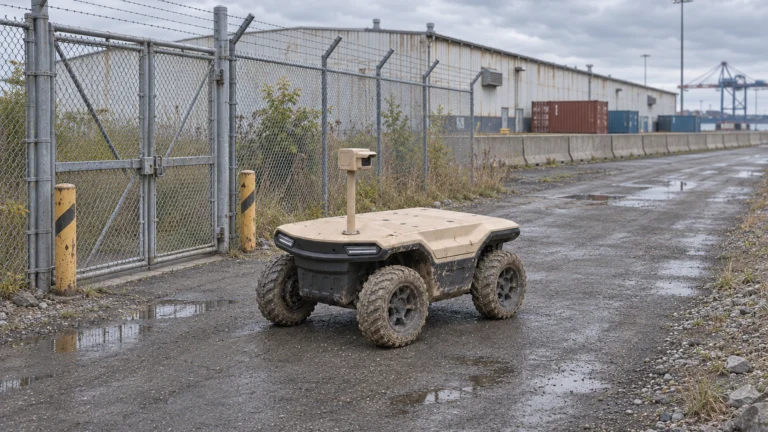
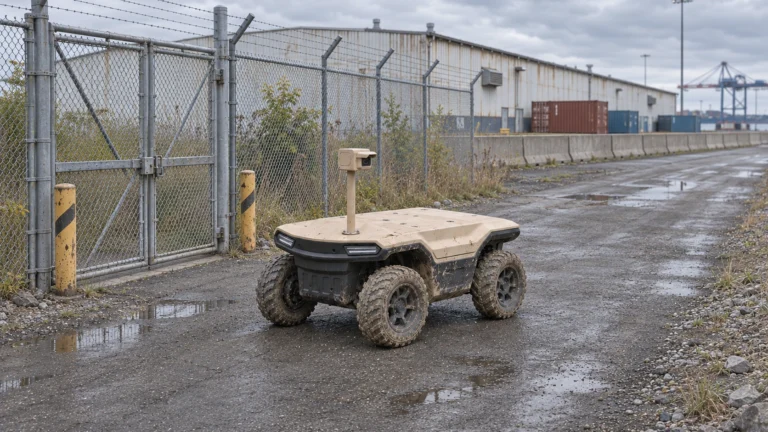
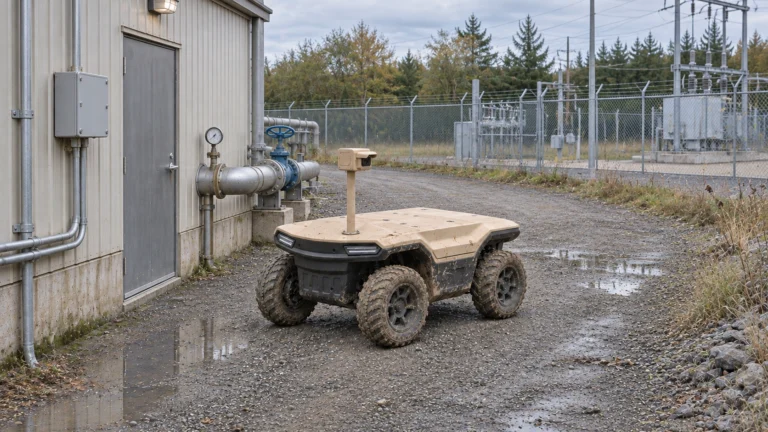
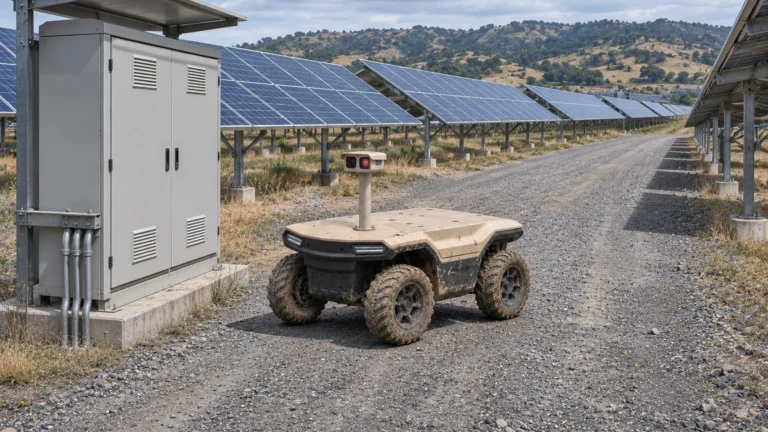
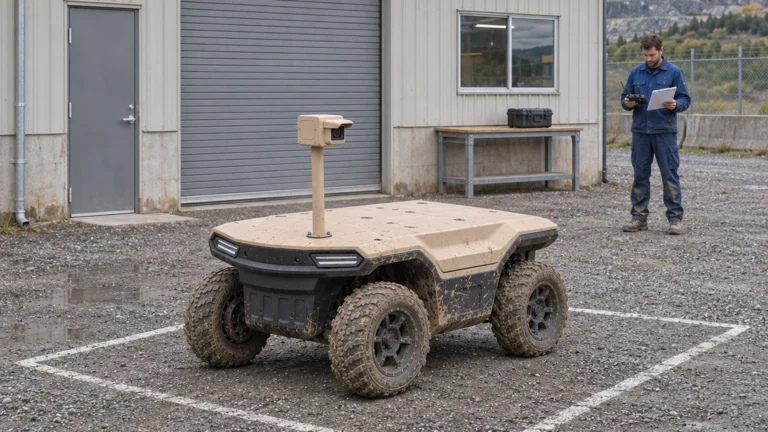
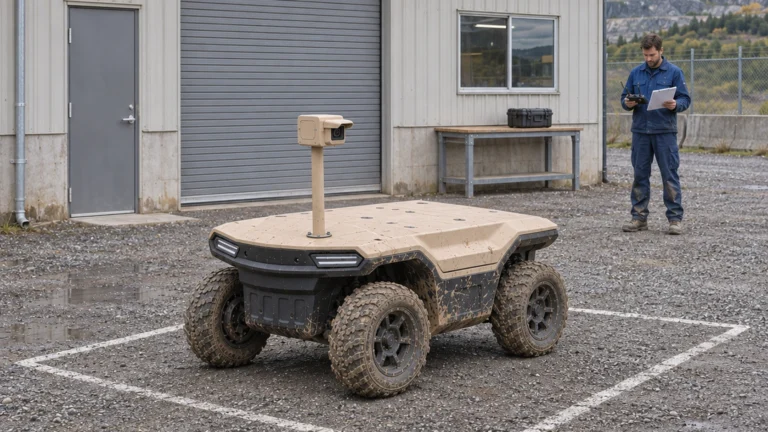
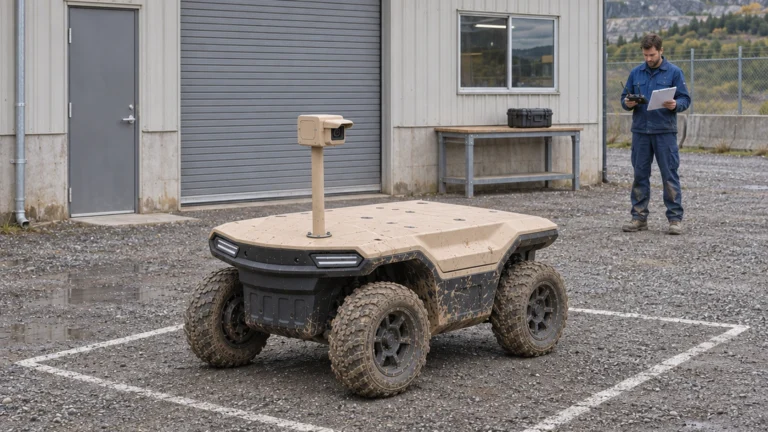
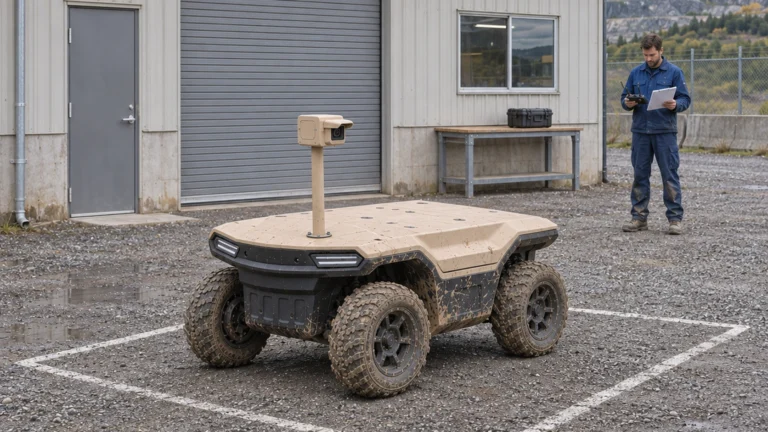
AI concept: camera-equipped Delta 150 at an exterior observation point; proposed configuration only.
Move from forestry, mining and energy to a specific task
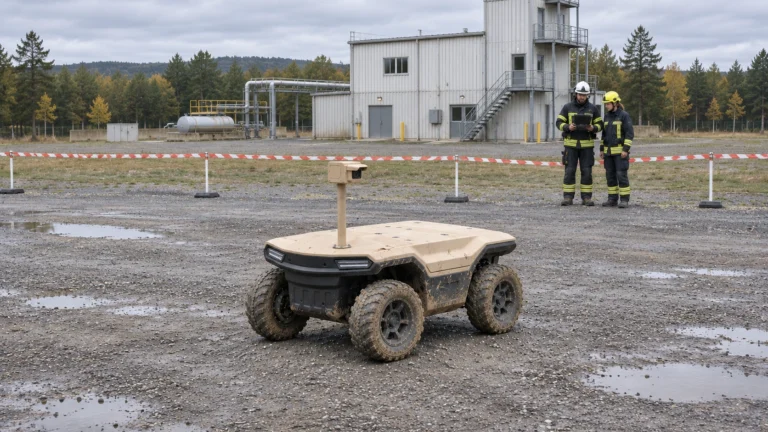
A forestry site may need a repeatable view of a workshop, a log-yard boundary or an approved road observation position. A mine may need images of accessible auxiliary equipment from an isolated service lane. An energy operator may need exterior observations at permitted ground-level points. Each is a different task with its own access, image-quality and support conditions.
Write the requirement as an action and an output: stop at asset P-01 and return a timestamped view that the maintenance team can compare. Replace vague aims such as monitor the entire site with a finite list of targets. Record areas the vehicle must not enter and work that remains with people or existing instruments.
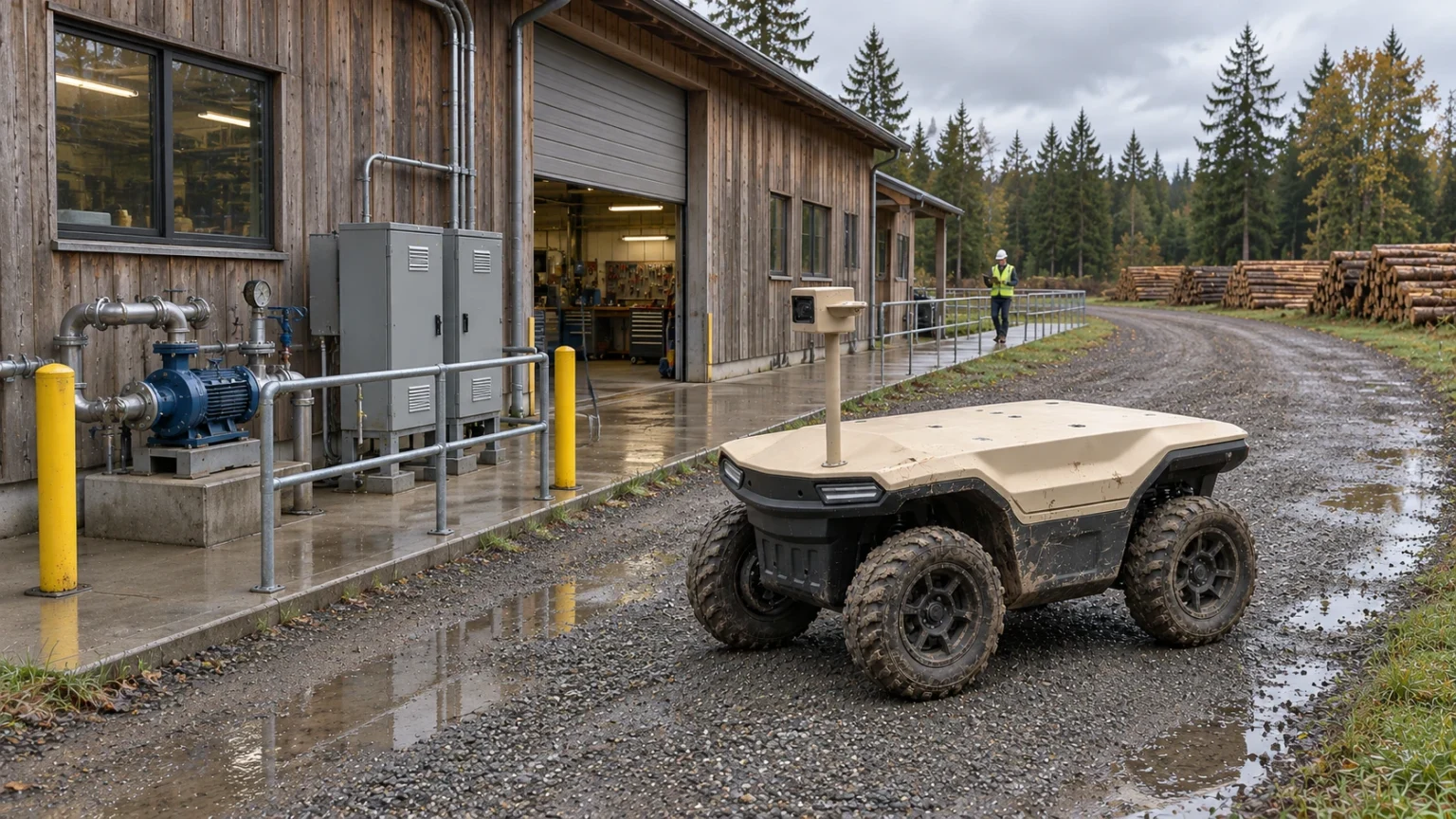
For example, the illustration shows a camera-equipped platform outside a maintenance workshop. It represents a proposed external observation task, not a completed deployment, an automated diagnosis or permission to approach operating equipment. A forest track, mine haul road and plant walkway are not interchangeable routes.
Separate observation, alarms, maintenance and logistics
Observation produces a view or measurement. Alarm verification asks whether new information helps an operator decide what happened. Maintenance turns a reviewed finding into a work request. Logistics moves a specified load between defined locations. One platform may contribute to several steps, but the responsibilities and evidence should remain separate.
A navigation camera is not automatically a task camera. Likewise, reaching a pump does not prove that a gauge can be read, and recording a truck does not prove that its journey was authorised. The proposal should identify the additional equipment and data needed for the intended result.
An operator remains responsible for the agreed review and escalation process. Describe who receives the record, who can request another view and who handles exceptions. Avoid counting every automatically generated notification as useful work.
Define the input and usable output of each task
| Task | Inputs to agree | Useful output |
| Exterior inspection | Asset list, viewpoint, lighting and required detail | Image or measurement linked to the asset and time |
| Alarm verification | Alarm ID, location, permission and permitted route | Reviewed event record, including inconclusive results |
| Yard patrol | Observation positions, traffic and shift plan | Comparable views and an exception log |
| Light transport | Load, restraint, handling and destination access | Acknowledged delivery under agreed conditions |
Define output quality before selecting the payload. For an image, request an example of the detail the reviewer needs. For a measurement, specify the instrument, method and conditions. A visible temperature pattern is not automatically a calibrated measurement or a diagnosis.
An acceptance record should connect task, route version, fitted equipment, operator intervention and the resulting file. Include failed attempts and missing data. Otherwise a successful demonstration at one easy point may conceal incomplete coverage elsewhere.
Allocate work between Delta 150 and the larger family entries
Use the Delta UGV/AGV family page as the product entry point, then request a configuration for the task. For Delta 150, count cameras, mounts, enclosures, communication equipment and added power equipment as part of the installed load.
Delta 500 and Delta 1000 are separate family entries for heavier equipment or logistics discussions. Evaluate their own specifications and route evidence. This article does not transfer Delta 150 operating limits, sensors, charging arrangements or autonomous functions to those models.
The illustrated observation camera is conceptual. Confirm sensor type, mounting height, field of view, power and interfaces in the proposed supply. If the task instead needs cargo handling, require a separate load and handling assessment; an observation illustration is not a validated transport configuration.
Check site access, the business owner and the budget
A useful application must have a reachable route and an organisation able to use its result. Identify the operational owner, reviewer, local support person and budget decision-maker. Establish the current task frequency, missed observations, review time and recovery work before discussing savings.
A long perimeter does not itself justify a fleet. Some gaps may be better addressed by changing fixed-camera coverage or the human workflow. Compare the added useful observations with the new supervision, charging, cleaning and maintenance required. Keep released staff time separate from expenditure that can actually be removed.
If a required point cannot be reached or the output cannot support a decision, retain an unresolved item. Change the task, choose a different observation method or stop the proposal. A pilot should answer a purchasing question, not merely demonstrate movement.
Complete a task card and choose the next reading branch
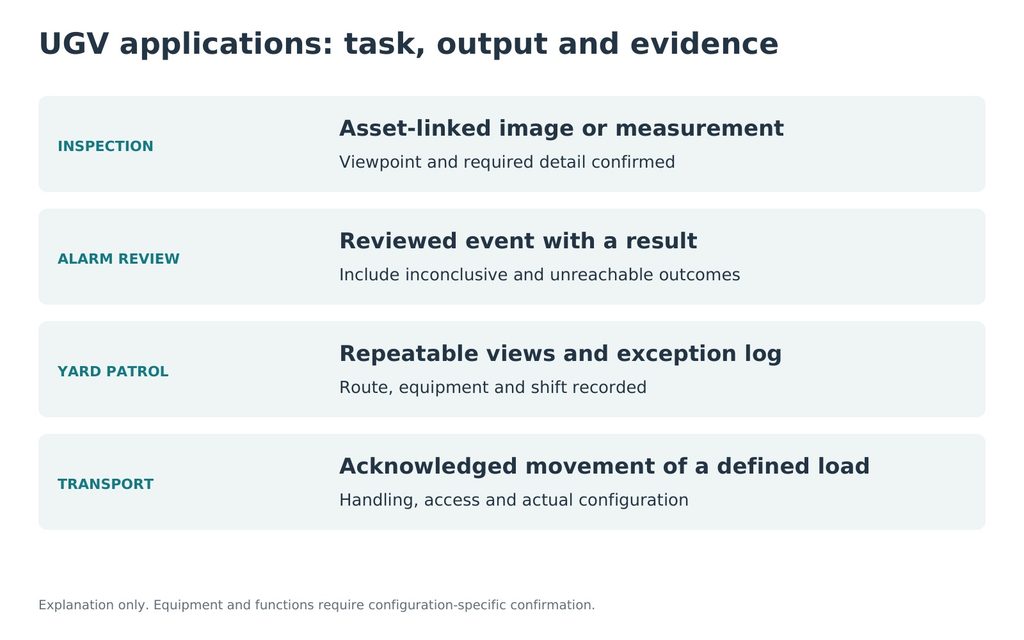
JINJIA task-definition framework; evidence remains configuration-specific.
| Task-card field | Record before requesting a proposal |
| Task and owner | One action, the asset or event, and the person using the result |
| Route and equipment | Approved path, exclusions, installed mass, power and interfaces |
| Schedule and people | Required visits, review responsibility and exception support |
| Acceptance and decision | Useful-output criteria, evidence gaps and the next decision |
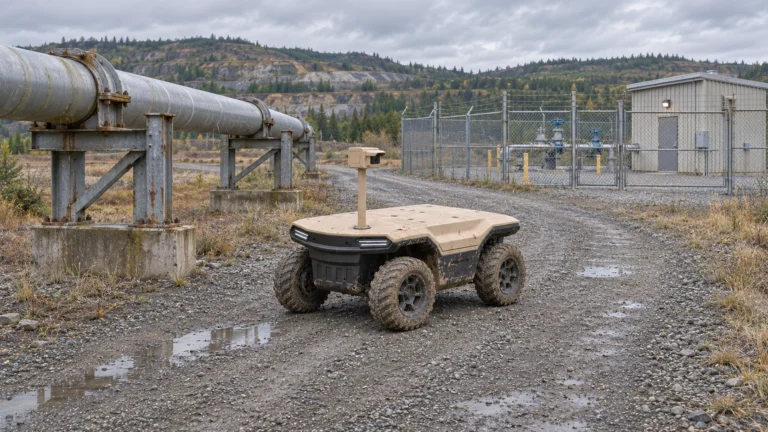
For terminology and chassis choices, read what a UGV is and types of UGV. Forestry, yards and alarms are separate application branches in this series. Existing pipeline guidance provides a further repeatable observation example; its site conditions still need individual assessment.
Send JINJIA your task card with a route map, desired record, fitted-load requirements and working schedule. Use the supplied worksheet to keep assumptions and unresolved questions visible.
Frequently asked questions (FAQ)
A: Start with one reachable observation or transport task, a named user of its result and a clear acceptance record. Avoid beginning with an entire industry or unrestricted site coverage.
Q: Does an AGV application imply fully autonomous operation?
A: No. Here AGV means Autonomous Ground Vehicle, but the supplied driving functions, conditions, supervision and takeover arrangements must be stated individually.
Q: Can the navigation camera perform inspection work?
A: Only if its actual view and output meet the task requirement. Confirm this with representative records rather than inferring it from the presence of a camera.
Q: Are all Delta models suitable for the same task?
A: No. Compare the installed load, access and delivered configuration of each model. Family membership does not establish identical sensors or operating limits.
Q: What makes an image useful for maintenance?
A: It needs the relevant asset identity, time, viewpoint and required detail, plus a reviewer and a process for follow-up. A picture alone does not close a work request.
Q: When should a proposed application be rejected?
A: Reject or revise it when access, useful output, operating support or a business owner cannot be established. Record the missing evidence rather than treating a concept as a proven solution.
Sources and further reading
1. JINJIA — Delta UGV/AGV product family
Product-family context. The proposed task equipment and operating functions require confirmation for the supplied configuration.
2. JINJIA — What is an unmanned ground vehicle?
Related editorial explanation of UGV terminology; not a test record.
3. JINJIA — Types of unmanned ground vehicles
Related reading on platform types; suitability still depends on the actual route and task.
4. JINJIA — Making pipeline patrol repeatable with a Delta inspection UGV/AGV
Related observation-planning example; not a claim that this forestry task has already been deployed.