

Route following does not establish unrestricted autonomous operation. Choose an inspection UGV control mode by deciding who commands movement, which conditions permit the task and who handles exceptions. Remote driving, an assistance feature and an approved autonomous route can coexist, but each needs a clear operating boundary.
Delta 150 is a compact wheeled platform to assess for observation and inspection tasks. In this series AGV means Autonomous Ground Vehicle; industrial AGV can also mean Automated Guided Vehicle. Neither abbreviation proves a particular function. Confirm the supplied hardware, software, control link and task equipment before assigning a mode.
At a glance
• Describe functions rather than relying on a mode label.
• Give control transfer a named owner and acknowledgement.
• Test abnormal conditions before approving a route.
Contents
Separate remote driving, assistance and route operation
Assign people to dispatch, supervision and recovery
Verify positioning, communications and the task view
Test takeover and abnormal conditions
Complete a mode-scope record before requesting a proposal
Frequently asked questions (FAQ)
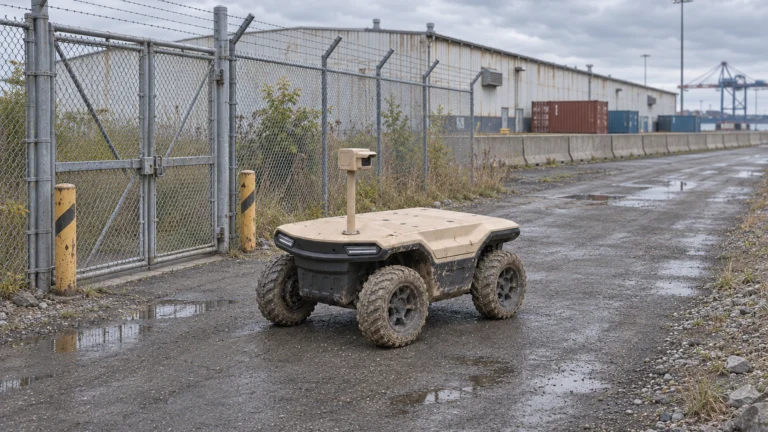
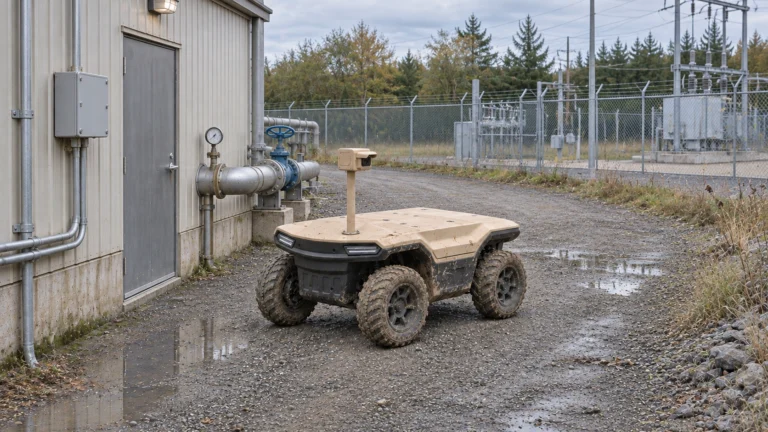
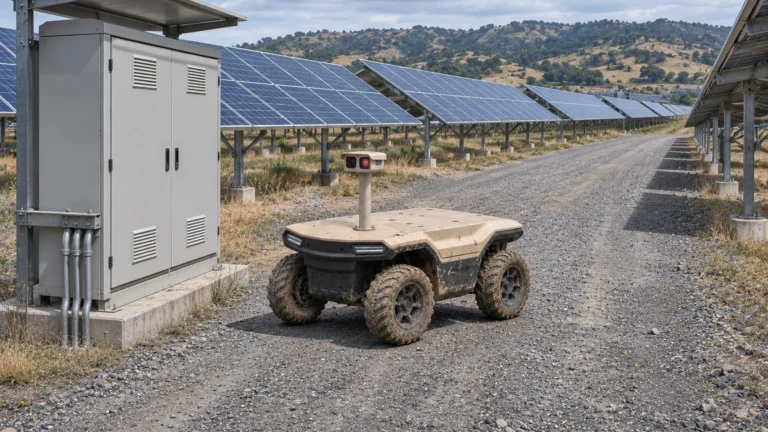
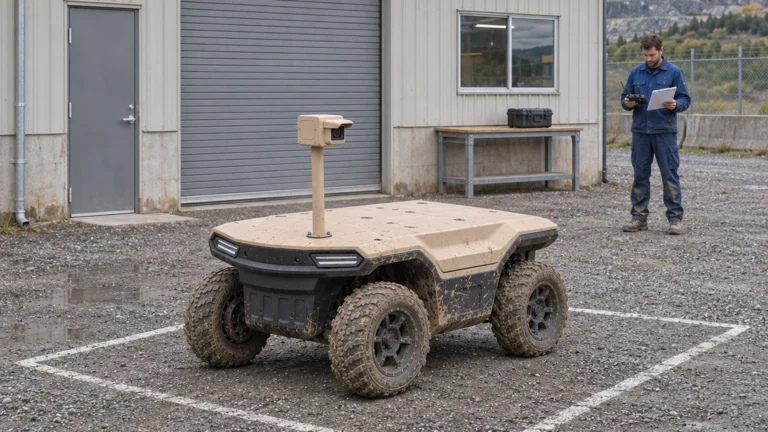
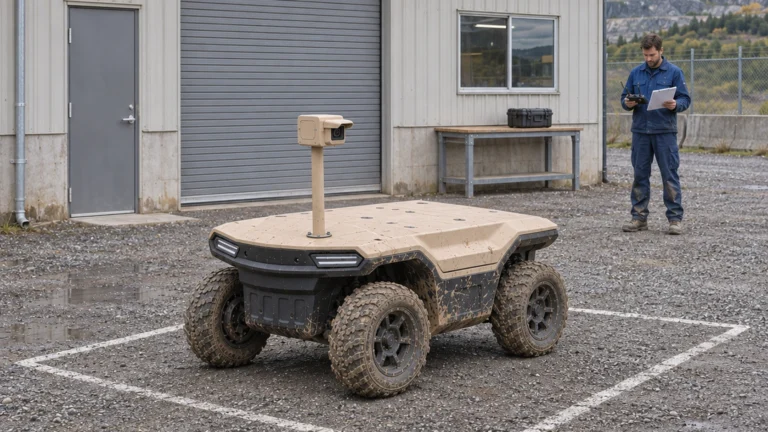
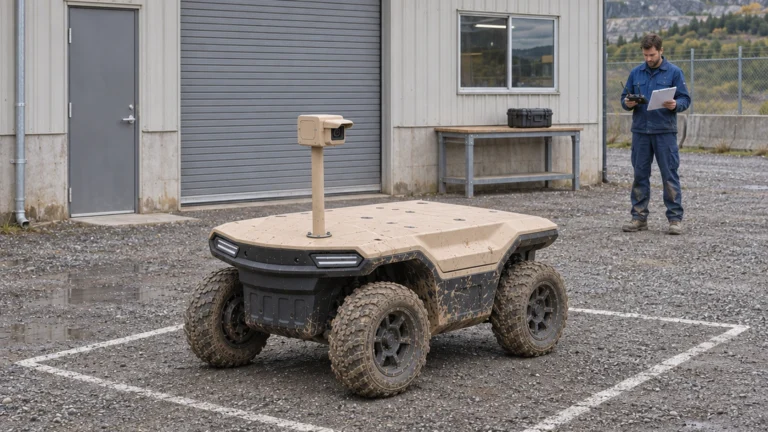
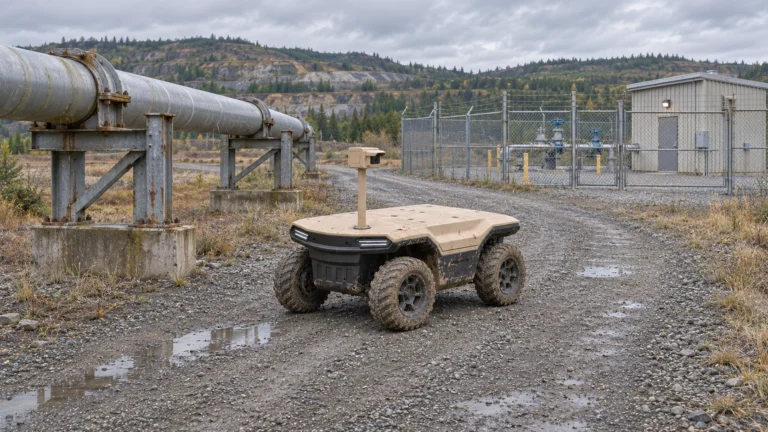
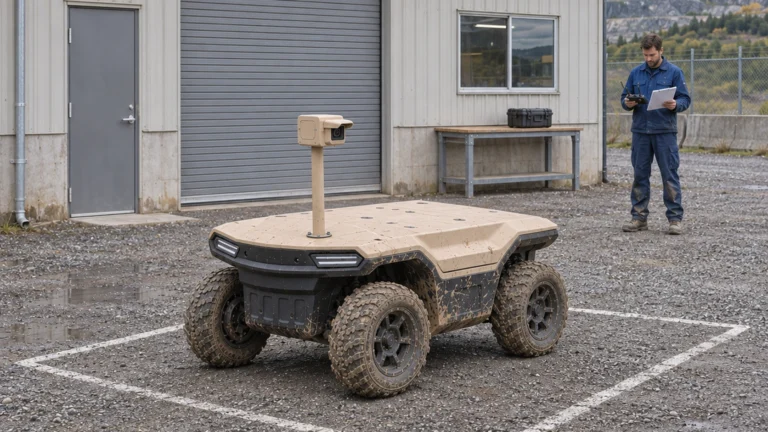
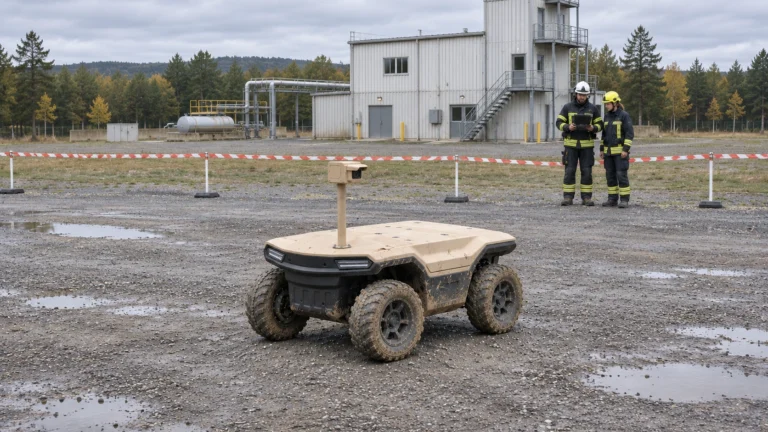
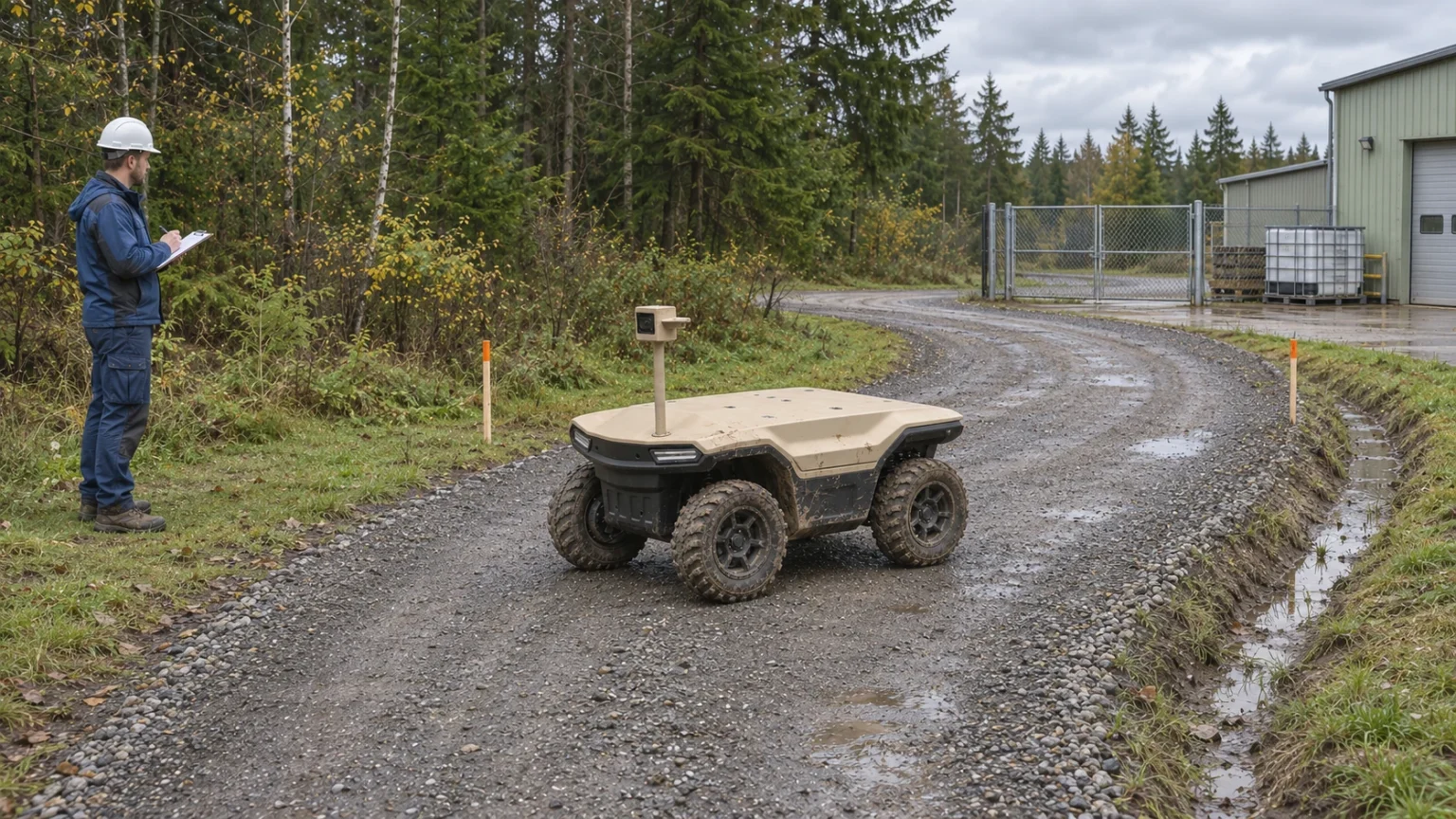
AI concept: proposed task-equipped Delta 150; configuration subject to confirmation.
Separate remote driving, assistance and route operation
In remote driving, an operator commands movement using the available controls and view. Assistance may constrain or support a particular action, such as limiting a command. Route operation delegates specified movement within an agreed area. Therefore, asking whether a robot is autonomous is less useful than asking which actions it performs under which conditions.
NIST’s historical ALFUS work considers mission, environment and human involvement. Use that distinction to organise questions, not to award Delta an autonomy grade. Write one function per requirement: following a surveyed route, stopping at a point, requesting review or reacting to a defined fault. Do not infer one function from another.
Assign people to dispatch, supervision and recovery
Name the person who approves a mission, the person who supervises it and the person who may recover the vehicle. These responsibilities may belong to different teams. For example, an authorised route can still be unavailable because the site has started loading work. The dispatch decision needs current site information, not only an approved map.
Agree how the operator knows which station holds control and whether a command has taken effect. Also plan breaks and shift handover. A remote connection does not remove camera cleaning, charging, physical recovery or the human review of an inspection result. Include those duties when comparing staffing needs.
Verify positioning, communications and the task view
Positioning tells the system where it estimates the vehicle to be. The control link carries commands and status. A task camera supplies the inspection view. Because these services have different purposes, a usable video stream cannot establish acceptable positioning or control latency. Check them separately at difficult turns, canopy cover and observation stops.
Record the route version, weather, equipment layout and operating mode with each test. A change in mast height or camera direction can affect both visibility and clearance. Before evaluation, identify when a delayed image is too old for the assigned decision and how the interface shows that condition. Agree thresholds from the task rather than inventing universal values.
Make mode changes explicit
Treat a mode change as a controlled transfer: request, permission, acknowledgement and confirmation of the resulting state. Specify whether the vehicle must first be stationary and which commands remain available. The integrator should document the behaviour of the delivered system; an editor cannot assume these interlocks from a screen label.
Use a hypothetical gate inspection to expose gaps. The supervisor requests a route mission, the site owner confirms access and the robot reaches an approved observation point. If the view is blocked, the task returns incomplete. Any subsequent remote repositioning needs permission and confirmed control. Completing the journey does not close the inspection finding.
Test takeover and abnormal conditions
Prepare controlled tests for operator handover, a blocked route, loss of the control link, inadequate localisation and an unavailable task camera. Keep these as separate events. First establish a test area and recovery arrangements. Then verify actual responses against the agreed requirement, with personnel able to end the test.
Record the trigger, active mode, last usable status, acknowledgement, resulting behaviour and recovery owner. Retain failed attempts. A software pause, a protective stop and an emergency-stop function have different purposes; do not present them as equivalent without configuration evidence. Likewise, automatic return is a function to assess, not a universal response to every failure.
Complete a mode-scope record before requesting a proposal
For each route segment, enter permitted modes, prerequisites, command authority, exception response and the evidence required to approve operation. An unknown behaviour stays unresolved. The next action may be a controlled test, a configuration change or exclusion of the segment; a checklist tick should not hide missing evidence.
Use the accompanying worksheet to compare requirements with the proposed Delta 150 configuration. Delta 500 and Delta 1000 need separate assessments. Submit your route, task output, staffing plan and control requirements through the JINJIA contact page. This gives the technical team a concrete scope for a proposal and verification plan.
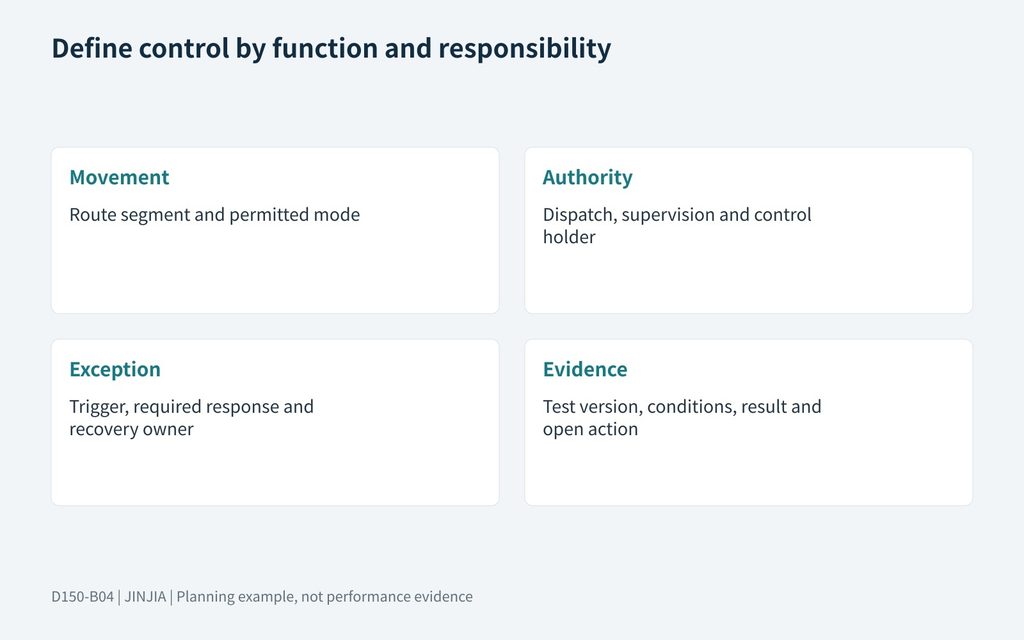
JINJIA planning framework; example inputs are not test results.
| Scope item | Record before evaluation |
| Movement | Route segment and permitted mode |
| Authority | Dispatch, supervision and control holder |
| Exception | Trigger, required response and recovery owner |
| Evidence | Test version, conditions, result and open action |
Frequently asked questions (FAQ)
A: No. It applies to defined movement and conditions; access, traffic and exception handling still need approval.
Q: Can assistance replace a remote operator?
A: Assess the actual function and responsibilities. One assistance feature does not establish unattended task completion.
Q: Does live video prove the control link is adequate?
A: No. Check command delay, acknowledgement, state reporting and loss behaviour separately.
Q: Who owns a mode change?
A: Name the requesting and accepting roles, then verify how the system confirms permission and active control.
Q: Should the vehicle always return after connection loss?
A: Do not assume that response. Agree and test the configured behaviour for the permitted route.
Q: What starts a configuration discussion?
A: A route, task output, proposed equipment, working schedule, staffing plan and a list of required control functions.
Sources and further reading
NIST — historical ALFUS autonomy framework
Historical context for separating mission, environment and human involvement; not a current Delta certification.
Model-family context; confirm functions and limits for the supplied configuration.